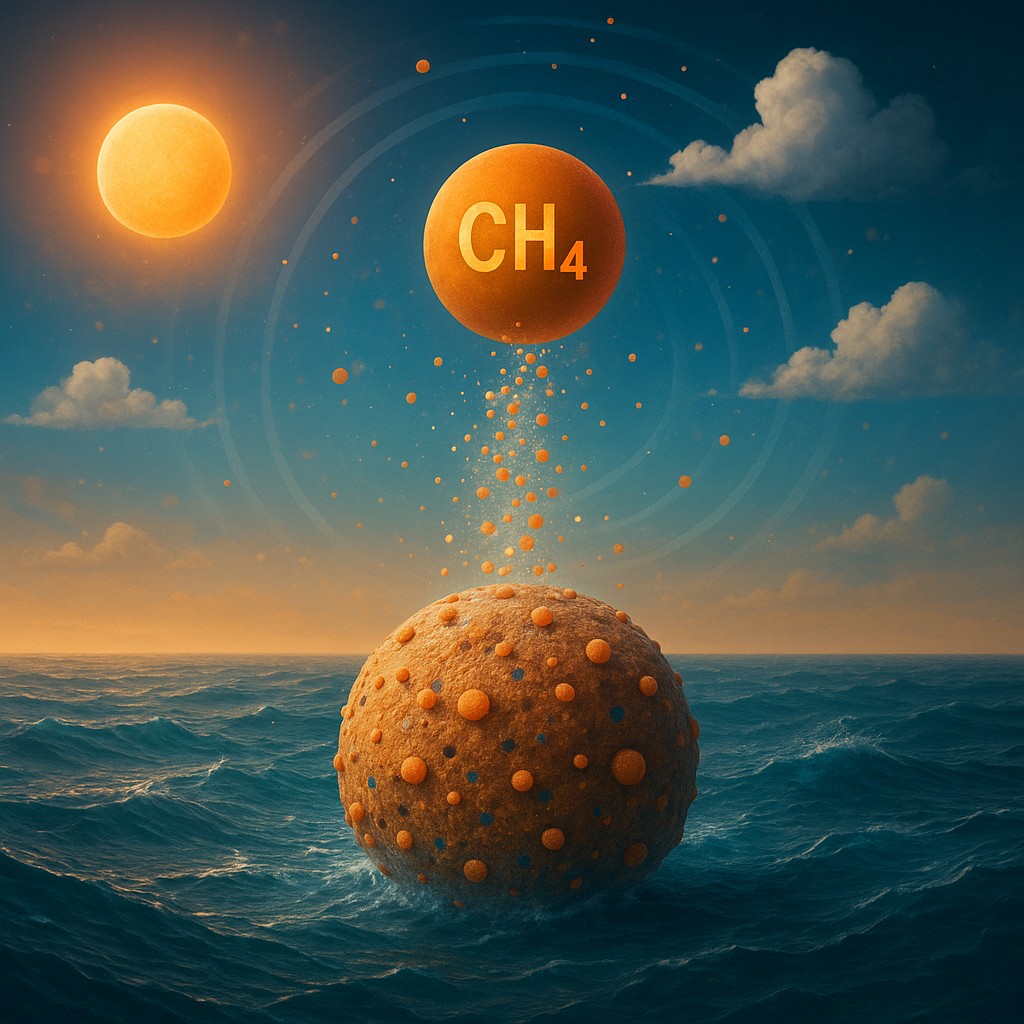
When we talk about climate change, the conversation almost always revolves around carbon dioxide. CO2 is the undisputed heavyweight of greenhouse gases, mainly because it stays in our atmosphere for centuries, leaving behind a slow-burning legacy of heat. However, there is a faster, more aggressive player in the game: methane. While methane is far less common than CO2, it is roughly 80 times more powerful at trapping heat over a 20-year period. If CO2 is like a thick wool sweater keeping the planet warm, methane is a high-tech space heater cranked to the maximum setting. Because it is so potent yet relatively short-lived, removing it from the air would be the fastest way to cool our warming world.
Humanity has spent decades focusing on how to stop pumping gases into the sky. This is a bit like trying to fix a flooded basement by turning off the faucet; it is necessary, but it doesn't get the water out of the carpet. To actually lower the temperature during our lifetimes, we need to look at atmospheric chemistry management, which essentially means helping the sky clean itself. Currently, experimental trials on the high seas are testing a method that uses the ocean's natural chemistry to do just that. By mimicking the way desert dust interacts with sea spray, scientists are trying to speed up the destruction of methane before it can bake the planet.
The Chemistry of a Self-Cleaning Atmosphere
Our atmosphere already has its own immune system. In nature, methane is slowly broken down by chemical reactions involving the hydroxyl radical, often called the "detergent" of the atmosphere. This radical hunts down methane molecules and rips them apart, turning them into water vapor and CO2. While turning methane into CO2 might sound like a bad thing, it is actually a massive win because you are swapping a very powerful greenhouse gas for a much weaker one. The problem is that the natural supply of these detergents is limited, and we are pumping methane into the air faster than the atmosphere can scrub it away.
Maritime trials are now testing a new approach that uses a different kind of chemical cleaner: the chlorine atom. In the marine boundary layer, the air just above the ocean surface, chlorine is incredibly effective at breaking down methane through oxidation. When scientists release iron salt aerosols, which are microscopic particles of iron and chloride, into this moist, salty air, they trigger a reaction fueled by sunlight. This process, called photolysis, releases reactive chlorine atoms. These atoms are "hungry" and react with methane up to 16 times faster than standard hydroxyl radicals. By strategically releasing these salts, we are essentially upgrading the atmosphere’s cleaning kit from a hand towel to a pressure washer.
Mimicking the Earth’s Natural Dust Cycles
This technology isn't some strange alien intervention; it is a boost to a process that has existed for eons. For millions of years, mineral dust from the Sahara Desert and other dry regions has blown across the oceans. This dust contains iron, and when it mixes with salty sea mist, it creates the exact chemical conditions scientists are now trying to replicate. History shows that during past ice ages, there was much more dust in the air. This led to higher iron levels in the atmosphere and lower levels of methane. Some researchers believe this natural "iron-salt chimney" was one of the key reasons the Earth stayed cool during those periods.
By using ships to spread iron salt aerosols, we are effectively creating "artificial dust storms" in a controlled, scientific way. The air just above the ocean is the perfect laboratory: it is humid, full of natural sea salts, and exposed to intense sunlight, all of which are needed for the iron salts to work. Instead of building massive, expensive factories on land to pull methane out of the air with fans and filters, we are using the sun as our power source and the wind as our delivery network. It is a big-picture solution that works with the planet's existing mechanics rather than trying to overpower them.
Comparing Methane Removal Strategies
To understand why iron salt aerosols are getting so much attention, we have to see how they compare to other solutions. Most technologies for catching carbon or methane fall into two categories: mechanical or chemical. Mechanical systems are often called Direct Air Capture (DAC). While DAC works well for CO2, it is very difficult to use for methane because methane molecules are so spread out. Trying to catch methane with a machine is like trying to find a few specific grains of blue sand in a giant desert.
| Feature |
Direct Air Capture (Mechanical) |
Iron Salt Aerosols (Chemical) |
| Energy Source |
Massive amounts of electricity |
Natural sunlight and wind |
| Infrastructure |
Large, expensive land-based plants |
Existing cargo or research ships |
| Scalability |
Limited by cost and land use |
High, uses the open atmosphere |
| Primary Target |
Carbon Dioxide (mostly) |
Methane |
| How it Works |
Physical filters and sponges |
Chemical reactions (catalysis) |
| Speed of Impact |
Decades to see cooling |
Years to a decade to see cooling |
As the table shows, the "passive" nature of iron salts is their greatest advantage. You don't need to build a power plant to fuel the reaction; the sun provides the energy for free. This makes the cost of removing each ton of methane much lower than mechanical options. However, the real challenge is not the cost, but the precision required to do it safely.
Balancing Risks and Rewards
Whenever humans start "managing" the atmosphere, the first question must be: what could go wrong? The atmosphere is a chaotic system where one small change can cause a see-series of unintended effects. Scientists are currently focusing on three main concerns. First is the ozone layer. Chlorine is famous for destroying ozone in the upper atmosphere. However, these trials take place in the lower atmosphere, where the chemistry is different. Researchers must ensure that the chlorine atoms stay low enough to destroy methane without drifting high enough to damage the ozone layer.
Second, we have to consider the local ocean environment. When these iron salts eventually settle out of the air, they fall into the water. Iron acts as a fertilizer for phytoplankton, the tiny plants at the base of the ocean food chain. While fertilizing the ocean might sound good because it helps the water absorb more CO2, it can also cause "blooms" of algae that disrupt the local balance of life. Finally, there is the impact on weather. These particles can act as "seeds" for clouds. If we change the concentration of particles in the air, we might accidentally change how bright clouds are or where it rains. This is why current trials are small and closely watched, following a "measure twice, cut once" philosophy.
From Cutting Pollution to Active Stewardship
For the last 30 years, our climate strategy has been defensive. We have focused on "mitigation," which basically means trying to do less damage. We talk about reducing footprints, cutting emissions, and stopping pollution. While these steps are vital, they are no longer enough to avoid the worst effects of warming because there is already too much heat-trapping gas in the air. The iron salt trials represent a major shift in our relationship with the Earth. We are moving from being accidental polluters to being intentional caretakers of the atmosphere’s chemistry.
This shift requires us to grow up as a species. It means we stop seeing the atmosphere as a bottomless trash can and start seeing it as a living chemical system that we have to maintain. We are learning how to assist the planet’s natural cycles, giving them a boost where they have been overwhelmed by human activity. It is a move from an era of taking to an era of restoration, where we use science to heal the air we breathe.
The challenge of climate change is massive, but it is also a chance to understand our world more deeply. These experiments over the empty reaches of the ocean are more than just chemical tests; they are a sign of human ingenuity and our refusal to give up on a livable future. As we learn to master the delicate chemistry of the air, we gain more than just a cooler planet. We gain the confidence to face complex problems with bold, science-backed action. The path forward isn't just about stopping the bad; it’s about actively creating the good, one chlorine atom at a time.