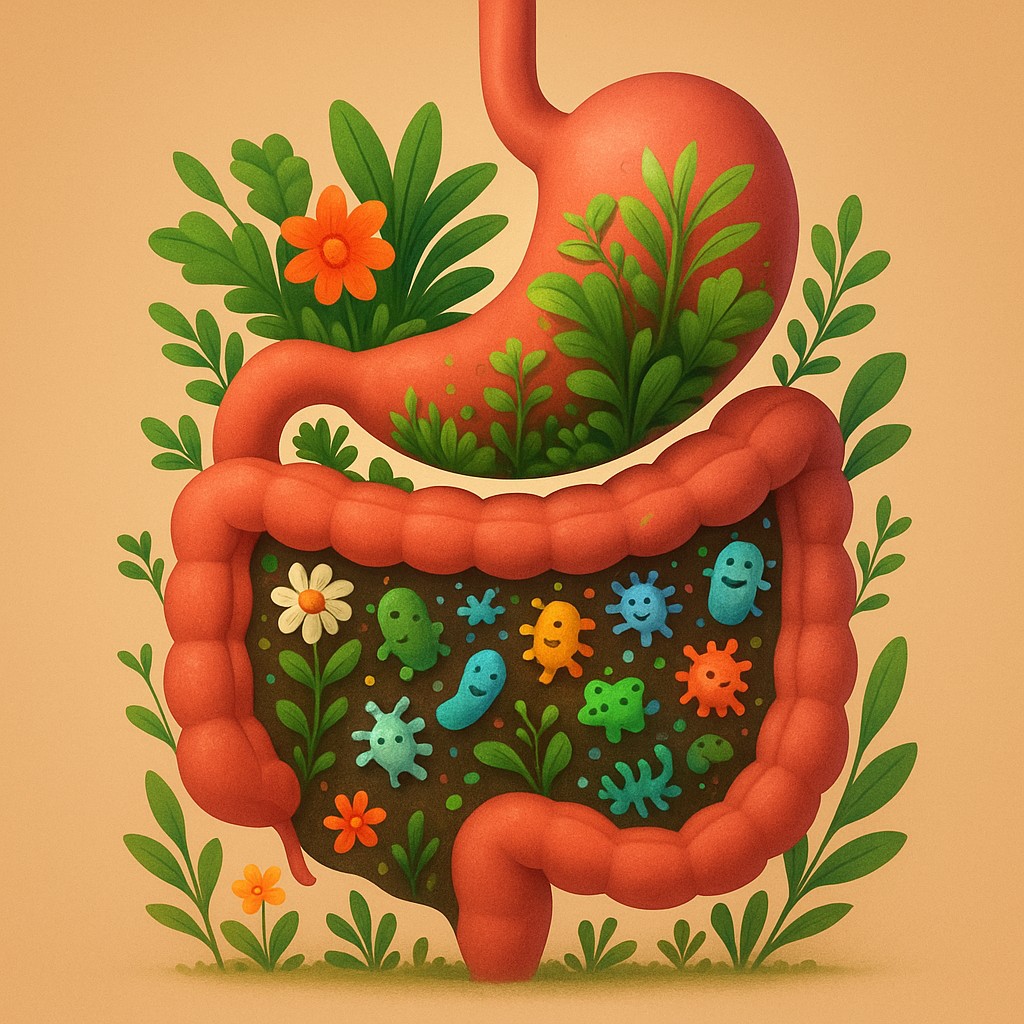
Imagine for a moment that you aren't just one person, but a walking, talking biological city. Inside the winding halls of your digestive tract lives a busy community of trillions of microorganisms. This group of bacteria, fungi, and viruses weighs about as much as your brain. This microscopic civilization, called the gut microbiome, isn't just hitching a ride for the free snacks. It acts as a high-tech internal pharmacy and security team, influencing everything from your immune strength to how clearly you think and even your daily mood.
Finding the "perfect" gut isn't about scrubbing yourself sterile; it is more like growing a lush, diverse rainforest. In microbiology, variety is the gold standard for health. When your internal ecosystem is full of many different species, it becomes resilient. It can bounce back from the occasional pizza binge or a necessary round of antibiotics. Building this strength requires a change in perspective. We have to stop seeing bacteria as "germs" and start seeing them as essential partners in our long-term health.
The Inner Garden and the Microbial Workforce
To take care of your gut, you first need to appreciate what these tiny tenants actually do. They are the ultimate multitaskers. They break down complex carbs that your own human cells can't digest, and in the process, they create short-chain fatty acids. Think of these fatty acids as premium fuel for the cells lining your colon. They help maintain a strong barrier that keeps toxins out of your bloodstream. When this barrier weakens, it can lead to body-wide inflammation, which is the quiet cause of many modern health problems.
Beyond digestion, your gut is often called your "second brain." It contains a massive network of nerve cells and produces about 95 percent of your body’s serotonin. This chemical is famous for making us feel happy, but it also controls the physical rhythm of your digestion. If your microbial balance is off, the connection between your gut and your actual brain can get fuzzy, leading to "brain fog" or irritability. By feeding your gut the right nutrients, you are essentially installing high-speed internet for your body's communication systems.
Diversity is the most important metric because different bacteria specialize in different jobs. Some train your immune cells to recognize enemies, while others create vitamins like B12 and K. If you eat the same five foods every day, you are essentially hiring only five types of employees for a massive corporation. To run a thriving, innovative "Gut Inc.," you need a diverse workforce that can handle any challenge the outside world throws at it.
The Strategy of the Thirty-Plant Challenge
One of the best ways to boost your microbial variety is to follow the "thirty plants per week" rule. This might sound like a lot of gardening at first, but it is actually simple once you realize what counts as a plant. Grains, seeds, nuts, beans, fruits, vegetables, and even herbs and spices all count toward your total. Each of these plants contains different fibers and polyphenols (natural plant chemicals), which act as specific types of "prebiotic" fuel for different bacterial strains.
Think of prebiotics as fertilizer for your internal garden. While probiotics are the actual seeds (the live bacteria), prebiotics are the food that helps those seeds sprout and grow. If you take an expensive probiotic pill but don't eat enough fiber, those helpful bacteria will simply starve and pass right through you. By rotating your vegetables and trying new grains like quinoa or farro, you are offering a buffet that feeds a wide range of microbes. This ensures that no single species takes over or dies out.
Variety is vital because plants have evolved different chemical defenses to survive in the wild. When we eat these various compounds, our gut bacteria break them down into metabolites that protect our own cells. A person who eats a colorful mix of purple carrots, green kale, and red raspberries gives their microbiome a much better toolkit than someone who only eats white potatoes and iceberg lettuce. It isn’t about the total amount of vegetables you eat, but the variety of the "botanical guest list" you invite to dinner.
Fermentation as a Living Multivitamin
While prebiotics feed the bacteria you already have, fermented foods bring in brand-new recruits. For thousands of years, humans used fermentation to keep food from spoiling before refrigerators existed. In the process, we accidentally found one of the greatest health hacks in history. Foods like kimchi, sauerkraut, kefir, and kombucha are full of live, active cultures that can temporarily join your microbial community and improve your health.
Recent studies show that a diet high in fermented foods can significantly increase gut diversity while lowering inflammation. Unlike a pill, these foods offer a "synbiotic" experience, providing both the live bacteria and the complex environment they need to survive the trip through your stomach acid. It is best to think of these as "visiting consultants." They don't always live in your gut forever, but they do incredible work while they are passing through.
To get the most out of these foods, choose "raw" or "unpasteurized" versions. Heat kills the very bacteria you want to eat, so the shelf-stable sauerkraut in the middle of the grocery store won't work as well as the bubbly, refrigerated kind. Adding small amounts throughout the day, like a spoonful of kimchi with your eggs or a splash of kefir in a smoothie, provides a steady stream of reinforcements for your internal army.
Comparing Key Components of Gut Health
| Component |
Primary Function |
Best Food Sources |
| Prebiotics |
Fiber that feeds your existing beneficial bacteria. |
Onions, garlic, leeks, bananas, asparagus, and oats. |
| Probiotics |
Live beneficial bacteria that support your microbial community. |
Yogurt, kefir, kimchi, miso, and real sourdough bread. |
| Polyphenols |
Antioxidants that act as fuel and protect the gut lining. |
Dark chocolate, blueberries, green tea, and olive oil. |
| Resistant Starch |
Starch that escapes digestion to feed the lower gut. |
Cooked and cooled potatoes or rice, and green bananas. |
Debunking the Myths of Gut Cleansing
In the age of social media, the term "gut health" is often used by companies selling expensive detoxes, teas, and "cleanses" that promise to wipe the slate clean. This is a common and harmful mistake. Your gut does not need to be scrubbed; it is a self-cleaning oven. Most "cleanses" are just products that make you go to the bathroom more often. They can actually irritate your gut and flush out the very bacteria you worked so hard to grow.
Another myth is that you need a high-dose probiotic supplement every day to be healthy. While supplements help with certain conditions or after taking antibiotics, they are often expensive and poorly regulated. Many capsules only have a few types of bacteria, while one serving of high-quality yogurt or kimchi might have dozens of different types in much higher amounts. For most people, food is a much better and cheaper way to balance the microbiome.
It is also important to stop thinking of bacteria as simply "good" or "bad." Even some "bad" bacteria have a purpose in small amounts, such as keeping your immune system on its toes. The goal is balance, not total elimination. When we over-sanitize our lives with antibacterial soaps and processed foods, we lose important microbes. This can make our immune systems bored, leading them to attack harmless things like pollen or our own bodies, which contributes to allergies and autoimmune issues.
Navigating the Enemies of the Microbiome
Just as some things help your gut thrive, some modern habits act like a forest fire in your internal ecosystem. Ultra-processed foods are perhaps the biggest threat. These foods have almost no fiber and are full of emulsifiers (additives that keep food smooth) and artificial sweeteners. Emulsifiers can thin the protective mucus layer of your gut, making it easier for harmful bacteria to irritate your intestinal wall.
Artificial sweeteners are also tricky. They have zero calories, but they aren't "free" to your microbiome. Some studies suggest certain sweeteners change gut bacteria in ways that make it harder for your body to manage blood sugar. It is a strange irony: by trying to avoid sugar, we might be making our metabolism less efficient by upsetting our microbial partners.
Stress and lack of sleep also play a huge role. The link between the gut and the brain is a two-way street. When you are constantly stressed, your body produces cortisol, which can make the gut "leaky" and change which bacteria thrive. You can eat all the kale in the world, but if you are burned out and tired, your microbiome will show it. A healthy gut requires a whole-body approach that values rest and mental health just as much as what is on your plate.
The Art of Mindful Eating and Consistency
Good gut health isn't a weekend project; it is a lifelong relationship. How you eat is often just as important as what you eat. Chewing your food thoroughly is the first step of digestion. It breaks down large pieces so your stomach acid and enzymes can do their jobs. When you rush through a meal while looking at your phone, you skip the "cephalic phase" of digestion. This is when your brain tells your gut to get ready for food. Skipping it can lead to bloating and poor nutrient absorption.
Consistency is better than intensity. It is much better to eat one serving of fermented food and three different vegetables every day than to go on a "superfood" binge once a month. Your bacteria reproduce quickly, so your microbiome can start to change within just 24 to 48 hours of changing your diet. This is empowering because it means you are only a few meals away from starting a healthy trend in your body.
As you start this journey, listen to your body instead of just following a strict plan. Some people find that eating too much fiber too fast causes temporary gas or bloating. This is usually just a sign that your "microbial gym" is lifting heavy weights it isn't used to yet. Slow and steady wins the race. Start by adding one new plant a day and a small forkful of sauerkraut. You will soon see your energy, skin, and digestion transform from the inside out. You have trillions of tiny allies waiting for you to lead them. Give them the fuel they need, and they will take care of the rest.