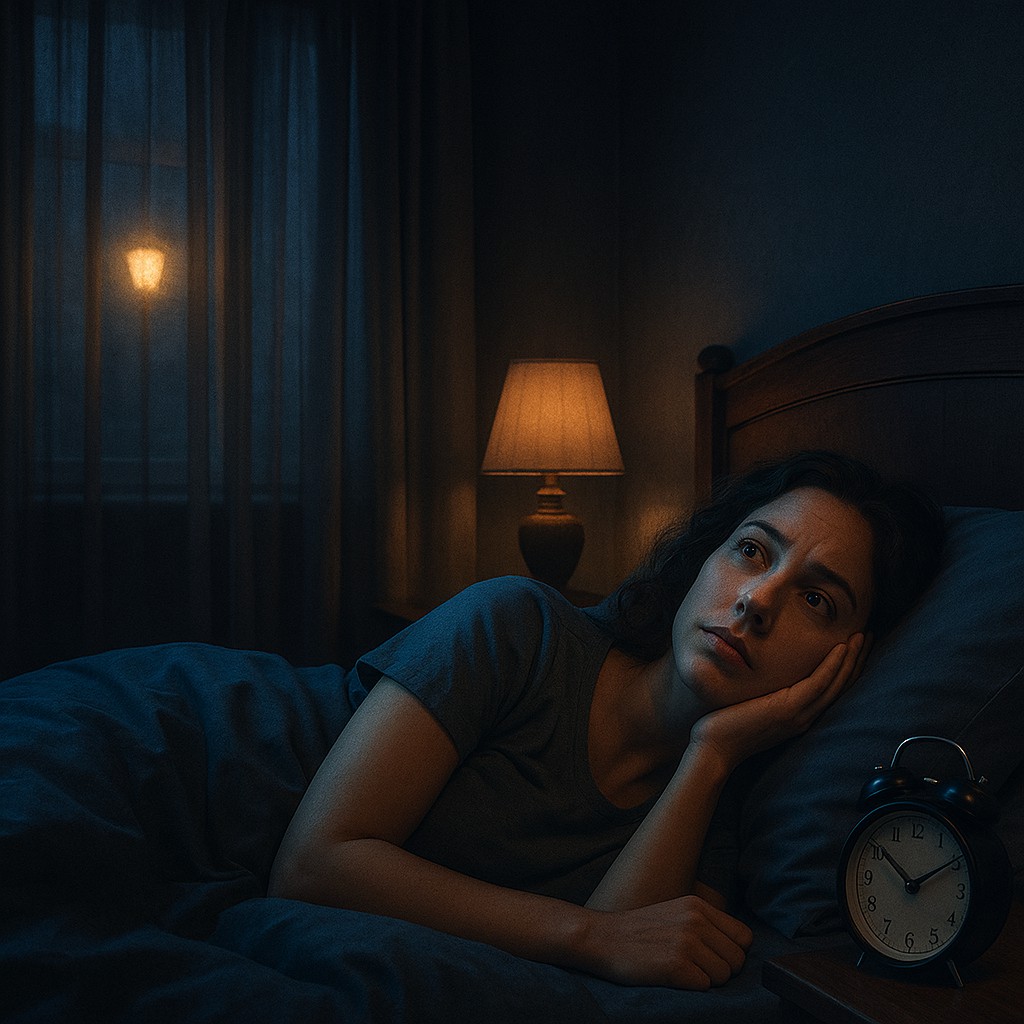
Imagine you are lying in bed at three in the morning. The house is silent, the streetlights cast a pale glow through the curtains, and your eyes are wide open. You start running through a mental checklist of everything you did wrong today: you drank that second espresso too late, you stared at your phone for five minutes before turning out the light, or perhaps you are simply failing at the basic human requirement of resting. This experience, often called middle-of-the-night insomnia, usually comes with a crushing sense of anxiety. We have been told since childhood that a healthy adult needs eight hours of continuous, unbroken sleep. Any deviation from that golden rule feels like a biological malfunction.
However, what if that midnight wakefulness isn't a glitch in your system, but a lingering echo of how humans are actually designed to live? For the vast majority of human history, the idea of sleeping in one solid eight-hour block would have seemed bizarre, or even impossible. Before the invention of the lightbulb and the rigid schedules of the factory floor, the human night looked very different. People did not just "fall asleep" and stay that way; they moved through the darkness in a rhythmic dance of rest and activity that historians now call bimodal or biphasic sleep. Understanding this forgotten rhythm can change your entire relationship with the night, transforming a period of anxiety into one of profound peace.
The Forgotten Rhythm of First and Second Sleep
To understand how we used to sleep, we have to look back at a world ruled by the rising and setting of the sun. Before the late nineteenth century, dusk meant more than just turning on a lamp; it meant a total shift in the environment. In rural and urban areas alike, people would typically go to bed shortly after the sun went down. This was not because they were exceptionally lazy, but because candles and oil lamps were expensive and often provided poor light. This initial period of rest was widely known in literature and court records as "first sleep" or "dead sleep." It was a deep, restorative slumber that usually lasted about four hours, taking the sleeper from roughly nine or ten at night until just after midnight.
What happened next is the most fascinating part of this historical puzzle. Around midnight or one in the morning, people would naturally wake up. This was not a startled or frustrated waking, but a gentle transition into a state of quiet alertness. They would stay awake for about one to two hours, a period they called the "watch." During this interval, the brain produces high levels of prolactin, a hormone associated with feelings of tranquility and peace. Far from being a nuisance, this midnight gap was a cherished time for reflection, light chores, or socializing. Once this period of wakefulness ended, people would return to their beds for "second sleep," which lasted until dawn.
This pattern was so common that it shows up in hundreds of historical documents, from the medical papers of ancient Greece to the diaries of laborers in the 1700s. Even Geoffrey Chaucer mentions "first sleep" in The Canterbury Tales, treating it as a standard fact of life that required no explanation. It was the universal human experience, a natural cadence that allowed the body to process information and rest in stages rather than in one exhausting marathon. The "eight-hour block" we strive for today is, in historical terms, a very recent and somewhat artificial invention imposed by the demands of the modern world.
How the Industrial Revolution Rewired the Night
The shift away from bimodal sleep did not happen because of a sudden biological change, but because of a massive cultural and technological overhaul. When the Industrial Revolution began to gain momentum, time became a commodity that could be bought and sold. Factories needed workers to arrive at specific times and stay for long shifts, which began to squeeze the flexibility out of the traditional day. As the concept of "time is money" took root, the two-hour midnight gap started to look like an inefficiency that the modern worker could no longer afford.
The true death knell for biphasic sleep, however, was the arrival of artificial lighting. Before gas lamps and eventually the electric lightbulb, the night belonged to the darkness. But as cities became illuminated, the night was transformed into a place for business, theater, and extra labor. Artificial light suppresses the production of melatonin, the hormone that tells our brains it is time to wind down. By pushing our bedtimes later and later into the evening, we effectively deleted the "first sleep" phase. We began to consolidate our rest into one single period simply because we were staying up later to work or socialize, and we had to wake up early to beat the factory whistle.
By the early twentieth century, the "watch" had largely vanished from Western memory. Parents began training their children to sleep through the entire night without waking, and doctors started treating midnight wakefulness as a medical condition rather than a natural occurrence. We traded the rhythmic ebb and flow of the pre-industrial night for a more "efficient" block of sleep. While this change allowed for the massive productivity of the modern era, it also gave birth to a specific kind of modern neurosis: the fear that if we wake up at three in the morning, something is profoundly wrong with our health.
Comparing the Ancestral and Modern Sleep Models
When we look at these two ways of living side by side, it becomes clear that neither is inherently "better" on its own, but they serve very different purposes. The ancestral model prioritized psychological rest and a slow connection with the natural world, while the modern model prioritizes social coordination and economic output. Below is a comparison of how these two systems function in practice.
| Feature |
Ancestral Bimodal Sleep |
Modern Monophasic Sleep |
| Structure |
Two distinct blocks (First/Second Sleep) |
One continuous eight-hour block |
| The Midnight Gap |
A productive 1-2 hour period of wakefulness |
Viewed as "maintenance insomnia" |
| Hormonal Profile |
High prolactin during the midnight gap |
Melatonin suppressed by blue light |
| Social Context |
Family time, prayer, or quiet reflection |
Late-night entertainment or overtime work |
| Relationship to Sun |
Closely tied to natural light cycles |
Separated from the sun by artificial light |
| Primary Stressor |
Physical safety and warmth |
Anxiety about being "productive" tomorrow |
This contrast highlights why so many people struggle today. We are trying to force a biological system that evolved over millennia into a rigid structure that has only existed for about 150 years. When we fail to meet the "eight-hour" standard, we experience a stress response that actually makes it harder to fall back asleep. In the bimodal system, waking up at night was an opportunity; in the modern system, it is a failure. By recognizing the historical precedent, we can begin to remove the shame and frustration that many of us feel during those quiet, dark hours.
The Secret Chemistry of the Midnight Watch
One of the most compelling reasons to reconsider our view of mid-night waking is the unique chemical state the brain enters during that time. Research into bimodal sleep, most notably a landmark study by psychiatrist Thomas Wehr in the 1990s, found that when people are deprived of artificial light for several weeks, they naturally return to the first and second sleep pattern. What was even more startling was the psychological state of the participants during the wakeful gap. They did not report feeling "tired" or "wired"; instead, they described a state of profound meditation and calm.
This calm is likely due to the hormone prolactin, which the body releases during these periods of darkness. Prolactin is the same hormone that allows birds to sit on their nests for long periods without becoming restless. In humans, it provides a sense of quiet satisfaction and mental clarity. This explains why, historically, the midnight gap was often the time when people did their most meaningful thinking or writing. It was a time when the ego was quiet, the world was still, and the mind could wander without the distractions of the day.
Many of the world's most creative and spiritual traditions have long recognized the power of this specific time. In various religious orders, the "Matins" or night prayers were held during this window because it was believed the soul was most receptive to the divine when the body was in this semi-rested, semi-awake state. When you wake up at 2:00 AM today, you are likely experiencing a shadow of this state. However, instead of leaning into the calm, we often spike our cortisol (the stress hormone) by worrying about our alarm clock. If we could learn to treat those moments as a "quiet watch" rather than an interruption, we might find that our midnight brain is actually one of our most creative and peaceful versions of ourselves.
Breaking the Cycle of Sleep Anxiety
The most practical takeaway from the history of bimodal sleep is freedom from the "eight-hour myth." While it is true that most adults need somewhere between seven and nine hours of total rest, there is no biological law stating that those hours must be consecutive. If you find yourself staring at the ceiling in the middle of the night, the best thing you can do is remind yourself that you are simply participating in an ancient human tradition. Tell yourself, "My body is finishing its first sleep, and now I am simply in the watch." This mental shift alone can lower your heart rate and make the transition back to "second sleep" much smoother.
If you cannot fall back asleep within twenty minutes, trying to force it often backfires. Instead, consider the historical examples of the midnight gap. Get out of bed, keep the lights very low (avoiding the blue light of phones or computers), and engage in a low-intensity activity. Read a physical book, fold some laundry, or simply sit with a cup of herbal tea and think. By removing the pressure to "perform" sleep, you allow your body's natural rhythms to take back the wheel. Most people find that after 45 minutes or an hour of quiet wakefulness, a wave of sleepiness naturally returns, signaling the beginning of the second sleep.
It is also important to note that bimodal sleep is not a requirement for everyone. Some people are "natural sleepers" who can easily hit a solid eight hours without a hitch. However, for the millions of people who struggle with maintenance insomnia (waking up and having trouble staying asleep), the historical context of biphasic sleep is a powerful tool for self-compassion. We are not broken machines; we are ancient organisms living in a high-tech world. Recognizing that our ancestors spent centuries enjoying the "watch" can turn a lonely night of staring at the clock into a meaningful period of peaceful solitude.
Embracing the Wisdom of the Dark
As we move forward in an increasingly 24/7 world, reclaiming the quiet beauty of our natural rhythms is a radical act of self-care. We have spent over a century trying to conquer the night, filling it with neon, data, and the relentless pressure to be "on." But the night has its own logic, one that values stillness over speed and reflection over reaction. By understanding that our bodies still carry the blueprints of our ancestors, we can stop fighting our biology and start working with it.
May you find comfort the next time you wake up in the stillness of the early morning. Instead of reaching for your phone to check the news or your email, reach for the sense of peace that your ancestors knew well. Use that time to breathe, to dream while awake, and to appreciate the unique silence of the world when everyone else is still. You aren't losing sleep; you are gaining a moment of timelessness. When you finally drift back into your second sleep, you will do so not out of exhaustion, but out of a deep sense of harmony with the long, beautiful history of human rest.