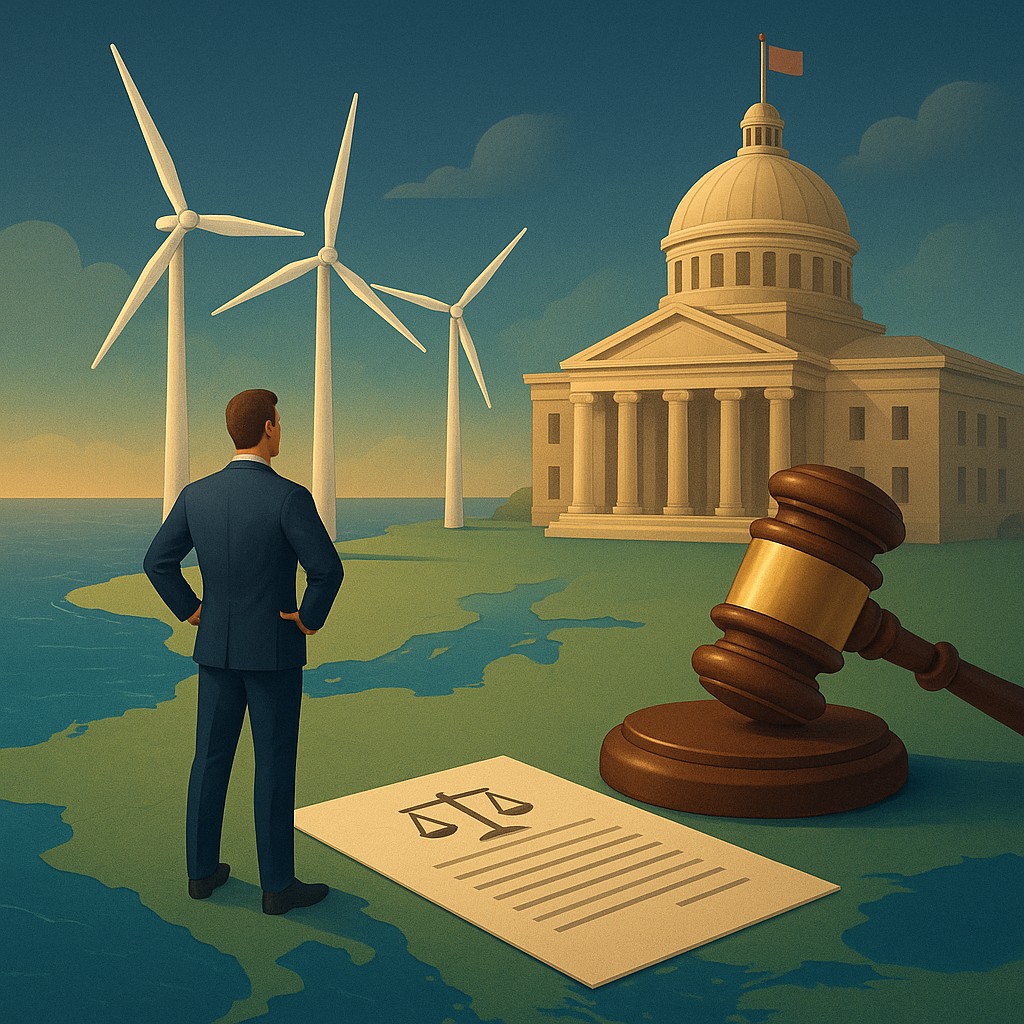
Imagine you are the CEO of an energy company worth billions. You have spent five years and $300 million building a cutting-edge wind farm in a coastal country that was desperate for green energy. You followed every rule, hired local workers, and signed every permit the government required. Then, a new political party wins a surprise election on a populist platform. Within a month, they pass a law declaring your wind farm a "public utility," effectively seizing your project without paying you a dime. If you try to fight this in the local courts, you realize the judges were appointed by the very president who just took your assets. You are essentially asking the thief to decide if the theft was legal.
This scenario is exactly why international finance relies on a powerful, invisible, and controversial legal framework known as the Bilateral Investment Treaty, or BIT. These treaties act like high-stakes insurance for global capital. They ensure that if a country wants foreign investment, it must agree to a specific set of international rules. Most importantly, these treaties include a "secret escape hatch" called Investor-State Dispute Settlement (ISDS). This mechanism allows a private corporation to bypass a country’s entire national court system and sue a sovereign government in a private international tribunal. It is a world where corporate lawyers can challenge the laws of nations, often with billions of dollars in taxpayer money on the line.
The Handshake That Binds Sovereign Nations
At its simplest level, a Bilateral Investment Treaty is a contract between two countries. It sets the ground rules for how a person or company from one country will be treated when they invest in the other. Think of it as a prenuptial agreement for global trade. Countries sign these because they want to attract foreign money. If a developing nation wants to build bridges, hospitals, or power plants, it needs the world’s big players to feel comfortable writing massive checks. Without a BIT, a foreign company might fear the government will nationalize its project or pass "nuisance laws" designed to drive them out of business once the infrastructure is finished.
These treaties generally focus on a few core promises. The first is "Fair and Equitable Treatment." This is a broad term that sounds pleasant but keeps legions of lawyers busy for decades. Essentially, it means the host country cannot change the rules of the game so drastically that the investor’s "legitimate expectations" are shattered. The second is "Protection from Expropriation," which ensures that if a government takes your property for a public reason, they must pay you the fair market value. Finally, there is the "Most Favored Nation" clause. This prevents a government from giving a better deal to a French company than it gives to a Japanese company, as long as both countries have treaties in place.
While these sound like common-sense principles of fairness, the real power lies in how they are enforced. Unlike most international treaties, which are agreements where "Country A" complains to "Country B," BITs give power directly to the corporation. If an American tech giant feels the Italian government has treated it unfairly, it doesn't have to wait for the White House to take up the case. The company can start a legal battle on its own. This shift from diplomacy between states to litigation by investors against states has changed the global landscape, turning private companies into independent power players.
The Secret Architecture of International Tribunals
When a corporation decides to sue a country, they don't head to a Supreme Court or a local judge; they go to a specialized forum. The most common is the International Centre for Settlement of Investment Disputes (ICSID) in Washington, D.C., or a similar body in The Hague. These are not traditional courts with permanent judges and mahogany benches. Instead, they are arbitration panels. Usually, the process involves three arbitrators: the company picks one, the government picks one, and both sides agree on a third person to chair the panel. These individuals are often elite international lawyers or former judges who specialize in trade law.
The unique thing about these tribunals is that they operate outside the jurisdiction of any single nation. They are not bound by the legal precedents of the country being sued, and their decisions cannot easily be appealed in a local court. This independence is intentional. The goal is to create a neutral "level playing field" so a foreign company isn't at the mercy of a biased local court. However, because these proceedings can be private and the arbitrators are paid by the hour, critics argue this creates a "shadow legal system" that lacks the transparency and accountability we expect from public courts.
The decisions made in these rooms are final and legally binding. If a tribunal rules that a country must pay a corporation $500 million, that country is under immense pressure to pay. Failing to do so would damage its international credit rating and signal to the world that it is an unsafe place to invest. This creates a fascinating power dynamic. A small developing country might find itself facing a legal bill that represents a huge chunk of its yearly healthcare budget, all because it tried to raise its minimum wage or increase taxes on a foreign mining firm.
When Public Policy Meets Private Profit
The most intense debates surrounding BITs happen when a government passes a law for the public good that happens to hurt a foreign company’s profits. Imagine a country that bans a specific chemical used in mining because new science shows it is poisoning the local water supply. If a foreign mining company invested hundreds of millions of dollars based on the "expectation" that they could use that chemical, they might sue the government for a "regulatory taking." They aren't saying the government lacks the right to protect its water; they are saying the government shouldn't make the company pay the price for that policy change.
This has led to several famous and controversial cases. For example, when Germany decided to phase out nuclear power following the Fukushima disaster, a Swedish energy company filed a multibillion-dollar claim against the German government. Similarly, when Uruguay passed strict tobacco labeling laws to discourage smoking, a major tobacco company sued, arguing the labels devalued their trademarks. In these instances, the tension is clear: how do we balance a nation’s "right to regulate" for its citizens against an investor’s right to be protected from sudden, costly changes in the law?
To understand the different views on this system, it helps to look at the arguments for and against the current BIT framework. It is rarely a simple case of "good versus evil," but rather a clash of two different priorities.
| Feature |
Pro-BIT (Economic Stability) |
Anti-BIT (Sovereign Rights) |
| Legal Certainty |
Encourages investment by ensuring rules won't change on a whim. |
Can cause "regulatory chill," where countries fear passing laws. |
| Neutrality |
Bypasses corrupt or inefficient local court systems. |
Oversteps national courts and undermines local democracy. |
| Compensation |
Ensures fair pay for seized assets or destroyed business value. |
Forces taxpayers to fund corporate profits for public health choices. |
| Enforcement |
Strong mechanisms ensure countries honor their signatures. |
No meaningful way for citizens to appeal tribunal decisions. |
Correcting Common Myths About Global Arbitration
One persistent myth is that these international tribunals are "corporate kangaroo courts" where the company always wins. In reality, the data shows a more balanced story. Governments actually win about as often as corporations do, and many cases are settled somewhere in the middle. The system is designed to be a deterrent, not just a payday. Proponents argue that the mere existence of a BIT forces a government to think twice before acting impulsively, which leads to more stable governance over time.
Another misconception is that these treaties only exist between the "rich North" and the "poor South." While early treaties were designed to protect Western companies in former colonies, the landscape has changed. Today, many developing nations sign treaties with each other. China, for instance, has become one of the most active signers of BITs as it seeks to protect its own investments in Africa and Latin America. As more countries become international investors, they begin to see the value in the very protections they once criticized.
Finally, people often believe these tribunals can "overturn" local laws. This is technically incorrect. An international tribunal cannot strike a law from the books or tell a country it must stop a certain policy. They can only order the country to pay damages. If a country wants to keep a law that violates a treaty, they can, they just have to pay for it. This is why the term "regulatory chill" is so common; a government might be afraid to pass a $10 million environmental law if they think it will trigger a $200 million lawsuit from a foreign investor.
The Future of Global Economic Rules
The world is currently at a crossroads regarding how these treaties should work. Some nations, like Australia and Brazil, have begun to push back against the traditional ISDS model. They are opting for treaties that require companies to use local courts first or that prevent companies from suing over certain public sectors like health and the environment. There is a growing movement to create a permanent "Multilateral Investment Court" with professional, full-time judges and a clear appeals process, making it look much more like the World Trade Organization (WTO) than a private meeting.
We are also seeing the "modernization" of older treaties. Modern BITs often include clear language stating that a government's pursuit of public welfare, such as public health, safety, and the environment, does not count as seizing property. This provides a "safe harbor" for governments, ensuring they won't be sued for things like raising the minimum wage or meeting climate goals. This evolution shows the international community is trying to find a middle ground where capital remains mobile, but democracy remains sovereign.
Understanding the Bilateral Investment Treaty is essential for anyone who wants to know how the modern world actually works. It is the hidden plumbing of the global economy, moving trillions of dollars through pipes made of legal clauses and arbitration rules. While the system is often criticized for its secrecy and its impact on national independence, it remains the primary way we bridge the gap between different legal cultures and economic systems.
As you go about your day, look at the projects around you. The bridge in your city, the wind turbine on the hill, or the fiber optic cables beneath your feet are often the result of this complex legal dance. You now have the knowledge to see beyond the headlines and understand the invisible contracts that hold the global marketplace together. The tension between profit and policy is permanent, but by understanding the rules, we can participate in the conversation about how those rules should change for a fairer future. Keep this in mind the next time you hear about a big international dispute, you will likely find a BIT hiding just beneath the surface.