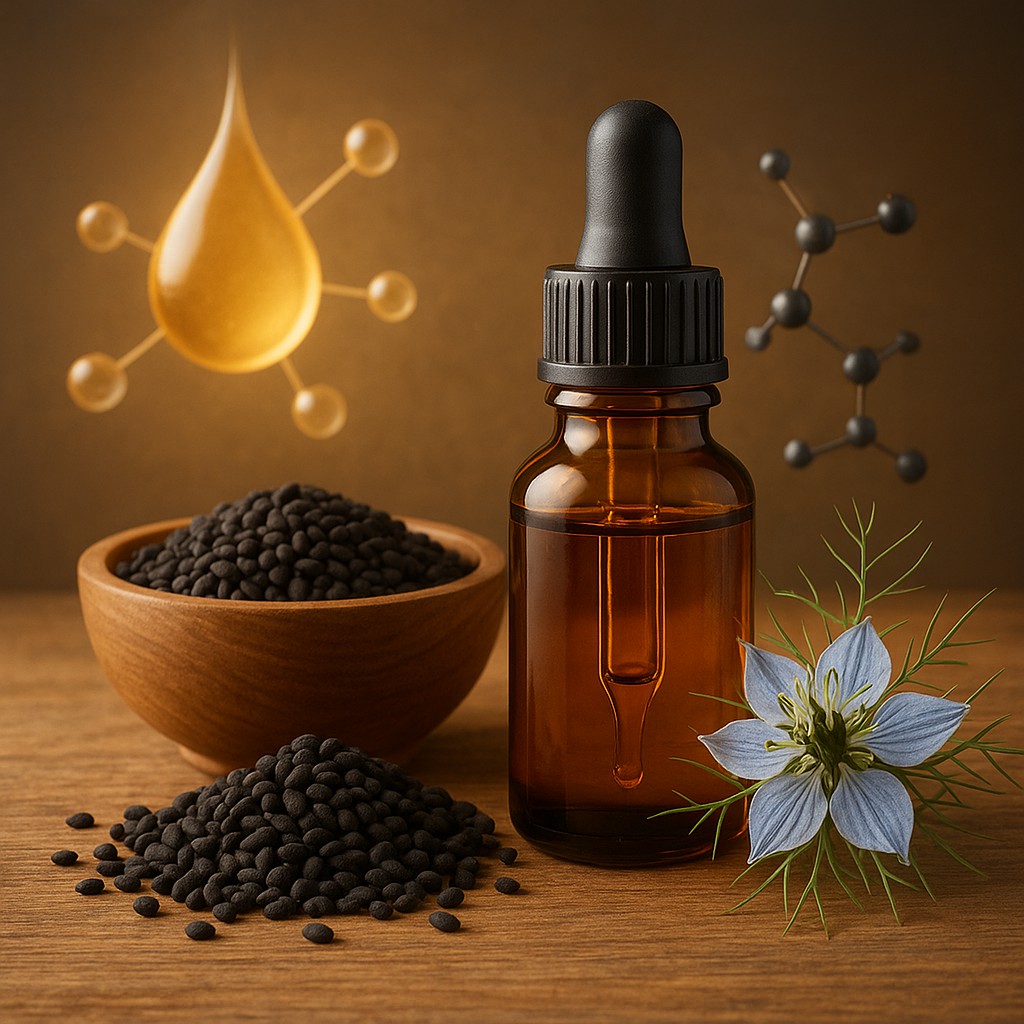
Imagine a tiny black seed, no larger than a flake of pepper, capable of traveling through millennia. It has found its way into the sarcophagi of pharaohs and the most advanced medical texts of Ancient Greece. This is black cumin, or Nigella sativa. Its oil is so packed with active compounds that it was once whispered to cure everything except death itself. While that claim sounds like something from a fantasy novel, modern science is starting to pull back the curtain on the chemistry that explains why this oil remains a cornerstone of traditional medicine worldwide.
Today, black seed oil does more than just sit on the shelves of dusty apothecary shops. It has earned a place in modern wellness routines as a natural "Swiss Army knife," capable of balancing skincare, immune support, and inflammation management. When we look into its benefits, we find that its effectiveness isn't magic; it comes from a standout molecule called thymoquinone. Understanding how this substance works with our bodies opens the door to a more holistic approach to health, where nature and biology work together to keep our vital functions running smoothly.
The Molecular Secrets of Thymoquinone
To understand why black seed oil is so special, we first have to look at its internal structure. Unlike sunflower or olive oil, it contains potent volatile essential oils, with thymoquinone acting as the lead conductor. This compound is a fierce antioxidant with a remarkable ability: it can neutralize free radicals (unstable molecules that damage cells) before they cause harm. Imagine microscopic firefighters putting out tiny fires started by stress, pollution, or a poor diet. That is exactly what thymoquinone does at a molecular level, protecting our DNA and the walls of our cells.
Beyond its antioxidant power, thymoquinone helps regulate inflammation. In a healthy body, inflammation is a temporary and necessary response to fight infection. However, when it becomes chronic, it turns into a destructive background noise linked to many modern diseases. Black seed oil helps turn down the volume. It blocks certain enzymes that trigger inflammation, which explains why it has been used for centuries to soothe joint pain and morning stiffness. It is like giving your body a biological lubricant to ease internal tension.
We also shouldn't forget the "hitchhikers" traveling in this oil: essential fatty acids like omega-3, 6, and 9, along with B-complex vitamins and vitamin E. This cocktail isn't there by accident. It ensures the body absorbs the active ingredients properly while deeply nourishing our tissues. The interaction between these nutrients creates a synergy where the whole is greater than the sum of its parts. This biochemical complexity makes black seed oil unique, allowing it to adapt to whatever the user needs, whether that is a stronger immune system or a healthier glow.
A Powerful Ally for Breathing and Immunity
One area where black seed oil truly shines is respiratory health. If you have ever felt like your lungs were a bit tight, especially during allergy season or heavy pollution, this oil could become your best friend. Studies suggest that its bronchodilator properties help relax the muscles in the airway. This makes it easier for air to move in and out, helping to soothe the wheezing or tight chest feeling often linked to mild asthma or chronic bronchitis. It is a gentle way to support standard medical treatments, offering welcome relief to tired lungs.
On the immune front, black seed oil does more than just kick-start our defenses; it educates them. It seems capable of balancing the immune response, which is vital. A lazy immune system leaves us open to viruses, while one that is too aggressive can turn against us, causing allergies or autoimmune issues. The black seed seems to "whisper" to our white blood cells, telling them to stay alert without becoming hostile. This balancing act is especially helpful for people with hay fever, as it reduces sensitivity to pollen and dust.
To make things clearer, here is a quick summary of the key compounds and what they do:
| Active Compound |
Main Function |
Felt Benefit |
| Thymoquinone |
Antioxidant and anti-inflammatory |
Less oxidative stress and pain |
| Unsaturated fatty acids |
Supports the skin barrier |
Supple, hydrated skin |
| Vitamin E |
Cell protection |
Anti-aging effect and radiance |
| Thymoquinol |
Natural antibacterial |
Better resistance to infections |
| Omega-6 (Linoleic Acid) |
Cholesterol regulation |
Improved heart health |
Revitalizing Skin and Hair
If you look in the mirror, you will see another favorite target for black seed oil. Thanks to its antibacterial and antifungal properties, it has become a top choice for problem skin. Unlike some chemical treatments that strip the skin bare, black seed oil purifies while protecting the skin's natural moisture barrier. It is particularly effective against acne because it helps control oil production while killing the bacteria that cause breakouts. For those struggling with eczema or psoriasis, its soothing touch calms itching and helps irritated tissue heal.
The scalp also benefits from this special treatment. We often forget that hair is only as healthy as its roots. When massaged in, black seed oil stimulates blood flow to the hair follicles. It contains essential nutrients that strengthen the hair fiber from the base, helping to reduce hair loss caused by stress or seasonal changes. Additionally, its ability to fight fungus makes it a powerful natural remedy for stubborn dandruff. It is a luxury treatment that is affordable and free of questionable synthetic chemicals.
However, because it is so potent, you should use it carefully on the skin. Since it is highly concentrated, people with sensitive skin often prefer to dilute it with a gentler "carrier" oil, like sweet almond or jojoba oil. This allows you to enjoy the benefits without risking temporary irritation. The goal is to harness this concentrated piece of nature so it can become a daily ally, bringing light back to dull skin and strength to tired hair.
Blood Sugar Balance and Digestive Calm
Beyond looks and breathing, black seed oil dives deep into our metabolism, specifically how we manage sugar. Research indicates that the seed may help stabilize blood glucose levels by making the body more sensitive to insulin. In a society that often consumes too many refined carbs, having a natural tool to blunt blood sugar spikes is a major advantage. While this does not replace prescribed diabetes medication, it fits perfectly into a lifestyle focused on prevention and overall metabolic health.
The digestive system, often called our "second brain," also gets a boost. Black seed oil has carminative properties, which is a fancy way of saying it helps reduce bloating and gas. It also supports liver function by helping the organ process toxins more efficiently. For those who feel heavy after meals or have an imbalanced gut, a short course of the oil can help reset the system. Its antibacterial action even helps fight off unwanted bacteria like H. pylori, which is responsible for many stomach ulcers.
It is fascinating how a simple oil can affect so many parts of our body. Whether it is protecting the heart by maintaining healthy cholesterol or easing digestive discomfort, it acts as a stabilizer. It doesn't force the body to do something against its nature; it simply provides the tools and chemical signals the body needs to repair and balance itself. This respectful approach to biology explains why its use has lasted across so many ages and cultures.
Precautions and Busting Myths
Despite its impressive resume, black seed oil is not a miracle product that works without rules. One common mistake is thinking that more is always better. In reality, this is a powerful oil that should be used in moderation. One teaspoon a day is usually enough for a wellness routine. Taking too much could irritate the liver or stomach in sensitive people. Additionally, pregnant women should avoid taking it internally as a precaution, as it can affect uterine contractions.
Another common myth involves the smell and taste. Yes, black seed oil is strong, peppery, and a bit bitter. That is actually a good sign - it means the thymoquinone is present! If you can't stand the taste, there is no need to suffer every morning; you can get capsules that provide the benefits without the bitterness. Also, make sure to choose "cold-pressed" and unfiltered oil, often labeled as Ethiopian or Egyptian black seed oil. This ensures that the fragile components weren't destroyed by heat during production.
Finally, don't listen to those who claim it can replace serious medical treatments. Black seed oil is an exceptional health partner and a life-enhancing supplement, but it should never push aside a doctor's advice. Its role is to strengthen your baseline, prepare the body to react better, and fill in preventive gaps. By weaving it intelligently into your lifestyle, you get the best of both worlds: the safety of medical oversight and the ancient richness of a time-tested natural remedy.
Bringing black seed oil into your life builds a bridge between the wisdom of the past and the high-performance demands of the modern world. It is a choice to use a product that doesn't just mask a symptom, but works deep within the foundations of your health. Whether you are an athlete looking to lower inflammation, a city dweller protecting your skin from pollution, or simply someone wanting to bolster your natural defenses, this "black gold" holds treasures waiting to be used. By taking the time to understand how it works and using it with respect, you give your body an extra chance to radiate vitality and balance.