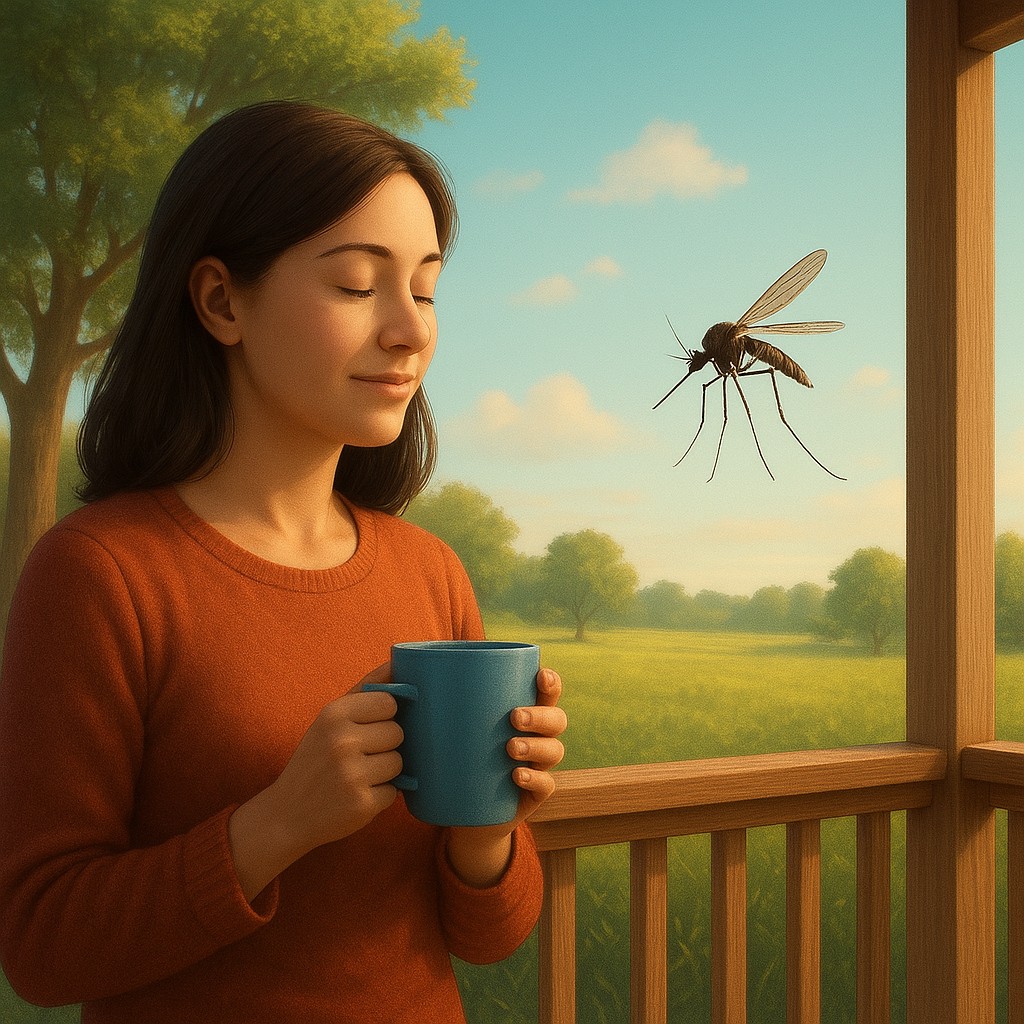
Imagine waking up on a Saturday morning and stepping onto your back porch with a cup of coffee, only to realize the air is strangely still. Usually, this is the time of day when you perform a frantic dance, slapping your ankles and waving your arms to fend off a squadron of high-pitched aerial attackers. But today, there is nothing. No buzzing in your ear, no itchy red welts blooming on your skin, and no need to douse yourself in chemicals that smell like a camping supply store. For most of us, this sounds like a utopian dream - a world where the most hated creature in human history has simply vanished into thin air.
The mosquito is more than just a nuisance; it is technically the most dangerous animal on Earth. While sharks, lions, and hippos star in terrifying documentaries, mosquitoes kill hundreds of thousands of people every year. They act as the ultimate delivery system for pathogens like malaria, dengue fever, and Zika. If they disappeared tomorrow, the immediate human reaction would be pure celebration. However, as with any major change to the planet’s biological makeup, a "Great Vanishing" would set off a chain reaction through the natural world. This shift might be far more complicated than just getting rid of itchy bites. To understand if we really want them gone, we have to look past our own discomfort and peer into the hidden gears of the ecosystem, where these tiny vampires actually carry some surprising weight.
A Massive Win for Human Health
The most obvious and staggering impact of a mosquito-free world would be the sudden shift in global health. Currently, nearly half of the world's population lives in areas at risk of malaria. Every year, hundreds of millions of people fall ill. The economic burden on developing nations is immense, trapping entire regions in cycles of poverty due to medical costs and lost labor. If the Anopheles mosquito vanished, malaria would vanish with it. We would see an almost instantaneous drop in infant mortality rates across much of Africa and Southeast Asia. The sheer scale of human suffering that would be wiped away is hard to imagine, but it would easily be the greatest public health victory in our history.
Beyond malaria, we would see the end or severe reduction of yellow fever, West Nile virus, Japanese encephalitis, and the Zika virus. Healthcare systems would no longer need to spend billions of dollars on mosquito control, bed nets, and vaccine research. In cities like Rio de Janeiro or Miami, the fear of Zika during pregnancy would evaporate. From a human-centered point of view, the mosquito is a biological villain with no redeeming qualities. We spend our lives trying to keep them out of our homes and away from our children; their absence would feel like the lifting of a permanent, global shadow.
A Hole in the Aquatic Food Chain
While humans are busy celebrating, the inhabitants of the world's wetlands, ponds, and marshes would face a catastrophic supply chain crisis. We often forget that the annoying adult mosquito is only the final stage of a complex life cycle. Mosquitoes spend their "youth" as larvae living in the water. In many stagnant pools and seasonal wetlands, these larvae exist in staggering numbers, sometimes thousands per square meter. They act as tiny biological vacuum cleaners, eating organic waste, algae, and microorganisms. In doing so, they clean the water and turn that microscopic energy into fatty, protein-rich snacks for larger creatures.
Fish, turtles, and even dragonfly larvae rely heavily on mosquito larvae as a primary food source. For many small fish, these larvae are the "steak" of the pond world. If you remove that massive amount of food overnight, the creatures that eat them will face immediate shortages. While some hunters might be able to switch their diet to other insects, many specialists could see their populations crash. This would ripple upward, affecting the larger fish that eat the smaller ones, and the birds that eat those larger fish. Removing such a foundational pillar could transform vibrant, biodiverse wetlands into ecological ghost towns.
The Secret Life of Non-Vampire Mosquitoes
One of the biggest misconceptions about mosquitoes is that they live exclusively on blood. In reality, mosquitoes actually love nectar. Only the females bite, and they only do it when they need a protein boost to produce eggs. For the rest of their lives, and for the entire lives of the males, mosquitoes survive on the sugar found in plant nectar. Because they travel from flower to flower to get their sugar fix, they are actually important pollinators. While they might not have the charming reputation of the honeybee, mosquitoes are responsible for pollinating a wide variety of plants, particularly in damp or shaded environments where other insects might not go.
In certain parts of the world, mosquitoes are the primary pollinators for specific species. For example, the blunt-leaf orchid relies heavily on mosquitoes for its survival. If mosquitoes vanished, these plants might face extinction. In the vast Arctic tundra, where mosquitoes emerge in clouds so thick they can darken the sky, they serve as a critical food source for migratory birds. These birds travel thousands of miles north specifically to feast on the seasonal explosion of insect life. Without the "Arctic mosquito swarm," many of these birds might find it impossible to raise their chicks, leading to a decline in bird populations that we would feel thousands of miles away in our own backyards.
Weighing the Toll Against the Contribution
To weigh the potential disappearance of these insects, we have to look at the trade-offs. On one side is the immense human cost of disease; on the other is the ecological stability of the planet. It is a difficult balance to measure because the "value" of a species is often subjective, depending on whether you are a doctor in a tropical clinic or a scientist studying migratory patterns.
| Area of Impact |
With Mosquitoes |
Without Mosquitoes |
| Human Health |
Over 700,000 deaths annually from various diseases. |
Huge reduction in infectious disease and child mortality. |
| Food Chains |
Essential food source for fish, birds, bats, and frogs. |
Possible collapse of specialized predator populations. |
| Pollination |
Support for many wild plants and specific orchid species. |
Potential extinction of unique plants and lower biodiversity. |
| Economic Cost |
Billions spent on healthcare and pest control. |
Huge savings in health budgets; potential rise in tourism. |
| Biomass |
Massive energy transfer from microbes to larger animals. |
Loss of an efficient energy transfer system in wetlands. |
The Empty Niche Problem
Nature hates a vacuum. One of the most dangerous things about imagining the extinction of a species is the "Empty Niche" problem. If mosquitoes were to vanish tomorrow, the ecological space they occupied - the food they ate and the role they played - would not stay empty for long. Something else would eventually move in to take their place. The terrifying question for scientists is: what would that "something else" be? Sometimes, the replacement is even worse than the original.
If the mosquito larvae that clean our water disappear, we might see an explosion of other, more resilient or toxic microorganisms. If the adult insects are replaced by a different biting fly that carries even more aggressive diseases, we might find ourselves wishing for the days of the simple mosquito. Ecology is a tangled web of checks and balances. When you snip one thread, you don't just lose that thread; you change the tension and the shape of the entire web. We have seen this happen before with invasive species, where the removal or introduction of a single creature wreaks havoc in ways no one predicted.
The Morality of Extinction
There is also a deeper, more philosophical question at play: Do we have the right to intentionally wipe a species off the face of the Earth? In recent years, scientists have developed a technology called "gene drive." This allows us to genetically modify mosquitoes so they can only produce male offspring, eventually causing a population to collapse and go extinct in a specific area. While we haven't used this to wipe out a species globally yet, the capability is becoming a reality. This has sparked a fierce debate among biologists, ethicists, and world leaders.
Supporters argue that the mosquito is a biological fluke that causes more harm than any small ecological benefit could ever justify. They point out that we have already eliminated smallpox and are on the verge of eliminating polio, so why should a "living" disease carrier be any different? Opponents, however, worry about the "unintended consequences" of our pride. They argue that we don't know enough about the millions of interactions mosquitoes have in the wild to safely remove them. They suggest that instead of total extinction, we should focus on "mosquito editing" - changing them so they can no longer carry human diseases while still allowing them to serve as fish food and pollinators.
A Lesson in Humility and Connection
The story of the mosquito is a powerful reminder that every creature, no matter how tiny or annoying, is part of a larger story. We tend to view the world through the lens of our own convenience, but nature operates on a much longer and more complex timeline. If mosquitoes were to disappear tomorrow, the world would certainly be more comfortable for a human taking a walk in the woods, but it might also be a more fragile place for the countless other species that form the foundation of our environment.
Rather than dreaming of a world without them, perhaps the better path is one of understanding. By studying the mosquito, we learn about how blood-feeding evolved, the details of how viruses spread, and the delicate balance of wetland ecosystems. We are slowly learning how to protect ourselves from the diseases they carry without needing to burn down the entire house they live in. In the end, the mosquito teaches us a lesson in humility: even the most hated creatures on the planet help hold the world together in ways we are only beginning to understand.
This journey through the world of the mosquito should leave you feeling more than just a bit grateful for your screen doors and bug spray. It should leave you with a sense of wonder at the complexity of our planet. Every buzz you hear is a tiny thread in a massive, ancient tapestry. While we should never stop fighting the diseases they bring, we can also appreciate the incredible, invisible labor they perform in the shadows of our swamps and the petals of our wild orchids. The next time you see a mosquito, you might still want to swat it - and that’s okay - but you’ll do so knowing that even this tiny, winged vampire plays a starring role in the grand theater of life.