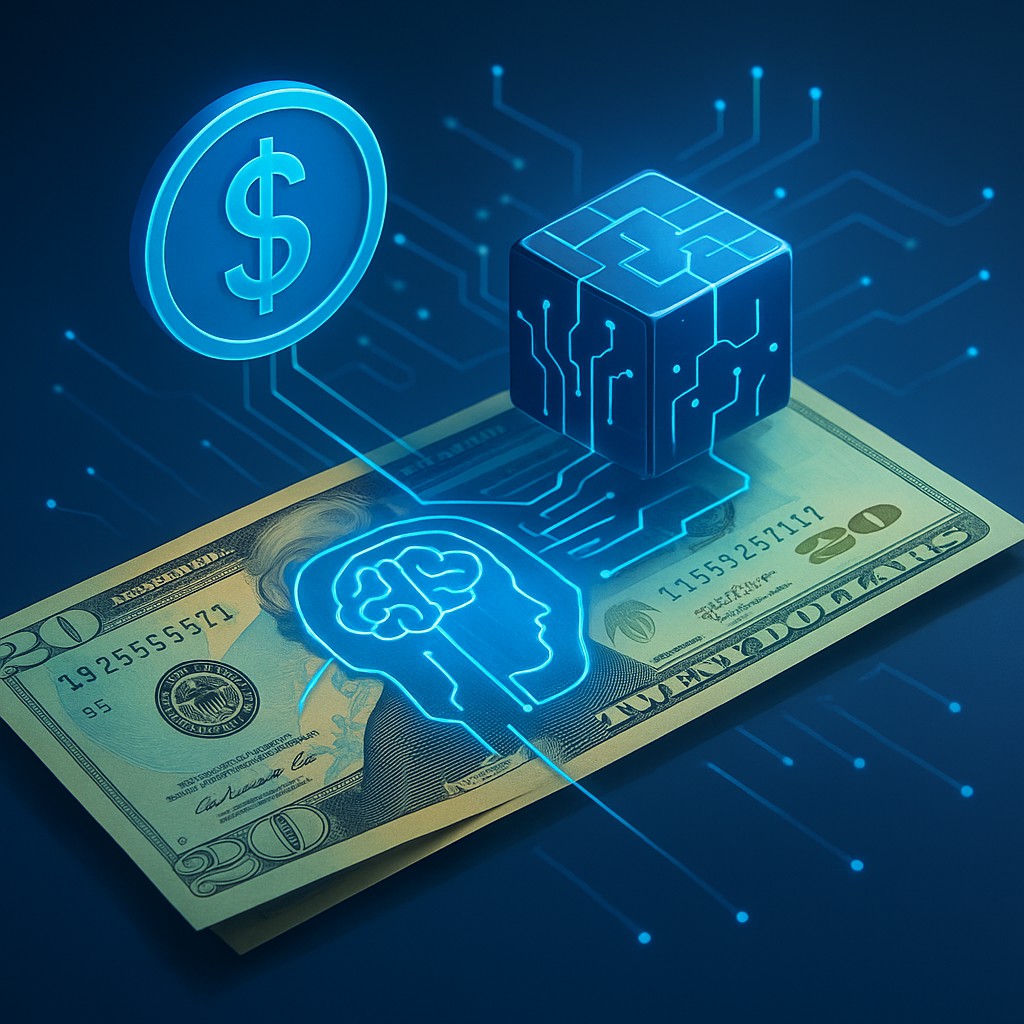
Imagine for a moment that your twenty-dollar bill had a tiny, invisible brain. Instead of being a passive piece of paper sitting in your wallet waiting for you to buy a coffee or a bus ticket, this bill knows exactly what it is for. If you try to spend it on a video game, the bill politely declines. It reminds you that it was part of a government grant specifically meant to pay your electricity bill or buy a bag of healthy groceries. This isn't a plot from a science fiction novel; it is the cutting edge of modern money. Central banks around the world are currently testing Digital Currencies (CBDCs) that go beyond simple electronic transfers and enter the world of "programmable money."
This evolution marks a major shift in how we think about the link between government policy and our cash. For decades, when a government wanted to jump-start the economy or provide disaster relief, they mailed out paper checks and hoped for the best. Some people spent the money on essentials, others put it in savings, and a few might have spent it on things the government didn't intend to support. By building "smart contracts" - or self-executing computer code - directly into the currency, authorities can make sure every cent of public funding hits its target with pinpoint accuracy. This changes money from a static way to store value into a flexible tool for social and economic goals.
The Logic Behind the Digital Coin
To understand how money can be "programmed," we have to look at how regular transactions work today. Currently, if you send money to a friend, your bank checks your balance, takes out the amount, and tells your friend's bank to add it to theirs. This is just a simple update to a digital ledger. However, programmable money adds a "logic layer" to this process. Before the ledger updates, certain rules must be met. Think of it like a digital vending machine: the machine won't give you a soda until it confirms you’ve put in enough money and pressed the right button. Programmable money applies this "if-then" logic to every transaction.
In recent central bank trials, this logic is often used to automate "conditional payments." For instance, if a city wants to provide a housing subsidy, they could issue digital tokens programmed to be valid only when sent to a registered landlord's digital wallet. If a user tries to send those tokens to an electronics store, the transaction simply fails because the code doesn't recognize the shop as a landlord. This removes the need for piles of paperwork, receipts, and manual checks, as the money itself enforces the rules at the moment of sale.
The real benefit of this system is efficiency. In traditional systems, preventing fraud or making sure funds are used correctly requires a huge bureaucracy of people checking forms and IDs. With programmable money, the code does the "policing." This doesn't just stop bad actors; it also speeds up the process for honest citizens. Instead of waiting weeks for a claim to be approved, a digital currency system could verify a person's eligibility and release the funds instantly, knowing the money can only be used for its intended purpose. It is a shift from checking for mistakes after the fact to setting up guardrails in advance.
Distinguishing Between Tools and Privacy
One of the biggest hurdles for the public is the fear that programmable money means "Big Brother" is watching every purchase. It is vital to separate the technology of programming from the rules of privacy. These are two different layers of the digital currency setup. Programmability is a functional tool, like a faucet on a sink. Privacy rules are the walls around the bathroom. You can have a very advanced faucet (programmability) without necessarily tearing down the walls (privacy).
Many central banks, including the European Central Bank and the Bank of England, are looking for ways to keep these layers separate. They are testing systems where the "logic layer" decides if a payment is allowed, while a separate "settlement layer" moves the actual funds without revealing the user's identity to the government. In these models, the government might know that someone spent fifty dollars on groceries, but they wouldn't know who that person was. The goal is a system that is transparent enough to see if a policy is working, but private enough to prevent personal surveillance.
To see how these concepts compare, look at the differences between our current electronic money and the proposed programmable digital currencies:
| Feature |
Traditional Electronic Money |
Programmable Digital Money |
| Verification |
Manual audits and paperwork |
Automated via smart contracts |
| Speed |
1 to 3 days to clear |
Transactions finish almost instantly |
| Restrictions |
Hard to enforce after payment |
Built directly into the money's logic |
| Policy Tool |
Indirect (interest rates, taxes) |
Direct (targeted stimulus and aid) |
| Fraud Risk |
High (identity theft, check fraud) |
Low (code-verified transactions) |
Smart Contracts and the End of Bureaucracy
The engine driving this change is the "smart contract." While the name sounds like a complex legal document, it is just a piece of code that says, "If Condition A happens, then do Action B." In the world of programmable money, these contracts can be very advanced. Imagine a disaster relief situation where a hurricane hits a coastal town. In the old way of doing things, residents would apply for aid, wait for an inspector, and eventually get a check. In a programmable world, the computer system could be linked to weather sensors. If a sensor records wind speeds over a certain limit, the smart contract could automatically send a payment to every digital wallet registered in that area.
This automation also works for businesses. Companies could use conditional payments to ensure suppliers are only paid when a delivery is confirmed by a GPS tracker or a digital signature at the warehouse. This gets rid of the "I'll pay you when the goods arrive" argument, because the money is already held in a digital escrow - a secure temporary account - and releases itself the moment the delivery is made. It reduces the need for middle-men, agents, and lawyers, making the entire economy move much faster.
However, we must also admit that programming money requires a lot of trust in the programmers. If the code has a glitch, or if the rules are too strict, it could stop people from buying what they need in an emergency. This is why central bank trials focus on "user-led" programming. This is the idea that the user, not just the government, should be able to set rules for their own money. You might program your own wallet to automatically put 10 percent of your paycheck into savings, or to stop yourself from spending more than fifty dollars a week on takeout pizza. In this sense, programming becomes a tool for personal discipline rather than just state control.
Practical Scenarios for a Digital Future
What does this look like in daily life? Let’s look at a few examples of the programmable advantage. Imagine a student receives a government scholarship for textbooks and tuition. Currently, the school has to verify enrollment, the student has to buy books and show receipts, and the government has to pay the student back. With programmable money, the scholarship is sent as a digital balance "locked" to the ID codes of bookstores and universities. The student walks into the shop, taps their phone, and the transaction is approved instantly because the "logic" confirms the store is a bookstore.
Consider another example: a green energy incentive. A city might want to encourage people to use public transit by offering a "commuter bonus." They could issue digital currency that only gains value or unlocks rewards when used at subway gates or bike-sharing kiosks. This creates a direct, easy link between a goal (reducing traffic) and the financial behavior of citizens. It is much more effective than a tax credit that people only see once a year; it provides an immediate benefit for making the "right" choice.
The flexibility of this technology also allows for money that has a time limit. During an economic slump, a common problem is that people "hoard" cash because they are worried about the future, which slows down the economy. A government could issue a stimulus payment programmed to lose 5 percent of its value every month if it isn't spent. This "use it or lose it" logic encourages people to spend the money at shops and businesses quickly, giving the economy the boost it needs. While this sounds radical, it is simply a digital version of an old economic concept called "demurrage," which has been discussed for over a century.
Common Myths and the Road Ahead
As with any new technology, myths tend to follow. One common misunderstanding is that programmable money will replace physical cash entirely. In reality, most central banks imagine a "hybrid" model where digital currency and physical cash exist together. Cash is an essential backup for when the power goes out or when total anonymity is needed, while digital currency provides high-tech features for a modern economy. It is about adding a new tool to the box, not throwing away the old ones.
Another myth is that once money is "programmed," it can never be changed. On the contrary, the programming is usually a secondary layer, meaning the underlying currency stays a standard unit of value. After you spend your "grocery-only" money at the store, the shop owner receives "regular" digital currency they can use to pay employees or buy more stock. The rules usually only apply to that first specific transfer, not to every person who handles the money later. The programming is like a temporary wrapper that falls away once the intended purchase is finished.
Looking ahead, the experiments happening today in labs and pilot programs will likely define our finances for the next fifty years. We are moving toward a world where money is not just a "dumb" object, but a "smart" part of our lives. It will help us stick to our budgets, make sure our taxes are used as promised, and help governments respond to crises at the speed of light rather than the speed of the mail. It is a bold new chapter in the history of trade, and understanding how it works is the first step toward mastering this digital frontier.
As we stand on the edge of this financial revolution, remember that technology is only as good as the intention behind it. Programmable money offers us a chance to build a faster, fairer economy that responds to our actual needs. It invites us to be active participants in a system where every dollar is more than just a piece of paper - it is a promise kept by code. By staying curious, you are preparing yourself for a world where your wallet is just as smart as your smartphone.