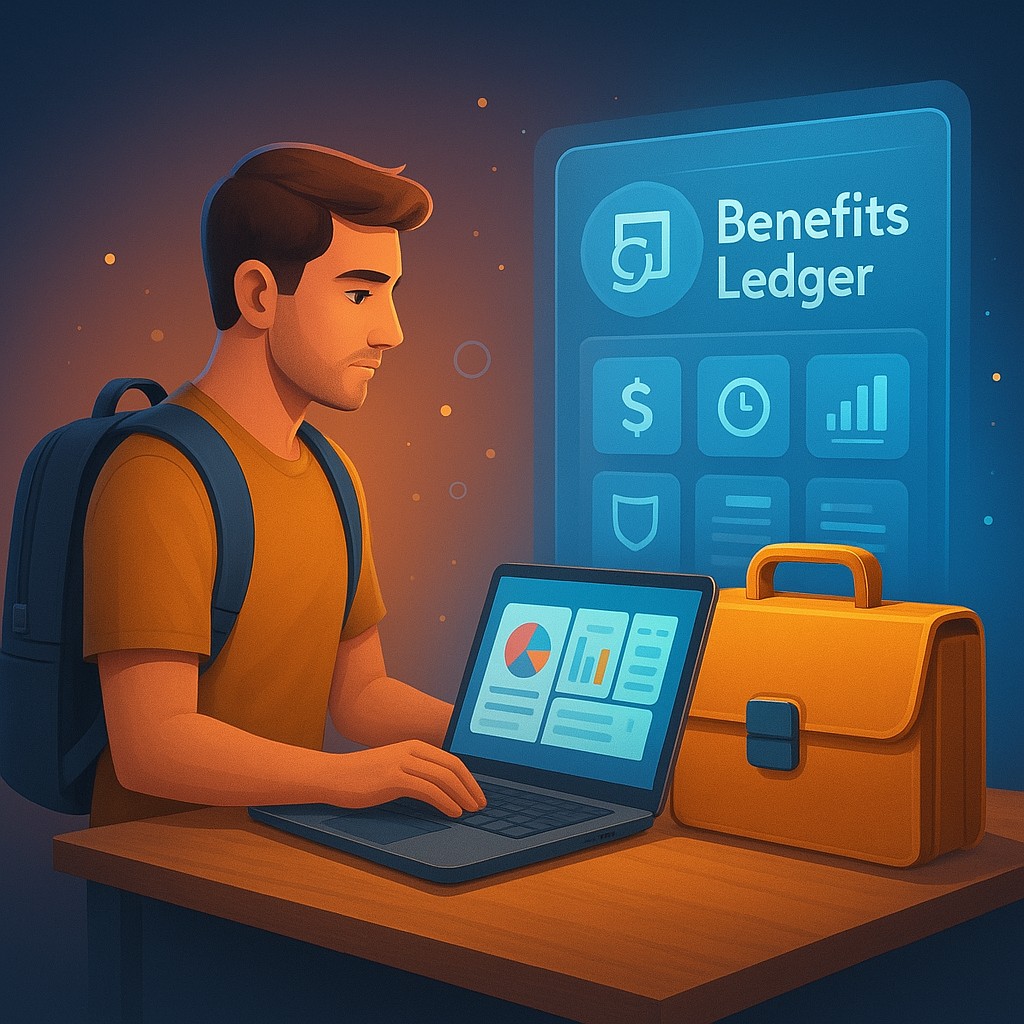
Imagine you are a digital nomad - a graphic designer by day and a rideshare driver by night - or perhaps a freelance consultant balancing five different clients across three time zones. In the old world of work, the deal was simple: you gave forty years to a single company, and in exchange, they gave you a gold watch and a steady pension. Today, that social contract has been torn up by the rise of the "gig economy," where millions of people work as independent agents. While this offers more freedom than ever before, it creates a scary financial gap. When your "employer" is an app or a series of short-term contracts, there is no HR department to set up your retirement savings or match your contributions. You are the CEO, the intern, and the pension manager all at once, which usually means the pension part never happens.
The main problem today is "benefit friction." Currently, retirement savings are tied to specific companies. If you move from Company A to Company B, you have to go through a complex ritual to move your money, or worse, you stop saving entirely because the paperwork is too much. For a gig worker who might work for ten different "employers" in a single week, the traditional model is impossible to maintain. This leads to a scattered financial life where tiny amounts of potential savings are lost across the digital landscape. However, a new wave of international trials is trying to rewrite this script using centralized digital ledgers. Instead of benefits being tied to a job, they are tied to the person. This creates a shield of financial stability that moves with the worker like a "digital backpack."
How the Portable Digital Backpack Works
At the heart of this shift is "portability." It sounds simple, but it is a logistical nightmare to pull off without the right technology. In a portable benefits system, the worker owns the account, and the platforms or clients they work for contribute to it based on how much work was done. Imagine a digital ledger - essentially a high-tech, transparent database - that recognizes your unique worker ID. When you finish a $50 delivery on one app, the system automatically takes a set percentage, like 2 percent, and sends it to your central account. An hour later, when you finish a $200 coding project for a client across the world, that same ledger triggers another contribution.
This system relies on automated clearinghouses - services that move money between banks - and Application Programming Interfaces (APIs), which allow different apps to talk to one central hub. The beauty of this approach is that it removes the need for humans to do anything. People are notoriously bad at manual saving, especially when their income goes up and down. By automating the process at the moment of payment, the system turns every small task into a tiny investment. This mirrors how large corporations handle payroll taxes but applies it to a fragmented, global workforce. It collects "fractional contributions," meaning that while a single 50-cent deposit from a sandwich delivery seems small, the ledger ensures it joins thousands of other 50-cent pieces to grow into a large sum.
Using a Ledger Instead of an HR Office
To understand how this works in real life, we have to look at the "centralized digital ledger." While the word "ledger" might make you think of dusty books in an old office, the modern version is a high-speed, verifiable record of every transaction. In these international trials, the ledger acts as a trusted middleman. It solves the trust problem: Platform A doesn't need to know who Platform B is, and the worker doesn't need to worry if Platform A will remember to send the money. The ledger records the obligation the moment the task is finished.
The technical "handshake" between the gig app and the retirement account is the secret ingredient. In many pilot programs currently being tested, such as those inspired by laws in places like Utah or Florida, the focus is on creating a "worker-owned" entity. This is a vital difference. In the traditional world, the employer "owns" the plan and runs it. In the new world, the ledger ensures the worker is the sole owner of the data and the dollars. If a delivery app goes bankrupt or a freelancer decides to stop driving and start tutoring, the ledger doesn't care. It simply keeps accepting contributions from whatever new digital source the worker connects to their "backpack."
Comparing the Old Guard and the New Wave
To see how big this shift is, it helps to compare the portable model to what we have used for the last century. The table below shows the structural differences between traditional company plans and the new portable ledger systems.
| Feature |
Traditional Retirement Plan |
Portable Digital Ledger System |
| Main Connection |
The Employer (Company-focused) |
The Individual (Worker-focused) |
| Where Money Comes From |
A single payroll department |
Many different apps and clients |
| Moving Between Jobs |
Requires a manual "rollover" |
Automatic; moves with the person |
| Workload |
Low for worker, high for company |
Low for both through automation |
| Effect of Job Loss |
Savings stop immediately |
Savings continue through any new task |
| Account Ownership |
Managed by the employer |
Owned directly by the individual |
This table shows that we are moving from a "static" model of savings to a "liquid" one. In the static model, you are building a castle in one kingdom, and if you move, you have to try to carry the heavy stones with you. In the liquid model, you are carrying a jar, and every stream you pass adds a few drops of water to it. The ledger is the jar.
Correcting Myths About the Gig Economy
There are several misunderstandings about portable benefits. The first myth is that these systems are just another tax that will lower a worker's take-home pay. While a percentage is moved aside, the "portability" element often includes contributions from the platforms themselves. In many trials, the goal is to require the hiring platform to pay a small percentage on top of the worker’s fee, mirroring the "employer match" found in corporate offices. This isn't just taking money from a worker; it is forcing the digital economy to pay for the long-term well-being of its people.
Another common myth is that this technology is only for "high-tech" workers. On the contrary, these systems are designed for the most vulnerable parts of the job market, where workers have the least power and the most irregular schedules. Whether it is a house cleaner, a courier, or a freelance journalist, the digital ledger doesn't care what the job is. As long as the payment is digital, the contribution can be captured. However, it is important to remember that these systems are tools for saving, not for raising wages. They do not fix the problem of low pay. If a worker is barely earning enough for groceries, a portable benefits system will only lead to a very well-managed, but very empty, retirement account. We must see this as a way to deliver stability, not a magic fix for poverty.
Tiny Deposits and the Power of Growth
The math behind these trials relies on "compounding" - letting your money earn interest on its interest - speeded up by very frequent deposits. In a traditional job, you might save for retirement once or twice a month through your paycheck. In a portable gig model, you might save thirty or forty times a day. Every time a task is done, a tiny deposit is sent off. While these amounts are small, the frequency allows the money to start working in the market almost instantly.
This also changes how a worker thinks. Instead of seeing retirement as a distant, giant goal that requires a big monthly sacrifice, it becomes a background process. It turns the "transactional" nature of the gig economy into a strength. In a world where work is broken into bits, savings are also broken into bits. The digital ledger then weaves these bits back together into a secure future. This "fractional" saving is like buying fractions of stocks; it makes investing possible for people who don't have $500 to spare at the end of the month but do have 50 cents to spare at the end of a ride.
A Global Laboratory for Benefits
The trials making international news are laboratories for the future of social policy. Different countries are testing who should manage these ledgers. Some suggest a government office, while others prefer a group of private companies and labor unions. The challenge is "interoperability" - making sure different systems can talk to each other. If a worker moves from a project in the United Kingdom to a contract in Singapore, can the "backpack" handle different currencies and tax laws?
This is where the digital ledger becomes a tool for diplomacy as well as finance. By using standard rules, these systems could eventually lead to "transnational portability," where a global citizen can build a retirement fund that doesn't care about borders any more than the internet does. We are seeing the early stages of a global "safety net as a service," where social security is no longer tied to a specific country or a giant corporation. It is a total redesign of how we protect people in a world that is fast, fluid, and freelance-driven.
Securing the Future One Byte at a Time
Looking ahead, the success of these trials will determine if the gig economy becomes a sustainable career or a trap of permanent insecurity. The shift from company-managed pensions to individual stability is a massive change in the history of labor. It admits that the way we work has changed forever and that our financial systems must change too. We can no longer expect one company to catch us if we fall; instead, we must build the nets ourselves, strand by strand, through every digital task we do.
The digital ledger is more than just a database; it is a promise of stability in a changing world. It recognizes that while the "job" might be temporary, the "worker" is permanent. By using technology to automate the boring and complex parts of saving, we can ensure that the freedom of the gig economy doesn't come at the cost of the worker's future. You are no longer just working for a fee today; you are building a legacy, one tiny contribution at a time, ensuring that when the apps eventually go dark, your financial lights stay on.