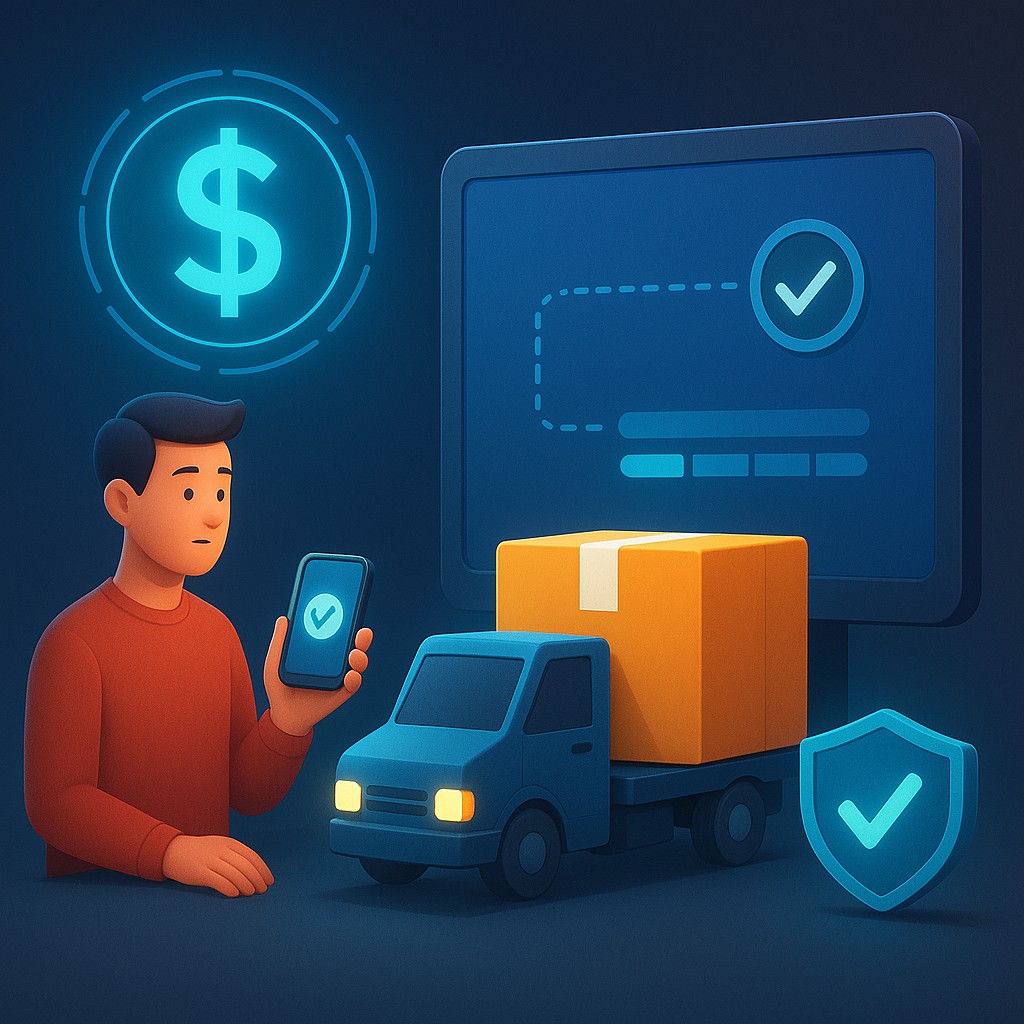
Imagine you are waiting for a package to arrive. In the world as we know it, you pay upfront and then sit by the window, hoping the driver actually shows up and that the box doesn't just contain a brick. On the other side, the seller sends the item and crosses their fingers, hoping your credit card payment isn't declined or reversed. We usually solve this tension by hiring expensive middlemen, like banks or escrow services, to hold the money in a "waiting room" until everyone is satisfied. But what if the money itself was smart enough to know when the job was finished? What if your currency had its own logic, waiting patiently in a digital limbo until a verified delivery signature was scanned, then instantly jumping into the seller's account without a human ever having to hit a "release" button?
This is the heart of the revolution happening with Central Bank Digital Currencies, or CBDCs. While the term "programmable payments" might sound like something from a dense computer science textbook, it is actually a simple and elegant way to make the financial world less of a headache. Governments around the globe are currently testing ways to weave "if-then" logic directly into the digital fabric of national currencies like the Dollar, Euro, or Yen. By using decentralized protocols - essentially shared digital rulebooks that everyone can trust but no one can rig - we are moving toward a future where money transfers aren't just messages sent between banks, but automated actions triggered by real-world events.
The Secret Sauce of "If-Then" Finance
To understand how a central bank can make money "smart," we have to look at something called a smart contract. Despite the name, these aren't traditional legal documents filled with confusing "heretofore" legalese. Instead, they are small bits of computer code that live on a digital ledger. Think of them like a digital vending machine. In a traditional store, you give a person money and they decide whether to hand you a soda. In a vending machine, the "contract" is built into the hardware: IF you provide two dollars AND you press the button for a lime seltzer, THEN the machine must release the can. The machine cannot change its mind or decide it doesn't like your shoes.
When we apply this to CBDCs, the "vending machine" becomes the entire payment network. Current trials are testing systems where a payment is authorized but not completed until a specific data point, often called an "oracle," sends a signal. For example, a government might want to send an emergency grant to a small business, but only if that business can prove it has kept its staff on the payroll. Instead of the owner filling out twenty forms and waiting months for a clerk to review them, a smart contract could monitor payroll data and release the funds the second the requirements are met. It is the ultimate "set it and forget it" tool for the global economy.
Separating the Logic from the Liberty
One of the biggest points of confusion in these talks is the difference between "programmable money" and "programmable payments." It is a subtle distinction, but it is the difference between a helpful financial assistant and a restrictive digital parent. People often worry about programmable money because it refers to currency with built-in rules about how the owner is allowed to spend it. For instance, imagine a digital dollar that can only be spent on groceries. While that might have specific policy uses, it understandably makes people feel that their financial freedom is being limited.
Programmable payments, however, are about the delivery mechanism rather than the owner's choice. This technology focuses on the plumbing of the financial system. It is about automating a transfer so that it happens more efficiently once a contract is fulfilled. If you hire a contractor to fix your roof, you aren't being restricted when the payment is set to release only after a successful inspection; you are actually being protected. You are ensuring that your money only moves when the work is done. This distinction is vital because recent central bank trials are primarily focused on this "plumbing," aiming to remove the friction, fees, and delays that slow down international trade and government services.
| Feature |
Traditional Electronic Payments |
Programmable Payments (CBDC) |
| Settlement Speed |
Can take days to "clear" and "settle." |
Nearly instant once conditions are met. |
| Middlemen |
Requires escrow services or clearing houses. |
Uses digital code to automate trust. |
| Reliability |
Prone to human error or manual delays. |
Works exactly as written in the code. |
| Complexity |
High overhead for conditional transfers. |
Low overhead; logic is built into the system. |
| Cost |
High fees for specialized payment types. |
Lower costs by removing intermediaries. |
An Efficiency Engine for Government and Industry
The potential for these automated systems goes far beyond buying gadgets online. Consider the massive world of international shipping. Right now, when a giant container ship arrives at a port, a mountain of paperwork has to move between banks, insurers, shipping companies, and customs officials before the goods are released and the money is paid. This process is slow, expensive, and filled with chances for someone to lose a stamp or mistype a number. With a programmable CBDC, the system could be linked to the ship's GPS and digital records. As soon as the ship crosses a specific digital boundary at the harbor and the customs office uploads a "pass" notification, the payment could trigger automatically across borders.
In the public sector, the "leakage" of funds is a major concern. When money is set aside for a specific purpose, such as a local environmental cleanup, it often passes through several layers of administration. At each step, there is a risk that the money will be diverted, delayed, or used for something else. A programmable payment allows the central bank to "tag" the funds for a specific use. The money isn't restricted in a way that hurts the person receiving it, but it ensures that the payment only unlocks for authorized vendors. This creates a transparent trail of accountability that would make any auditor happy.
Bridging the Trust Gap
In the legal world, professionals talk about "counterparty risk." This is just a fancy way of saying "the risk that the person on the other side of the deal won't do what they promised." For centuries, we have dealt with this risk by creating huge institutions like banks to act as the "middlemen of trust." You trust the bank, I trust the bank, so we can do business together. But banks are run by humans; they have business hours, they charge fees, and they occasionally make mistakes. Programmable payments replace this "institutional trust" with "mathematical trust."
By using decentralized protocols, the rules of the payment are written into the digital ledger itself. This means that even if two people have never met and don't particularly like each other, they can trade with complete confidence. The code is the final word. If the condition is met, the money moves. If it isn't, the money stays put. Removing the middleman doesn't just make things faster; it makes finance more accessible. Small businesses that couldn't afford the high fees of an official escrow service can now use the same secure, conditional payments that used to be reserved for multi-million dollar corporate deals.
The Future of the Digital Wallet
Looking ahead, we can see a world where our digital wallets are much more than just a place to store cash. They will become personal financial managers that act on our behalf according to rules we set. Imagine your car automatically paying for its own tolls, parking, and electricity, but only after it verifies the service was actually provided. Or imagine insurance claims being paid out the moment a verified weather sensor confirms your home was hit by a flood, rather than having to spend months fighting with an adjuster. The money waits for the event, and then it acts.
This shift represents a move from "reactive finance," where we have to manually push money around, to "proactive finance," where money flows through the economy like water through a smart irrigation system. Central banks are moving carefully to ensure these systems are stable and secure, but the direction is clear. We are moving toward a more fluid, automated, and honest financial system where "the check is in the mail" finally becomes a thing of the past.
As you navigate this changing landscape, remember that technology is rarely just about the gadgets; it is about the friction it removes from our lives. The rise of programmable payments is a sign that our financial tools are finally catching up to the speed and intelligence of the rest of our digital world. While there is still work to do on regulations and technical hurdles, the "smart money" is literally on its way. We are at the start of a transformation that will make the economy more transparent and efficient for everyone, turning "financial logic" into a practical tool you can use every day.