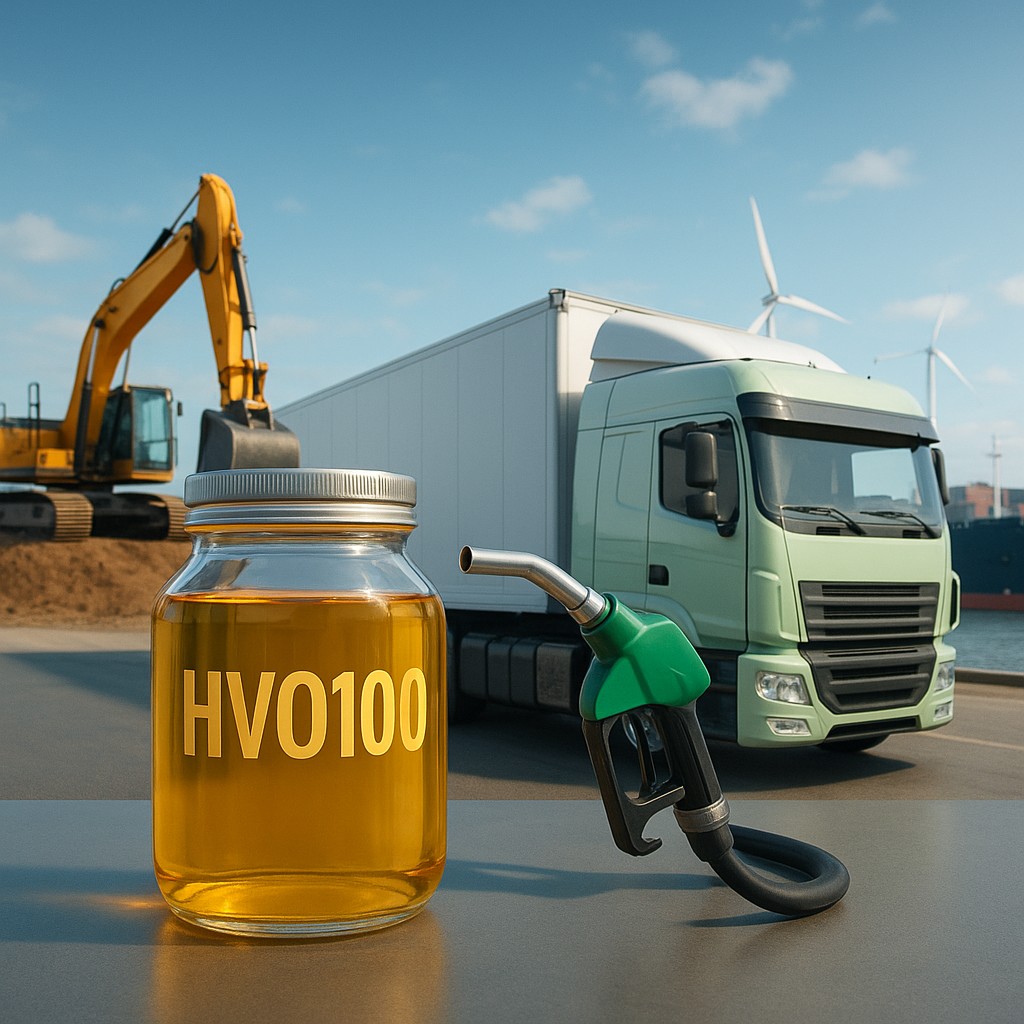
Imagine for a moment that switching to a sustainable future didn't require us to scrap every piece of machinery we already own. For over a decade, the conversation about green transport has been dominated by images of sleek electric cars and massive battery factories. While electricity is a vital part of the solution, it poses a massive logistical challenge for the world’s heavy lifting. Huge cargo ships, massive excavators, and long-haul trucking fleets cannot easily swap an engine for a battery without losing immense amounts of cargo space or stopping to charge for days at a time. The world is full of high-performance diesel engines built to last for decades, and throwing them all away seems like a monumental waste of resources.
What if the answer wasn't changing the machine, but reimagining the liquid flowing through its veins? We have experimented with biofuels for a long time, but early versions often felt like a compromise. They clogged filters and required special engine tuning to work properly. However, a quiet revolution in fuel standards is bringing a new player to the stage: Hydrotreated Vegetable Oil, or HVO100. This is not the "french fry grease" of the early 2000s that smelled like a fast-food kitchen and required a backyard chemistry kit. It is a sophisticated, high-tech synthetic fuel that behaves so much like standard diesel that your engine might not even realize it has switched to a carbon-neutral alternative.
The Chemistry of a Clean Break
To understand why HVO100 is different from older biodiesels, we have to look at the molecules. Traditional biodiesel, often called FAME (Fatty Acid Methyl Esters), is made through a process called transesterification. While this creates a fuel that works, the resulting liquid contains oxygen atoms. Oxygen in fuel is a bit like a ticking time bomb for an engine; it attracts water, encourages bacteria to grow in the tank, and causes the fuel to "gel" or turn into a waxy sludge when the weather gets cold. This is why most manufacturers limit old-school biodiesel blends to just 7 or 20 percent of the total tank.
HVO100 takes a completely different path through a process called hydrotreatment. Instead of simply mixing fats with alcohol, producers take waste oils, such as used cooking oil, animal fats, or vegetable oils, and blast them with high-pressure hydrogen. This chemical treatment strips away every single oxygen atom, leaving behind a pure chain of hydrogen and carbon. The result is a "paraffinic" fuel that is chemically almost identical to high-quality fossil diesel. Because the oxygen is gone, the fuel is stable, resists water, and can sit in a tank for years without spoiling. It is a "drop-in" fuel, meaning it meets strict international quality standards (EN 15940), allowing it to be used at 100 percent concentration in many modern engines without any mechanical changes.
From Waste to Power
The magic of HVO100 is how it turns a circular economy into the physical circular motion of a piston. The raw materials used to make this fuel are remarkably diverse, focusing on things that would otherwise be environmental waste. By processing "tall oil" (a byproduct of paper making), industrial corn oil, and food industry leftovers, producers can create a fuel that reduces total greenhouse gas emissions by as much as 90 percent. This calculation covers the entire journey, from collecting the waste to the final exhaust. It transforms the concept of "exhaust" from simple pollution into a manageable part of the carbon cycle.
Beyond the climate benefits, HVO100 significantly improves local air quality. Because the fuel is synthetic and highly refined, it lacks the sulfur and "aromatics" (heavy chemical compounds) found in crude oil. When it burns, it does so more completely. This leads to a massive reduction in particulate matter, which is the "soot" often seen coming from older diesel trucks. It also lowers nitrogen oxide (NOx) emissions in many engines. For someone living in a city, this means a bus running on HVO100 is not just better for the planet, but also much better for the lungs of the people standing on the sidewalk.
| Feature |
Conventional Fossil Diesel |
Traditional Biodiesel (FAME) |
HVO100 Renewable Diesel |
| Source |
Crude Oil (Fossil) |
Vegetable Oils and Fats |
Waste Fats/Oils + Hydrogen |
| Chemical Structure |
Complex Hydrocarbons |
Esters (contains oxygen) |
Pure Paraffinic Hydrocarbons |
| Cold Weather Performance |
Good |
Poor (prone to gelling) |
Excellent (customizable) |
| Storage Life |
High |
Low (spoils quickly) |
Very High |
| CO2 Reduction |
Baseline |
Moderately High |
Up to 90% |
| Engine Modification |
None Required |
Minor to None |
None Required |
Overcoming the Reputation of Old Biofuels
One of the biggest hurdles for HVO100 isn't technical, it's psychological. Many fleet managers and car owners remember the early days of biofuels, when "B100" (pure traditional biodiesel) caused fuel injectors to jam and engines to stall in the winter. Those skeptics are right to be cautious, as those old fuels were fundamentally different from what engines were designed to handle. However, HVO100 is effectively a synthetic twin of diesel rather than a biological cousin. It has a higher "cetane number" (a measure of ignition quality) than fossil diesel, which actually makes the engine run more quietly and start more easily in freezing temperatures.
Another common myth is that renewable diesel is just a "bridge" technology that will be useless in five years. In reality, the logistics of global shipping and heavy industry suggest that high-energy liquid fuels will be necessary for decades. Even if every passenger car became electric tomorrow, we would still need a way to power the massive cargo ships that cross the oceans or the heavy machinery that builds our roads. HVO100 provides a way to clean up these "hard to electrify" sectors immediately, using the pipelines and gas stations we already have. It turns the massive investment in our current machines into a platform for a greener future.
Balancing Supply and Demand
If HVO100 is better than fossil diesel and works in existing engines, you might wonder why it isn't at every corner gas station yet. The main problem is production capacity. While we produce a lot of waste fats and oils, the total amount is still small compared to the billions of gallons of oil the world burns every day. Currently, HVO100 is often reserved for sectors that are hardest to change, like aviation (where it is called Sustainable Aviation Fuel, or SAF) and heavy-duty shipping. Scaling up requires massive investment in specialized refineries.
There is also the cost. Because the process uses high-pressure hydrogen and expensive catalysts, HVO100 is usually more expensive to produce than pumping oil out of the ground. This makes it reliant on government incentives to close the price gap. Recent updates to international laws, such as the Renewable Fuel Standard in the U.S. and various European Union rules, are designed to create a stable market. As more refineries open and the technology improves, the "green extra cost" is expected to shrink. For now, it remains a premium product for those committed to cutting carbon without buying a whole new fleet of vehicles.
The Strategy for an Incremental Revolution
Adopting HVO100 represents a shift in how we think about environmental progress. Sometimes, the most effective revolution is the one you can't see from the outside. By focusing on "drop-in" solutions, we can achieve massive emission cuts in months rather than waiting decades for every vehicle on earth to be replaced. It allows a construction company to keep its reliable bulldozers while cutting its carbon footprint overnight. It allows a classic diesel car enthusiast to keep a piece of history on the road without the guilt of old-fashioned pollution. It is a practical, science-first approach to a problem that usually demands expensive and radical disruption.
This shift also highlights the importance of a "chemistry-first" mindset. Instead of forcing a machine to act differently, we are refining the fuel to meet the machine's needs even better than the original fossil fuel did. This balance of engineering and ecology suggests that the future of transport isn't just about batteries and wires, but also about reimagining the molecules we move through our world. As production grows and more manufacturers officially approve their engines for HVO100, the silent hum of a clean diesel engine might become one of the most important sounds in the fight against climate change.
The journey toward a sustainable planet is rarely a straight line. It is often a complex web of improvements where the best solutions meet us exactly where we are. By understanding that our existing tools can be used for a cleaner tomorrow, we gain the power to act now. HVO100 reminds us that innovation doesn't always have to look like a futuristic spaceship; sometimes, it looks like a familiar truck, running on a familiar engine, fueled by second chances and better chemistry. When we look at the challenges ahead, there is something inspiring about the idea that yesterday's waste can become tomorrow's momentum.