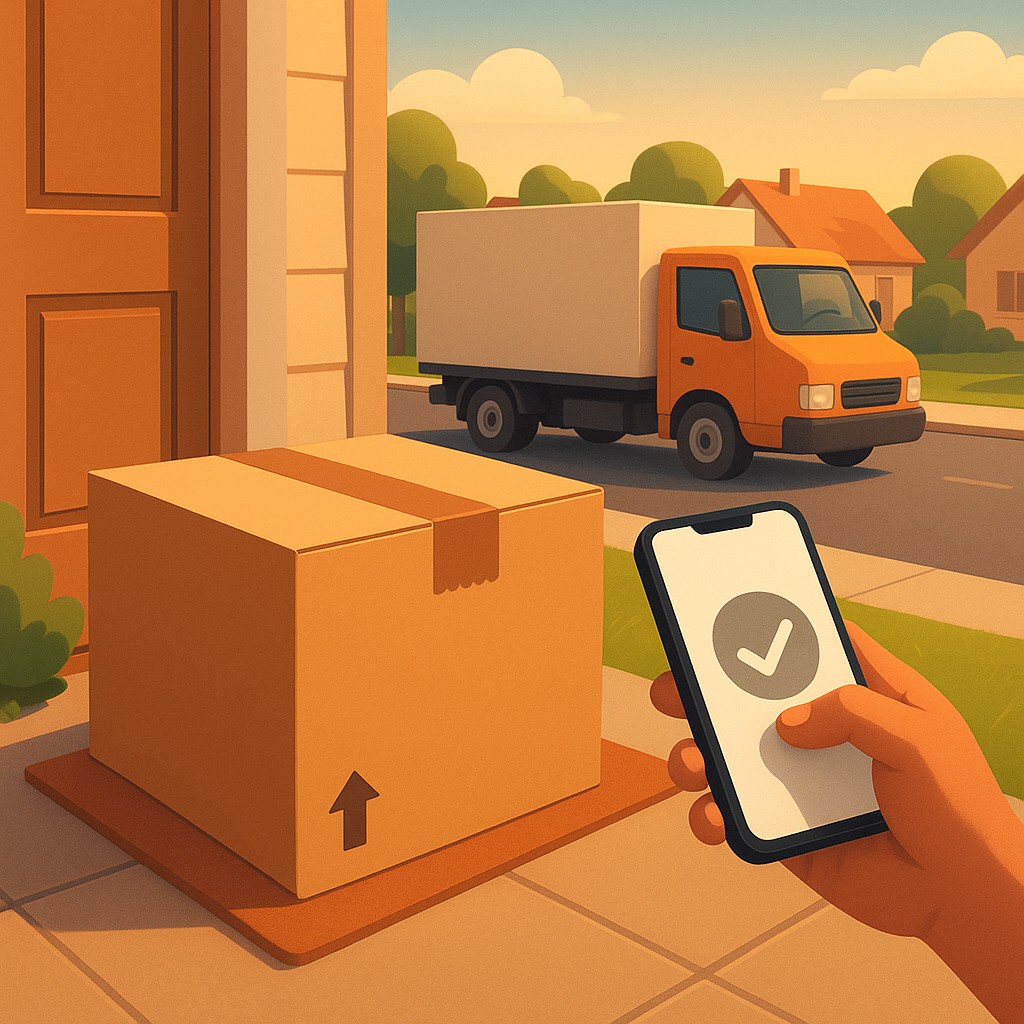
Imagine walking through your front door after a long day, realizing you’re out of high-grade coffee beans, and quickly placing an order on your phone. Before you have even finished washing your hands, a delivery truck pulls up to the curb with the exact bag you just bought. It feels like a glitch in the simulation or perhaps a very polite neighborhood stalker. In reality, it is the result of a massive shift in how the world’s largest retailers think about time and space. For decades, the supply chain has been a reactive beast, sitting quietly in a warehouse until a customer clicks a button and triggers a frantic scramble to pick, pack, and label the item.
Today, that model is being turned inside out. Logistics giants are no longer waiting for you to make up your mind. By analyzing mountain ranges of data - from local weather patterns to the collective browsing habits of your specific neighborhood - companies are engaging in "speculative shipping." They move products toward your local regional hub or a delivery van in your zip code before you ever add them to your cart. This marks the transition from a "pull" economy, where your order pulls the product from the shelf, to a "push" economy, where the product is pushed toward you because there is a high probability you will eventually want it.
The Mathematical Bet Behind the Box
At the heart of this logistical magic is a calculated risk. In the traditional world of retail, shipping an item that hasn't been sold is considered a cardinal sin. It leads to "dead freight," the cost of moving goods that don't earn money, and the potential expense of returning the item if it never sells. However, the math of modern e-commerce has shifted. Big-box retailers have realized that the cost of shipping an item back to a central warehouse is actually much lower than the cost of losing a customer to a competitor who can deliver faster. If a customer sees a "delivery by 5:00 PM" notice, they are far more likely to buy than if they see "delivery in 3 to 5 business days."
Anticipatory shipping turns the delivery process into a game of poker where the house has a very good idea of what cards you are holding. Instead of trying to predict what one specific person will buy - which is notoriously difficult and raises privacy concerns - algorithms focus on collective demand. If local data shows that a specific neighborhood in Seattle buys 20% more umbrellas whenever the forecast predicts three straight days of rain, the company doesn't wait for the storm to start. They fly a crate of umbrellas to the nearest distribution center while the sun is still shining, betting that the shared "need" will appear within forty-eight hours.
This strategy relies on "probabilistic inventory." Instead of a simple "sold or unsold" status, items exist in a state of likely sale. By shortening the physical distance between the product and the consumer, the retailer gains a massive advantage in the one currency that matters most in the digital age: convenience. The warehouse is no longer a static building in the middle of a desert; it is a fluid, moving network of trucks and local hubs that constantly shift to match the heartbeat of the city.
Moving Beyond the Individual Crystal Ball
A common misconception about this technology is that a rogue AI is watching your every keystroke to figure out that you, specifically, are about to buy a leopard-print toaster cover. While individual tracking exists, anticipatory shipping is much more about the "wisdom of the zip code." Retailers look at the high-level behavior of thousands of people to predict the small-scale needs of a local area. If a new video game console launches and three people on your street have already bought it, the algorithm assumes more people nearby will likely order controllers or extra cables within the week.
The data points used to fuel these predictions are often surprising. Companies might look at social media trends to see which toys are going viral, check local real estate data to see if a neighborhood has many new homeowners who will need lawnmowers, or even monitor flu outbreaks to stock up on tissues and medicine in specific regions. By combining these signals, they create a "heat map" of demand. The goal is to ensure the inventory is already sitting in a van or a local sorting facility by the time you realize you need it.
To understand how this differs from the old way of doing business, it helps to compare the two methods directly. The shift from reactive to proactive logistics changes every part of the business, from how warehouses are built to how delivery drivers are managed.
| Feature |
Reactive Shipping (Traditional) |
Anticipatory Shipping (Modern) |
| Trigger Event |
Customer completes checkout. |
Algorithms identify high-probability demand. |
| Stock Location |
Kept in large, distant warehouses. |
Kept in local hubs or mobile vans. |
| Primary Goal |
Minimize storage and shipping costs. |
Maximize delivery speed and loyalty. |
| Data Usage |
Past sales records and basic inventory. |
Real-time browsing, trends, and geography. |
| Risk Factor |
Lost sales due to slow transit times. |
Costs of returning unsold "speculative" items. |
The Logistics of the Last Mile
The most expensive and difficult part of any delivery is the "last mile," the final stretch of the journey from a local hub to your front door. This is where traffic jams, confusing apartment numbers, and "Beware of Dog" signs live. By using anticipatory shipping, companies are effectively clear the first 99 miles in advance so they can focus all their energy on that final sprint. This involves a heavy reliance on regionalization, the practice of breaking down a national delivery network into smaller, self-sustaining pockets.
In a regionalized network, the company tries to ensure that the item you want is already within 50 miles of your house. If they can achieve this, the delivery doesn't require a plane or a long-haul semi-truck; it just requires a small electric van or even a bike courier. This not only makes the delivery faster but also significantly reduces the carbon footprint per package, as the most fuel-heavy parts of the shipping process are bypassed. It turns the retail giant into a series of interconnected neighborhood shops, hidden behind a website interface.
Interestingly, this model also allows companies to be more flexible with pricing. If a retailer realizes they have "speculatively shipped" too many air conditioners to a city having a cold summer, the algorithm can trigger a local flash sale or a "recommended for you" discount for users in that area. This allows the company to clear the inventory without paying to ship it back to a main hub. The inventory becomes a living thing, adjusting its price and location in real time to find the fastest path to a customer.
Handling the Risks of Getting It Wrong
No algorithm is perfect, and the biggest hurdle for anticipatory shipping is the "oops" factor. What happens when a company ships five thousand high-end espresso machines to a town that suddenly decides it prefers tea? In the early days, the fear was that the cost of returns would bankrupt the system. However, modern logistics companies have become masters of the "re-route." If an item is on its way to a hub where demand has cooled, the system can often re-label the package mid-journey and send it to a different hub where demand is still high.
There is also the creative solution of "abandonment." In some cases, if a speculatively shipped item has low value and cannot be easily sold nearby, it might actually be cheaper for the company to donate it or sell it to a local liquidator than to ship it back to a central hub. This sounds wasteful, but when compared to the massive efficiency gains across the rest of the network, it is often viewed as a "shrinkage" cost - similar to what grocery stores pay for produce that goes bad. The precision of AI is reaching a point where these errors are becoming the exception rather than the rule.
Finally, there is the human element. For delivery drivers and warehouse workers, this shift means moving toward more consistent, though still intense, workloads. Instead of a massive spike in activity during the holidays followed by a dead quiet January, predictive data allows for a "smoothing" of the supply chain. By moving stock early during off-peak hours, companies avoid the chaotic bottlenecks that used to define the retail world. It is a more regulated, rhythmic way of moving goods around the planet, dictated by the silent hum of servers predicting our next move.
Embracing the Future of Instant Fulfillment
As we move deeper into this era of predictive commerce, the line between "shopping" and "having things appear" will continue to blur. We are moving toward a world where the supply chain acts as a vast, invisible utility, like water or electricity. You dont think about where your water comes from when you turn on the tap; you simply expect it to be there. In the same way, anticipatory shipping works to make products available at the exact moment the desire for them arises, effectively erasing the friction of geography and time.
This evolution encourages us to think differently about our habits and our environment. It shows us that we are part of a larger ecosystem of data and movement, where our collective choices shape the flow of goods across the globe. By understanding the mechanics of how that package arrived so quickly, we can better appreciate the staggering amount of coordination and intelligence required to make the modern world run. The next time a package arrives before you’ve even had time to check your tracking number, remember that you aren't just a customer; you are a data point in a complex dance of probability and speed. The future isn't just coming; it's already being shipped to your door.