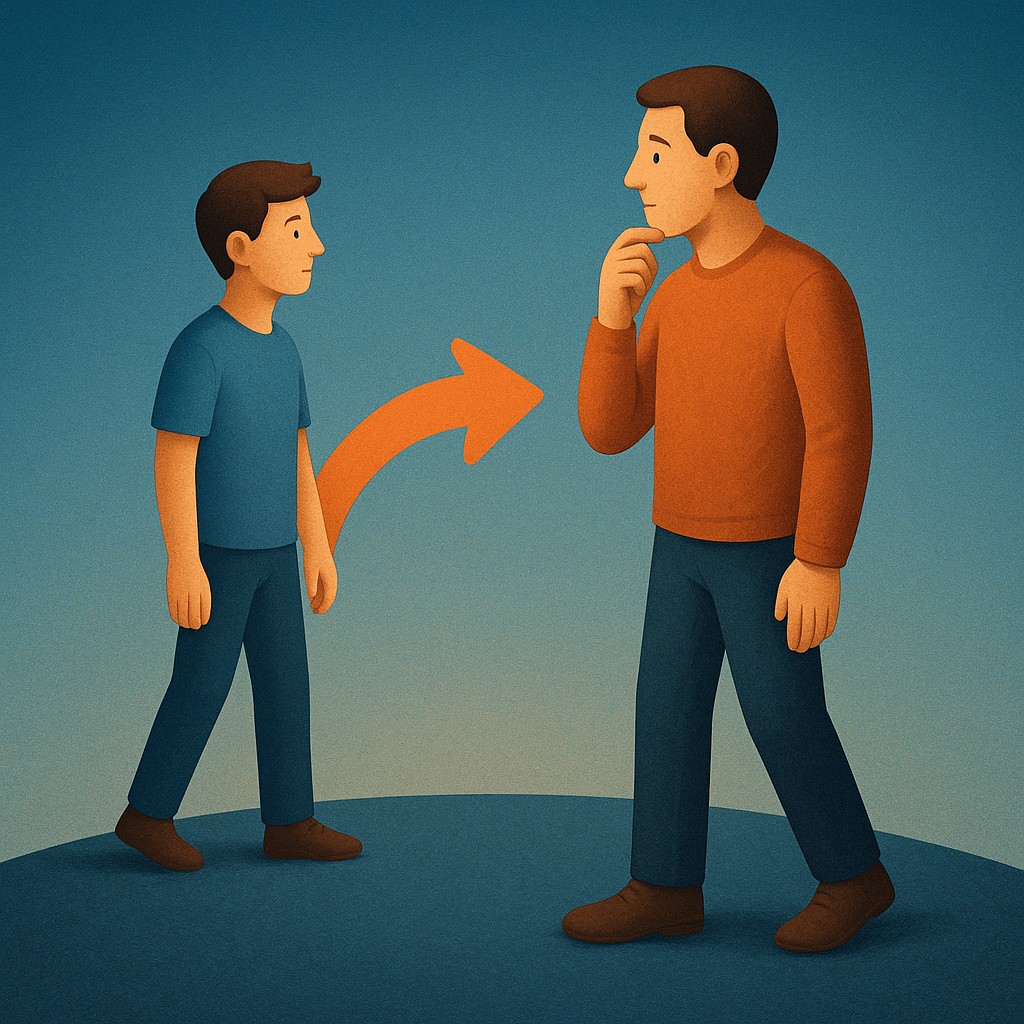
Think back to who you were ten years ago. You might have been wearing a trendy outfit that now looks ridiculous, listening to music you currently find annoying, or chasing a career path you eventually walked away from. Most of us can look back a decade and see someone who feels more like a distant cousin than a reflection in the mirror. We recognize that our tastes, values, and even our basic personality traits have shifted. We feel proud, or maybe a little embarrassed, by how much we have grown and matured since that chapter of our lives.
Yet, something strange happens when we look toward the future. When we imagine ourselves ten years from today, most of us predict we will be almost exactly the same person we are right now. We assume our current favorite foods, political views, and hobbies have finally "settled" into their permanent forms. We admit we were a work in progress up until this very moment, but we somehow decide that the work is now finished. We treat ourselves like a completed masterpiece at the end of a long gallery, rather than a living sketch that is still being drawn.
The Mental Blind Spot of the "Finished Product"
Psychologists call this the "End-of-History Illusion." It is a common mental bias where people of all ages believe they have grown significantly in the past, but will not change much in the future. In a major study of over 19,000 people ranging from teenagers to the elderly, researchers found that this was not just a quirk of youthful optimism. Even 60-year-olds believed they had changed immensely since they were 50, yet they predicted they would stay exactly the same by age 70. No matter how old we get, we always feel like we have finally "arrived" at our true selves.
This illusion happens because remembering is much easier for the brain than imagining. Recalling the past is relatively simple; the data is already there, even if some details are a bit fuzzy. We can clearly remember the "cringe-worthy" phases of our youth because they actually happened. However, imagining a future version of ourselves requires a lot of creative work. Our brains have to build a hypothetical reality from scratch, which is exhausting and often feels vague. When the brain finds a task difficult, it takes a shortcut: it mistakes the difficulty of imagining change for the unlikelihood of that change actually occurring.
The Patterns of Our Miscalculations
This illusion relies on a process called "anchoring." We use our current self as a heavy anchor, and when we try to sail into the future, we find we can only move a few inches from that spot. Because we feel so certain about who we are right now, that certainty spills over into our expectations for the future. We assume our current preferences are permanent laws of our nature. This leads to a strange gap in how we value things over time. For example, people are often willing to pay more money to see their current favorite band in a concert ten years from now than they would spend to see a band they loved ten years ago today.
To see how this illusion affects different parts of our lives, look at the table below. It compares how we see our past growth versus how we expect to change in the future.
| Area of Life |
Reflection (Looking Back 10 Years) |
Prediction (Looking Forward 10 Years) |
| Personal Values |
"I used to be impulsive; now I value stability and depth." |
"My values are set in stone; I will always care about these things." |
| Tastes & Hobbies |
"I can’t believe I spent all my time playing that game." |
"This hobby is part of my identity; I’ll never get tired of it." |
| Personality |
"I was much more introverted and shy back then than I am now." |
"This is just who I am; my temperament won't change anymore." |
| Friendships |
"I’ve lost touch with people I thought were lifelong friends." |
"My current social circle is the one I will have forever." |
This data shows that we are constantly surprised by our past but overconfident about our future. We treat our future self as a simple copy of our current self. We fail to realize that the future "us" might look at our current choices with the same confused amusement we feel toward our teenage selves. The "History" in the name of this illusion refers to our personal history; we think the book is closed when we are actually just starting a new volume.
The High Cost of Underestimating Change
The End-of-History Illusion is more than just an interesting psychology fact; it has a big impact on how we live and make major commitments. When we fall for this trick, we make decisions for a future version of ourselves that might not actually want what we are choosing today. This is especially clear in long-term contracts, career paths, and even marriages. We make "permanent" decisions based on "temporary" passions, assuming those feelings will stay just as intense for decades.
Think of someone who gets a large tattoo of a band they like right now, or someone who buys a house in a remote area because they currently enjoy being alone. Five years later, they might find their musical tastes have changed or they now crave a busy social life. Because they didn't account for the fact that they would change, they are now "stuck" with the choices of a stranger. In finances, this illusion often leads to poor retirement planning. We might choose an investment strategy that fits our current comfort level, not realizing that a 50-year-old version of ourselves will have a very different relationship with risk than our 30-year-old self.
This bias also hurts our ability to care for our own future. If we don’t believe we will change, we don't feel the need to set our future selves up for success. We might overspend today because we can’t truly grasp that the person who will be 65 and broke is actually us. By failing to see that our identity is fluid, we treat our future self like a stranger whose problems aren't quite ours yet. We effectively dump our responsibilities onto a person who hasn't been born yet, assuming they will be just like us but somehow better at handling the consequences.
Mastering the Art of Flexibility
How do we fight an illusion that is hard-wired into our brains? The first step is to adopt a "growth mindset" that lasts forever. Instead of seeing yourself as a finished product, try to see yourself as a moving system. When making big decisions, ask yourself: "Is this choice leaving enough room for a different version of me to exist?" This might mean choosing reversible decisions over permanent ones when possible, or picking paths that offer many options rather than a single, narrow track.
- Interview your future self: Occasionally try to imagine your life ten years from now. Instead of assuming you’ll have the same interests, imagine you’ve developed three entirely new ones. What might they be? This exercises your imagination and breaks down the rigidity of your present self.
- Review your past shifts: Regularly remind yourself of the big changes you’ve already gone through. Look at photos from five or ten years ago and list the things that were important to you then but aren't anymore. This is proof that you are someone who changes.
- Avoid "forever" commitments based on "right now" feelings: If you feel a sudden, intense urge to change your life because of a new interest, give it a "cooling off" period. Acknowledge that while the interest is real, the idea that it will last forever is likely an illusion.
- Focus on flexibility: Instead of planning for one specific version of your future, focus on things that any version of you would need: good health, financial freedom, and a curious mind. These are "transferable assets" for any personality you might eventually have.
In short, we should learn to be skeptical of our current desires. While it is important to live in the moment, we must also act as a guardian for the stranger we are destined to become. By accepting that our future self will have different tastes, different energy levels, and different dreams, we can make wiser, kinder choices today.
Embracing constant change doesn't mean your current feelings aren't real; it just means you are a complex human being. It allows us to forgive our past mistakes and stay open to future transformations. You aren't a static monument; you are a river. The water flowing through you today is not the same as it was yesterday, and it won't be the same tomorrow. By letting go of the need to be "finished," you give yourself the freedom to keep growing, learning, and surprising yourself for the rest of your life. The story isn’t over yet, and that is the most exciting part of all.