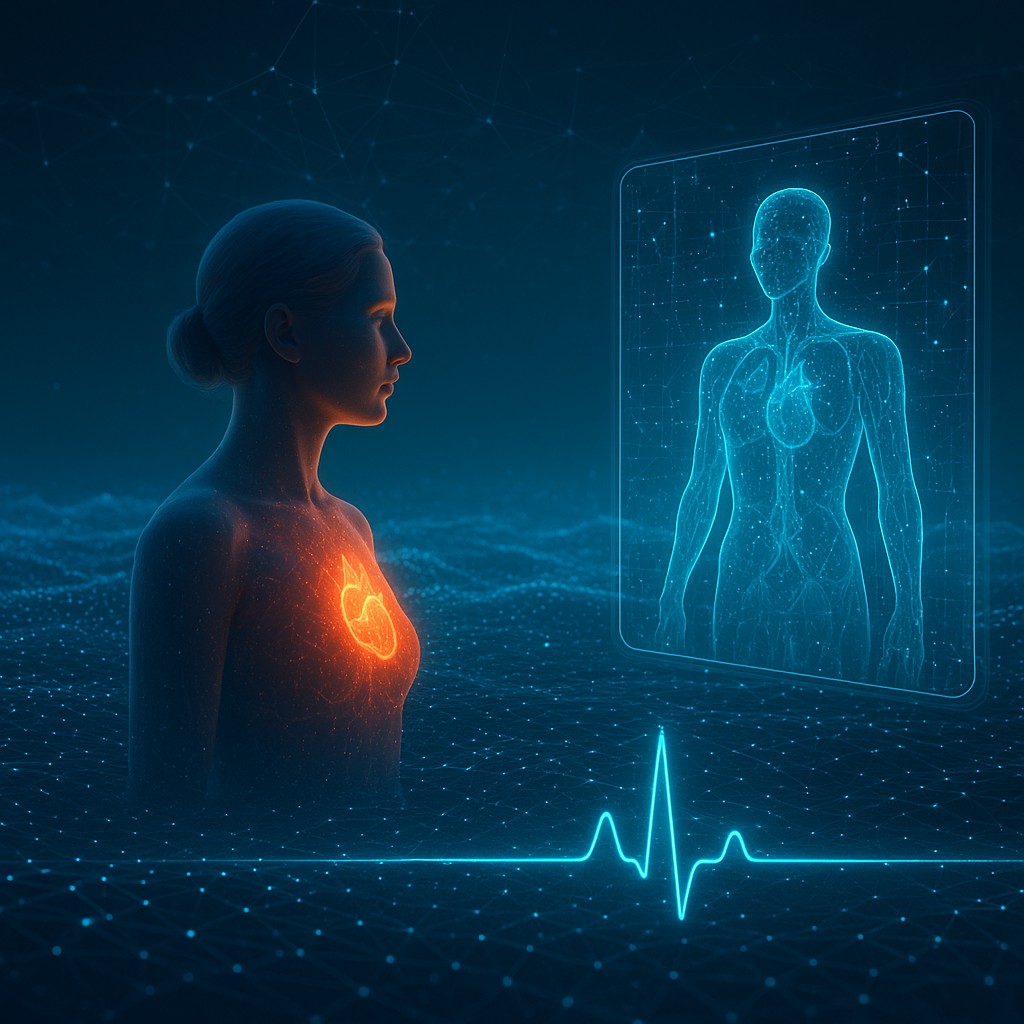
Imagine standing at the edge of a vast digital ocean. Every drop of water is a data point representing a heartbeat, a metabolic pathway, or a unique genetic trait. For decades, developing a new medicine has been a grueling marathon through the "Valley of Death" - a metaphorical stretch where nine out of ten promising drugs fail. They fail because they simply do not behave the same way in a living human body as they do in a petri dish. Traditionally, we have relied on a "wait and see" approach: testing compounds on animals before cautiously moving to small groups of human volunteers, always hoping our complex biology doesn't throw a curveball that ends the project.
Now, imagine if we could run that marathon a million times in a single afternoon without a single person ever taking a pill. This is the promise of in silico clinical trials. This revolutionary shift adds "in silico" (meaning "in silicon" or on a computer chip) to the traditional methods of in vivo (in a living organism) and in vitro (in a test tube). By building highly accurate virtual populations, scientists can now simulate how a new heart medication might affect a 70-year-old woman with diabetes compared to a 20-year-old athlete with a rare genetic mutation. We are no longer just guessing based on averages; we are predicting outcomes based on the deep, messy reality of human diversity, all within the safety of a supercomputer.
The Digital Twin and the Virtual Patient
The backbone of this technology is the "Digital Twin." In engineering, a digital twin is a virtual model of a physical object - like a jet engine - that stays updated with real-time data to predict when it might break. Creating a digital twin in medicine is far more complex because humans do not come with blueprints. To build a virtual patient, researchers gather massive amounts of data from "omics" (studies of genes, proteins, and metabolism), electronic health records, and past clinical trials. They do not just simulate a generic person; they create a "virtual cohort" that represents the untidy reality of the public, including different ethnicities, ages, and pre-existing conditions.
These models are built using Physiologically Based Pharmacokinetic (PBPK) modeling. That is a mouthful, but think of it as a digital map of the body's plumbing and chemistry. The computer calculates how a drug enters the bloodstream, where it travels (like the liver or the brain), and how quickly the kidneys flush it out. By adjusting the "knobs" on this digital map, scientists can see how a drug might build up to toxic levels in someone with poor kidney function long before that drug is ever manufactured. It is essentially a flight simulator for pharmacology, allowing researchers to crash a thousand virtual planes to ensure the real one flies perfectly.
The beauty of this science is that we are using the very thing that makes us complex - our data - to simplify the path to healing. If a drug is going to cause a rare but dangerous heart rhythm problem, it is much better to find that out by watching a virtual heart monitor flatline on a screen than to discover it during a trial involving thousands of people. These virtual populations act as a filter, catching toxic or useless candidates early on. This allows the most promising treatments to reach the finish line much faster.
From Code to Chemotherapy
It helps to look at how this works in a specific medical context, such as cancer treatment. Oncology is notoriously difficult because every tumor is a unique battlefield. In the past, a "standard dose" of chemotherapy was often a blunt instrument, calculated based on a patient's height and weight. However, two people of the same size can process the same drug at wildly different speeds. An in silico trial can simulate how a specific chemotherapy molecule interacts with different tumor environments across a virtual population of 50,000 "patients."
By running these simulations, researchers can identify who will respond to a drug and who won't. They might find that a drug only works if a patient has a specific protein in their cells. This insight allows the actual real-world trial to be much smaller and more focused. Instead of testing 5,000 random people, they can test 500 people who are genetically likely to benefit. This is not just about speed; it is about ethics. It prevents people from being exposed to drugs that were never going to work for them, or worse, were likely to cause them harm.
Beyond individual drug responses, in silico trials are a godsend for rare "orphan diseases" and children's medicine. It is ethically and logistically difficult to run large clinical trials on children or people with incredibly rare conditions. There simply are not enough patients to provide a clear statistical sample. However, by using a virtual population informed by the biological data we do have, researchers can estimate how a "grown-up" drug might need to be adjusted for a five-year-old's metabolism. It bridges the gap between what we know and what we are unable to test in the physical world.
The Pillars of Virtual Testing
To understand how a computer can mimic a breathing, sweating, thinking human, we have to look at the four primary structures that support in silico trials. These are not just lines of code; they are mathematical versions of biological laws.
| Component |
Function in the Simulation |
Real-World Equivalent |
| PBPK Models |
Simulates how a drug moves through and concentrates in organs. |
A biological "plumbing" diagram. |
| QSP Models |
Simulates the interaction between a drug and the disease itself. |
A "battle plan" for how a drug fights a virus or tumor. |
| Virtual Populations |
Generates thousands of individuals with varying traits (age, weight, genetics). |
A digital version of a crowded city square. |
| Monte Carlo Simulations |
Runs the trial thousands of times with random changes to find odd results. |
Playing out every "what if" scenario to find the worst case. |
These four pillars work together. The PBPK model tells us where the drug goes; the QSP (Quantitative Systems Pharmacology) model tells us what it does when it gets there; the Virtual Population ensures we are testing it on a variety of "bodies"; and the Monte Carlo simulations account for the random chaos of life. When you put them together, you have a powerful predictive machine. It can tell a pharmaceutical company, "This drug will likely fail in patients over 65 because their livers won't clear it properly." That single sentence can save five years and a billion dollars.
Distinguishing Myth from Machine Reality
As with any high-tech advancement, it is tempting to believe we are about to replace human doctors and human trials entirely. This is a common misconception. Biology is incredibly "noisy." Evolution has spent billions of years creating backup systems and feedback loops that we are only beginning to decode. A computer model is only as good as the data fed into it - a concept known as "garbage in, garbage out." If we don't understand a specific biological path, we can't write code for it.
Current in silico trials are used to support, not replace, the final stages of human testing. Regulatory bodies like the FDA (Food and Drug Administration) and the EMA (European Medicines Agency) are increasingly accepting in silico data as evidence, but they still require the "gold standard" of physical trials before a drug hits pharmacy shelves. The goal of the virtual trial is to narrow the field. If we start with 10,000 potential drug compounds, in silico testing can whittle that down to the top three. We then take those three "all-stars" into human trials with much higher confidence.
Another myth is that these simulations are just fancy calculators. In reality, they are more like digital ecosystems. They use machine learning to adapt as new data comes in. When a real human trial is finally conducted, the results are fed back into the computer to "train" the model, making it even more accurate for the next drug. It is a partnership where the digital world learns from the physical world, and the physical world is protected by the digital one.
The Algorithmic Apothecary
The phrase "in silico" might sound cold, like a machine trying to do a human’s job, but it is actually one of the most human-centered developments in modern science. It acknowledges that the "average patient" does not exist. By embracing the diversity of millions of virtual profiles, we are moving toward a future of precision medicine where treatments are tailored to the individual rather than a general group. We are effectively creating a world where the first time a human ever takes a new drug, they are the "one millionth and first" person to do so, because a million virtual versions of them have already cleared the path.
This shift represents a fundamental change in how we handle failure. In the old model, failure was a catastrophe - a waste of life, time, and resources. In the in silico model, failure is just data. Every time a virtual patient has a bad reaction, the algorithm learns. This allows us to fail fast, fail cheaply, and fail privately. When we finally succeed, we do so with a level of certainty that was previously unimaginable.
As we continue to map the human genome and unlock the secrets of proteins, our digital twins will only become more realistic. We are entering an era where the laboratory is no longer just a room full of beakers and microscopes, but a glowing screen where the next life-saving cure is born. This is the ultimate fusion of biology and technology. It is a testament to our ability to use the tools of the future to solve the biological puzzles of our past. The next breakthrough in your medicine cabinet likely spent its childhood living in a server rack.