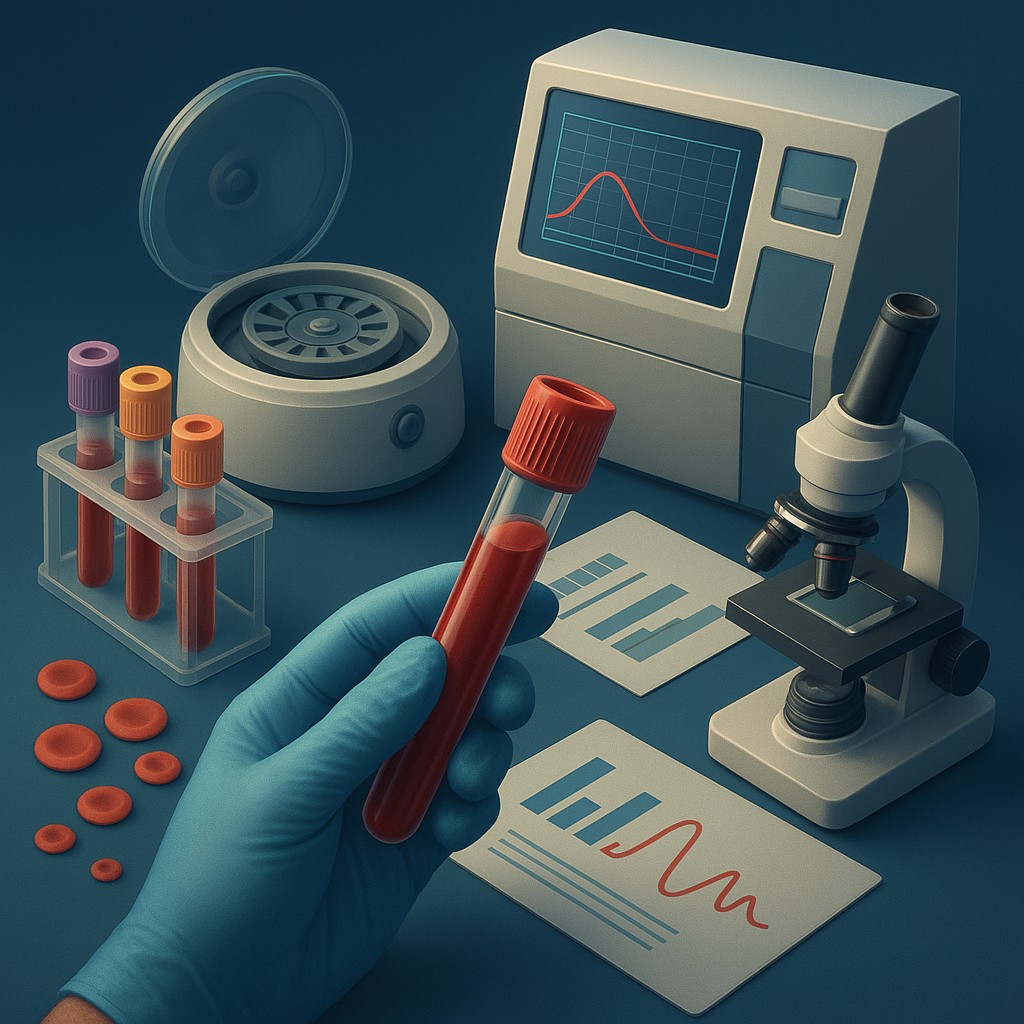
Blood is like your body's ongoing conversation with itself. Each small vial taken by a phlebotomist captures a fragment of that conversation and converts it into numbers and words your clinician can read. Because blood circulates everywhere, it carries clues about your organs, immune system, metabolism, and even your recent meals or medications. Knowing what a blood test can reveal, and what happens between a warm arm and a clear report, makes those numbers feel less mysterious and more useful.
You have probably seen lab coats, labeled tubes, and long reports full of abbreviations. Behind that clinical scene there is a precise choreography: tubes with the right additives, machines that read tiny droplets with lasers or chemistry, technicians who monitor quality control charts, and software that flags values outside the expected range. Learning the parts of this process helps you understand which tests are reliable, which require context, and why your doctor sometimes repeats the same panel.
What your blood can reveal: snapshot of health in liquid form
A single blood draw can yield a wide range of information, from how many red cells you have to whether a specific virus is present. Laboratories generally examine three broad areas: cells, chemistry, and molecular signals. The cellular picture shows oxygen delivery, infection, and clotting potential. Chemistry tests measure sugars, electrolytes, liver enzymes, and kidney markers, which reflect organ performance. Molecular and immunologic tests detect pathogens, hormones, or immune activity, and may identify genetic material.
For example, a complete blood count, or CBC, reports the number and types of blood cells, revealing anemia, infection, or bone marrow problems. A metabolic panel checks glucose, sodium, potassium, creatinine, and liver enzymes, giving clues about diabetes, dehydration, electrolyte imbalances, and organ function. Tests such as HbA1c show average blood sugar over months, while high-sensitivity C-reactive protein, CRP, signals inflammation. Each result is one piece of a puzzle clinicians assemble alongside symptoms, history, and exam findings.
Remember that no single blood value is fate. Many tests respond to ordinary factors - eating, dehydration, vigorous exercise, or starting a supplement. That is why lab professionals and clinicians interpret results in context and often repeat tests to confirm unexpected findings.
From needle to data: the step-by-step lab journey
When you roll up your sleeve the process seems instantaneous, but many small, crucial steps follow the stick. First, the correct tube must be used. Tubes have colored caps that tell the phlebotomist whether the sample should clot, or contain anticoagulants like EDTA, heparin, or citrate. Those additives matter - EDTA preserves cells for a CBC, citrate is used for coagulation tests, and a plain tube yields serum for many chemistry assays.
Once collected, tubes are labeled and barcoded to maintain patient identity and link each sample to the right orders. Samples often go to a centrifuge next, a device that separates components by spinning. Serum is the liquid left after blood clots, while plasma is serum plus clotting factors preserved by anticoagulants. Many chemistry tests run on serum or plasma, while blood gas tests use whole blood because they measure oxygen and carbon dioxide directly.
Aliquoting follows centrifugation when needed - technicians or robots transfer precise volumes into secondary tubes or onto analyzer-specific plates. Each analyzer prefers a particular sample volume and container. Samples are then placed on analyzers, which can run dozens to hundreds of tests per hour depending on their design. Throughout this journey there is a steady stream of checks - visual inspection for hemolysis, barcode scanning, and quality control runs - all to ensure the numbers will be trustworthy.
The machines that do the heavy lifting: what they are and how they work
Modern laboratories depend on an orchestra of machines, each built to answer a different question. Knowing their basic principles makes lab reports less intimidating. Here are the main types of analyzers and what they do.
-
Hematology analyzers: These count and characterize blood cells. They use techniques like impedance, where cells passing through an aperture change electrical resistance, and optical flow cytometry, where lasers and light scatter reveal cell size and complexity. The output is a complete blood count with red cell indices, a white cell differential, and platelet counts.
-
Chemistry analyzers: Automated systems that measure small molecules and enzymes using spectrophotometry, color changes, and electrochemical detection. They analyze electrolytes, glucose, kidney and liver markers, lipids, and more. Some are point-of-care devices for rapid bedside testing, while larger instruments handle high-volume lab work.
-
Coagulation analyzers: These assess the blood's ability to clot, reporting values like prothrombin time and activated partial thromboplastin time. They commonly use optical or mechanical detection to determine when a clot forms after reagents are added.
-
Immunoassay analyzers: Many tests detect proteins, hormones, or antibodies by antigen-antibody reactions. Machines measure signals such as light emission, fluorescence, or color to quantify substances like thyroid hormones, troponin for heart injury, or viral antibodies.
-
Molecular and PCR machines: When the question is whether a specific DNA or RNA sequence is present, polymerase chain reaction, PCR, or next-generation sequencing instruments are used. These machines amplify genetic material and detect it with high sensitivity, which is how many modern infectious disease and genetic tests are performed.
-
Flow cytometers: These analyze cells one by one using lasers and fluorescent markers. They are essential in immunology and oncology for characterizing cell populations, such as lymphocyte subtypes or leukemia cells.
-
Blood gas analyzers: Used mainly in acute care, these measure oxygen, carbon dioxide, pH, and electrolytes in arterial or venous blood. Results inform respiratory and metabolic status in critically ill patients.
Each machine has calibration standards and internal controls that run regularly. Technicians perform maintenance, and manufacturers provide software updates - all necessary to keep results accurate and comparable over time.
Inside the lab: people, quality, and safety that you do not see
A lab is more than machines; it is an ecosystem of trained professionals and strict procedures designed to reduce error. Medical laboratory scientists and technicians oversee tests, troubleshoot instruments, and interpret quality control data. Phlebotomists are trained to collect samples safely and minimize contamination. Pathologists and clinical chemists provide oversight and consult on complex cases.
Quality control runs known samples with established values alongside patient samples. If a control is out of range, that signals a problem that must be investigated and corrected before patient results are released. External quality assessment programs send blind samples to labs to ensure consistency across institutions. These layers of checks mean a lab result carries not just a number, but the confidence of reproducible procedures.
Safety is a constant priority. Labs handle biohazardous material, so they use personal protective equipment, biological safety cabinets, and strict waste disposal protocols. The chain of custody for samples is tracked to avoid mislabeling, and sophisticated laboratory information systems link instruments, barcodes, and electronic medical records. Automation has reduced many manual steps, but human oversight remains essential for interpreting unexpected patterns and rare anomalies.
Common myths and useful clarifications about blood tests
There are a handful of common misunderstandings that cause unnecessary worry or confusion. Here are a few of the most persistent ones.
-
Myth: Fasting is always required. Reality: Some tests, such as fasting glucose and lipid panels, require fasting to standardize results. Many other tests do not. Your clinician or the lab will tell you when fasting is necessary.
-
Myth: A single abnormal result is always serious. Reality: Lab values fluctuate with time, activity, and even posture. Mild abnormalities often prompt repeat testing or additional context rather than immediate alarm.
-
Myth: All labs use the same reference ranges. Reality: Reference ranges can vary by lab, method, and population. A value slightly outside one lab’s range might fall within another’s. Clinicians interpret results in the context of your health and the specific method used.
-
Myth: Blood draws are very dangerous and weaken you. Reality: For most people a standard blood draw is safe and causes only momentary discomfort. The volume taken is tiny compared with total blood. Special considerations apply for people with bleeding disorders or severe anemia.
-
Myth: Home tests are as reliable as lab-based assays. Reality: Point-of-care and home kits are improving, but many still have limits in sensitivity and specificity compared with centralized lab instruments and trained personnel.
These clarifications help you ask the right questions and decide when follow-up is needed.
Quick guide to common tests, what they tell you, and the machines behind them
The table below summarizes several frequently ordered tests: what they measure, why doctors request them, the typical sample type, and the usual class of analyzer. It is a handy cheat sheet when you review a lab order or a report.
| Test name |
What it measures |
Why it is ordered |
Sample type |
Typical analyzer |
| Complete Blood Count (CBC) |
Red cells, white cells, platelets, hemoglobin, indices |
Anemia, infection, bleeding, bone marrow disorders |
Whole blood in EDTA tube |
Hematology analyzer (impedance/flow cytometry) |
| Basic/Comprehensive Metabolic Panel (BMP/CMP) |
Glucose, electrolytes, creatinine, liver enzymes, proteins |
Kidney and liver function, electrolytes, metabolic status |
Serum or plasma |
Chemistry analyzer (spectrophotometry, electrochemistry) |
| Lipid panel |
Total cholesterol, LDL, HDL, triglycerides |
Cardiovascular risk assessment |
Serum or plasma (fasting may be requested) |
Chemistry analyzer |
| HbA1c |
Average blood glucose over 2-3 months |
Diabetes diagnosis and monitoring |
Whole blood |
Hemoglobin analyzers, chromatography, or immunoassay |
| Troponin |
Cardiac muscle protein released with injury |
Suspected heart attack |
Serum or plasma |
High-sensitivity immunoassay analyzers |
| CRP and ESR |
Acute phase reactants, markers of inflammation |
Detect inflammation, infection, monitor treatment response |
Serum (CRP), whole blood (ESR) |
Immunoassay (CRP), manual or automated ESR devices |
| PT/INR, aPTT |
Clotting times and pathways |
Bleeding risk, anticoagulation monitoring |
Plasma in citrate tube |
Coagulation analyzers |
| Blood culture |
Growth of bacteria or fungi |
Suspected bloodstream infection |
Special blood culture bottles |
Microbiology incubators and identification systems |
| PCR for pathogens |
Specific DNA/RNA sequences |
Detect viruses, bacteria, or genetic markers |
Serum, plasma, swabs, or whole blood |
PCR or molecular analyzers |
This table is a simplified guide. Some tests run on multiple platforms and labs may use different methods, which is why results should always be reviewed with their reference ranges and notes.
How to read results like a curious, empowered friend
When you get your lab report, start with the basics. Note which tests were ordered and the reference ranges provided. Ask three simple questions: Is the value inside or outside the range, by how much, and does it fit your symptoms? If a result is borderline, treat it as a prompt to monitor or retest, not as a final verdict.
If a value is dramatically abnormal, your clinician will usually order confirmatory tests, repeat the sample, or take immediate action. For example, a very high potassium result could be an artifact caused by hemolysis - when red cells break open in the tube they release potassium - so technicians often comment on sample quality to help clinicians interpret results.
Questions to ask your clinician or the lab include: Did the sample show hemolysis or clotting? Was the test run on an automated analyzer or a point-of-care device? Are additional confirmatory tests recommended? Being specific and curious helps you avoid overinterpretation and unnecessary worry.
Final thoughts: seeing tests as tools, not judgments
Blood tests are powerful tools. They can detect disease early, monitor treatments, and guide life-saving decisions. But like any tool they work best in skilled hands and with the right context. A lab result is a signal, not a final judgment. Values rise and fall with behavior, medications, infections, and time. When you understand the journey from syringe to screen, you are better equipped to ask clear questions, follow up appropriately, and partner with your healthcare team.
So next time you offer your arm for a blood draw, picture the tiny laboratory ballet that follows: the tube that prefers plasma over serum, the centrifuge spinning like a tiny planet, the laser counting your cells, and the refrigerator where quality controls wait their turn. Those invisible steps are why a simple test can tell complex stories about your health. Take the results, ask curious questions, and treat them as invitations to learn more about your body. You will come away feeling smarter, safer, and a little less mystified by the language of labs.