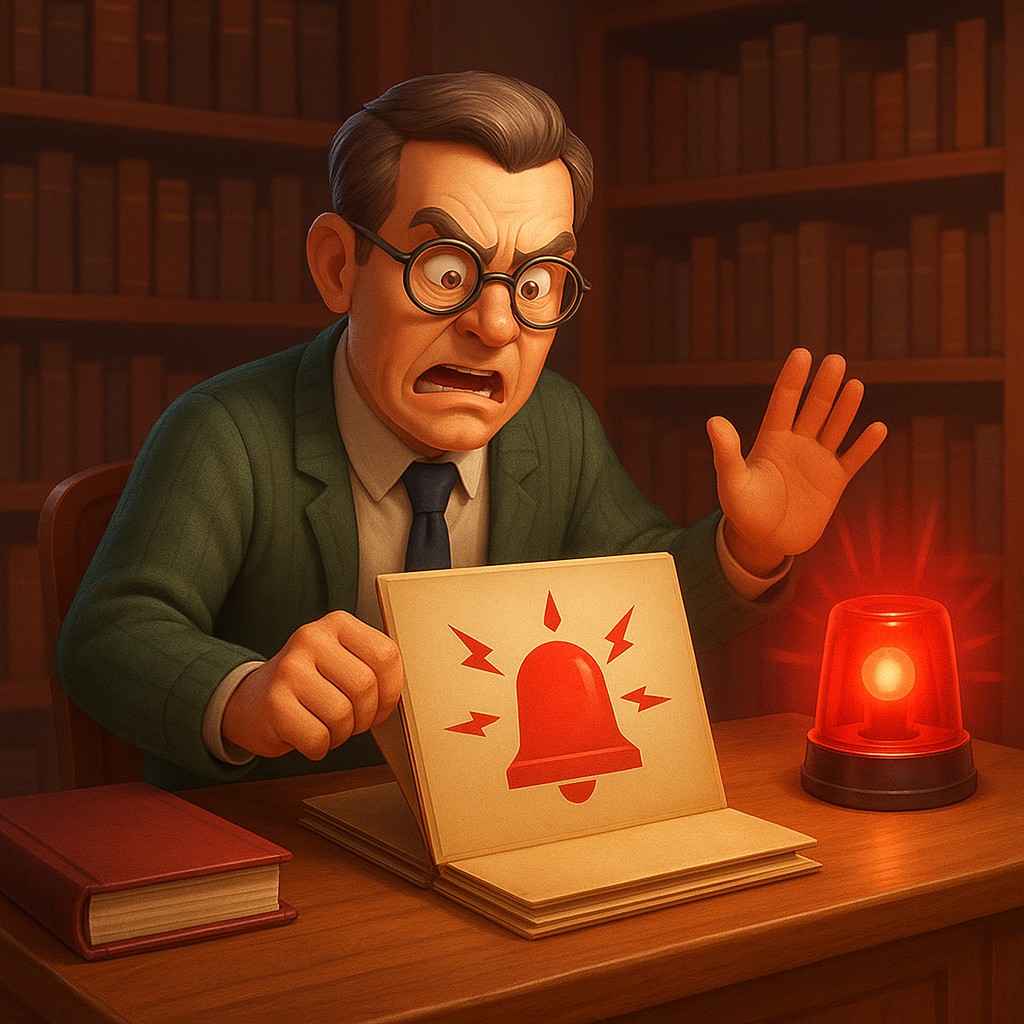
Think of your brain as a highly efficient, if a bit overprotective, librarian. This librarian’s main job is to file away your experiences so you can find them later. Most days are routine, filled with lunch orders and daily commutes. But when something truly distressing happens, the librarian panics. Instead of calmly indexing the event and putting it on a dusty shelf in the "Past" section, the librarian leaves the file open on the desk, sets off a loud alarm, and treats the memory like "Breaking News" happening right this second. Every time you try to look at that file, the librarian slams it shut and screams. This only makes you more certain that whatever is inside that folder is a monster capable of hurting you again.
This is the psychological paradox of avoidance. When we go through a traumatic or painful event, our natural instinct is to look away, push it down, and pretend the folder doesn’t exist. But in the world of neuroscience, avoidance actually acts as a reward for fear. By running away from a memory, you signal to your amygdala - the brain's fear center - that the memory itself is an active predator. As long as you refuse to look at it, your brain stays convinced the threat is still live. This creates a cycle where the memory keeps its "emotional charge," making your heart race and your palms sweat as if the event were happening right now.
How the Internal Alarm System Works
To understand how to turn down the volume on these intrusive memories, we first have to look at how the brain builds a fear response. When you are in danger, your brain creates a "fear circuit." This circuit ties the sights, sounds, and smells of the event to a massive rush of adrenaline. This is a brilliant survival tactic if a predator is chasing you, because it ensures you remember exactly what and where the danger is. The problem starts when the predator is gone, but the circuit stays stuck in the "on" position.
Psychologists often call this a failure of emotional processing. Normally, as time passes, the hippocampus helps "time-stamp" a memory, essentially telling the brain, "This happened in 2015, and it is over now." But in cases of post-traumatic stress or intense anxiety, the memory lacks that stamp. It feels as if it were outside of time. Because the brain hasn't fully digested the experience, it keeps the memory on high alert. This is why a simple trigger, like a specific scent or a loud noise, can make someone feel physically transported back to the original scene.
Modern clinical tools like Imaginal Exposure aim to bridge this gap between the past and the present. It works as a form of "controlled re-experiencing." Instead of letting the memory blindside you in the middle of the grocery store, you intentionally invite it into a safe, therapeutic space. By doing this, you take the controls back from the panicked librarian. You are saying, "I am going to look at this file, and I am going to do it on my own terms."
Breaking the Loop by Revisiting the Past
The core of imaginal exposure is a concept called habituation. Think of it like walking into a room with a very loud, ticking clock. At first, the sound is maddening. But if you stay in the room long enough, your brain eventually decides the ticking isn't a threat and isn't providing any new information. Gradually, the sound fades into the background. Your brain has grown used to the stimulus.
Imaginal exposure applies this logic to the "ticking clock" of a painful memory. In a typical session, a person closes their eyes and describes the memory in the present tense, as if it is happening right now. They describe the colors, the sounds, and - most importantly - their internal feelings. This sounds backwards, almost like a form of torture. Why would you want to feel that pain again? The answer is the "safety signal." Because you are describing the event while sitting in a comfortable chair, breathing steadily, and speaking to a professional you trust, your brain receives two conflicting signals: the memory of danger and the current reality of safety.
When these two signals exist at the same time, the brain begins to update its records. It realizes that while the memory is scary, the memory itself cannot actually bite, burn, or break anything. This process uncouples the mental image from the panic response. Over many sessions, the peak levels of distress naturally start to drop. The brain learns it can survive the memory without running away. This doesn't make the memory "happy," but it does move it from the category of "Active Threat" to "Unhappy Thing That Happened Once."
Comparing Avoidance and Exposure
| Feature |
The Avoidance Strategy |
The Exposure Strategy |
| Main Goal |
Short-term relief from distress. |
Long-term reduction in sensitivity. |
| Brain Signal |
"This memory is a live predator." |
"This memory is an old recording." |
| How it Works |
Strengthens the fear circuit. |
Learning to let the feeling fade. |
| Memory Status |
Frozen, vivid, and disorganized. |
Put in context and part of your history. |
| Physical Effect |
Constant high-alert and tension. |
Gradual "cooling" of the nervous system. |
The Power of the Present Tense and Detail
One of the most striking parts of this technique is the insistence on using the present tense. If you say, "I was walking down the street and I felt scared," you are telling a story about a stranger who used to be you. It is a story told from a safe distance. While this helps in everyday conversation, it isn't enough to trigger the deep emotional processing needed for healing. By switching to the present tense - "I am walking down the street, and I feel my heart starting to race" - you engage the brain's emotional centers more directly.
Rich detail serves a specific purpose: it prevents "emotional numbing." Many people with intrusive memories have become experts at glossing over the worst parts. They skip the peak of the story or blur the details to keep the pain away. However, the fear lives in those skipped details. By forcing the brain to slow down and describe the specific shade of wood on a door or the temperature of the air, the person shines a flashlight into the dark corners of the memory.
As the light stays on, the monsters in the corner usually turn out to be piles of laundry. These "hot spots," the most distressing parts of the memory, are processed one by one. Research shows that as people get used to these hot spots, their overall anxiety and depression symptoms tend to drop sharply. It is a matter of proving to the amygdala that it has been overreacting to a ghost. Once the amygdala is convinced, it finally stops pulling the fire alarm.
Healing Is Not Erasing
A common worry about this therapy is the fear that it will "erase" the memory or change who you are. Imaginal exposure is not a science-fiction movie where a laser wipes your hard drive. You will still remember what happened. The goal isn't to forget; it is to remember without the crushing weight of physical terror.
Think of it like a physical scar. When a wound is fresh, touching it causes sharp, agonizing pain. You might guard that part of your body and refuse to let anyone near it. But as the wound heals and turns into scar tissue, the mark remains, but the sensitivity changes. You can touch the scar, look at it, and acknowledge how you got it without feeling the original "sting." Integration is the process of turning a raw psychological wound into a stable part of your life story.
This process allows you to reclaim your "mental real estate." When you spend all your energy trying not to think about something, you have very little left for creativity, relationships, or joy. By facing the memory and stripping it of its power, you evict a squatter that has been living in your head rent-free for years. You gain the ability to live in the actual present, rather than being tethered to a distorted version of the past.
The Path to Emotional Freedom
The journey through your own memory is rarely easy, but it is a powerful way to take back control of your life. We cannot change what happened to us, and we cannot force our brains to simply "delete" difficult chapters. We can, however, change our relationship to those events. We can move from being victims of a repeating loop to being the conscious authors of our own stories.
By choosing to lean into the discomfort rather than recoiling, you are performing an act of immense bravery. You are teaching your nervous system that you are stronger than your scariest thought. As you walk through the fire of the memory, you eventually realize the flames are made of nothing but old data and phantom signals. On the other side of that realization lies a deep sense of peace and the freedom to finally look forward without fearing what is behind you.