Throughout most of our evolutionary history, humans lived in a state of constant, subtle negotiation with their surroundings. We were usually a little too cold, a bit hungry, or working harder than we liked just to secure a meal. In our modern quest for a perfect 72-degree living room and an endless supply of food, we have accidentally silenced the ancient survival programs designed to keep our internal machinery in peak condition. By stripping away all discomfort, we have removed the signals that tell our bodies to clean, repair, and strengthen themselves.
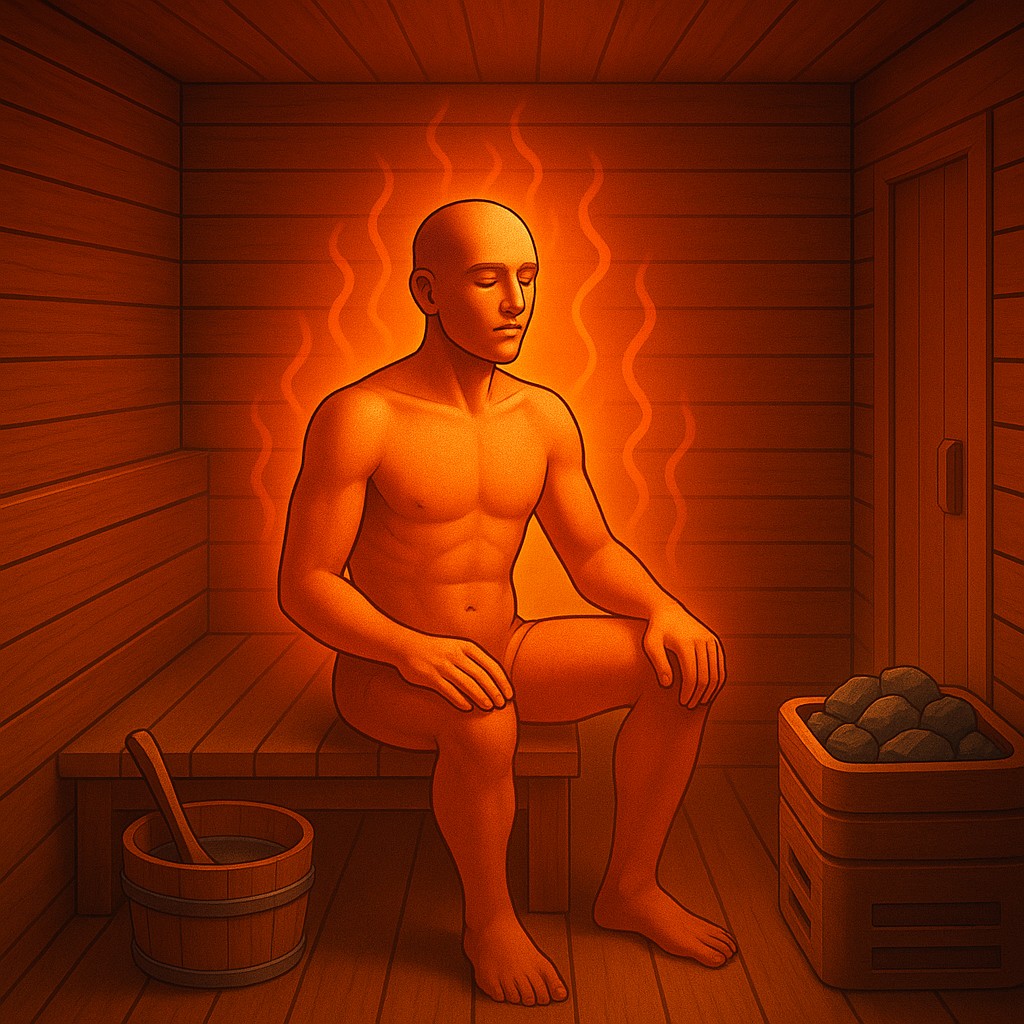
This is where the sauna comes in. It isn't just a luxury spa treatment; it is a tactical way to reintroduce environmental pressure. When you step into a wooden room heated to 170 degrees Fahrenheit, your body does not see it as a chance to relax. It treats it as a biological crisis. Within minutes, your heart rate climbs, your blood vessels open wide, and your internal temperature begins to rise. This controlled brush with danger triggers a phenomenon called hormesis, where a brief dose of stress actually makes an organism stronger rather than weaker. It is the biological version of a high-intensity fire drill, ensuring every piece of equipment works perfectly before a real emergency occurs.
The Fine Art of Biological Hardening
Hormesis is one of the most surprising principles in biology. It suggests that the link between stress and health is not a straight line where more stress always means more damage. Instead, it follows a U-shaped curve. At the bottom of that curve is sedentary comfort, where nothing happens and the body grows stagnant. At the far end is chronic, overwhelming stress that causes real injury. But in the "Goldilocks zone" in between-usually defined by short, intense bursts of pressure-the body enters a state of hyper-repair. This is why lifting heavy weights builds muscle rather than just tearing it apart, and why brief heat exposure can revitalize your cellular structure.
When we experience this specific type of stress, our cells switch their focus from growth and reproduction to maintenance and protection. Think of it like a city that halts all new construction for a weekend to focus entirely on fixing potholes, repairing the power grid, and scrubbing away graffiti. This shift is a highly coordinated system-wide response. By making ourselves briefly uncomfortable, we signal to our DNA that the environment has turned hostile. In response, our cells produce a suite of protective compounds that stay in our system long after we have left the heat and returned to the cool air of normal life.
Meet the Molecular Chaperones
At the heart of this heat-driven rejuvenation is a class of molecules called Heat-Shock Proteins (HSPs). To understand why they matter, we first have to look at how life is shaped. Almost every function in your body is carried out by proteins, which are long chains of amino acids. However, a protein’s job depends entirely on its three-dimensional shape. It has to be folded just right to work, much like a complex piece of origami. As we age, or when we are exposed to toxins and daily wear and tear, these proteins begin to lose their shape. They become "misfolded," turning into useless, sticky biological junk that can clog up your cells.
Heat-Shock Proteins act as the cell’s quality control team, often called "molecular chaperones" by biologists. When your body temperature rises in a sauna, it triggers a massive surge in these HSPs. They patrol the inside of the cell, looking for proteins that have become tangled or unfolded. Once they find a damaged protein, the HSPs latch onto it and provide the energy and guidance needed to refold it into its correct, working shape. This "protein grooming" prevents the buildup of cellular debris often linked to brain diseases and the general decline we associate with getting older.
The Infrastructure of Thermal Resilience
While this microscopic drama unfolds inside your cells, your larger systems are undergoing their own transformation. The heat forces your heart to pump harder to move blood to the skin for cooling, providing a cardiovascular workout similar to moderate exercise. This increased circulation does more than just cool you down; it flushes nutrients and oxygen into tissues that might otherwise be ignored. Furthermore, the heat triggers the release of endorphins and a protein called Brain-Derived Neurotrophic Factor (BDNF), which acts like "Miracle-Gro" for your brain cells, helping new neurons grow and improving your mood.
It is important to tell the difference between this beneficial, short-term stress and the chronic heat stress found in extreme climates or dangerous jobs. The magic of the sauna lies in its brevity. Because a session usually lasts only 10 to 20 minutes, the body has plenty of time to recover and lock in the gains made during the heat. If the heat never stopped, the body’s cooling systems would fail and the HSPs would be overwhelmed. The table below compares how different types of stress affect our biology:
| Type of Stress |
Duration |
Biological Result |
Long-term Effect |
| Hormetic (Sauna) |
Short (10-20 mins) |
Triggers HSPs and BDNF |
Better resilience and repair |
| Sedentary (Comfort) |
Chronic |
Stagnation; low protein turnover |
Less metabolic flexibility |
| Pathological (Heatstroke) |
Prolonged |
Protein breakdown; organ failure |
System-wide damage |
| Exercise (Physical) |
Short to Moderate |
Micro-tears; high heart demand |
Strength and heart health |
Cleaning the Cellular House
One of the most fascinating effects of heat is how it stimulates a process called autophagy, which literally means "self-eating." While it sounds a bit grim, it is actually a vital survival mechanism. When the body is stressed by heat, it identifies cellular parts that are broken beyond repair-such as old mitochondria that no longer produce energy or clumps of protein that even HSPs cannot fix.
Autophagy is the process where the cell recycles these broken parts, breaking them down into basic building blocks to create new, healthy structures. Using a sauna acts as a catalyst for this "spring cleaning." By regularly inviting this thermal stress, you ensure that no part of your cellular machinery is left to sit and rot. You are forcing the body to be lean, efficient, and constantly renewing itself. This is likely why long-term studies of frequent sauna users in places like Finland show much lower rates of heart disease and dementia. They are quite literally sweating out the biological rust.
The Strategy of Discomfort
Adding heat-based stress to a modern life is more of a strategic choice than a fitness trend. It requires a shift in mindset: seeing a hot environment not as something to avoid, but as a training ground for your cells. The goal is to find that point of "productive discomfort" where your breathing changes and your heart begins to pound, staying there just long enough to set off the alarm bells. Once those alarms ring, the repair crews (the HSPs) are sent out, and the real work of longevity begins.
However, the effectiveness of this practice depends heavily on what you do after the heat. Recovery is just as important as the stress itself. In many traditional sauna cultures, people follow a hot session with a plunge into cold water or a roll in the snow. This rapid change creates a "vascular gym" effect, causing blood vessels to snap shut after being wide open. This maximizes circulation and provides a sharp hit of norepinephrine, a chemical that improves focus and lowers inflammation. The cycle of heat and recovery creates a rhythm that mimics what our ancestors experienced, keeping the body’s adaptive systems sharp.
Building the Durable Human
As we move toward a future where we spend more time in controlled, artificial environments, the deliberate use of healthy stress becomes even more vital. We are living through a "mismatch," where our ancient biology struggles to cope with the unprecedented luxury of the 21st century. Our cells are designed to be challenged; they thrive on the edge of survival. When we give them nothing but comfort, they lose their edge. They forget how to repair themselves, how to manage stress, and how to defend against the slow decay of time.
Embracing the heat is a way to bridge that gap. It serves as a reminder that we are dynamic systems that need pressure to maintain our integrity. By stepping into the heat, you are participating in a ritual as old as life itself-the process of becoming stronger through struggle. Each drop of sweat represents a protein being refolded, a cell being cleaned, and a heart being strengthened. Health is not a destination of permanent ease; it is a moving target that we hit through the beautiful dance of stress and recovery. When you finally step out of the sauna, you aren't just cleaner on the outside-you are structurally more resilient on the inside, better prepared for whatever the world throws at you tomorrow.