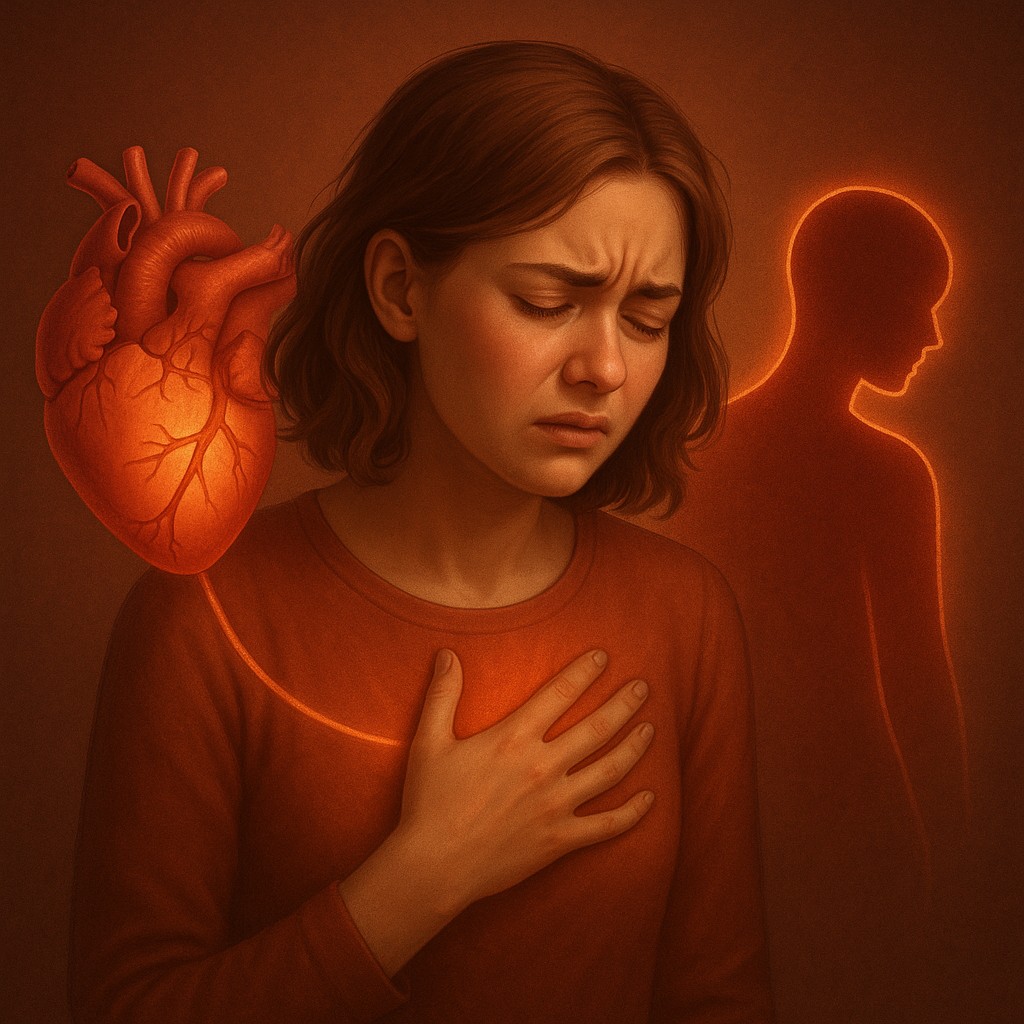
We have all felt that sudden, hollow thud in the chest when a friend cancels plans at the last minute, or the burning sensation in the throat when a conversation carries on as if we aren't even there. For centuries, poets and songwriters have used the language of the emergency room to describe these moments, claiming their hearts are "broken" or their feelings are "bruised." While we often brush these descriptions off as dramatic metaphors, it turns out that your brain is quite literal when it comes to suffering. When you feel "hurt" by a social snub, your nervous system isn't just looking for a poetic way to describe sadness. It is sounding a high-priority alarm using the exact same hardware it uses when you stub your toe or burn your hand on a stove.
This overlap isn't a biological accident or a glitch in our wiring. It is a sophisticated survival strategy that reflects how dangerous it was for our ancestors to be alone. In the harsh conditions of the Ice Age, being cast out from the tribe was effectively a death sentence. A lone human cannot hunt mammoths or keep watch for predators effectively. To ensure we stayed glued to our social groups, evolution took the most effective deterrent it had, physical pain, and hot-wired it into our social interactions. This means that "social pain" is a biological reality with a measurable footprint in the brain. Understanding how it works can change everything from how we treat loneliness to how we recover from a difficult breakup.
The Neural Switchboard of Suffering
To understand why a cold shoulder feels like a physical blow, we have to look at the Anterior Cingulate Cortex, or the ACC. Think of the ACC as the brain’s "alarm system" or "distress monitor." While other parts of the brain tell you exactly where a physical injury is located (such as "my left pinky is touching a needle"), the ACC handles the emotional "ouch" factor. It is the part of the brain that determines how much a sensation actually bothers you. In clinical studies, patients with damage to their ACC report that they can still feel a painful touch, but it no longer feels distressing. They describe the sensation with detachment, acknowledging it without the usual urge to pull away.
Social rejection hijacks this specific gear in our cognitive machinery. Researchers have used brain scans to watch the brain in real-time while someone is being excluded. In one famous experiment, participants played a virtual game of catch called "Cyberball" with two other players who were actually computer programs. Initially, everyone shared the ball, but eventually, the two virtual players began throwing it only to each other, leaving the human participant out. Even though the participant knew it was just a computer game with people they would never meet, their ACC lit up with the same intensity as if they were in physical pain. The brain doesn't care if the rejection is "logical"; it only cares that the connection has been broken.
A Shared Architecture for Different Aches
The link between the physical and the social goes deeper than just a shared alarm bell; they appear to use the same neurological operating system. This is most evident in how the body manages pain using chemical messengers. When you experience physical trauma, your brain releases natural painkillers called opioids to dull the sensation and help you cope. Interestingly, the brain does the same thing during social distress. This shared chemistry led researchers to a startling question: if social pain and physical pain use the same pathways, could standard over-the-counter painkillers actually treat hurt feelings?
The answer, surprisingly, is yes. In controlled studies, participants who took acetaminophen (the active ingredient in Tylenol) for three weeks reported significantly fewer "hurt feelings" and less daily social distress compared to a group taking a placebo. Brain scans confirmed that the drug had dampened activity in the regions responsible for social pain. However, this is not a recommendation to reach for the medicine cabinet every time someone ignores a text message. Rather, it serves as powerful evidence that the ache of loneliness is a biological event rooted in our chemistry. It proves that the heaviness you feel in your chest during a period of grief is a sign of your nervous system reacting to a threat to your survival.
The Sharp Memory of Social Scars
While physical and social pain share the same immediate processing centers, they are very different when it comes to memory. This is where the social pain system proves to be more enduring and potentially more damaging than physical injury. Most of us can recall a time we broke a bone or had a root canal, but we cannot actually re-experience that pain. We remember that it happened and that it was unpleasant, but our nervous system does not fire the pain signals all over again. Physical pain is designed to be temporary; once the wound heals, the alarm shuts off so we can get back to normal.
Social pain, however, is remarkably easy to relive. When you think back to a humiliating moment from high school or a painful breakup from years ago, you can often feel the exact same tightening in your chest and the same rush of distress you felt at the time. The brain maintains a high-definition recording of social injuries. From an evolutionary perspective, this makes sense: you don't need to remember the exact searing heat of a fire to know not to touch it, but you do need to remember precisely why a social interaction went wrong so you can avoid being cast out again. Unfortunately, this means that while a physical bruise disappears in a week, a social bruise can be reactivated for decades.
| Feature |
Physical Pain |
Social Pain (Rejection) |
| Primary Brain Region |
ACC and Sensory Cortex |
ACC and Insula |
| Biological Function |
Prevents tissue damage or death |
Prevents isolation or death |
| Response to Painkillers |
Dully by common pain medicine |
Dulled by common pain medicine |
| Ease of Reliving It |
Low (hard to "feel" an old injury) |
High (easy to "feel" an old snub) |
| Location of Sensation |
At the site of the injury |
Often in the chest or stomach |
The Vagus Nerve and the Body Map of Heartbreak
If the pain of rejection is processed in the brain, why do we feel it so clearly in our gut and chest? This is largely the work of the vagus nerve, the longest nerve in the body’s "automatic" nervous system. The vagus nerve acts as a two-way highway between the brain and the internal organs, including the heart, lungs, and digestive tract. When the brain registers a social injury, it sends an immediate stress signal down this nerve. This can cause the heart rate to drop suddenly, the airways to tighten, or the stomach muscles to knot up, creating that "sinking" feeling.
This physical reaction explains why people experiencing intense loss often describe a literal heaviness or tightness in their chest. The brain is effectively putting the body into a state of shock. In extreme cases, such as the loss of a long-term partner, the stress hormones can be so intense that they lead to "Broken Heart Syndrome," where the heart muscle temporarily weakens and changes shape. This underscores the reality that social health is not just a psychological luxury; it is a physical necessity. When we tell someone to "man up" or "get over it," we are asking them to ignore a system that is as deeply ingrained as the one that tells them they are thirsty or suffocating.
Rethinking Our Need for Others
Understanding the overlap between physical and social pain helps us dismantle the myth that emotions are somehow less "real" than physical symptoms. In modern society, we often treat isolation as a personal failing or a minor inconvenience, yet our biology views it as a critical emergency. This explains why loneliness is such a strong predictor of early death, comparable to smoking fifteen cigarettes a day. When our social ties are frayed, our brains remain on high alert, keeping our inflammation levels up and our immune systems weak, just as if we were walking around with an unhealed wound.
By recognizing that social rejection is a legitimate injury, we can approach our interactions with more empathy. We can see that hurt feelings aren't a sign of weakness, but a sign of a perfectly functioning survival instinct. It also allows us to be more intentional about "social hygiene." Just as we would wash a cut to prevent infection, we must take care of our social connections to prevent the long-term biological damage that comes from isolation. We are not just social animals in a poetic sense; we are biologically tied to one another by the very nerves that keep us alive.
As you move through the world, remember that your need to belong is as fundamental as your need for air. Your brain’s habit of turning a snub into a sting is a testament to how valuable you are to the group, and how vital the group is to you. When you feel that familiar ache in your chest after a difficult conversation, don't try to argue your way out of it. Instead, acknowledge it for what it is: a biological signal calling you to reconnect, to repair, and to return to safety. You are wired for connection, and every "ouch" is just your brain reminding you that staying together is the only way we have ever survived.