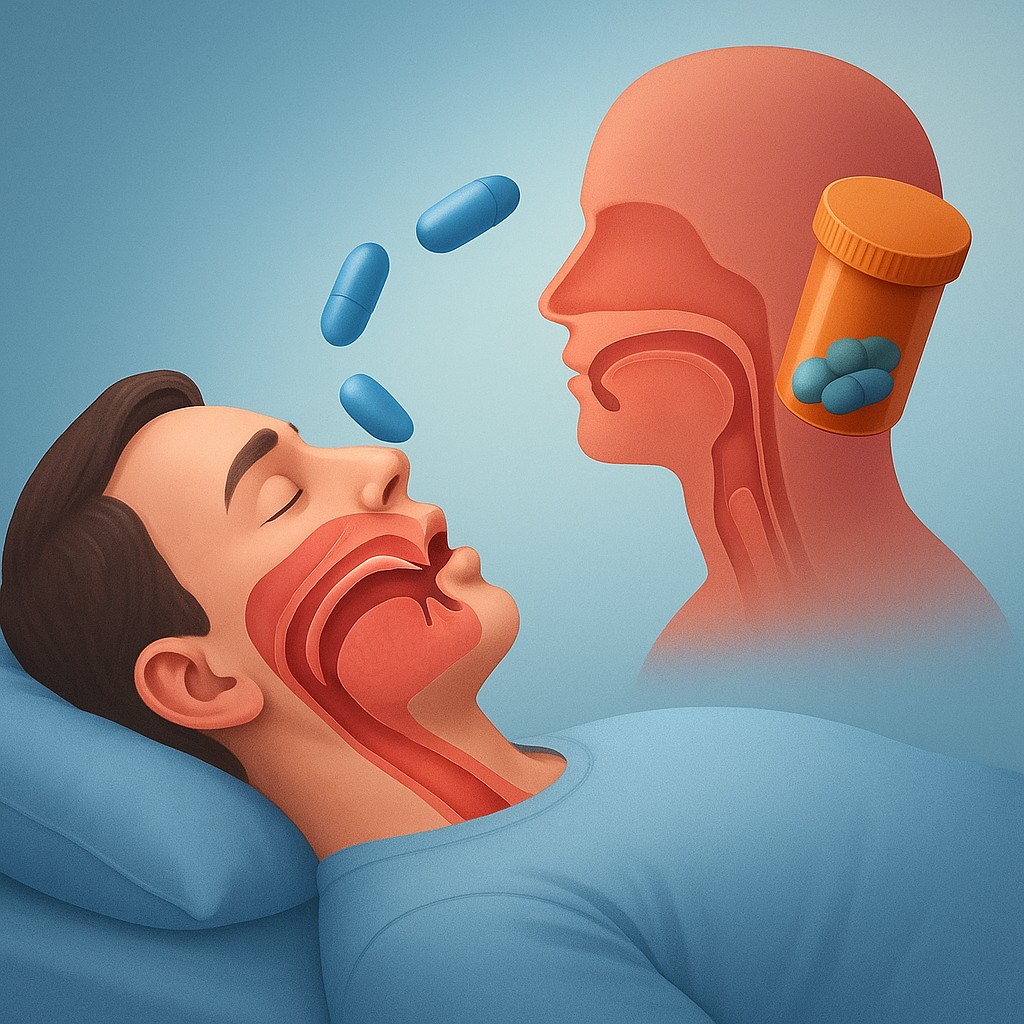
Imagine lying down for a well-deserved rest, only to have your body spend the night in a wrestling match with its own anatomy. For millions of people living with obstructive sleep apnea, the "r" in rest stands for resistance. As they drift into a deep sleep, the throat muscles relax just a bit too much, causing the airway to narrow or collapse entirely. This leads to a cycle of gasping, snoring, and tiny wake-ups known as micro-awakenings. Even after eight hours in bed, the brain feels as if it pulled an all-nighter. Traditionally, the fix has been a CPAP machine, a device that acts like a leaf blower for the face to force the airway open, or invasive surgeries to reshape the throat.
Recently, however, the medical world has found a surprising ally in the fight for a quiet night: weight-loss medications known as GLP-1 receptor agonists. While they are most famous for helping people shed pounds by silencing "food noise" in the brain, these drugs are proving to be more than a simple metabolic fix. Researchers have discovered that these medications are actually performing structural renovations on the human airway. By targeting inflammation and reducing the size of specific tissues, these drugs are shifting our view of sleep apnea. It is moving from a hardware problem that needs a mechanical fix to a biological problem that can be managed with chemistry.
The Architectural Flaw of the Human Throat
To understand why a medication designed for diabetes and weight loss helps people breathe better at night, we first have to look at the shaky engineering of the upper airway. Unlike our ribs, which are held open by sturdy bone, or our windpipe, which is reinforced with rings of cartilage, the area behind the tongue is essentially a collapsible tube made of soft tissue and muscle. This design allows us to speak, swallow, and sing, but it is also a structural weakness. When we sleep, gravity and muscle relaxation work against us, pulling the walls of that tube inward.
In a healthy system, the brain monitors oxygen levels and keeps enough tension in the throat muscles to ensure air can pass through. However, when excess tissue begins to crowd this narrow corridor, the margin for error disappears. Think of it like a hallway filled with overstuffed furniture. It is hard enough to navigate when the lights are on, but if you try to walk through it in the dark while the walls are vibrating, you are bound to get stuck. In the case of sleep apnea, that "overstuffed furniture" often takes the form of fatty deposits in an unexpected place: the tongue.
The Heavy Tongue Hypothesis
Most people think of the tongue as a simple slab of muscle, but it is actually a complex organ that contains a surprising amount of adipose, or fatty, tissue. Studies show that people with obstructive sleep apnea have much higher percentages of tongue fat than those who sleep soundly, even when comparing people of the same total body weight. This extra weight makes the tongue sluggish and likely to slide backward when a person lies on their back. As the tongue falls toward the throat, it acts like a doorstopper, physically blocking the flow of oxygen.
The breakthrough in using GLP-1 medications lies in how they prioritize where the body loses weight. While regular exercise might trim your waistline, these medications appear to be especially effective at reducing the "pathological" fat found in the upper airway. By shrinking the volume of the tongue and the soft tissues around the throat, the medication effectively widens the hallway. This is not just about general weight loss; it is about targeted structural clearing. For the first time, we are seeing evidence that a pill can physically reshape the internal geometry of the airway to make it more resistant to collapse.
Beyond Weight: Calming the Fire Within
If it were just about weight loss, any diet would solve sleep apnea, but we know that is not always the case. There is a second, more subtle mechanism at work: the reduction of systemic inflammation. Obstructive sleep apnea is not just a mechanical blockage; it is a cycle of irritation. Every time the airway collapses and the sleeper gasps for air, the body releases a surge of stress hormones and inflammatory markers. This causes the lining of the throat to swell, making it even easier for the airway to block up the next time the person falls asleep. It becomes a self-reinforcing loop of swelling and suffocation.
Modern weight-loss drugs are powerful anti-inflammatory agents. They work to dampen the body’s overactive immune responses, which helps to soothe chronic irritation in the upper respiratory tract. By reducing the "puffiness" of the throat lining and strengthening the signals between the brain and the airway muscles, the drugs help the body stay open on its own. Instead of a floppy, inflamed tube, the airway becomes a firm, clear passage. Below is a comparison of how different treatments approach this structural challenge.
| Feature |
CPAP Therapy |
Surgical Intervention |
GLP-1 Medication |
| Mechanism |
Constant air pressure forces airway open |
Physical removal of tissue or bone |
Reduction of tongue fat and inflammation |
| User Experience |
Requires wearing a mask every night |
One-time recovery period from surgery |
Weekly injection or daily pill |
| Airway Impact |
Mechanical expansion |
Permanent structural change |
Biological volume reduction |
| Primary Goal |
Symptom management |
Structural correction |
Metabolic and structural repair |
Training the Brain and the Breath
One of the most fascinating aspects of this new era of sleep medicine is how these medications interact with the nervous system. Sleep apnea is often split into two types: obstructive, which we have discussed, and central, which involves the brain "forgetting" to tell the body to breathe. Many patients actually suffer from a mix of both. Interestingly, some GLP-1 receptors are located in the hindbrain, the area responsible for basic life functions like heart rate and breathing drive.
By acting on these receptors, the medication may help stabilize the "loop gain" of the respiratory system. Loop gain is essentially the sensitivity of your internal thermostat for carbon dioxide. If your brain is too sensitive, it overreacts to small changes in CO2, causing you to breathe too hard. This leads to a sudden drop in breathing, fueling an unstable cycle. These drugs appear to help smooth out those signals, ensuring that the transition between breathing and resting is a gentle wave rather than a jagged cliff. It is like upgrading the software of the respiratory system at the same time we are clearing the hardware of the airway.
The Blueprint for a Better Night
While the science behind these drugs is revolutionary, it is important to remember that they are tools, not magic wands. Improving the mechanics of the airway is a massive leap forward, but sleep quality still depends on a variety of environmental and behavioral factors. A clear airway won't help much if your brain is being bombarded by blue light from a smartphone or if your internal clock is scrambled by irregular sleep hours. The medication fixes the pipe, but you still have to manage the flow.
Many doctors now view these drugs as a "bridge" or a "facilitator." For someone who struggled to use a CPAP machine because it felt claustrophobic or uncomfortable, these medications can reduce the severity of their apnea. This might even reach a point where they no longer need the machine, or where they can use a much lower, more comfortable pressure setting. This combined approach, focusing on both the biological structure of the throat and the habits of the sleeper, represents a more holistic way of treating a condition that affects every organ in the body through oxygen deprivation.
Redefining the Future of Respiratory Health
We are currently witnessing a shift from treating sleep apnea as a permanent disability to treating it as a dynamic, manageable condition. For decades, the message to patients was often "wear this mask forever or risk a heart attack." Now, the conversation is expanding to include the possibility of biological reversal. By targeting the hidden fat within the tongue and the chronic inflammation that narrows our breath, we are discovering that the human body has a remarkable capacity for structural repair when given the right chemical signals.
As you move forward with your own health journey, remember that the most profound changes often happen in the quietest moments, like during the deep, uninterrupted cycles of sleep. Whether through new medical breakthroughs or the timeless wisdom of good sleep habits, the goal remains the same: ensuring that every breath you take while you dream is as effortless as it is refreshing. The future of sleep medicine is not just about forcing the body to work; it is about helping the body remember how to breathe on its own, one peaceful night at a time.