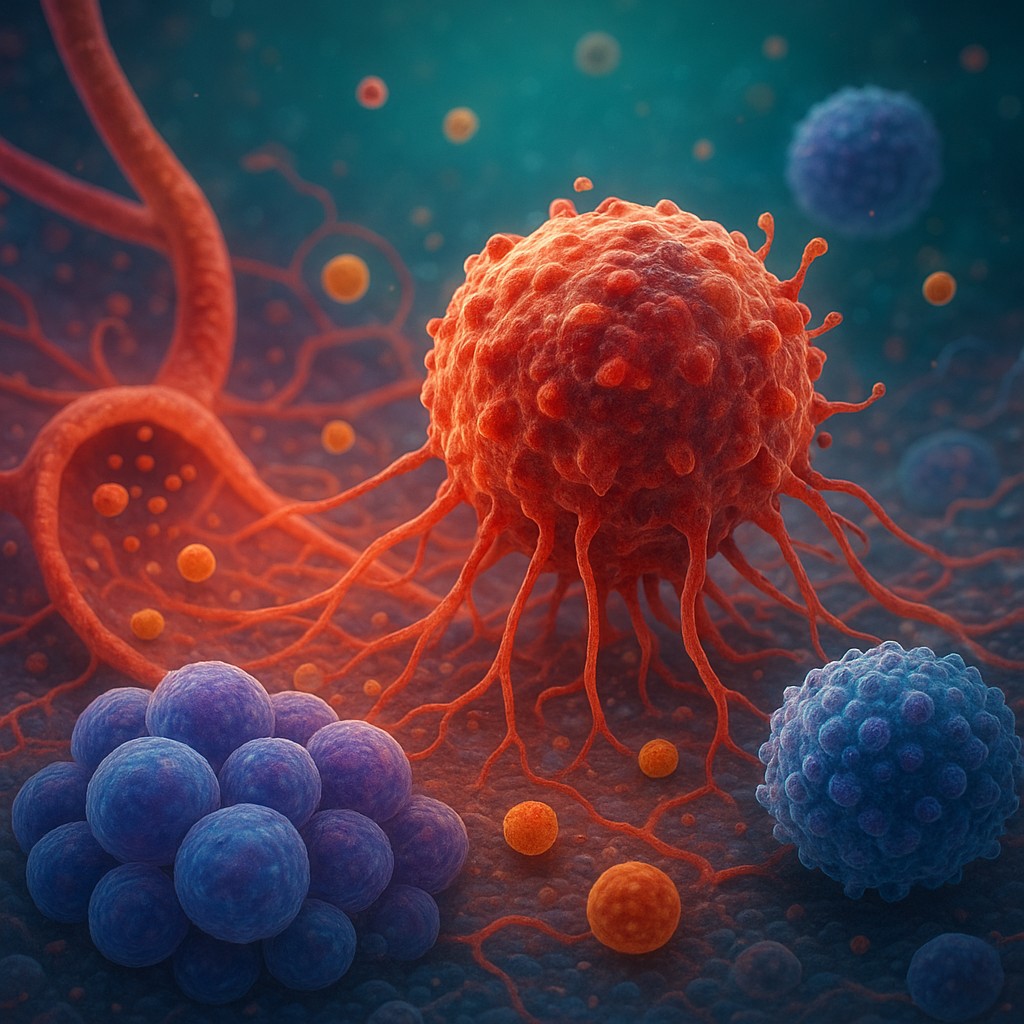
Imagine for a moment that your body is a bustling, high-tech city. This city is home to trillions of citizens, which we call cells. Each citizen has a specific job: some are architects building bones, others are messengers carrying signals, and some serve as the waste management crew keeping the streets clean. This city is governed by a strict set of rules kept in a sophisticated genetic library. These instructions tell every citizen when to work, when to rest, and, most importantly, when to stop making copies of themselves. Under normal conditions, this biological city functions in perfect harmony, balancing growth and decay.
However, even the most well-run city can face a crisis when a few citizens decide to ignore the law. Cancer is essentially a rebellion in our biological metropolis. It happens when a single cell develops a glitch in its instruction manual and starts acting in its own interest rather than for the good of the whole body. Instead of following the "stop" signals, this rogue cell begins to replicate uncontrollably, hogging resources and ignoring the polite requests of its neighbors to settle down. Understanding cancer means looking at how these tiny disruptions in our cellular blueprints can lead to a massive breakdown in the city's infrastructure. It is not just one disease, but a collection of related disorders where cells forget how to die and learn how to grow without limits.
The Instruction Manual and the System Glitch
At the heart of every cell is the nucleus, which houses our DNA. You can think of DNA as a massive, spiraling encyclopedia that contains every instruction needed to build and operate "You." When a cell needs to divide to replace a damaged neighbor, it checks a specific chapter on "Cellular Replication." This process is highly regulated by two types of genes that act like the pedals on a car. The first are proto-oncogenes, which function as the gas pedal, telling the cell to grow. The second are tumor suppressor genes, which act as the brakes, telling the cell to slow down or stop if things look suspicious.
Cancer begins when these genes undergo mutations, which are basically typos in the genetic code. Imagine if the gas pedal on a car got stuck to the floor while the brakes simultaneously snapped. The cell begins to speed through its life cycle, ignoring all traffic lights and stop signs. These mutations can be caused by many factors, including environmental toxins, radiation, or even a random clerical error during DNA copying. While our bodies have a fantastic "spell-check" system that usually catches and fixes these typos, a mistake occasionally slips through. Once that rogue instruction is locked in, the cell stops being a team player. It becomes an independent threat with one dangerous goal: infinite expansion.
The Art of Staying Immortal
One of the most fascinating and terrifying things about cancer cells is their refusal to age. Most healthy cells have a built-in expiration date. They are programmed to divide a certain number of times and then undergo a process called apoptosis, which is essentially a graceful biological suicide. This keeps the tissue fresh and prevents old, damaged cells from causing trouble. Cancer cells, however, find a way to bypass this "kill switch." They essentially find the fountain of youth by manipulating their telomeres, which are the protective caps at the end of chromosomes (the structures that hold our genes) that usually wear down as a cell ages.
By keeping these caps long and healthy, cancer cells avoid the signals that would normally tell them to stop dividing. This makes them "immortal" in a laboratory setting, meaning they can keep dividing for decades as long as they are fed. This immortality allows a small cluster of rogue cells to eventually grow into a tumor. While a normal cell might look at its surroundings and realize there is no more room to grow, a cancer cell lacks this "contact inhibition." It will happily pile on top of its neighbors, creating a chaotic, disorganized mass that disrupts the function of the organ it lives in.
A Comparison of Civilized Cells and Rogue Rebels
To better understand how these two types of cells differ in their daily lives, we can look at their behavior across several categories. The following table summarizes the distinctions between the law-abiding citizens of your body and the rebellious cancer cells.
| Feature |
Healthy Cells |
Cancer Cells |
| Growth Signal Needs |
Only divide when they receive an official "Go" signal from the body. |
Create their own growth signals or ignore the need for them entirely. |
| Response to "Stop" Signals |
Immediately stop dividing when they touch neighboring cells. |
Ignore physical boundaries and pile up on top of one another. |
| Life Span and Death |
Undergo programmed cell death (apoptosis) when old or damaged. |
Evade cell death signals and can divide indefinitely. |
| Energy Consumption |
Use energy efficiently through standard cellular breathing. |
Use energy inefficiently and hog sugar from surrounding tissues. |
| Location and Movement |
Stay in their assigned tissue or organ (unless they are blood cells). |
Can break away and travel to other parts of the body (metastasize). |
Bribing the Infrastructure for More Fuel
As a tumor grows, its inner cells eventually end up too far away from the nearest blood vessel to receive oxygen and nutrients. In a normal situation, these starving cells would simply die off. However, cancer cells are remarkably resourceful. They send out chemical distress signals that trick the body into building new plumbing specifically for the tumor. This process is called angiogenesis. It is as if a group of squatters in a building managed to convince the city's utility department to install new water lines and power grids just for their illegal apartment.
By hijacking the body's blood supply, the tumor ensures it has a private, high-speed delivery service for sugar and oxygen. This does more than just help the tumor grow; it also provides a convenient "highway" system. Once a tumor is connected to the blood vessels or the lymphatic system, individual cancer cells can break off and enter the stream. This is how cancer spreads to distant parts of the body, a process known as metastasis. A cell that started in the lung might catch a ride through the bloodstream and set up a new colony in the brain or the liver. This ability to colonize new territories is what makes late-stage cancer so difficult to treat.
Stealth Mode and Evading the Internal Police
You might wonder why our immune system, which is great at killing bacteria and viruses, doesn't just wipe out these rogue cells the moment they appear. The truth is that your immune system actually catches and destroys potential cancer cells quite often. However, successful cancer cells are masters of disguise. They develop ways to hide from the "Natural Killer" cells and T-cells that patrol the body. Some cancer cells coat themselves in proteins that act like a "cloaking device," making them look like perfectly normal, healthy tissue to the immune police.
Other cancer cells take a more aggressive approach to self-defense. They can release chemicals that actually "turn off" the immune cells nearby, creating a safe zone where the tumor can grow undisturbed. The immune cells are still there, but they are essentially lulled into a deep sleep, unaware that a massive rebellion is happening right in front of them. Modern breakthroughs in immunotherapy focus on this exact problem. Scientists are now creating drugs that "unmask" the cancer cells or "wake up" the immune system so it can do the job it was always meant to do.
The Metabolic Greed of the Rogue Cell
The way cancer cells process energy is also fundamentally different from how healthy cells operate. Most of our cells use oxygen to break down sugar in a very efficient way. Cancer cells, however, often rely on a much less efficient method called fermentation, even when plenty of oxygen is available. This is known as the Warburg Effect. While it seems backward for a cell to use a less efficient engine, this pathway allows the cancer cell to produce the raw "building blocks" (like fats and proteins) it needs for rapid division much faster than a normal cell could.
This high demand for fuel is why cancer patients often experience unintended weight loss. The tumor acts like a "metabolic sink," pulling huge amounts of sugar out of the blood to fuel its frantic expansion. It is a greedy neighbor that never turns off the lights and leaves all the taps running, eventually draining the resources of the entire community. By studying these unique energy habits, doctors are finding ways to "starve" tumors by targeting the specific pathways they use to process sugar, without harming the healthy cells that play by the rules.
Evolution Within the Tumor
One of the most challenging parts of treating cancer is that the tumor itself is constantly evolving. Because cancer cells are unstable, they mutate much faster than normal cells. Within a single tumor, you might have dozens of different groups, each with slightly different traits. When a patient undergoes chemotherapy, the drugs might kill 99 percent of the cancer cells. However, the remaining 1 percent might have a random mutation that makes them resistant to the drug. These survivors then multiply, creating a new tumor that is entirely immune to the previous treatment.
This "survival of the fittest" play-out inside a person's body is why many modern treatments use a "cocktail" of different drugs. By attacking the cancer from multiple angles at once, doctors hope to catch all the different variations before they have a chance to adapt. It is a high-stakes game of biological chess, where the opponent is constantly trying to rewrite the rules. Understanding this evolutionary nature of cancer has shifted the focus from finding a single "cure" to developing personalized medicine that can change as the cancer changes.
Working Together for a Healthier Future
While the mechanics of cancer can seem daunting, our understanding of these processes has grown immensely in the last few decades. We are no longer just guessing at how these rogue cells function; we are mapping their blueprints, tracking their fuel sources, and learning how to dismantle their disguises. Every piece of knowledge we gain about how a cell decides to divide or how it tricks a blood vessel into growing is a new tool in our medical toolkit. The shift from broad, aggressive treatments to precise, targeted therapies is already saving countless lives and turning what was once a death sentence into a manageable, long-term condition for many.
The story of cancer is ultimately a story about the resilience and complexity of life itself. It reminds us of the incredible coordination required to keep a human body functioning and the importance of supporting the systems that protect us. As we continue to decode the secrets hidden within our DNA, we move closer to a day where the "rebellion" of cancer can be stopped before it even begins. You should feel empowered by the fact that your body has trillions of loyal citizens working tirelessly for your health. With the help of modern science, we are getting better every day at making sure the rules of the city are respected. There is every reason to be optimistic about our ability to outsmart these rogue cells and protect the harmony of our biological metropolis.