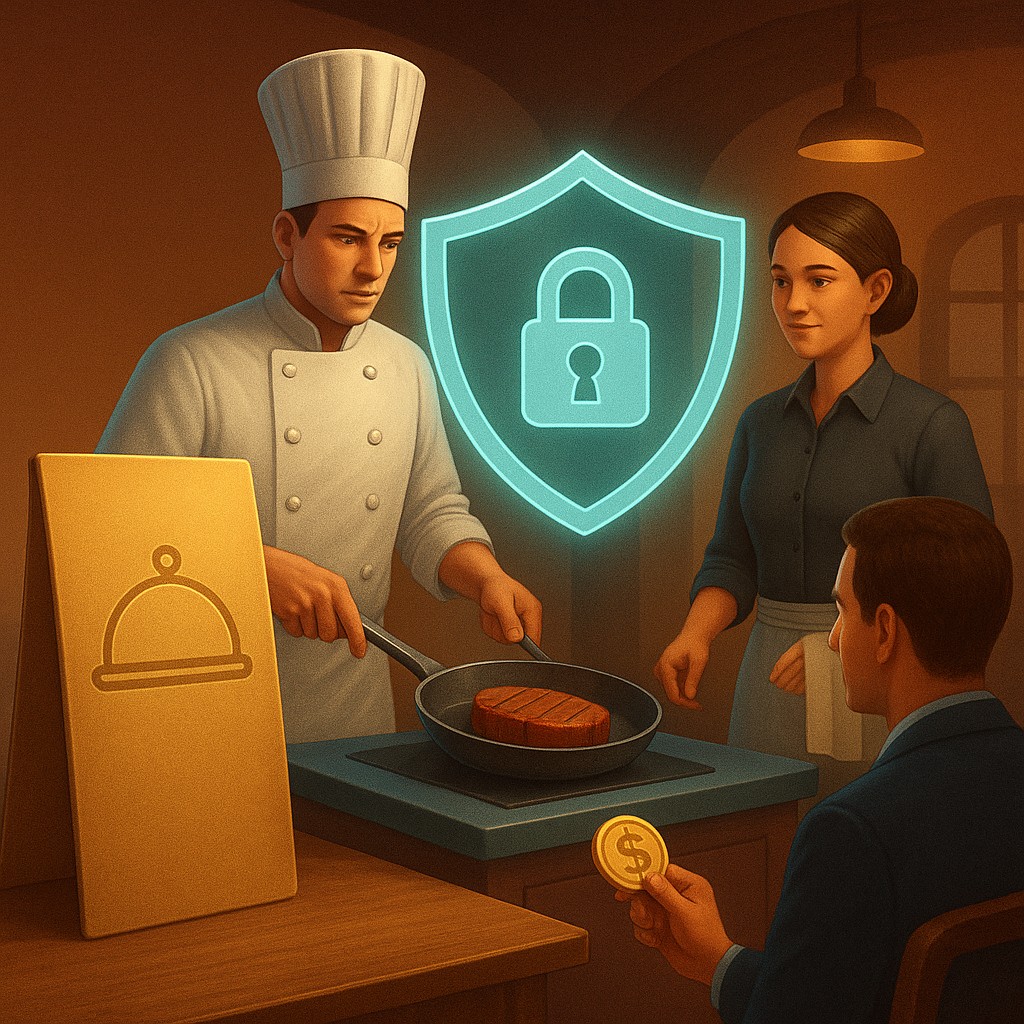
Think of a country like a high-end restaurant. As a citizen, you are a customer who has already paid for a gourmet meal through your taxes. The politicians are the chefs and servers entrusted to deliver that meal. Now, imagine if the chef started selling your steak out the back door to a friend, or if the server demanded an extra twenty dollars just to hand you a napkin. Suddenly, the restaurant is not serving its patrons, but rather the private interests of the staff. This is the essence of corruption. It shifts the primary goal of a government from public service to private gain, turning the wheels of progress into a rusty mess that only moves when greased with a favor or a bribe.
The quest to eliminate corruption is often treated like a hunt for a few bad apples, but history and social science tell us it is usually a problem with the orchard itself. If the soil is tainted and the fences are broken, even the best seeds will struggle to grow straight. Eliminating corruption is not just about catching the person with their hand in the cookie jar; it is about redesigning the kitchen so the cookie jar is clear, monitored by cameras, and requires three different keys held by three different people to open. It is an engineering challenge as much as a moral one, involving the clever use of technology, the balancing of power, and the courage of an informed public.
The Invisible Price Tag of a Dishonest System
To fix a problem, we must first understand the true depth of the damage. Many people think of corruption as a victimless crime or a cost of doing business, but the reality is far more sinister. Corruption acts like a hidden tax that falls hardest on those who can least afford it. When a government official takes a bribe to award a construction contract to an unqualified company, the result is not just a rich official. The result is a bridge that collapses during a storm, a school built with cheap materials, or a road that washes away after the first rain. The price of that bribe is paid in human lives and wasted potential.
Beyond the physical decay, corruption erodes the very bedrock of a functioning society: trust. When people believe that the game is rigged, they stop following the rules. Why pay taxes if the money disappears into a politician’s offshore account? Why follow the law if a well-connected cousin can make a phone call and have a ticket erased? This cynicism creates a feedback loop where the public checks out, leaving the corrupt with even more room to operate. To break this cycle, we have to look at corruption as a systemic virus that requires a multi-layered immune response.
Shining a Light in the Dark Corners of Finance
If corruption has a favorite habitat, it is the shadows. Secret meetings, anonymous donations, and dark money in political campaigns are the lifeblood of dishonest governance. The most effective way to kill a virus like this is with radical transparency. Many modern reformers suggest that every cent moving in or out of a political campaign should be tracked in real-time and made available to the public. If a massive corporation donates to a candidate, the voters should know exactly who is writing the check before they go to the polls, not six months after the election is over.
Digital technology offers us tools that previous generations could only dream of. Imagine a public ledger, perhaps based on secure database technology, where every government contract is listed alongside the bids from competing companies. If the public can see that a contract was awarded to a company owned by the minister’s brother-in-law, the outcry is immediate and the political cost becomes too high to bear. This shift from privacy by default to transparency by default is the first major pillar in dismantling the corrupt architecture of modern politics.
Comparing Traditional vs. Transparent Political Systems
| Feature |
Traditional Opaque System |
Transparent Modern System |
| Campaign Funding |
Anonymous dark money and private bags of cash. |
Fully disclosed, real-time digital tracking of all donations. |
| Contract Bidding |
Closed-door negotiations and favors for friends. |
Open, competitive digital auctions visible to the public. |
| Public Oversight |
Internal investigations that rarely see the light of day. |
Independent watchdogs and protected whistleblowers. |
| Asset Disclosure |
Officials keep their wealth a secret from the electorate. |
Mandatory public disclosure of assets for all high-level staff. |
Structural Checks and the Power of Institutional Friction
One of the oldest ideas in politics is that power corrupts, and absolute power corrupts absolutely. To combat this, we need to build friction into the system. This means ensuring that no single person or department has total control over a decision. If a governor wants to spend a billion dollars on a new dam, they should have to get approval from an independent budget office, pass a public environmental review, and face questioning from an opposition-led committee. These hurdles are not just red tape; they are safeguards designed to make it very difficult for one person to act selfishly without being noticed.
Another critical piece of this structural puzzle is the independence of the judiciary and the police. In a corrupt system, the president or prime minister can simply fire a prosecutor who gets too close to the truth. To eliminate corruption, the people who investigate the government must not be controlled by the government. This requires a civil service model where investigators are hired based on merit and cannot be fired for political reasons. When the law applies to the person at the top just as much as the person at the bottom, the incentive to be corrupt drops significantly because the risk of jail time becomes a very real reality.
The Myth of the Great Hero and the Reality of Civic Duty
A common misconception is that we just need to wait for an incorruptible hero to ride into town and clean up the mess. This is a dangerous myth because it promotes passivity. Searching for a perfect leader is like looking for a unicorn. Instead, we should assume that all humans are flawed and liable to succumb to temptation if the stakes are high and the risks are low. The goal is not to find a saint; it is to create a system where even a person with a hint of greed finds it impossible to steal because the safeguards are too strong.
The real hero in the fight against corruption is an engaged and educated public. In countries where corruption is low, it is usually because the citizens are expensive to satisfy. They demand high-quality services, they read the news, and they hold their representatives accountable at the ballot box. When a scandal breaks, the citizens do not just shrug and say that is just politics. They show up, they protest, and they vote the offenders out. This culture of accountability is the immune system of a democracy. Without it, any laws we write are just ink on paper.
Reimagining the Incentive Structure for Public Servants
Sometimes, corruption is a survival strategy. In some parts of the world, government employees are paid so little that they literally cannot feed their families without taking tips or bribes. While this does not excuse the behavior, it does explain it. A practical way to reduce low-level corruption is to ensure that civil servants like police officers, teachers, and clerks are paid a living wage. When someone has a good job with a pension and a sense of pride, they are much less likely to risk losing it all for a small bribe.
At higher levels, we need to change how politicians view their career path. Currently, many see politics as a stepping stone to a lucrative lobbying job. This is known as the revolving door problem. A politician might pass a law that helps a specific industry, and two years later, they are hired by that industry as a consultant with a million-dollar salary. To stop this, we need strict cooling off periods that ban former officials from lobbying for several years after leaving office. By removing the future payday for doing favors today, we align the politician’s interests back with the people they represent.
Bringing it All Together for a Cleaner Tomorrow
The road to a corruption-free society is not a sprint; it is an endurance race that requires constant vigilance. We have seen that the solution involves a blend of high-tech transparency, robust legal safeguards, and a fundamental shift in how we pay and monitor our officials. More importantly, it requires us to stop viewing corruption as an inevitable part of life. Human history is a long story of us overcoming "inevitable" problems, from smallpox to slavery. Corruption is no different. It is a man-made system, which means it can be unmade by human ingenuity and collective will.
As you step back into your role as a citizen, remember that your voice and your attention are the most powerful tools in this fight. Demand to see the data, support independent journalism, and never settle for the idea that this is just how things are. When we build systems that reward honesty and punish greed, we unlock the true potential of our communities. We are not just cleaning up a government; we are clearing the path for a future where every child has a fair shot, every bridge is safe, and every tax dollar is used to build a world we can all be proud of. The kitchen is being redesigned, and you are the most important inspector on the job.