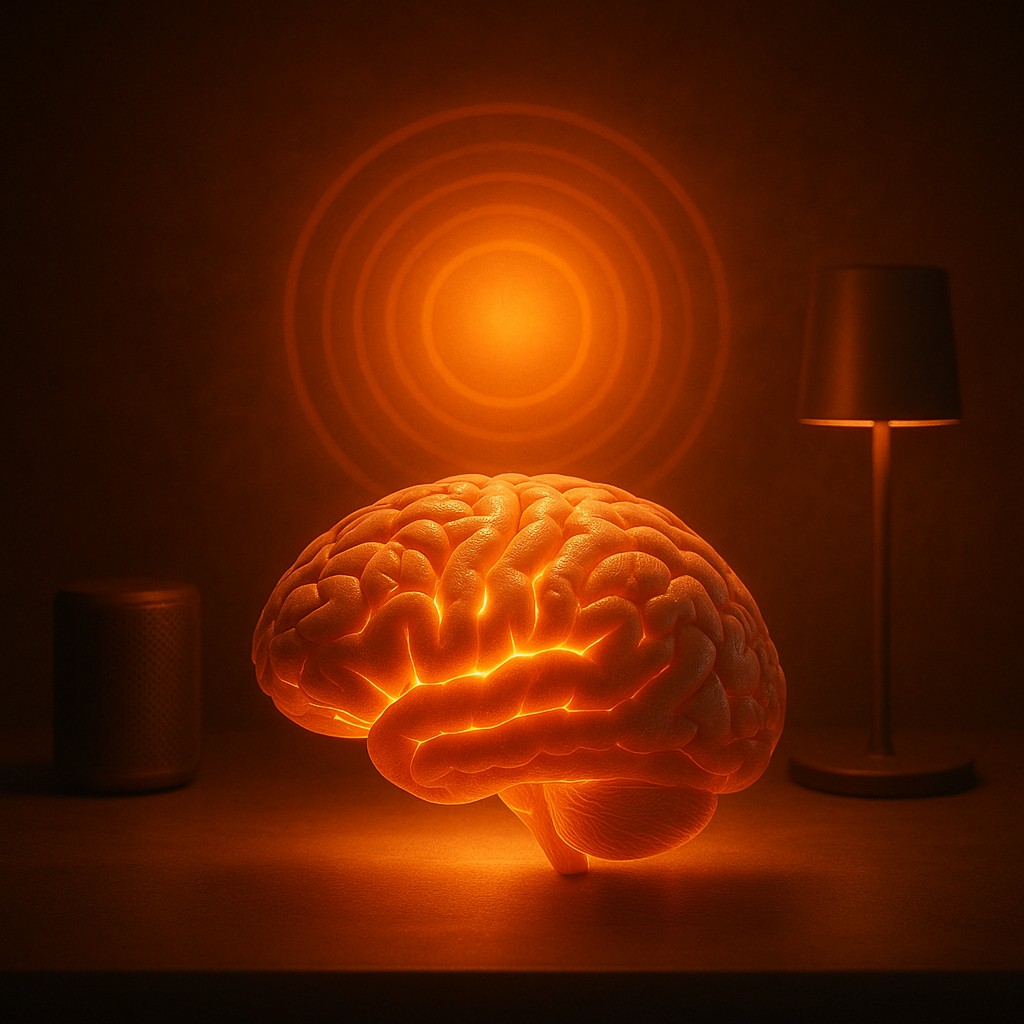
Imagine walking into a room where a soft, amber light pulses with a rhythmic hum. It feels less like a song and more like a heartbeat. You aren't at a futuristic spa or a niche art installation; you are participating in a cutting-edge clinical trial designed to "spring clean" your brain. For decades, we have viewed neurodegenerative conditions like Alzheimer’s as an inevitable decline, driven by a mysterious buildup of toxic proteins that clog the gears of memory. But a new frontier in neuroscience suggests the solution might not be a pill or complex surgery, but rather a specific, rhythmic language that our brain cells already speak.
The core of this breakthrough is a phenomenon called Gamma Entrainment. By using non-invasive light and sound therapy tuned to a precise frequency of 40 pulses per second - or 40 Hertz - researchers are attempting to "re-sync" the brain’s electrical activity. This isn’t about general relaxation or playing Mozart to get smarter; it is a tactical, mechanical intervention. It is based on the radical idea that if we can nudge the brain’s electrical rhythms back into a healthy pattern, we can wake up a biological cleanup crew that has been snoozing on the job. This approach seeks to turn the brain’s own immune system back on, allowing it to scrub away the "rust" and debris that interfere with our thoughts.
The Secret Symphony of Neural Oscillations
To understand why 40 Hertz matters, we first have to look at the brain as a massive, electrified orchestra. Your neurons are constantly firing and communicating through electrical pulses. When groups of neurons fire together, they create waves of activity known as brain rhythms or oscillations. These waves come in several "flavors" depending on what you are doing. Delta waves are the slow, heavy pulses of deep sleep, while Beta waves are the rapid spikes of active concentration. Gamma waves, which pulse between 30 and 100 times per second, are the highest frequency of all. They are the "workhorse" rhythms linked to high-level thinking, such as forming memories, solving problems, and processing what we see and hear.
In a healthy brain, Gamma rhythms act like a conductor, ensuring different regions stay in sync so they can exchange information efficiently. However, in people with neurodegenerative diseases, these Gamma rhythms often become weak or fragmented. It is as if the conductor has stepped off the podium, leaving the violins and the drums to play at different tempos. When the rhythm breaks down, the brain’s ability to process and store information follows. Researchers now believe this rhythmic decay isn't just a symptom; it might be a primary cause of mental decline, creating a toxic environment where waste products pile up unchecked.
Recruiting the Brain’s Internal Janitors
The most fascinating players in this story are the microglia. Often overlooked in favor of the more "glamorous" neurons, microglia are the resident immune cells of the brain. Think of them as a cross between a security guard and a specialized janitor. In a healthy state, they crawl around the brain, sniffing out germs and gobbling up cellular trash. Most importantly, they are responsible for clearing out Amyloid-beta and Tau, the two toxic proteins that are the hallmarks of Alzheimer’s disease. In a struggling brain, however, microglia often fall into a state of "senescence," or chronic inflammation. They stop cleaning and start causing collateral damage to healthy cells.
This is where 40 Hertz light and sound therapy creates a biological bridge. Recent studies show that when the brain is exposed to sights and sounds at this specific frequency, it "entrains" to the rhythm, meaning the neurons begin to fire in lockstep with the external signals. This synchronized firing sends a powerful message to the microglia. Researchers have observed that under the influence of Gamma Entrainment, microglia physically transform. They get bigger, their "mouths" (or eating pathways) open wider, and they actively begin to seek out and digest the protein plaques that cause memory loss. It is a stunning example of how a physical, rhythmic signal can change how a cell behaves.
Comparing Sensory Rhythms and Cognitive Effects
While using sound and light for health is an ancient concept, the modern scientific approach is remarkably precise. It is crucial to distinguish these clinical protocols from the "binaural beats" or "meditation music" found on the internet. Below is a comparison of how different types of sensory stimulation interact with the brain, highlighting why 40Hz is so unique in clinical trials.
| Type of Stimulus |
Primary Frequency Range |
Typical Goal |
How it Works |
| Ambient Music |
Variable (Complex) |
Mood and relaxation |
Releases dopamine and processes emotions |
| Alpha/Theta Beats |
4 Hz to 12 Hz |
Stress reduction and light sleep |
Calms the nervous system via the vagus nerve |
| Gamma Entrainment |
Exactly 40 Hz |
Brain maintenance and protein clearance |
Activates microglia for a metabolic cleanup |
| High-Frequency Noise |
100+ Hz |
Focus or masking distractions |
Blocks out background noise |
As the table suggests, the 40Hz intervention is not about "vibes" or general wellness. It is an intentional, mechanical trigger. This precision allows the therapy to move past the brain's emotional centers and directly influence the metabolic and immune structures that govern brain health.
The Plumbing System and the Power of Pulsing
One of the newest and most exciting discoveries in this field involves the "glymphatic system," which is essentially the brain’s plumbing. Because the brain sits behind a protective blood-brain barrier, it cannot rely on the body’s normal lymphatic system to wash away waste. Instead, it uses cerebrospinal fluid to flush out toxins, a process that mainly happens while we sleep. New research suggests that 40Hz Gamma Entrainment significantly boosts this flushing mechanism. It appears that the rhythmic firing of neurons causes the blood vessels in the brain to pulse in a specific way, acting like a pump that pushes fluid through the brain tissue more effectively.
This discovery changes our perspective on brain health from a chemical problem to a physical one involving fluid dynamics. If the brain’s "pipes" are clogged, no amount of medicine will work because the waste has nowhere to go. By using light and sound to increase "arterial pulsatility" - the rhythmic throbbing of the arteries - doctors are essentially power-washing the brain from the inside out. This holistic view of the brain as a system of rhythms, fluids, and immune responses is what makes current international protocols so promising. It addresses the environment of the brain rather than just trying to fix a single broken cell.
Common Misconceptions About Brain Stimulation
Whenever a non-invasive therapy makes waves in the media, myths usually follow. The most common misconception is that any flickering light or rhythmic sound will do the trick. In reality, the brain is highly sensitive to the precision of the pulse. If the light flickers at 38Hz or 42Hz, the biological response in the microglia is much weaker or entirely absent. This is why researchers emphasize that "brain music" apps are rarely a substitute for medical-grade devices that calibrate frequency with microsecond accuracy.
Another misconception is that more is always better. Some might assume that if 40Hz is good, 80Hz must be twice as effective. However, the brain operates within specific "biological windows." The 40Hz frequency is a "Goldilocks" zone that matches the natural speed of certain cells that act as the brain's clock. Pushing the brain too hard or using jarring frequencies can lead to over-excitement or even seizures in people who are predisposed to them. This is a medical intervention, and like any medicine, the "dosage" of frequency and duration is the key to safety and success.
Navigating the Challenges of Human Trials
While the results in animal models have been spectacular, translating these findings to humans presents a unique set of hurdles. A mouse brain is much smaller and less complex than a human brain, making it easier for sensory signals to reach deep structures like the hippocampus, where memories are stored. In humans, the thick skull and the sheer volume of the brain mean we have to be more strategic about how we deliver the "message." Current trials are testing whether combined "multisensory" stimulation - light and sound together - is more effective, as the two inputs can reinforce each other and reach wider areas of the brain.
There is also the question of "habituation," which is the brain’s tendency to ignore repetitive sounds or sights. If you live near a train track, eventually you stop hearing the trains. Researchers are currently investigating whether 40Hz therapy needs to be varied or delivered in specific intervals to prevent the brain from tuning it out. Despite these challenges, early human trials show the therapy is safe and appears to improve sleep quality and daily functioning in patients with mild memory loss. The goal is not just to "cure" a disease once it has taken hold, but to provide a tool people can use at home to protect their "cognitive reserve" as they age.
The Future of Passive Brain Maintenance
Imagine a world where your morning routine includes twenty minutes of reading under a specific lamp or eating breakfast while a subtle 40Hz hum plays in the background. If clinical trials continue to show positive results, we may see Gamma Entrainment built into the very fabric of our homes. This could redefine how we approach aging, shifting the focus from reacting to a crisis to proactive maintenance. Instead of waiting for the first signs of memory loss, we could use these sensory tools to keep our "janitors" active and our "plumbing" clear throughout our adult lives.
This approach represents a shift toward "biophysiological" medicine, where we treat the body with the physical signals it evolved to understand, rather than just chemicals. It empowers people to take an active role in their brain health through simple, non-invasive habits. As we learn more about how the brain responds to rhythm, we realize the key to a healthy mind might be as simple as finding the right beat and sticking to it. Your brain is a masterpiece of electrical engineering, and sometimes, all it needs is a little rhythmic nudge to keep the music playing beautifully for a lifetime.