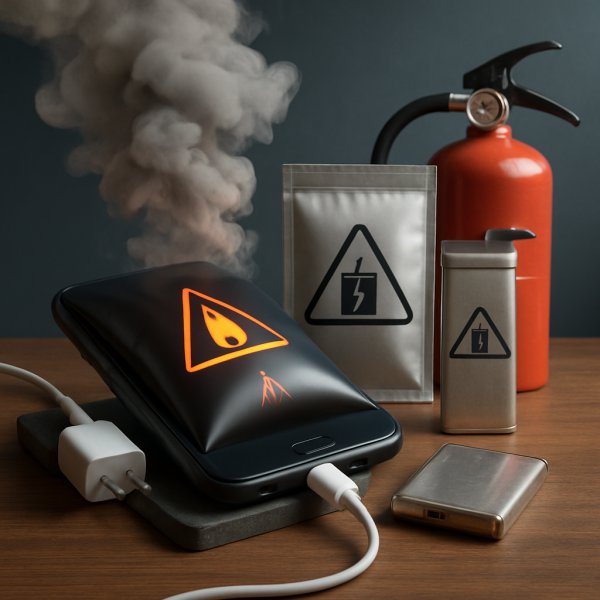
When your battery looks like it’s eaten a marshmallow: why this matters more than you think
You are not alone if you have ever opened a laptop sleeve or phone case and noticed a bulge where there should be a flat battery. A swollen battery is a small, quiet problem that can quickly become a loud, dangerous one. It might start as a cosmetic puffiness under the back cover, but because batteries store chemical energy, that puff often signals internal breakdown, gas generation, and a real risk of fire or chemical release. Treating a swollen battery like a minor annoyance is asking for trouble.
Think of a swollen battery like a balloon inside a backpack. At first the balloon stretches the fabric a little, then it pushes against zippers, and at worst it pops when you least expect it. The battery does the same, except instead of an embarrassing noise, you may get heat, flames, or toxic fumes. The good news is that most swollen batteries give warning signs, and with calm, correct actions you can reduce the risk to yourself, your home, and the environment. This guide teaches what’s happening, why it matters, and exactly what to do now, next, and later.
This is practical advice, not techno-panic. You will get clear step-by-step actions for immediate safety, a short table that helps you decide what to do for different devices, and an explanation of how to dispose of or replace the battery responsibly. Along the way I will correct common myths, give prevention tips, and invite you to pause and think about how to keep your gear safe. By the time you finish, you will feel calm, informed, and ready to act.
What causes a battery to swell - plain science without the jargon
Most consumer electronics use lithium-ion batteries because they store a lot of energy in a small package. Inside these batteries are layers of materials that shuttle lithium ions back and forth. Over time, or because of abuse like overcharging, overheating, or physical damage, the internal chemistry can break down. When that happens, gases form inside the battery cell. The gases have nowhere to go, so the thin metal or plastic pouch expands and the battery bulges.
Other chemistries, such as nickel-based and lead-acid, can also show swelling, but the mechanisms and risks differ. Lead-acid batteries may vent gas when overcharged and become misshapen. Nickel-metal hydride batteries rarely swell, but they can. For the vast majority of modern phones, laptops, e-bikes, and vape devices, you are dealing with lithium-ion pouch or cylindrical cells that swell when they fail.
Swelling is a symptom, not the disease. It tells you that internal damage is happening. Left alone, the situation can escalate to an internal short, rapid heating, and in rare but real cases, thermal runaway - a self-accelerating reaction that produces heat, flame, and noxious gases. That is why quick, sensible action matters more than curiosity.
First things to do right now - an easy, calm emergency checklist
If you discover a swollen battery, your first priority is safety. The following steps are ordered and simple so you can act quickly without making the situation worse.
- Power down. Turn off the device if it is safe to do so. This reduces the chance of an electrical event. If the device is hot, wait until it cools before touching it.
- Stop charging. Unplug chargers immediately and do not place the device on a charger. Charging a compromised battery can accelerate failure.
- Move it away from combustible materials. Place the device on a non-flammable surface such as concrete, tile, stone, or a metal tray. Keep it away from curtains, papers, bedding, and anything that burns easily.
- Don’t puncture, press, or try to flatten it. Puncturing a swollen battery can release flammable liquids and gases, and cause a fire or explosion. Do not use needles or tools to release pressure.
- If you see smoke, smell strong chemical odors, or spots of liquid, evacuate and call emergency services. Battery fires can produce toxic gases and are hazardous to fight without proper equipment.
These steps are deliberately conservative, because the cost of underreacting can be high. If you have children, pets, or roommates, alert them and keep them at a safe distance.
Device-specific guidance - how to handle phones, laptops, tools, and vehicles
Batteries vary by size, chemistry, and how integrated they are in the device. Below is a compact table that summarizes immediate actions and the best next steps for common devices. Use it as a quick reference when you need to decide what to do.
| Device type |
Immediate actions (first 5 minutes) |
Short-term storage or transport |
Best disposal or service action |
| Smartphone / small tablet |
Power off, stop charging, place on non-flammable surface |
Put in a fireproof battery bag or metal container, carry in person to recycler |
Use manufacturer service, retailer take-back, or local hazardous waste recycler |
| Laptop |
Shut down and unplug, remove battery if user-removable, place on non-flammable surface |
If removable, store in a fireproof pouch or metal box; if built-in, take to service |
Authorized service center or certified e-waste recycler; do not attempt cell replacement unless trained |
| E-scooter / e-bike / power tool |
Power off, disconnect battery if removable, move outdoors to non-flammable area |
Transport upright in metal container if vehicle-size, call local hazardous waste for bulk pickup |
Return to manufacturer or certified battery recycler, especially for high-capacity packs |
| Vape or small cylindrical cell |
Power off, remove battery if safe, do not continue using |
Store in a battery safe bag, visit battery retailer or electronics recycler |
Recycle at a battery drop-off; do not put in household trash |
| Car / lead-acid battery |
Disconnect negative cable first, avoid sparks, move vehicle to ventilated area |
Keep upright, avoid tipping or spilling electrolyte |
Return to auto shop or recycling center - lead-acid batteries are highly recyclable |
| Airline or long-distance transport |
Do not transport swollen lithium batteries by air |
Contact carrier and waste professionals for guidance |
Many carriers refuse; follow hazardous goods rules and local regulations |
If you can remove the battery safely - how to do it the right way
Sometimes the battery is user-removable, other times it is glued or integrated. If your battery is designed to be removed by the user and you feel comfortable doing it, follow these careful steps. If you are unsure, stop and seek professional help.
First, power off the device and let it cool. Work on a non-flammable surface like a ceramic tile or metal tray. Use safety glasses and gloves - puncture-resistant gloves are ideal. Carefully remove the back cover using the proper tool for your device - do not pry with metal if it might puncture the battery.
If the battery comes out intact, do not squeeze it. Place it into a fireproof battery bag if you have one, or a metal container such as an old cookie tin with a lid. Do not place it in an ordinary plastic bag or the trash. Transport the battery to a certified battery recycler or drop-off as soon as possible. If you cannot remove it without force or risk, stop and take the device to a professional service center.
When a battery is smoking or on fire - emergency response
A battery on fire is a serious emergency. Lithium-ion fires are energetic and can reignite. If you witness smoke or flames:
- Evacuate people and animals from the area immediately.
- Call emergency services. Provide exact location and explain it is an electrical or battery fire.
- If you have a class ABC dry chemical extinguisher handy and trained to use it, you may attempt to control small flames from a safe distance. Water can be used cautiously on lithium-ion fires in some cases to cool surrounding materials, but it may not suppress the chemical reaction within the cell. Avoid using CO2 only, as it may not be effective for all battery fires.
- If indoors and safe to do so, close doors between the fire and other areas to slow smoke spread.
- After the incident, stay away until professionals declare the area safe. Battery fires can release toxic gases such as hydrogen fluoride in some conditions.
Emergency response is not the time for experimentation. The best action is to get trained help and keep a safe distance.
Disposal, recycling, and repairs - the responsible path
Swollen batteries are hazardous waste and cannot be tossed in the regular trash. Improper disposal risks fires in trash trucks and landfills, and it wastes valuable materials. Here are safe, practical steps to dispose of or replace the battery.
- Contact the device manufacturer or retailer. Many brands offer mail-in or in-store battery replacement programs. If the device is under warranty, you may have free or discounted repair.
- Use certified battery recyclers. Municipal hazardous waste centers or licensed e-waste recyclers accept swollen batteries. Search for "battery recycling near me" and verify credentials.
- For large batteries, such as e-bike or power tool packs, call your municipal hazardous waste service to schedule a bulk pickup or find a specialized recycler. Some retailers with trade-in programs accept large packs.
- Do not ship a swollen battery in household mail, especially by air. Airlines and postal services have strict hazardous materials rules and may refuse or require special packaging and documentation.
- Keep documentation. If you return a battery to a store or recycler, note the time, who you talked to, and take a photo. This can help if there are follow-up questions or claims.
Responsible disposal protects you and the planet, because many battery materials are recyclable and hazardous components are handled safely.
Common myths and mistakes - what not to do
Misconceptions about swollen batteries are widespread, and acting on them can make things worse. Let us bust a few persistent myths.
Myth - You can press a swollen battery and flatten it. False. Pressing or puncturing a battery can release flammable electrolyte and cause a fire or chemical burn. Never try to "deflate" a battery.
Myth - Freezing a swollen battery will fix it. False. Extremely cold temperatures can slow chemical reactions, but freezing does not reverse internal damage. It may also cause condensation that damages the device.
Myth - If it still works, keep using it. Risky. A working device with a swollen battery is an unstable situation. Back up important data immediately, then stop using and get professional help.
Myth - You can safely throw a swollen battery in the trash if it is enclosed in a box. False. Trash handling equipment can puncture batteries and start fires. Always recycle or dispose at authorized facilities.
Myth - Baking soda or household remedies will neutralize it. False. Household chemicals do not stabilize or neutralize a compromised battery. Leave containment to professionals.
Avoiding these mistakes will keep you and others safer.
Preventing swelling - habits that extend battery life
Prevention is not just for neat people, it is the most powerful thing you can do. Simple habits reduce stress on batteries and delay or prevent swelling.
Charge smart - avoid leaving devices at 100 percent or 0 percent for long periods, and unplug chargers when charging is done. Many devices now have battery health settings that limit charge to 80 or 90 percent for longevity.
Keep it cool - heat is a battery killer. Avoid leaving devices in hot cars or in direct sun for prolonged periods. If a device gets hot while charging, consider charging in a cooler environment.
Use the right charger - use manufacturer-recommended chargers and cables. Cheap or mismatched chargers can overheat or overcharge batteries.
Store properly - if you need to store a device for months, store it at about 40 to 60 percent charge in a cool, dry place.
Inspect regularly - check devices periodically for swelling, unusual heat, or degraded performance. Early detection makes disposal safer and easier.
Good habits keep batteries working longer and reduce the chance of swelling in the first place.
Reflection questions to make the advice stick
- Which devices in my home are more than two years old and use lithium-ion batteries? Are any of them showing signs of wear or bulging?
- Where would I safely place a swollen device right now if I discovered it - tile floor, metal tray, or the couch?
- Do I have a plan for battery disposal in my city - a recycler, a manufacturer take-back, or municipal hazardous waste pickup?
- Which charging habits could I change today to reduce battery stress - unplugging overnight, limiting charging to 80 percent, or avoiding cheap chargers?
Pause for a moment and answer these three to four questions in a notebook or on your phone. Simple planning reduces panic and improves safety if a battery problem appears.
Quick troubleshooting checklist you can print or memorize
- See bulge? Power off, stop charging, move to non-flammable surface.
- Removable battery? If you can safely remove it, place it in a metal container or battery bag and recycle promptly.
- Smoke or fire? Evacuate, call emergency services, alert others.
- Unsure about removal or size? Take the device to an authorized service center or recycler.
- Need to transport? Keep in a fireproof container, carry in person, follow local rules; do not fly.
This checklist condenses the most important steps into a quick, usable format.
Final thoughts - calm, confident, and responsible
A swollen battery is a solved problem when you treat it with a calm, methodical response. You do not need to become a battery expert to act safely. Power down, stop charging, isolate the device on a non-flammable surface, back up any immediate data if the device still functions, and then take the battery or device to a certified recycler or service center. If you see smoke or fire, prioritize evacuation and call emergency services. Avoid puncturing, pressing, attempting home repairs, or throwing the battery in the trash.
Think of this like learning to handle a small household emergency - doable, non-panicky, and empowering. With a few good habits, sensible tools like a battery bag or a metal tray, and knowledge of local disposal options, you will reduce risk and waste. The next time you notice a bulge, you will act with the calm confidence of someone who knows the right steps. You will also be doing the planet a favor, because proper recycling keeps hazardous materials out of the environment and recovers valuable resources.
Remember, safety is practical. If ever in doubt, choose caution and consult professionals. You have the knowledge now - use it to protect yourself and those around you.