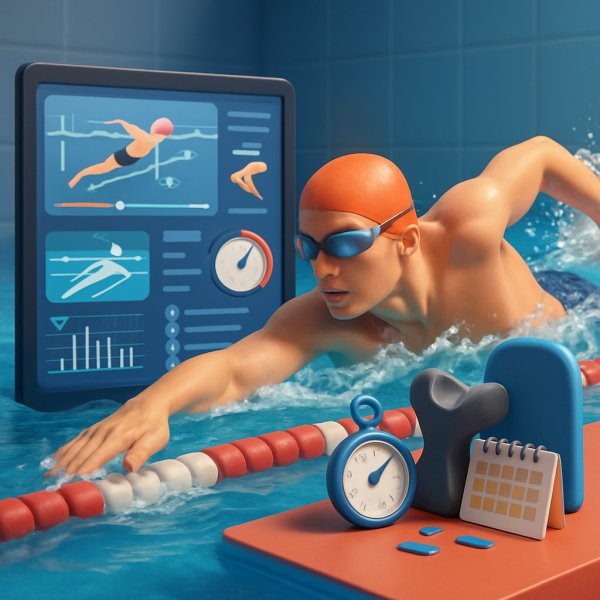
Want to shave seconds off your swim time? Imagine slicing through water like a knife through silk
Picture this: you push off the wall, glide, and for a flash you feel like you are flying. Then fatigue creeps in, your stroke shortens, and those precious seconds slip away. What if the secret to going faster was not only harder training, but smarter training, better technique, and tiny habits that add up? You do not need to turn into an elite athlete overnight; you need a plan that blends physics, physiology, and practical drills into a habit you actually enjoy. This guide will teach you how to be measurably faster, with clear drills, a simple 30-day plan, myth busting, and a case study you can copy.
The real reasons you lose time in the pool: drag, power, and pacing made simple
Swimming speed is fundamentally about reducing resistance and increasing forward thrust. Water is 800 times denser than air, so even small technical flaws create big slowdowns. When your body position is low in the water you create drag. When your stroke is short or your kick is inefficient you waste energy. When your race strategy is wrong you start too fast and fade, or start too slow and cannot catch up.
Physiology matters too. Fast swimming requires both aerobic capacity for repeatability and anaerobic power for sprinting and sprint finishes. Research in sports physiology shows interval training improves both speed and endurance better than endless slow laps, while technique work reduces drag and saves energy. In short, swim faster by combining technique, targeted conditioning, and smarter pacing.
Quick diagnostic: what to check in your next swim
- Record a 25 or 50 with phone video from the side and above, and time it. Watch for head position, hips sinking, and pauses in propulsion.
- Count strokes per 25 and strokes per length at race pace; fewer efficient strokes usually beat many choppy strokes.
- Note where you lose speed: first 15 meters, middle, or finish. That reveals whether you need starts, sustaining speed, or sprint endurance.
The three pillars to accelerate your speed: technique, conditioning, and race craft
Technique: Technique is high-return, low-risk. Small changes to body alignment, entry angle, and early catch produce big speed gains. Focus on a flat, horizontal body line with head neutral, fingertips leading, and a long early vertical forearm catch that pulls water back rather than down. Do drills like single-arm freestyle, catch-up, and sculling to feel the water and improve the catch phase. These drills transfer directly to faster, more efficient strokes.
Conditioning: Not all cardio is equal. Short, high-intensity interval sets - for example 8 x 50 meters at 90-95 percent with full rest - build race speed and lactic tolerance. Mixed with aerobic sets for recovery and technique-focused reps, these produce balanced improvement. Strength work matters too; core stability and hip-drive exercises on land improve your streamline and kick. Studies indicate swimmers who combine pool intervals with dryland strength training get faster times than those who only swim.
Race craft: Pacing is tactical. For a 100 meter event, a common mistake is an all-out first 50 followed by collapse. Instead, practice negative splits in training: swim the second half slightly faster than the first. Work on starts and turns too; they can account for 20-30 percent of race time in short events, so a better turn or faster breakout pays off big.
Drills, sets, and a tiny table to keep it practical
Below is a simple table of drills, what they fix, and how to do them. Use each drill 5 to 10 minutes during a session.
| Drill |
Fixes |
How to do it |
| Single-arm freestyle |
Improves catch and rotation |
Swim 25s alternating arms, focus on long reach and early vertical forearm |
| Sculling |
Feel and grab water |
4 x 25 scull at mid-body, concentrate on pressure on palm and forearm |
| Pull buoy + tempo trainer |
Develops catch without kicking fatigue |
6 x 50 at controlled tempo, focus on stroke length |
| Underwater dolphin kick |
Better starts and turns |
4 x 25 push-off strong underwater, limit breathing |
"Practice is not repetition without reflection; it is repetition with slight correction each time."
Include one set example per week: Warm-up 400 easy, technique drills 200, main set 8 x 50 race pace with 30-45 seconds rest, pull 200 easy, cooldown 200. Measure times and aim to reduce cumulative time week to week.
Common misconceptions that slow swimmers down (and why they are wrong)
Many swimmers think more laps equals more speed, but quantity without quality ingrains bad technique. Others believe kicking harder always makes you faster, yet an inefficient kick wastes oxygen and drops the hips. Some assume starts and turns are minor; in sprint events they can decide races. Correcting these misconceptions saves training time and accelerates improvement.
Reflective question: Which of these myths have you been following? Make a single commitment: replace one long, slow set per week with a focused interval set and watch how your speed responds.
A short case study: Maya cut 6 seconds off her 100 meter time in 8 weeks
Maya was a club swimmer with a 100 meter time that plateaued. She filmed her stroke, then focused each week on one measurable change: neutral head position, early vertical forearm, then interval sets for anaerobic capacity, and finally better turns. She also added two 20-minute dryland sessions a week targeting core and hip drive. By week 4 her stroke count per 25 fell by two strokes; by week 8 her race splits were more even and she had a 6 second drop. The combination of technique priority, targeted intervals, and dryland strength produced the improvement, not just more mileage.
Simple 30-day sprint plan you can start tomorrow
Week 1: Baseline test 100, video form, and focus on head and hips during drills. Week 2: Add 2 interval sessions (e.g., 10 x 50 with rest), keep 1 technique session. Week 3: Increase intensity on intervals, add turns/start practice. Week 4: Time trials, reduce volume, sharpen race pace and starts. Do two dryland strength sessions weekly, prioritize sleep and nutrition, and log times to track progress.
Small challenge: This week, pick a 25 or 50 to time, then film it and change just one thing next session - maybe a neutral head. Re-time after two weeks and measure change.
Final words that actually help: consistency, focus, and curiosity
Speed comes from deliberate practice, not punishment. Be curious, experiment with one variable at a time, and measure. Celebrate small wins - one fewer stroke, smoother turns, a cleaner breakout. Read coaches like Eddie Reese or research summaries in the International Journal of Sports Physiology and Performance to deepen understanding when you want specifics. Swim smart, train intentionally, and enjoy the delicious sensation when you push off and the pool lets you fly.