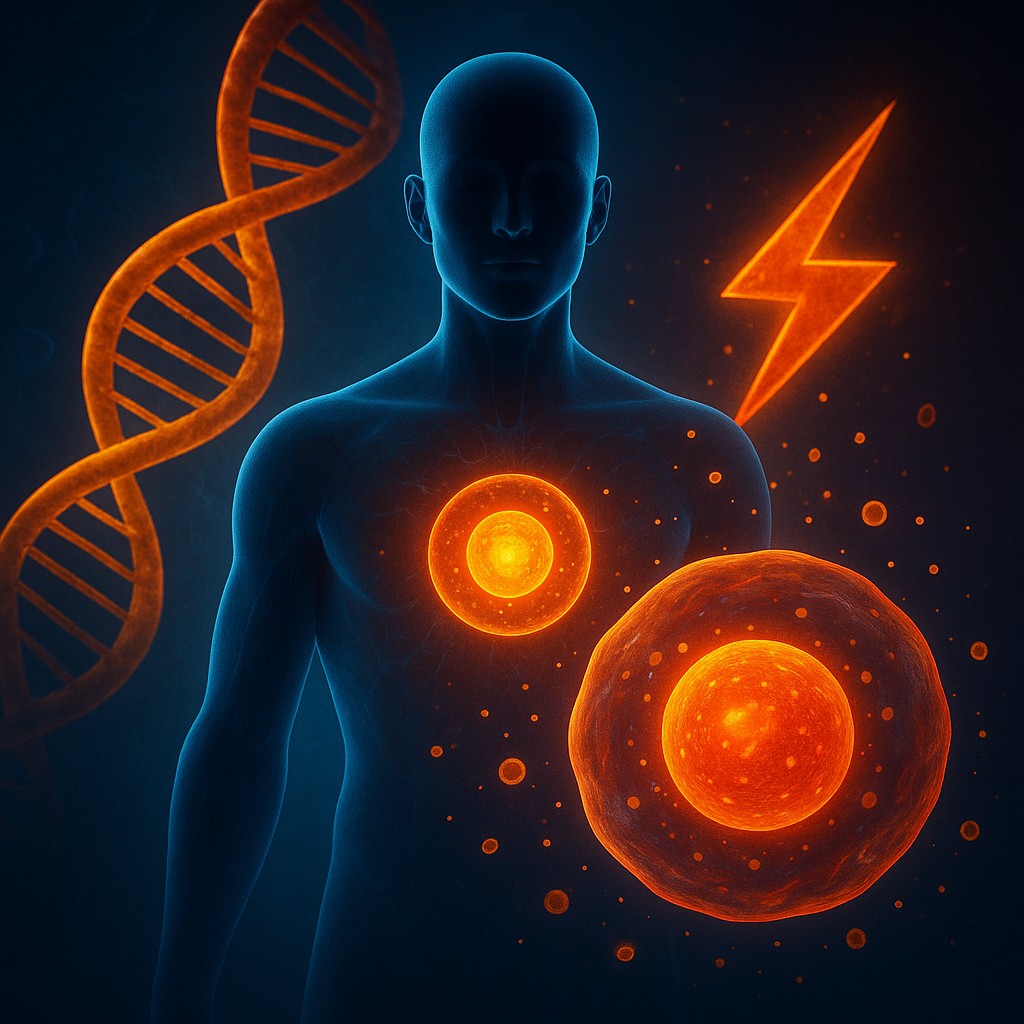
Imagine for a moment that your body is a high-end sports car. If you keep that car parked in a climate-controlled garage, never rev the engine, and only drive it at fifteen miles per hour on perfectly paved roads, you might think you are preserving it. In reality, the seals will dry out, the battery will die, and the fuel will turn to sludge. Biological systems are even stranger because, unlike cars, they actually get stronger when they take a bit of a beating. We often think of stress as the ultimate villain of the modern age - a silent killer that raises our blood pressure and turns our hair gray. While constant, unrelenting stress is indeed a disaster for our health, there is a secret, positive side to the story. Small amounts of trouble can actually make us feel younger, faster, and smarter.
This phenomenon is known as hormesis, a term taken from the Greek word hormāein, which means "to set in motion" or "to urge on." It describes a biological paradox where a substance or experience that is toxic in high doses actually provides a health benefit in low doses. Think of it as a biological version of the "what doesn't kill you makes you stronger" mantra, but backed by hard science. By intentionally putting our cells through brief, manageable bouts of discomfort, we trigger an ancient survival kit hidden inside our DNA. This kit doesn't just repair the damage; it goes several steps further by cleaning up old cellular trash and strengthening our internal defenses against future problems.
The Biological Sweet Spot and the Resilience Curve
To understand hormesis, we have to look at the dose-response curve, which is the foundation of how drugs and toxins are studied. Most people assume that if something is bad for you, the danger increases in a straight line. If one cigarette is bad, ten must be ten times worse. However, many biological processes follow a U-shaped or J-shaped curve. In these models, a "zero" dose of stress leads to stagnation and fragility. A moderate dose leads to peak health and adaptation, while an excessive dose leads to injury or death. This middle ground is where the magic happens. It is the biological sweet spot where the body realizes it is under threat and decides to upgrade its hardware rather than just sitting around waiting for the end.
When we experience one of these healthy stressors, our cells respond by hitting a master switch known as Nrf2. This is a protein that acts as the "director of internal security" for our cells. When a mild stressor activates Nrf2, it enters the cell's command center and turns on over 200 genes responsible for clearing out toxins and protecting the body. This is why eating a little bit of broccoli, which contains a mild natural toxin called sulforaphane, is good for you. The broccoli isn't "healthy" just because it contains antioxidants; it is healthy because its mild toxicity tricks your body into producing its own, much more powerful antioxidants. You are essentially hacking your own survival mechanisms to stay in peak condition.
Turning Up the Heat and Finding the Cold Truth
One of the most popular ways to trigger hormesis is by changing your temperature. Humans have used saunas and cold plunges for thousands of years, but we have only recently understood why they work on a molecular level. When you sit in a hot sauna, your body temperature begins to rise. This is technically a threat to the stability of your proteins. In response, your cells produce Heat Shock Proteins (HSPs). These proteins act like cellular "folding instructors." They find other proteins that have become tangled or misshapen due to stress and fold them back into their correct, working shapes. This process prevents the buildup of protein "junk" that is often linked to brain diseases and general aging.
On the flip side, cold exposure - such as a thirty-second freezing shower or a dip in an ice bath - triggers a different but equally powerful response. The sudden shock of the cold forces the body to produce norepinephrine, a chemical that improves focus and mood, while also activating "brown fat." Unlike regular white fat, which stores energy, brown fat burns energy to produce heat. This process, called thermogenesis, helps your metabolism and challenges your blood vessels to tighten and expand quickly. This "vascular gymnastics" keeps your arteries flexible and tough. The key, as always, is how long you stay in. Five minutes in a freezing lake can be a life-extending tonic, while two hours in that same lake is a medical emergency.
| Stressor Type |
Biological Trigger |
Primary Benefit |
| Intense Exercise |
Micro-tears and reactive oxygen |
New mitochondria and muscle repair |
| Cold Exposure |
Norepinephrine & Brown Fat |
Better metabolism and immune strength |
| Heat Exposure |
Heat Shock Proteins (HSPs) |
Protein repair and heart health |
| Plant Nutrients |
Mild plant toxins |
Activation of protective genes |
| Fasting |
Lack of nutrients |
Autophagy (internal cell cleaning) |
The Art of Cellular Housekeeping Through Hunger
Fasting is perhaps the oldest healthy stressor in the book. For most of human history, we didn't have refrigerators or delivery apps, meaning our bodies evolved to work best during times when food was scarce. When we stop eating for a set period, our cells experience "nutrient stress." Instead of panicking, they switch into a mode called autophagy, which literally means "self-eating." This sounds scary, but it is actually the ultimate internal spring cleaning. The cell hunts for broken energy producers, damaged proteins, and stray viruses, then breaks them down into raw materials to be used for energy or new repairs.
This process of autophagy is a perfect example of how a lack of stress can be harmful. In a state where we always have plenty of calories, the body never feels the need to turn on the cleaning switch. Why bother cleaning the house if you can just keep buying new furniture? Over time, this leads to a buildup of "zombie cells" and metabolic waste that can lead to long-term inflammation. By introducing a healthy dose of hunger, you force your body to become efficient. You are essentially telling your cells that resources are tight, so they had better get rid of everything that isn't helping. This results in a leaner, more energetic system that is less likely to get "clogged up" by a modern, inactive lifestyle.
Why Movement Is More Than Just Burning Calories
We often talk about exercise in terms of how many calories we burned or how much weight we can lift, but from a biological perspective, exercise is actually a controlled form of poisoning. When you sprint or lift heavy weights, you create reactive oxygen molecules, which are often called "free radicals." We have been told for decades that free radicals are the enemy, but in the context of exercise, they are actually the messengers. These bursts of molecules tell the body that its current energy system isn't good enough, which triggers the creation of more mitochondria - the tiny power plants inside your cells.
If you were to take a massive dose of antioxidant supplements right after a workout, you might actually cancel out the benefits of that exercise. By neutralizing the "stress" molecules before they can send their signal, you stop the body from realizing it needs to get stronger. This highlights how vital the "recovery" phase is. The stress is the signal, but the rest is when the actual building happens. If you exercise intensely every single day without a break, you move past the benefit zone and into the danger zone of overtraining, where your stress hormones stay too high and your tissues break down faster than they can be fixed.
Common Mistakes and the Danger of Overdoing It
A common myth about hormesis is that "more is always better." People hear that cold exposure is good and decide to spend twenty minutes in a commercial freezer, or they hear that fasting is good and stop eating for a week without any preparation. This misses the entire point of the dose-response curve. Hormesis works because the stress is "sub-lethal" and "intermittent" - it doesn't kill you and it doesn't last forever. It is a brief poke to the system that wakes it up, not a sledgehammer that breaks the foundation. If the stressor is too intense or lasts too long, the body spends all its energy just trying to survive rather than rebuilding stronger.
Another misconception is that these stressors work the same for everyone. A professional athlete can handle much more stress than someone recovering from a long-term illness. What acts as a healthy challenge for one person might be a devastating blow to another. This is why it is essential to listen to your body. If a cold shower leaves you shivering for three hours and feeling exhausted, you have pushed past your ability to recover. The goal is to feel a "glow" after the stressor - a sense of alertness and energy that signals your body has successfully handled the challenge and is now reaping the rewards.
Building Controlled Challenges Into Modern Life
Living a life of total comfort is a relatively new experiment in human history, and so far, the results are disappointing. We have traded the dangers of the wild for "diseases of civilization" like type 2 diabetes, obesity, and chronic fatigue. Reintroducing healthy stress is about reclaiming a bit of that ancient toughness. It doesn't mean you have her to go live in a cave; it means choosing the stairs instead of the elevator, occasionally skipping a meal to let your digestive system rest, or feeling a little bit of the winter chill before putting on a heavy coat. These small, intentional choices keep your biological systems tuned up and ready for anything.
The beauty of hormesis is that it turns life's struggles into opportunities for growth. Instead of seeing a tough workout or a cold day as an annoyance, you can see them as "vaccines" for your cells. You are training your body to be comfortable with being uncomfortable. Over time, this physical strength often turns into mental and emotional resilience. When you know you can handle the shock of an ice-cold shower or the burn of a heavy set of squats, the metaphorical "cold showers" of life - like a stressful meeting or a flat tire - don't seem quite so scary.
Embracing this principle is a fundamental shift in how we relate to the world around us. It teaches us that our bodies are not fragile glass ornaments to be protected at all costs, but rather dynamic, intelligent systems that need a challenge to function at their best. By learning to dance on the edge of your comfort zone, you unlock a level of energy that comfort alone could never provide. So, the next time you feel that slight inner resistance to a cold morning or a difficult run, remember that your cells are waiting for that signal to grow. Step into the challenge, respect the recovery, and watch as your body transforms from a sheltered sedan into a rugged, high-performance machine ready for any road.