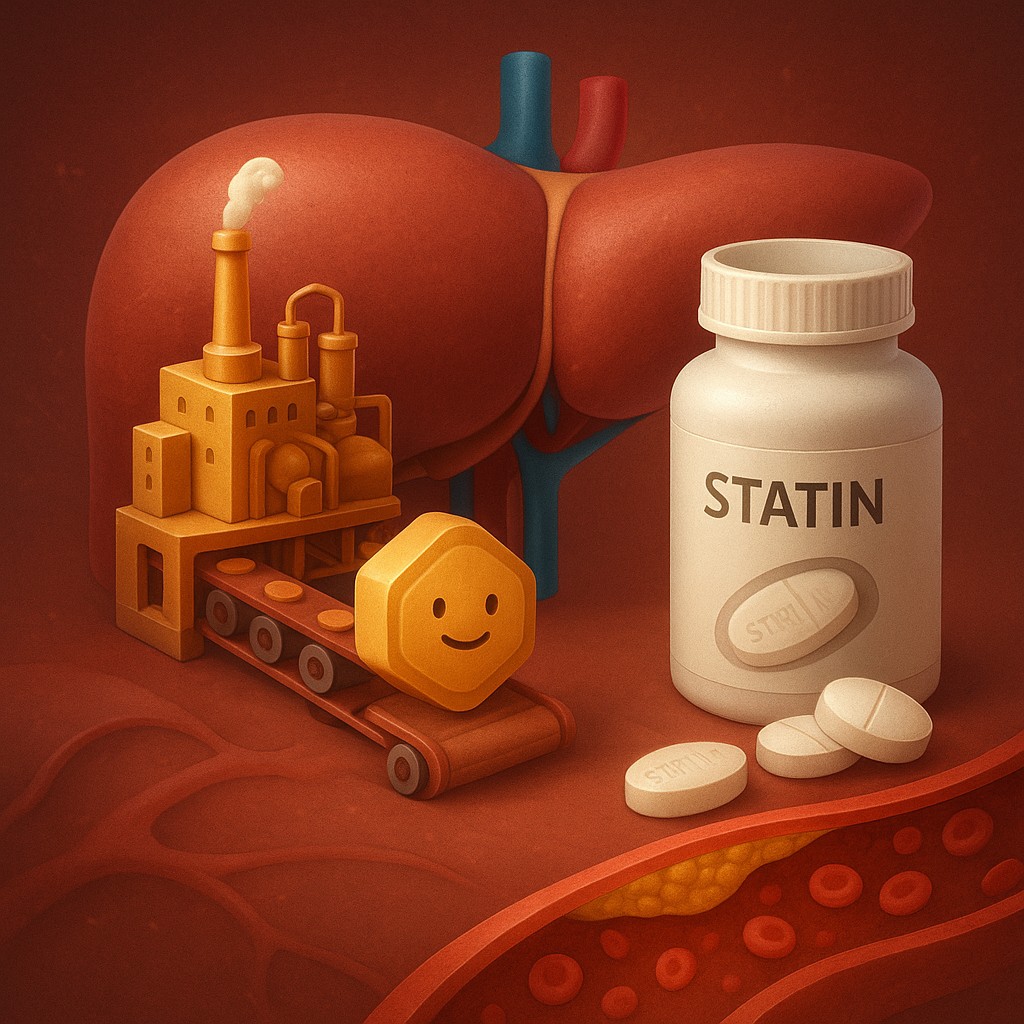
Imagine you manage a sophisticated manufacturing plant located deep inside your own body, specifically in your liver. This factory runs 24/7 to produce a substance people often discuss with a hint of worry: cholesterol. Despite its bad reputation, cholesterol is actually the essential mortar used to build your cells, the raw material for your hormones, and the insulation for your nerves. However, sometimes the factory goes into overdrive or the transport routes - your arteries - become clogged. That is when statins, the most prescribed drugs in the world, step in to shut down the lipid party.
Since they hit the market in the 1980s, statins have earned a reputation as miracle pills capable of preventing heart attacks and strokes. Yet, like any Hollywood success story, a breeze of controversy has stirred up heated debates in doctor’s offices and internet forums. Critics claim they are Trojan horses that clean out your arteries while secretly disrupting your metabolism enough to trigger type 2 diabetes. To understand this modern dilemma, we have to look into the biology of the cell and explore how such an effective molecule can sometimes become an unwelcome guest.
The Secret Mechanics of the Cholesterol Brigade
To understand why statins cause so much debate, we first need to look at how they work on a microscopic level. It all centers on an enzyme with a complex name: HMG-CoA reductase. Think of it as the head foreman of your liver factory. His job is to turn simple raw materials into the crucial middle step of making cholesterol. Statins are talented molecular imposters. They mimic those raw materials and take the foreman’s seat, effectively blocking the entire production line. The result is immediate: the liver produces less cholesterol and, panicking over the low stock, begins actively pumping and recycling the cholesterol already circulating in your blood.
But there is a catch. By blocking this enzyme, statins do more than just lower cholesterol. They also cut off the path for other essential byproducts, such as Coenzyme Q10. This nutrient is vital for energy production in our mitochondria, which are the power plants of our cells. It is a bit like cutting a city’s main power supply just to reduce pollution. The pollution drops, certainly, but the rest of the city begins to run in slow motion. This side effect explains why some patients feel muscle pain or unusual fatigue, as their muscle cells are essentially starving for energy.
This systemic intervention raises a fundamental question about the precision of modern medicine. Statins are not like lasers aimed at a single target; they are more like waves crashing over the entire biochemical machinery. By slowing down fat production, they also change how our cell membranes communicate. This communication is vital for glucose - the sugar we use for fuel - to enter our cells with the help of insulin. If the membrane becomes "too stiff" or if its receptors are disrupted by a lack of certain lipids, sugar stays in the blood, creating the perfect environment for chronic high blood sugar.
The Sugar Shadow: The Diabetes Paradox
This is where the plot thickens and we reach a sensitive subject: the link between statins and diabetes. Large-scale clinical studies have shown a small but statistically significant increase in the risk of developing type 2 diabetes among statin users. This isn't just a rumor; it is a documented biological reality. Scientists are still researching the exact cause, but they point to two likely culprits. On one hand, statins might reduce the ability of pancreas cells to secrete insulin. On the other, they might make tissues like muscles and the liver less sensitive to the hormone, a condition known as insulin resistance.
It is important to note that this risk is not the same for everyone. It seems most prominent in people who are already on the edge, such as those who are overweight, sedentary, or have slightly elevated blood sugar levels (pre-diabetes). For these patients, the statin acts like the final drop of water that overflows a metabolic cup that was already full. Dosage also plays a crucial role: the higher the dose used to crush cholesterol, the higher the risk of seeing blood sugar levels climb. This is the great paradox of pharmacology: treating a heart risk while potentially increasing another metabolic risk factor.
The table below summarizes the expected benefits versus the side effects fueling the current debate:
| Aspect of Health |
Positive Effect of Statins |
Potential Risks or Side Effects |
| Heart Health |
Reduces plaque buildup and heart attack risk. |
Rarely, severe muscle weakness (rhabdomyolysis). |
| Lipid Profile |
Drastically lowers LDL ("bad") cholesterol. |
Reduces Coenzyme Q10, vital for cell energy. |
| Blood Sugar |
No direct benefit for sugar levels. |
Possible increase in insulin resistance. |
| Inflammation |
Reduces overall vascular inflammation. |
Increased risk of a new type 2 diabetes diagnosis. |
| Brain Function |
May help prevent some types of strokes. |
Mental fog or temporary memory loss in some. |
Why People Aren't Throwing Away Their Statins
If the diabetes risk is real, why do doctors keep prescribing these drugs by the millions? It comes down to a "benefit-to-risk" balance, a concept essential to medicine. For someone who has already survived a heart attack, the risk of having another is massive and often fatal. In this context, the protection a statin offers against another stroke or heart attack is seen as far more important than the risk of blood sugar rising by a few points. Simply put, it is often better to manage early-stage diabetes with a strict diet or other medication than to risk an irreversible heart attack.
The real problem lies in mass prescriptions for "primary prevention," which involves people who have never had heart problems but whose cholesterol numbers are higher than the standard range. This is where the controversy is most intense. Is it wise to give a healthy person a lifelong drug based on a statistical future risk if that drug might disrupt their sugar metabolism? This ambiguity fuels public mistrust. Critics argue that we are sometimes over-medicating natural aging processes and underestimating long-term metabolic damage in favor of immediate wins on a blood test.
Furthermore, we cannot ignore the psychological factor. When patients start taking a statin, they might unconsciously relax their healthy habits. "Since my pill is handling my cholesterol, I can have another slice of cake," they might think. However, combining a statin with a high-sugar diet is the perfect recipe for triggering diabetes. The medicine then becomes an excuse to neglect health fundamentals, worsening the overall risk. A pill should never be a license to eat poorly; it should be a safety net that supports an impeccable lifestyle.
Separating Fact from Fiction in Common Debates
In the flood of information online, it is easy to get lost between rigorous science and wild theories. One persistent myth is that statins are a massive industrial conspiracy with no real use. That is an oversimplification. Science shows indisputably that for high-risk populations, these drugs save lives. On the flip side, the idea that statins are totally harmless and should be added to the water supply is equally absurd. As is often the case, the truth lies in a gray area where every patient must be evaluated individually.
Another common point of confusion involves muscle pain. You often hear that "statins destroy your muscles." While 5% to 10% of patients report aches (myalgia), severe muscle destruction is extremely rare. However, these "mild" pains should not be ignored. They can discourage physical activity, which is actually the best remedy for both high cholesterol and diabetes. If you stop moving because your legs hurt from your medication, you enter a vicious cycle where your metabolic health declines. This domino effect is a point critics of statins rightly emphasize.
As for the brain, some fear that lowering cholesterol leads to dementia, since the brain is the fattest organ in the body. Again, the evidence is mixed. While some people report "brain fog," large studies do not show a major risk of mental decline. In fact, by protecting small brain arteries from clogging, statins might even help prevent certain forms of vascular dementia. The human body is infinitely complex, and what is bad for one tissue might prove beneficial for another.
Taking Control of Your Metabolic Health
So, how do you handle this dilemma? The key is a personalized and proactive approach. If your doctor suggests statins, or if you already take them, the conversation should not stop at the cholesterol number on your blood test. It is essential to monitor your A1C (a marker of your average blood sugar over three months) to catch any drift toward diabetes as early as possible. Science is advancing, and we now know that not all statins are the same: some, like pravastatin or pitavastatin, seem to have less of an impact on blood sugar than more powerful ones like atorvastatin or rosuvastatin.
- Always prioritize lifestyle changes before turning to chemistry, if your situation allows.
- If you must take a statin, discuss the lowest effective dose with your healthcare provider.
- Ensure you get enough nutrients that might be depleted, like Coenzyme Q10 or magnesium.
- Stay physically active, as movement is nature’s best way to make your body sensitive to insulin.
- Reduce your intake of refined sugars, as high cholesterol is often a symptom of inflammation caused by too much sugar.
The goal is not to demonize or worship statins, but to see them for what they are: powerful tools that require expert handling. The risk of diabetes is a reality you must be aware of to prevent it. By staying informed, you are no longer just a passenger in the healthcare system, but the captain of your own biological ship.
Navigating the sometimes murky waters of modern medicine requires judgment and constant curiosity. Understanding that your body is not just a set of numbers on a page, but a fragile ecosystem, is the first step toward true longevity. Do not let the fear of side effects or a blind focus on benefits dictate your choices. By combining the wisdom of healthy habits with the power of modern medicine, you can build a future where your heart stays strong and your metabolism stays balanced. Be proud of your desire to learn, as it is what will keep you in control of your health with confidence and peace of mind.