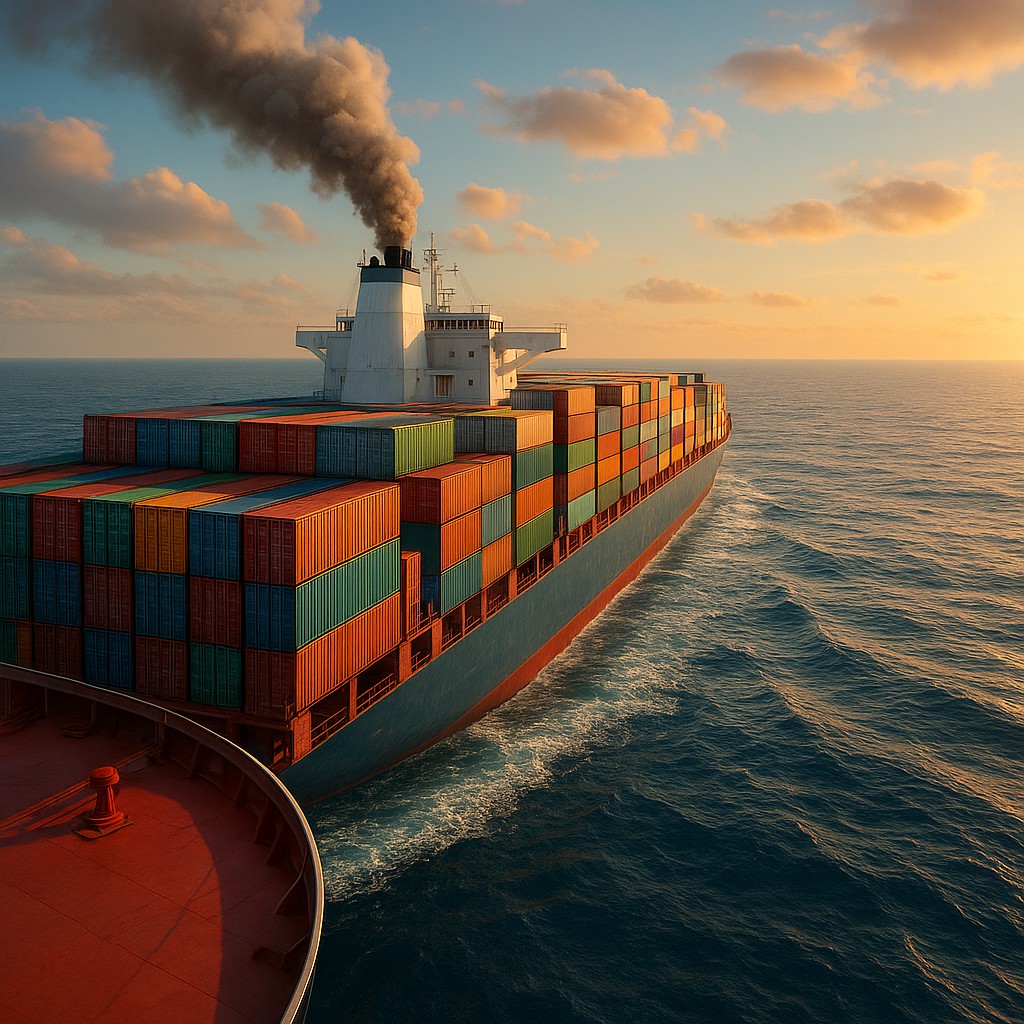
Imagine standing on the deck of a massive container ship, the kind that carries thousands of colorful metal boxes filled with everything from smartphones to designer sneakers. For decades, the mantra of the global shipping industry was "full steam ahead," driven by a relentless desire to shave every possible hour off a trip across the Pacific or Atlantic. However, a quiet revolution is taking place on the high seas, and it involves doing something that sounds almost counter-intuitive in our fast-paced world. The giants of the ocean are slowing down, not because of engine failure or a lack of ambition, but because of a fascinating quirk of physics that makes speed the enemy of our planet.
This strategy, known as slow steaming, is becoming the foundation of new international laws designed to slash carbon emissions. While it might seem like a simple case of driving slower, the impact on global logistics, engine mechanics, and environmental science is profound. By intentionally reducing the speed at which these behemoths travel, shipping companies are unlocking massive fuel savings that were previously lost to the friction of the waves. It is a rare example of a solution where the fix is behavioral rather than mechanical, proving that sometimes the best way to move forward is to ease off the throttle.
The Nonlinear Relationship Between Speed and Power
To understand why slowing down is such a powerful tool, we have to look at the relationship between a ship’s speed and the energy required to push it through the water. In a car, if you increase your speed by 20 percent, your fuel consumption increases in a relatively predictable, steady way. But water is much denser than air, and as a ship tries to move faster, it encounters rapidly increasing resistance. This is where the physics gets interesting: the power required to move a ship is roughly proportional to the cube of its speed. This means that even a tiny reduction in speed results in a massive drop in the energy needed to keep the vessel moving.
Consider the math in action. If a captain decides to cut the ship’s speed by just 10 percent, they aren't just saving 10 percent of their fuel. Because of that cubic relationship, a 10 percent drop in speed can lead to a nearly 25 to 30 percent reduction in the engine’s power demand. It is as if by walking slightly slower, you suddenly found you only needed to eat half as much lunch to stay energized. For a massive cargo ship burning hundreds of tons of fuel every day, these percentages translate into thousands of tons of carbon dioxide that never enter the atmosphere. This "low-hanging fruit" of carbon reduction is exactly why the International Maritime Organization (IMO) is focusing on speed management as a primary tool for reaching net-zero goals.
The Hidden Mechanics of a Slower Engine
When we talk about slow steaming, we aren't just talking about a captain pulling back a lever. There is a complex dance happening inside the engine room to ensure the ship remains efficient at these lower speeds. Marine engines are typically designed to operate at a specific "sweet spot," usually around 70 to 85 percent of their maximum output. When a ship engages in ultra-slow steaming, the engine might be running at 40 percent or even lower. This presents a technical challenge because engines running at low loads can suffer from "cold corrosion" (acid damage caused by low temperatures) or soot buildup, as they aren't getting hot enough to burn fuel perfectly.
To combat this, engineers have developed "slide valves" and modified fuel injection systems that allow the engine to maintain high pressure and efficient combustion even when it isn't working hard. Some ships even use "slow steaming kits," which are mechanical upgrades that optimize the turbochargers for lower airflows. By making these adjustments, the shipping industry is proving that it can move away from the "bigger and faster" mentality of the 20th century toward a more sophisticated "slower and cleaner" model. This shift requires a deep understanding of thermodynamics, as operators must balance fuel savings with the need to keep the engine healthy for the long haul.
Navigating the Logistics of a Slower World
If every ship on the ocean suddenly slows down by 15 percent, a logical problem emerges: goods take longer to arrive. In a world accustomed to "next-day delivery," this creates a ripple effect throughout the entire global supply chain. If a voyage from Shanghai to Los Angeles used to take 14 days but now takes 18, companies have to rethink their inventory levels and warehouse management. This extra time in transit is often called "inventory float," and it represents money that is essentially tied up at sea for longer periods. To keep the same amount of goods flowing into stores and factories, shipping lines often have to add more ships to a specific route, a practice known as "loop expansion."
There is a fascinating paradox here. If you slow your ships down to save carbon, but then you have to build and sail more ships to keep the supply chain moving, do you still come out ahead? Luckily, the answer is a resounding yes. Even when you account for the extra ships needed to maintain the same frequency of deliveries, the total carbon footprint of the fleet is still significantly lower than it would be if fewer ships were racing across the ocean at high speeds. The table below illustrates how these trade-offs generally look across a standard shipping route, showing that the environmental gain far outweighs the logistical inconvenience.
| Metric |
High-Speed Shipping |
Moderate Slow Steaming |
Ultra-Slow Steaming |
| Average Speed |
24 knots |
20 knots |
16 knots |
| Daily Fuel Consumption |
100% (Baseline) |
~65% |
~40% |
| Carbon Emissions |
Highest |
Significant Reduction |
Maximum Reduction |
| Voyage Duration |
Shortest |
Moderate |
Longest |
| Ships Needed for Weekly Service |
8 |
9 |
11 |
| Overall Fleet Fuel Efficiency |
Low |
High |
Very High |
Correcting the Myths of the Slow Lane
One common misconception about slow steaming is that it is a lazy or desperate measure used only by companies trying to save money during a bad economy. While fuel is indeed the largest expense for a shipping line, the arrival of mandatory emissions limits and carbon pricing from the IMO has turned slow steaming into a sophisticated regulatory tool. It is no longer just about the bottom line; it is about the right to operate in a greener world. Another myth is that ships will become "sitting ducks" for storms or pirates if they move slower. In reality, modern satellite weather routing allows ships to plan their paths so precisely that they can maintain a slow, steady pace while completely avoiding dangerous weather systems.
There is also a fear that slowing down will make global trade more expensive for the average consumer. While there are costs associated with longer wait times, the cost of ship fuel is so volatile that the savings from slow steaming actually help keep shipping rates stable in the long run. If a ship uses 30 percent less fuel, it is much less vulnerable to sudden spikes in oil prices. Consumers might wait a few extra days for their new sofa, but the trade-off is a global logistics network that is significantly more resilient to the fluctuations of the energy market and, more importantly, much kinder to the air we breathe.
Designing the Vessels of Tomorrow
As we look to the future, the practice of slow steaming is influencing how new ships are designed from the ground up. In the past, ship hulls were optimized for high-speed "planing," or slicing through waves with brute force. Today, naval architects are designing "fuller" hull shapes that are optimized for lower speeds, focusing on reducing the "wetted surface" (the area of the hull touching the water) and minimizing the wake left behind. We are even seeing the return of wind-assisted propulsion, such as giant mechanical sails or "Flettner rotors" (spinning cylinders that use the wind to generate pull), which work exceptionally well when a ship is traveling at the moderate speeds dictated by slow steaming rules.
By embracing the physics of slowing down, the maritime industry is setting a global example for how large-scale industrial sectors can adapt to environmental reality. It requires us to redefine what efficiency looks like, moving away from "miles per hour" and toward "carbon per ton-mile." As you watch a massive vessel disappear over the horizon, remember that its slower pace is a deliberate, calculated choice. It is a sign of an industry that is learning to work with the laws of nature rather than trying to overpower them, ensuring that the oceans remain a viable highway for trade for centuries to come. You are witnessing a historic recalibration of human ambition, where the ultimate goal isn't just to arrive, but to arrive sustainably.