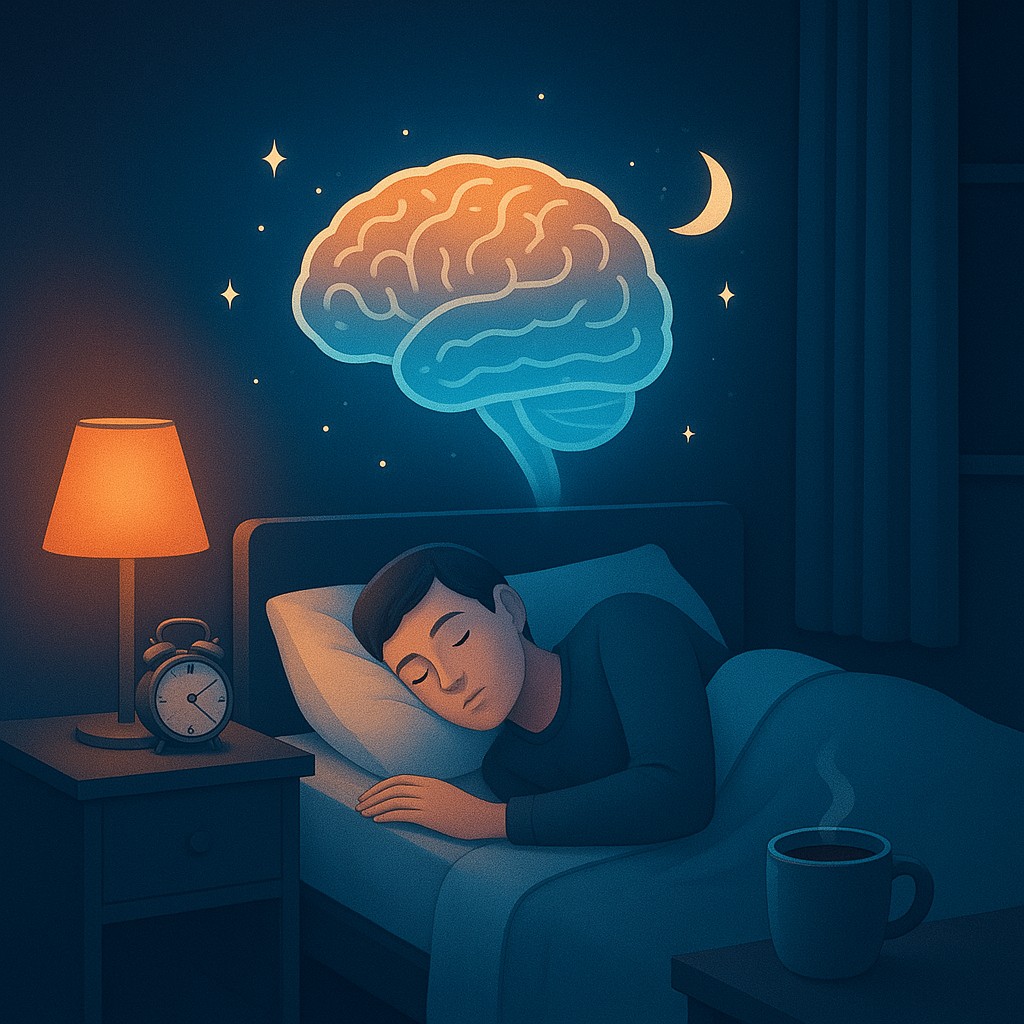
You probably think of sleep as something that takes over after a long day, not as something you actively do for your health. That glib "I will sleep when I am dead" line sounds clever until your energy tanks, your temper frays, and your focus disappears halfway through an email. Sleep is not a luxury or a passive backdrop - it is a biological process that governs nearly every system in your body, from the brain to the immune system, metabolism, and heart.
Think of sleep as the nightly firmware update your brain and body run to keep everything working smoothly. When you shortchange sleep, you skip critical maintenance, and small failures build into real problems. This guide moves from the basic science of sleep to practical steps you can try tonight, dispels common myths, and offers simple experiments to help you sleep better and live better.
Sleep as the conductor of physiological harmony
Sleep organizes and synchronizes processes that would otherwise drift apart. While you sleep, hormones get scheduled, DNA repair happens, and the immune system rehearses its responses to threats. These are not side effects of sleep, they are its main job. Think of sleep as a manager who coordinates repair crews, archive librarians, and emotional therapists between 10 pm and 7 am.
On the cognitive side, sleep sorts and prioritizes memories. Without enough sleep, new information does not consolidate into lasting memory, creativity stalls, and problem solving becomes clumsy. Emotionally, sleep buffers reactivity: a well-rested brain keeps perspective, while a sleep-deprived brain magnifies negative emotions and turns small annoyances into major irritations. Over time, poor sleep reshapes the brain toward anxiety, weaker impulse control, and a blunted capacity for joy.
Physically, the night shift is when tissues rebuild. Pulses of growth hormone during sleep help repair muscle and bone, and cells clear metabolic waste that accumulates while you are awake. The immune system uses sleep to coordinate defenses, so cutting sleep short is like going into a fight tired and underarmed. The combination of cognitive, emotional, and physical deficits explains why sleep is so tightly linked to health outcomes across the board.
What your brain actually does while you sleep
Sleep is not a single state. It cycles through stages roughly every 90 minutes: light sleep, deep sleep, and REM sleep. Each stage has a distinct role, and together they form a balanced nightly routine. Light sleep eases the transition from wakefulness to deeper states. Deep sleep, often called slow wave sleep, is when the brain lowers its metabolic activity and focuses on repair and clearing. REM sleep, when most vivid dreaming occurs, supports emotional processing and memory integration.
One fascinating cleanup process active during deep sleep is the glymphatic system. It floods the brain with cerebrospinal fluid to wash away metabolic waste, including proteins that, if allowed to build up, may contribute to neurodegenerative disease. Picture it as a nightly rinse that clears the day’s protein clutter. When sleep is shortened or fragmented, that clearing is incomplete.
Another key idea is synaptic homeostasis. During the day your brain strengthens synapses as you learn and experience more. Without sleep, synapses would overwhelm the system, creating noise instead of useful signal. Sleep prunes and scales back synapses so the most important connections remain and the brain stays flexible. The result is better learning, sharper attention, and improved emotional balance.
How poor sleep rewires health over years
Short-term sleep loss makes you clumsy, forgetful, and cranky. Long-term insufficient sleep rewires metabolism and immunity in ways that raise the risk of chronic disease. People who consistently sleep less than the recommended 7 to 9 hours per night have higher rates of obesity, type 2 diabetes, cardiovascular disease, and even earlier mortality. These links are not just correlations - physiological pathways make them plausible and measurable.
Sleep influences appetite hormones. Lack of sleep raises ghrelin, the hunger signal, and lowers leptin, the satiety signal, nudging you toward snacks and larger portions. It also reduces insulin sensitivity, making blood sugar harder to control and increasing diabetes risk. From a cardiovascular perspective, disrupted sleep elevates stress hormones like cortisol, raises blood pressure, and promotes inflammation that accelerates artery hardening. Over years, these forces add up, increasing the risk of heart attack and stroke.
The brain pays a price too. Chronic sleep problems are associated with cognitive decline and a higher risk of dementia. Inefficient nightly clearing of waste proteins and persistent inflammation may be part of this process. While more research is needed to trace every causal link, the evidence strongly points to sleep as a modifiable factor that affects long-term brain health.
Common sleep myths that sabotage results (and the real story)
You may have picked up sleep myths that sound reasonable but actually hurt your rest. Here are the most persistent ones, explained plainly.
- Myth: You can fully "catch up" on sleep on weekends. Reality: Extra sleep on weekends helps reduce short-term sleep debt, but it does not undo the cumulative metabolic and cardiovascular changes caused by chronic weekday sleep loss. Regularity is essential.
- Myth: Older adults need much less sleep. Reality: Sleep architecture changes with age, and older adults often sleep more lightly, but the need for restorative sleep remains. Chronic insomnia in older adults is common, and it should be treated rather than accepted as inevitable.
- Myth: Alcohol helps you sleep. Reality: Alcohol may speed falling asleep, but it fragments sleep later, reduces deep sleep and REM, and worsens breathing during the night. It is a short-term sedative with long-term costs.
- Myth: Naps are lazy. Reality: Short naps of 15 to 30 minutes can boost alertness and performance. Long naps late in the day can disrupt nighttime sleep. Smart napping is a tool, not a trap.
- Myth: I can adapt to functioning on five hours. Reality: Most people who sleep five hours regularly have measurable cognitive and health deficits, even if they feel fine. A small subset is genetically short-sleeping, and that is rare.
Knowing the real story helps you avoid choices that feel harmless but slowly erode your resilience. Sleep quality and consistency matter more than occasional marathon naps or permissive late-night screen sessions.
Practical habits that actually improve sleep quality
Small changes repeated nightly yield big gains. Think of sleep hygiene as training wheels for your brain - not a cure-all, but a practical framework that supports deeper, more restorative sleep.
- Keep a consistent sleep-wake schedule, even on weekends, to reinforce your circadian rhythm.
- Create a wind-down routine that signals your brain to prepare for sleep: dim lights, quiet activities, and 30 to 60 minutes without screens.
- Make your sleep environment cool, dark, and quiet, and reserve the bed for sleep and intimacy only.
- Watch caffeine and nicotine timing, avoid heavy meals close to bedtime, and limit alcohol.
- Exercise regularly, but not too close to bedtime if you are sensitive to stimulation.
These behaviors influence your circadian clock, sleep pressure, and sleep architecture. A stable schedule combined with a calming pre-sleep routine is more powerful than any single tweak. Implement one or two changes at a time to keep things manageable and build momentum.
| Habit Category |
Helpful Action |
What It Fixes |
How Fast You Might Notice Change |
| Schedule |
Wake up and sleep at same times daily |
Circadian alignment, daytime alertness |
1-2 weeks |
| Evening routine |
Dim lights, stop screens 1 hour before bed |
Easier sleep onset, deeper sleep |
Several nights to 2 weeks |
| Environment |
Cool, dark, quiet bedroom |
Fewer awakenings, better REM and deep sleep |
Immediate to a few nights |
| Substances |
No caffeine after early afternoon, limit alcohol |
Reduced sleep fragmentation, better REM |
1-3 days |
| Physical activity |
Regular daytime exercise, not within 2 hours of bed |
Faster sleep onset, more deep sleep |
1-4 weeks |
| Napping |
Short naps 15-30 minutes, before mid-afternoon |
Boosts alertness without wrecking night sleep |
Immediate benefits |
When sleep is more than a habit problem - recognize signs to seek help
Sometimes sleep trouble signals an underlying medical issue. If you have loud snoring with pauses in breathing, daytime drowsiness despite spending a lot of time in bed, or months of difficulty falling asleep, see a clinician. Sleep apnea, restless legs syndrome, chronic insomnia, and circadian rhythm disorders are treatable conditions.
Tell your doctor about how you function during the day, not just how many hours you sleep. Falling asleep while driving, nodding off in meetings, or needing daily naps are red flags. Your clinician may recommend behavioral treatment such as cognitive behavioral therapy for insomnia, diagnostic sleep testing, or referral to a sleep specialist. Treating a medical sleep disorder can dramatically improve mood, thinking, and overall health.
Tiny experiments to change your sleep, with a simple three-week plan
Habits respond better to experiments than to lectures. Try this three-week plan to shift your sleep, using small, measurable steps.
Week 1 - Baseline and small tweak: Track your sleep and daily energy with a simple journal or app. Choose one easy change, such as shutting off screens 60 minutes before bed. Note bedtime, wake time, perceived sleep quality, and daytime focus.
Week 2 - Add another habit: Keep a consistent wake time, even on weekends, and take a 20 minute nap before mid-afternoon only if needed. Continue logging, and watch for changes in how quickly you fall asleep and how you feel during the day.
Week 3 - Optimize environment and exercise timing: Make your room cooler and darker, and move formal exercise earlier in the day if it was late. Compare the three weeks and pick the two most effective changes to keep long-term.
Use simple, honest metrics - time to fall asleep, number of awakenings, and daytime alertness - rather than obsessive clock-watching. Small wins compound, and building confidence is part of the process.
Simple tools, not tricks - technologies that help and those that mislead
A growing market of sleep trackers, smart lights, and white noise machines promises better sleep. Some tools are genuinely useful, while others create anxiety and overinterpretation. Wearable trackers can give rough estimates of sleep duration and consistency. Smart lights that mimic sunrise and sunset can help shift circadian rhythms. White noise or soundscapes help when environmental noise is a problem.
Be cautious about assuming trackers measure sleep stages perfectly - many devices estimate rather than directly measure brain activity, and nightly variability in readings can cause stress. Use technology as a guide, not a verdict. If a gadget helps you build a routine, great - but do not chase perfect numbers.
Final nudge: sleep as a daily investment, not a nightly indulgence
Every night of good sleep is an investment in learning, resilience, and longevity. Treating sleep as a priority does not mean becoming rigid or joyless; it means recognizing that the small, repeated decisions you make about bedtime and wake time shape how well you function, feel, and age. A few consistent habits will yield better mood, sharper thinking, more energy, and a lower risk of disease.
Start small, experiment, and be patient. The brain and body respond quickly to improved patterns, and benefits add up. If you honor sleep, it will repay you with clearer days, deeper nights, and a quiet power that shows up in everything you do. Tonight, consider choosing sleep as an act of self-care that matters more than a late-night show or an extra hour of scrolling. Your future self will thank you.