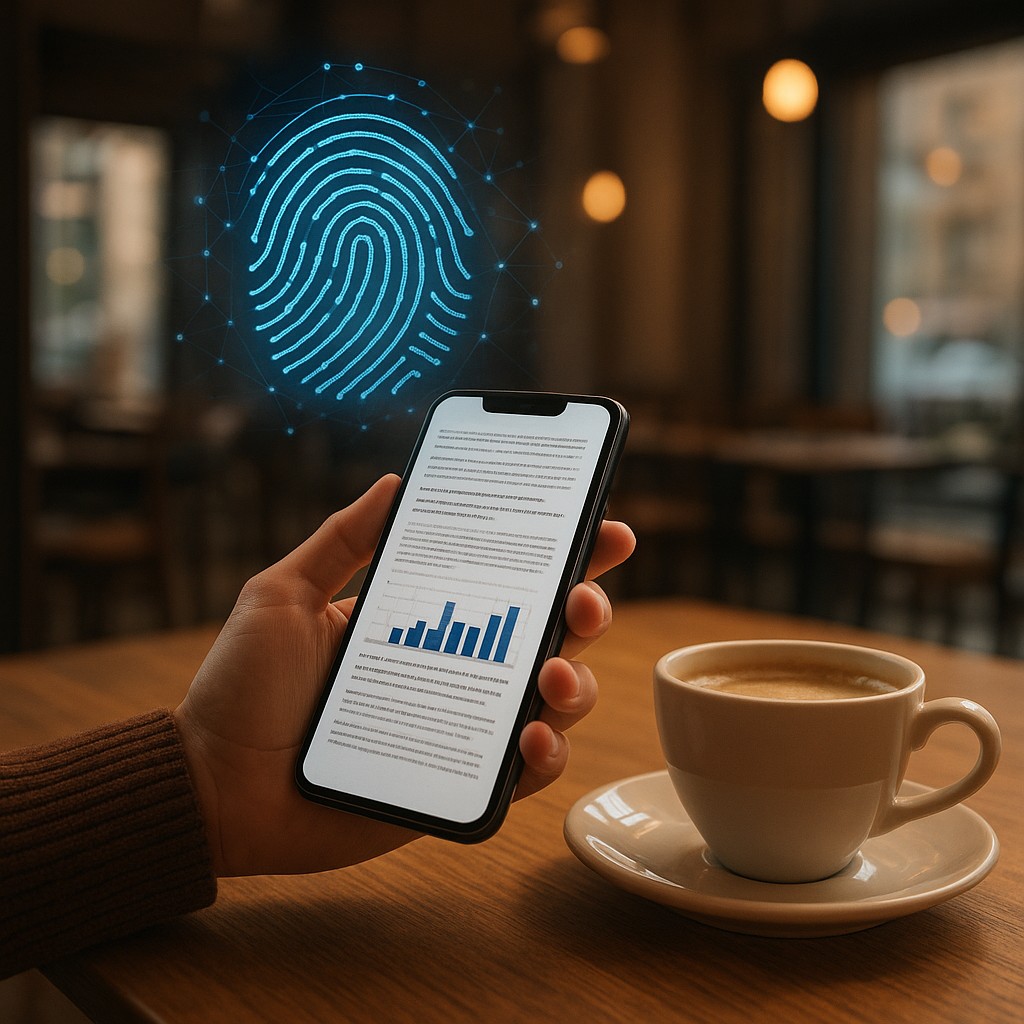
Imagine you are sitting in a coffee shop, reading a news report on your phone about a recent change in economic policy. The article doesn’t use inflammatory language or obvious insults. It presents facts, cites figures, and quotes experts. Yet, by the time you reach the final paragraph, you feel a subtle sense of unease or perhaps an unearned surge of optimism about the policy. You haven’t been lied to, but you have been nudged. This is the "invisible hand" of narrative bias, where the strategic choice of a verb or the emotional weight of an adjective shifts how you feel about the information without triggering your internal "fake news" alarm.
In our current era of lightning-fast, AI-driven journalism, maintaining objectivity is no longer as simple as checking facts. We are entering a landscape where the sheer volume of content makes it impossible for human editors to catch every instance of "framing," which is the process of positioning a story to favor one perspective over another. To combat this, researchers and newsrooms are starting to experiment with a sophisticated digital tool known as semantic fingerprinting. By treating language as a data set rather than just a way to talk, this technology helps us see the hidden patterns of influence that shape our worldview, one sentence at a time.
The Linguistic Signature of a Story
To understand semantic fingerprinting, we first have to look at words as if they have coordinates on a map. In the world of computational linguistics, words are more than just definitions; they are vectors, or points in a multi-dimensional space. If you take the word "determined" and the word "stubborn," they might share a similar dictionary definition regarding persistence. However, in a semantic space, they are miles apart. "Determined" carries a positive, heroic emotional weight, while "stubborn" suggests an irrational refusal to change. Semantic fingerprinting maps these nuances across thousands of articles to create a unique "signature" for a piece of reporting.
This signature is built by analyzing the "affective" properties of language, or how much emotion a word carries. Every verb and adjective vibrates at a certain frequency of intensity and sentiment. When an automated news report describes a political figure as "evading" a question versus "declining" to answer, the fingerprint changes. While a human might miss a single instance of this, an algorithm detects the pattern. If a news outlet consistently pairs high-intensity, negative verbs with a specific topic while using neutral, passive verbs for another, the semantic fingerprint begins to show a specific ideological lean. This isn't about looking for "bad words," but about measuring the cumulative pull of a writer's vocabulary.
Mapping the Geometry of Neutrality
One common misconception about media bias is that there is a single, objective "truth" that all reporters are failing to reach. Semantic fingerprinting takes a more practical approach by establishing a "neutral linguistic baseline." Think of this as the sea level of language. This baseline is built by feeding the system massive amounts of straightforward, encyclopedic text and data-heavy reports where the only goal is to share raw information. By comparing a new article against this baseline, the system can calculate how far the writing drifts away from zero.
This drift is often visualized as clusters of points on a graph. If you looked at a cloud of dots representing the language used in a neutral report, they would cluster around the center. In a biased report, however, those dots would drift toward the edges, pulled by the magnets of emotional intensity or partisan framing. This provides editors with a data-driven mirror. It doesn't tell a journalist what to think, but it shows them where their subconscious leanings have leaked onto the page. It turns a subjective argument about "tone" into a measurable metric that can be discussed and corrected before the "publish" button is ever pressed.
The Mechanics of Word Choice and Weight
The actual machinery of semantic fingerprinting relies on a process called "weighting." In a standard news story, most words are functional, such as "the," "is," and "at." The system ignores these. Instead, it focuses on "pivot words," which are the adjectives, adverbs, and verbs that carry the most thematic or emotional load. Each of these words is assigned a value based on how it has been used in the past and how close it sits to other charged terms. When these values are added up, they reveal the hidden architecture of the story.
| Linguistic Feature |
Neutral Example |
Biased/Framed Example |
Narrative Impact |
| Verb Choice |
"The committee reached a decision." |
"The committee finally succumbed to pressure." |
Suggests weakness or outside manipulation rather than independent action. |
| Adjective Intensity |
"The proposed budget is $2 billion." |
"The staggering $2 billion budget proposal." |
Creates a sense of shock or disapproval before the reader even sees the numbers. |
| Agent Positioning |
"Protesters gathered at the plaza." |
"A mob swarmed the plaza." |
Turns a civic action into a chaotic, threatening event. |
| Attribution |
"The official stated that receipts were missing." |
"The official admitted that receipts were missing." |
Implies the person was caught in a lie or felt guilty, rather than just making a statement. |
By breaking down a story into these parts, semantic fingerprinting acts as a high-resolution X-ray for text. It allows us to see the "bones" of a story, revealing whether the structure is balanced or if it has been warped to support a specific conclusion. This is especially vital for AI-generated news, where large language models might accidentally pick up the biases found in their training data. Without a tool like semantic fingerprinting, these "hallucinated biases" could be spread at a scale that human fact-checkers could never manage.
Beyond Truth and Into Transparency
A frequent concern regarding AI-driven bias detection is the fear of a "Censorship Bot" that decides what is true and what is false. It is crucial to understand that semantic fingerprinting does not, and cannot, define truth. It has no way of knowing if a policy is actually "staggering" or if a politician is truly "evading" a question in real life. Instead, its power lies in identifying inconsistency. Its goal is not to suppress a viewpoint, but to ensure the reader is aware of the "flavor" being added to the information.
Consider a sports reporter who grew up a fan of the home team. Even when trying to be objective, they might use more vibrant, energetic verbs when describing the home team's plays and more clinical, muted verbs for the opponents. A semantic fingerprinting tool would flag this difference. The reporter could then decide to either keep the "hometown" voice or adjust the language to be more balanced. In journalism, this tool functions as a "sanity check." It allows a news organization to say to its readers, "We have measured our own work for unintended leanings, and here is our transparency report." This builds a new kind of trust that isn't based on an "honor system," but on verifiable data.
The Future of the Informed Citizen
As these trials continue and the technology matures, we may see semantic fingerprinting built directly into the platforms where we get our news. Imagine a browser extension or a news app that displays a small bias chart next to every headline. This wouldn't tell you whether to read the article, but it would give you a heads-up: "This story uses high-intensity language compared to the average report." Armed with this knowledge, you can adjust your "critical thinking filters" accordingly. You become an active participant in the information world rather than a passive recipient of framed stories.
The ultimate goal of semantic fingerprinting is to encourage a return to the basics of objective reporting while acknowledging that humans (and the AI we build) are naturally subjective. By providing a data-driven mirror, we can begin to untangle the knots of subtext that make reading the news so exhausting today. We are moving toward a future where "journalistic integrity" isn't just a slogan, but a measurable standard that can be protected. As you navigate the digital world, keep in mind that the words you read are doing more than just giving you facts; they are painting a picture, and for the first time, we have the tools to see the artist's hidden brushstrokes.