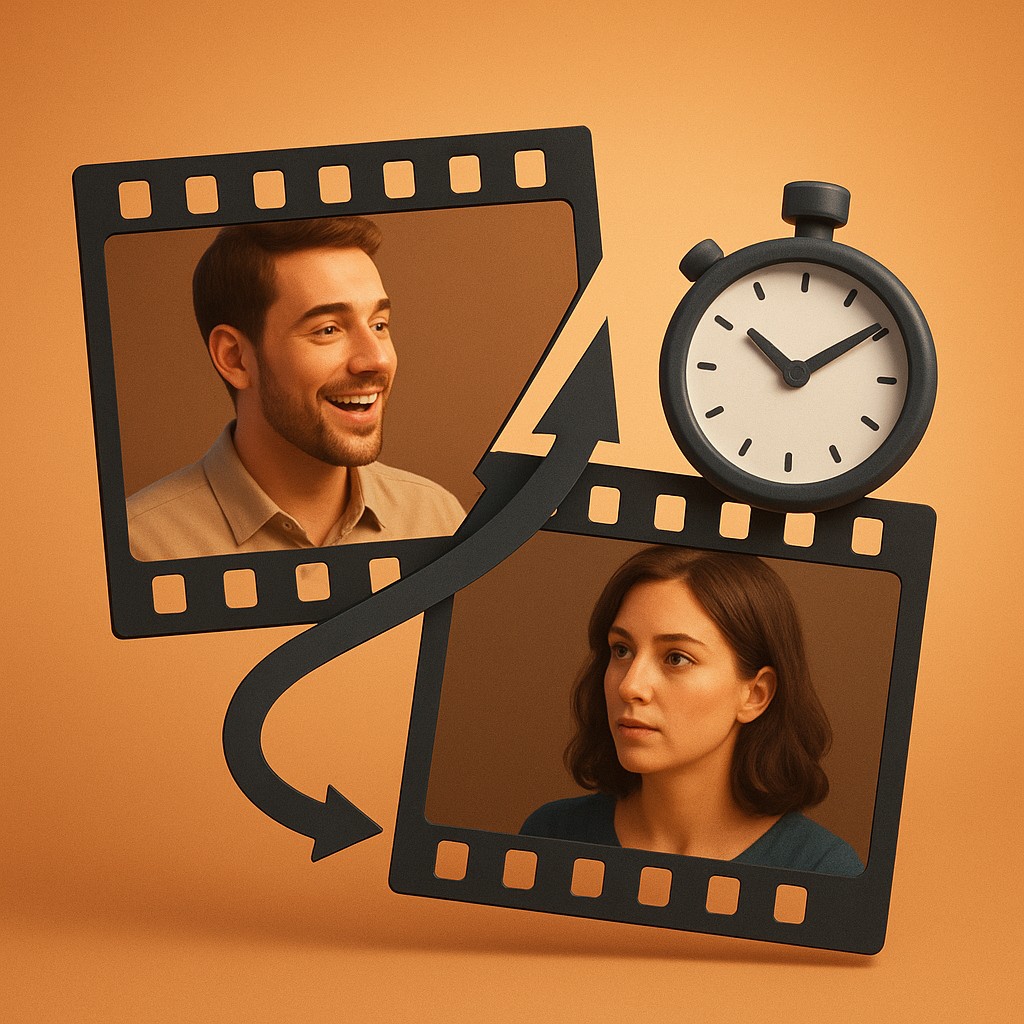
Have you ever noticed, while watching a movie, that you sometimes hear a character’s laugh or a door slamming before the picture actually changes? This isn't a glitch with your TV; it is one of the most powerful tools in an editor’s arsenal. This technique is so subtle it’s nearly invisible to the average viewer, acting like a hidden glue that holds the pieces of a story together. Without it, a film would feel like a series of stiff, clunky slides, breaking the spell that directors work so hard to cast.
Editing isn't just about hacking up film strips or digital files and taping them back together. It is a sophisticated way of tapping into human psychology and how we perceive the world. By playing with the gap between what we see and what we hear, editors recreate how we interact with reality. Our brains are naturally wired to process sight and sound at different speeds in certain situations, and movies exploit this quirk to make us forget we are looking at a flat screen.
The Art of the Invisible Transition and Dialogue Flow
In the world of professional post-production - the work done after filming is finished - editors often use "split edits." The idea is simple but effective: instead of cutting the sound and the picture at the exact same moment, the editor lets one bleed over into the next scene. One of the most famous versions of this is the "L-cut." It gets its name because, in editing software, the layout of the video and audio tracks looks like the letter "L." In practice, the image of Scene A ends, but its sound continues to play even as we start seeing the image of Scene B.
Imagine a tense dinner scene. A character finishes speaking, but instead of immediately jumping to the person they are talking to, the camera stays on the first person’s face while we hear the other person's cold reply. This delay creates psychological tension. We see the vulnerability or arrogance of the speaker while simultaneously hearing the impact of their words on the listener. The L-cut captures authentic reactions and gives emotional depth to the conversation. If every cut happened at the exact same time, the dialogue would feel mechanical, like a tennis match where the camera follows the ball but never shows the players' expressions.
This technique is the secret to natural conversation. In real life, we don't always turn our heads the very millisecond someone starts talking. Sometimes we keep looking at a person to see how they react to a noise outside, or we stare at an object while listening to instructions. By mimicking this natural behavior, the L-cut makes the story feel more organic. The viewer no longer feels like they are being jerked around by the edit; they feel like they are moving freely through the scene, guided by their own senses rather than the editor’s scissors.
The Science Behind Our Ears and Eyes
Why does our brain accept this overlap so easily? The answer lies in biology and evolution. Instinctively, sound has always been our primary warning system. In the wild, you would hear a branch snap before you actually saw the predator. Sound comes from all directions, while sight is limited by where we point our eyes. The L-cut (and its cousin the J-cut, where the sound arrives before the image) respects this sensory hierarchy. By letting the audio lead the transition, the editor uses a cue that the brain interprets as "natural," which makes the movie less tiring to watch.
When the picture and sound are cut perfectly in sync, it is called a "hard cut." If a movie used nothing but hard cuts, the viewer would eventually feel a kind of mental stutter. Every transition would be a tiny shock - a blunt reminder that we are watching an artificial construction. In contrast, the L-cut prepares the mind for what's coming. It creates a bridge of sound that allows the brain to move from one place to another effortlessly. It’s the difference between climbing a steep ladder and walking up a smooth ramp.
Here is a quick comparison to show how these editing choices impact the viewer:
| Cut Type |
Visual/Audio Structure |
Psychological Effect |
Typical Use |
| Hard Cut |
Audio and Video stop at the exact same time |
Shock, energy, blunt clarity |
Fast action, sudden topic changes |
| L-Cut |
Video changes, but audio from the previous scene continues |
Reflection, lingering emotion, smoothness |
Dialogue, moving scene endings |
| J-Cut |
Audio from the next scene starts before the image appears |
Anticipation, curiosity, preparation |
Changing locations, introducing characters |
Avoiding Sensory Confusion
Like any powerful tool, the L-cut must be used carefully. A beginner might be tempted to overdo it to make their work look "cinematic," but too much overlap can leave the audience feeling lost. If the sound from a previous scene drags on too long over new images without a logical connection, the viewer’s brain starts hunting for the source of the noise. Instead of being immersed, they become confused. Mystery turns into irritation, and the illusion of reality breaks.
Another major risk is creating an emotional mismatch. The L-cut works because it extends a mood. If you let the sounds of a joyful party bleed into the image of a funeral without a specific reason (like showing a memory of a happy time), you risk creating an absurd contrast that pulls the viewer out of the story. Editing isn't just about technical timing; it’s about tonal consistency. Every second of "overlapping" sound must serve the story, either by highlighting a character’s feelings or helping the viewer understand the setting.
It is also important to remember that L-cuts aren't just for voices. Background sounds play a vital role. Letting the rumble of a storm or the hum of a city carry over into the next shot helps link two locations that might be physically far apart. This helps build the "diegetic world" - the internal universe of the film. If the sound cuts off abruptly, that world feels like it collapses as soon as the camera looks away. The L-cut is the guarantee that life continues, even when it's off-screen.
Moving Beyond Technique to Emotion
Beyond the technicalities, the L-cut is a lesson in subtlety. By not showing everything immediately, or by leaving a sonic trail of the recent past, the editor invites the viewer to participate in the story. It is in these tiny gaps - these few frames where sight and sound aren't perfectly aligned - that movie magic often happens. This is where we feel what is left unsaid: the hesitation, the silence, or the weight of a secret.
To master this art, one must learn to listen as much as see. The best editors might spend hours adjusting an audio overlap by just two or three frames (about a tenth of a second). This precision might seem extreme, but it is what separates a movie you simply watch from one you truly experience. The L-cut is proof that in film, just like in music, the overlaps and the silences often create the most memorable melody.
Once you understand these mechanics, you will never look at a simple on-screen conversation the same way again. You will start to notice those waves of sound that lead or follow the images, and you’ll realize how gracefully your attention is being guided by these invisible craftsmen. Editing becomes a hidden ballet - a dance of perception where the ultimate goal is to make you forget that thousands of individual cuts were needed to create a single, seamless story.
Next time you watch a movie, try closing your eyes for a moment or paying close attention to the cuts during a conversation. You will discover a world of nuance where audio isn't just a servant to the image, but its essential partner. This new awareness will enrich your viewing and help you understand why certain scenes move you so deeply, far beyond what is simply projected in front of your eyes. Film is a beautiful lie that tells the truth, and the L-cut is one of its most elegant messengers.