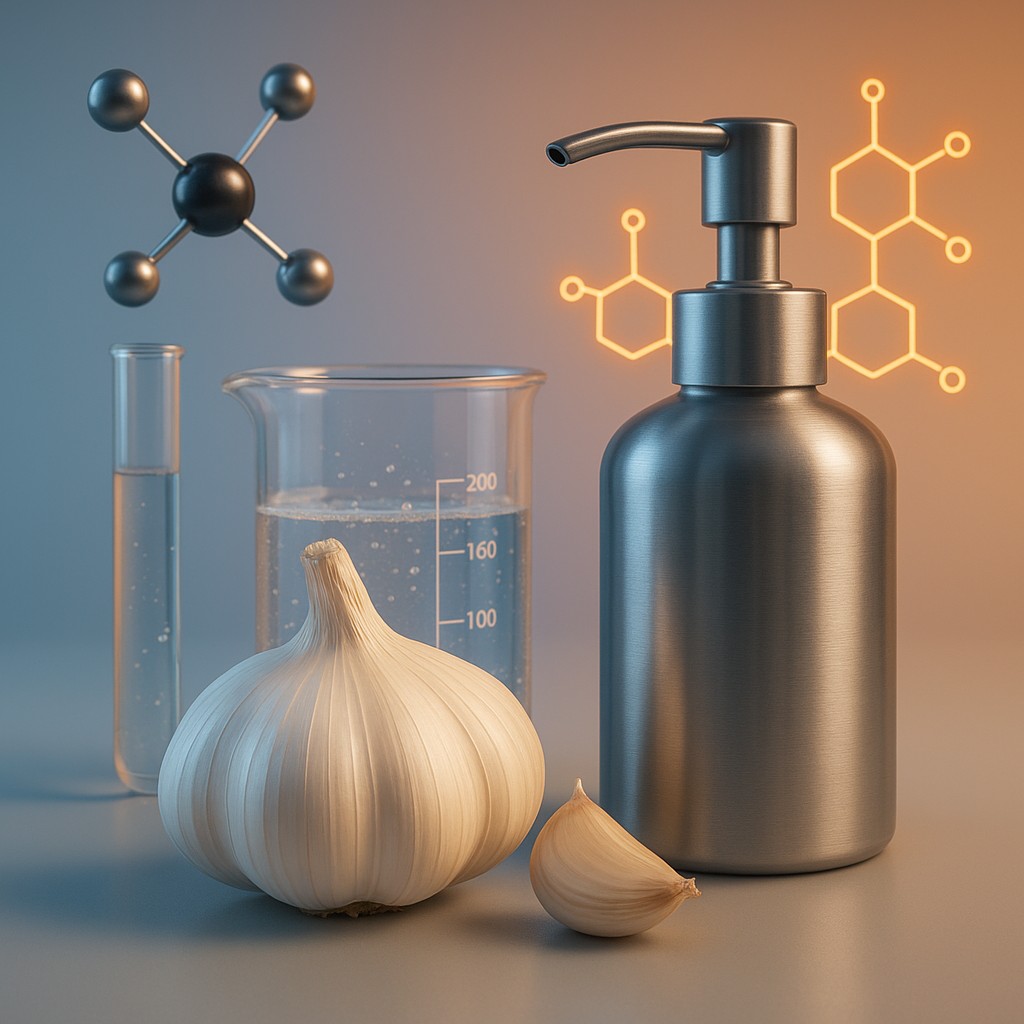
If you have ever spent an afternoon prepping a big batch of marinara sauce or a tray of roasted potatoes, you know that garlic is a double-edged sword. It provides a warm, savory base for almost every cuisine on the planet, but it also has a supernatural ability to stick around. You can scrub your hands with expensive floral soaps, soak them in lemon juice, or douse them in vinegar, yet the pungent ghost of that crushed clove remains. It clings to your skin as if it has formed a permanent bond, mocking your hygiene and making you smell like a pizzeria for the next forty-eight hours.
Standard hand soap fails because it is designed to break down fats and oils, but it isn't very good at neutralizing the specific "stinky" compounds that love to latch onto your skin. When you chop garlic, you aren't just breaking apart plant cells; you are triggering a complex chemical defense. The plant releases an enzyme called alliinase, which turns stable molecules into a series of acids. These quickly become the sharp, metallic sulfur compounds we recognize as the aggressive garlic scent. These molecules are masters of hiding, tucking themselves into the tiny ridges of your fingerprints and clinging to your skin's natural oils with frustrating strength.
The Molecular Culprit Behind the Stench
To understand why your kitchen sink might be a better cleanser than your soap dispenser, we first have to look at the chemistry of the garlic clove itself. Garlic belongs to the Allium family, which also includes onions, leeks, and chives. These plants spent millions of years evolving a chemical defense to stop animals from eating them. When the plant is damaged by a pest or a chef's knife, it produces a compound called allicin. Allicin gives fresh garlic its "bite," but it is also very unstable. It quickly breaks down into several sulfur-based chemicals, including diallyl disulfide.
These sulfur compounds are remarkably "sticky" at a molecular level. They are "water-fearing," meaning they do not dissolve in water. This is why a simple rinse under the tap does absolutely nothing to help. While soap can wash away the surface oils where these compounds live, it doesn't always break the bond between the sulfur and the proteins in your skin. This is where the scent becomes personal. The sulfur atoms are actually attracted to your skin proteins, forming a stubborn, temporary relationship. This explains why the smell seems to radiate from your pores even after you think you have cleaned up.
A Metallic Solution to a Smelly Problem
While water and soap might fail, a block of stainless steel often succeeds where traditional cleaning falls short. You may have seen "stainless steel soap" bars in kitchen stores that look like smooth, metallic pebbles. The secret, however, is that you do not need a fancy gadget. Rubbing your hands against a stainless steel faucet, the side of a clean kitchen sink, or even a large spoon will work just as well. This happens because of a specific chemical reaction involving chromium, the ingredient that makes "stainless" steel what it is.
Stainless steel is an alloy (a metal mixture) containing at least 10.5 percent chromium. When chromium is exposed to oxygen, it forms a very thin, invisible layer of chromium oxide on the metal's surface. This layer protects the steel from rusting, but it also acts as a powerful catalyst - a substance that speeds up a chemical change. When you rub your garlicky fingers against the steel, the sulfur molecules on your skin are more attracted to the chromium oxide than they are to your own body. The metal essentially outbids your skin for the sulfur, causing the odor molecules to jump from your hand to the steel.
The Magic of Binding and Transfer
This process is a fascinating example of chemical transfer. In a typical cleaning scenario, you use soap to surround dirt and wash it away. With the steel, you are performing a bit of molecular matchmaking. The sulfur atoms in the garlic have "unpaired electrons" - essentially empty seats looking for a passenger. The surface of the stainless steel provides the perfect landing pad. The chromium oxide layer acts as a magnet, pulling the odor-causing agents off your body and onto the metal.
Once the sulfur is stuck to the metal, it can be easily rinsed away with water, or it simply stays on the steel until you wash the utensil later. Note that the steel must be clean and unpainted for this to work. If you try this with a painted or coated metal surface, the chromium oxide layer is buried, and the chemical "magnet" cannot reach the sulfur on your hands. This trick is specifically effective for sulfur-based odors like garlic, onions, or even fish, but it won't do much for the smell of gasoline or markers, which work on different chemical rules.
Comparing Traditional Cleaning vs. Metal Transfer
To see why your kitchen routine might need a metallic upgrade, let's look at how different cleaners interact with stubborn garlic molecules.
| Cleaning Method |
How it Works |
Effectiveness on Sulfur |
Impact on Skin |
| Standard Soap |
Surrounds and lifts oils |
Low to Moderate |
Can dry out skin |
| Lemon Juice |
Neutralizes with acid |
Moderate (mostly masks smell) |
Can sting cuts |
| Baking Soda |
Scrubs surfaces |
Moderate |
Can be messy and harsh |
| Stainless Steel |
Chemical attraction/binding |
High |
Non-toxic and gentle |
| Cold Water |
Rinsing |
Low |
No impact |
Why the Steel Must Be Stainless
You might wonder if any piece of metal would do the trick. Could you rub your hands on a cast iron skillet or a copper pot? Generally, the answer is no. Cast iron is mostly iron and carbon; it lacks the specific chromium oxide layer found in stainless steel. Furthermore, cast iron is usually "seasoned" with a layer of baked-on oil, which would actually make your hands more oily. Copper has its own benefits, but it doesn't have the same high attraction to sulfur that chromium does.
The "stainless" part is the key. Without that protective oxide layer, the metal wouldn't have the right surface chemistry to strip the sulfur from your skin. This is a rare instance where the very property that makes a material modern and industrial also makes it the perfect tool for an ancient cooking problem. Use it right, and your kitchen sink becomes a piece of laboratory equipment.
Decoding the Sulfur Family of Smells
Garlic isn't the only sulfur-heavy culprit in the kitchen. Onions contain the gas that makes you cry, which eventually turns into similar sulfur compounds on your skin. Fish odors are often caused by chemicals called amines, but they frequently include sulfur molecules as the fish ages. This is why the stainless steel trick is a "universal kitchen hack." If the smell is sharp and lingering, there is a high chance sulfur is involved.
However, the science of smell is complex. While stainless steel is a hero for sulfur, it is useless against "non-polar" odors like those found in fats or floral perfumes. This highlights the importance of understanding the "what" and "why" behind your cleaning. Instead of blindly scrubbing with every chemical under your sink, identifying the chemistry of the mess allows for a smarter approach. Using steel specifically for garlic saves you from wasting soap and the discomfort of over-scrubbed, dry hands.
Common Myths and Misconceptions
There is a common myth that "stainless steel soap" bars are special because of a secret ingredient inside. In reality, they are usually just hollow shells of basic, high-grade stainless steel. You are paying for the comfortable shape, not a magic formula. In fact, many professional chefs simply rub their hands against the back of a large chef's knife while holding it safely under running water. As long as the surface is stainless steel, the shape doesn't matter.
Another myth is that the steel "kills" the smell. It is more accurate to say that the steel relocates it. The sulfur hasn't vanished; it has simply moved from your thumb to the metal surface. This is why it is still a good idea to wipe the steel with a soapy sponge afterward. If you don't, you are leaving a microscopic layer of garlic residue on your faucet or spoon. While it likely won't stink up the room, keeping a clean kitchen is always better practice.
How to Use the Trick in Your Kitchen
To get the most out of this chemical quirk, timing is everything. The longer the sulfur compounds sit on your skin, the deeper they can sink into your pores. The best move is to make the "steel rub" a standard part of your cleanup immediately after you finish your knife work. Once the dicing is done, head to the sink and rub your hands over the faucet or the basin walls while the water is running. This creates a continuous flow that helps carry the displaced molecules away.
It is also worth noting that this trick works best when the steel is wet. Water acts as a bridge that helps the sulfur moves more freely between your skin and the metal. It also ensures that once the sulfur binds to the chromium, it can be flushed away. Think of the water as the highway and the stainless steel as the destination. Without the highway, the molecules might struggle to get there; without the destination, they would just keep circling your hands.
The Future of Molecular Kitchen Hacks
As we blend the worlds of chemistry and cooking, these "molecular hacks" are becoming more common. We are moving away from brute-force cleaning - using more and more soap - and toward smart cleaning, where we use the natural properties of materials to our advantage. Knowing that a metal surface can act like a chemical sponge for sulfur allows us to be more sustainable and gentler on our skin. It reduces the need for harsh cleaners and lets us enjoy cooking without smelling like the ingredients the next day.
The next time you prep a mountain of garlic, don't fear the aftermath. You are essentially a kitchen chemist managing complex reactions. By using the stainless steel around you, you are applying the principles of atomic attraction to solve a problem that has plagued cooks for centuries. It turns a chore into a quick experiment, proving that sometimes the best tool for the job isn't in the cleaning aisle, but is the very sink you are standing in front of.
Embrace the garlic and trust the chromium. There is something satisfying about knowing that the same material used to build skyscrapers and surgical tools is also perfectly tuned to keep your hands fresh. Science isn't just for a lab; it is an active participant in your dinner prep, waiting for you to use its hidden potential. Turn your kitchen into a space of discovery and let chemistry work for you.