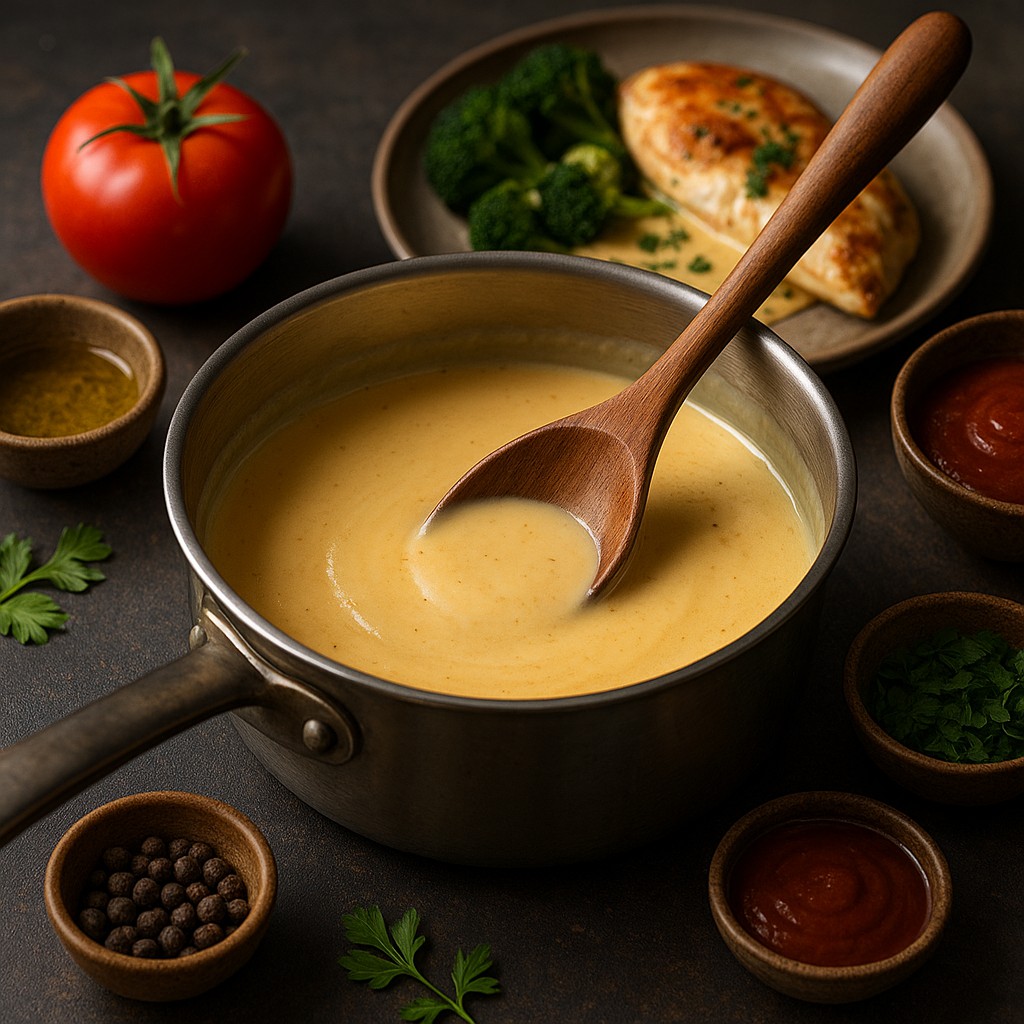
A great sauce is the quiet hero on the plate. It can turn a plain chicken breast into restaurant chicken, pull overcooked vegetables back from the brink, and make a bowl of noodles feel like a choice, not a backup plan. Sauce is also where cooking shifts from strict rules to taste, judgment, and a little nerve.
If you have ever wondered why your sauce tastes flat while someone else’s tastes deep, the answer is not a secret ingredient shipped in from a mountain monastery. It is usually a small set of repeatable ideas: building flavor in layers, controlling texture, and fixing the balance at the end. Sauces are less like magic spells and more like well-edited writing.
Once those ideas click, you can walk into almost any kitchen situation and improvise with confidence. You stop hunting for the perfect recipe and start making the food in front of you taste like you meant it.
The real “secret”: sauces are built, not poured
A common mistake is thinking sauce is something you add at the end, like ketchup on fries. Great sauces are usually built in stages, and each stage adds a different kind of flavor. Think of it like making a song: you need a beat (the base), harmony (aromatics), a chorus (the main flavor), and a final shine (finishing touches). Skip the layers and your sauce might still be fine, but it will rarely be memorable.
The first layer is usually a base of fat, water, or both. Butter, olive oil, rendered chicken fat, coconut milk, stock, wine, tomatoes, and even pasta water can all be the starting point. Fat carries aromas and adds richness. Water-based liquids spread flavor and keep things from feeling heavy. Many sauces use both because humans, like sauces, like balance.
Next come aromatics and browning. Onions, garlic, ginger, scallions, celery, carrots, peppers, and spices are not there to “decorate.” They are there to build depth. Browning, whether you are searing meat or sautéing tomato paste, creates hundreds of new flavor compounds through the Maillard reaction (the browning process that makes roasted food taste deeper). This is the gap between “tastes like ingredients” and “tastes like cuisine.”
Finally, great sauce-making is editing. You reduce to concentrate. You strain to smooth things out. You whisk to bring it together. You taste to correct. A sauce is rarely one-and-done. You adjust it the way you would tweak a photo in an editing app, just with more spoon-licking.
Flavor balance: the five knobs you can turn
Most sauce problems are balance problems. Too bland, too sharp, too heavy, too sweet, too muddy. The good news is you can fix most of that by turning a few simple “knobs.” When cooks say “season to taste,” what they really mean is “balance the forces.”
Here are the main levers you have, and what they do:
- Salt: boosts flavor and softens bitterness, but too much makes everything taste like seawater.
- Acid: brightens and sharpens, making rich food feel lighter (lemon, vinegar, wine, yogurt).
- Sweetness: smooths rough edges and balances acid and bitterness (sugar, honey, carrots, onions, sweet wine).
- Fat: carries aroma and gives a smooth, satisfying mouthfeel (butter, cream, oils, nut butters).
- Umami: savory depth and that “meaty” satisfaction (soy sauce, mushrooms, Parmesan, miso, fish sauce, tomatoes).
One big myth is that acid is only for sour sauces. Acid is for contrast. A tiny squeeze of lemon can make a cream sauce taste more creamy, not more sour, because it wakes up your palate so you notice more detail. Another myth is that sweetness makes a sauce sweet. In small amounts, sweetness is like the bass in music: you miss it when it is gone, but you do not want it turned all the way up.
A quick “rescue” habit that changes everything
When your sauce tastes off, do not panic and dump in five random things. Do a simple check: taste, then ask which direction it needs.
- If it tastes flat, try salt or umami first.
- If it tastes heavy, add acid.
- If it tastes sharp or aggressive, add a touch of fat or sweetness.
- If it tastes confused, reduce it (to concentrate) or simplify it (strain it, stop adding things).
Sauces reward calm, not chaos. Panic seasoning is how you end up with something that tastes like lemony soy caramel cream, which is not a cuisine, it is a cry for help.
Texture is half the deliciousness (and the part people forget)
If flavor is the story, texture is the voice telling it. A sauce can taste great and still feel wrong: grainy, thin, greasy, gluey, or broken. Great sauces often feel effortless, but that “effortless” feel is carefully built.
There are a few classic ways to control texture:
Thickening methods you can actually remember
Reduction is the simplest: simmer to evaporate water so the flavor gets stronger and the sauce thickens. This is great for stock-based pan sauces, wine sauces, tomato sauces, and fruit sauces. The upside is a clean taste. The downside is it takes time, and if your starting liquid is salty, you can accidentally over-salt as it reduces.
Starch thickening (flour, cornstarch, arrowroot, potato starch) makes a glossy sauce that clings. Flour is sturdier and more cloudy. Cornstarch is clearer and silkier. The most common mistake is boiling hard after adding starch, or adding too much, which can make the sauce taste floury or feel like cafeteria gravy.
Emulsification is the fancy word for getting fat and water to stay mixed. Mayonnaise, vinaigrette, hollandaise, beurre blanc, and many pan sauces rely on this. You whisk, shake, or “mount” with cold butter so tiny droplets of fat stay suspended in the liquid. The biggest myth: “More heat makes it thicken faster.” Often, too much heat breaks the emulsion and you end up with a greasy puddle.
Gelatin and collagen are the hidden reason restaurant sauces feel so luxurious. If you reduce a stock made from bones or skin, natural gelatin thickens the sauce and gives it a glossy, rich feel. That is also why a simple pan sauce made with good chicken stock can taste like you worked much harder than you did.
One table you will actually use
| Sauce goal |
Best technique |
What it feels like |
Common mistake |
Easy fix |
| Clingy, glossy stir-fry sauce |
Cornstarch slurry |
Shiny, coats evenly |
Too thick, gummy |
Add water or stock, simmer briefly |
| Elegant pan sauce |
Reduction + butter (mounting) |
Silky, restaurant-style |
Sauce breaks, looks oily |
Lower heat, whisk in a splash of water, remount with cold butter |
| Creamy pasta sauce |
Emulsion with pasta water + cheese |
Smooth, not heavy |
Cheese clumps, turns stringy |
Use lower heat, add cheese off-heat, loosen with pasta water |
| Classic gravy |
Roux (flour + fat) |
Velvet, opaque |
Floury taste |
Cook roux longer before adding liquid |
| Bright vinaigrette |
Oil + acid emulsion |
Light, punchy |
Separates instantly |
Whisk harder, add mustard or honey as an emulsifier |
Keep this simple model in your head: thickness comes from less water (reduction), added structure (starch or gelatin), or better mixing (emulsion). Pick the method that fits the style you want.
The sauce “spine”: start with a strong base and build upward
A lot of great sauces follow the same basic blueprint. Once you learn the spine, you can swap ingredients endlessly without getting lost.
A simple blueprint for everyday sauces
- Aromatic start: sauté onions/garlic/ginger/spices in fat to wake up the flavors.
- Main liquid: add stock, wine, tomatoes, cream, coconut milk, or a mix.
- Concentrate or thicken: reduce, or add starch, or emulsify.
- Season and balance: salt, acid, sweetness, umami.
- Finish: herbs, zest, butter, toasted oil, grated cheese, or a splash of something punchy.
This is not a strict formula. It is a guardrail. When you are improvising, it keeps you from jumping straight to “random liquids in a pan” and then wondering why it tastes like damp disappointment.
Storytime: why “finishing” changes everything
Picture two tomato sauces. Sauce A simmers for 30 minutes and gets served as-is. Sauce B simmers for 30 minutes, then gets a pinch of salt, a teaspoon of butter, a small splash of vinegar, and a handful of torn basil right before serving. Sauce B tastes brighter, rounder, and more alive, even though it simmered for the same amount of time.
That last-minute finishing is not just garnish. It is contrast and aroma. Many flavor compounds in herbs are volatile, meaning heat drives them off. Add herbs at the end and the sauce smells like something you want to eat. Add them early and the sauce smells like, well, “cooked.”
The deliciousness tricks restaurants use (that you can steal politely)
Restaurants are not always using secret ingredients. They are using repeatable habits that home cooks skip because they seem minor. Minor is the whole game. Sauces are won on details.
Layering umami without making it taste “Asian” or “Italian”
Umami ingredients get tied to certain cuisines, but in small amounts they mostly make food taste more like itself. A Parmesan rind simmering in a sauce does not shout “cheese.” It quietly adds depth. A teaspoon of miso in a stew does not turn it into miso soup, it just makes it taste more complete.
Try one of these in small amounts when your sauce feels thin:
- A few drops of fish sauce (yes, even in beef or tomato sauces)
- A spoon of tomato paste sautéed until brick-red
- A splash of soy sauce in gravies or braises
- Mushrooms or dried mushroom powder
- Anchovy melted into the aromatics (it disappears, like culinary camouflage)
A common misunderstanding is that umami is “cheating.” It is not cheating, it is seasoning. Salt is not cheating either, it is just the difference between “ingredients” and “food.”
The hidden power of time and temperature
Sauces often go wrong because the heat is wrong. High heat is great for browning and fast reduction, but it is tough on dairy and emulsions. Low heat is gentler and helps sauces stay smooth. A good rule: if your sauce has cream, butter emulsions, or cheese, treat it like a cat, warm and calm, not loud and chaotic.
Also, do not overlook resting time. A sauce that tastes a little edgy right after cooking often tastes more pulled together after 10 minutes off the heat. Flavors settle, sharp notes relax, and you are less likely to “fix” it into oblivion.
Common sauce myths that sabotage good cooks
Plenty of capable cooks make sad sauces because they learned one bad rule early and never questioned it. Let us clear up a few.
Myth: “Thicker is always better”
Not true. Some sauces should be light and loose, like a brothy ramen tare, a lemon-caper pan sauce, or a delicate herb dressing. Thickness should match the food. A steak can handle a rich reduction, but flaky fish often wants something brighter and thinner.
Myth: “If it tastes bland, add more spices”
Sometimes you do need spices, but blandness is often missing salt, acid, or concentration. Spices add personality, but they do not automatically add clarity. If your sauce tastes like “spiced nothing,” it is still nothing.
Myth: “Cream makes everything better”
Cream can make a sauce richer, but it can also mute flavor and make everything feel heavy and one-note. Often the better move is a knob-turn: a bit of butter for shine, a splash of stock for savoriness, or a squeeze of lemon for lift. Cream is a tool, not a personality.
Myth: “A broken sauce is ruined forever”
Most “broken” sauces can be saved. If an emulsion splits, lower the heat, whisk in a teaspoon of water, then slowly bring the fat back in (or whisk in a small cube of cold butter). If a cheese sauce turns grainy, it probably overheated. Take it off the heat and loosen it with warm milk or pasta water, then whisk patiently.
Practice sauces: three archetypes that teach you everything
If you want sauce confidence fast, practice a few “archetype” sauces that teach skills you can reuse everywhere. You are not memorizing recipes, you are learning moves.
A fast pan sauce (learns browning, deglazing, finishing)
Cook meat, remove it, pour off extra fat, then deglaze the pan with wine or stock, scraping up the browned bits. Reduce a little, add a knob of cold butter off the heat, and finish with lemon or herbs. This teaches you how flavor sticks to the pan and how to turn it into a silky sauce in minutes.
A simple emulsion (learns balance and stability)
Make a vinaigrette: three parts oil, one part vinegar or lemon, plus salt and mustard. Taste it, then adjust. This teaches the “knobs” better than almost anything because the flavors are exposed and honest.
A slow tomato sauce (learns sweetness, acidity, patience)
Cook onions slowly, add tomato paste and let it brown a bit, add tomatoes, simmer, then adjust with salt and a tiny bit of sugar only if needed. Finish with olive oil or butter and fresh basil. This teaches you the difference between raw tomato sharpness and cooked tomato depth, and how finishing changes aroma.
A closing pep talk for your next spoonful
Making a great sauce is not about being born with perfect instincts. It is about tasting on purpose, building flavor in layers, and treating texture like it matters as much as flavor. The “secrets” are mostly habits: brown a bit deeper, reduce a bit longer, add acid at the end, whisk with care, and adjust calmly instead of frantically.
Next time you cook, let the sauce be the main event, even if it is just a quick pan sauce on a Tuesday. Taste, tweak, taste again, and notice how small changes can make a big difference. Once you can make a sauce that makes you pause and say, “Oh, that’s nice,” you have leveled up in a way that sticks for life.