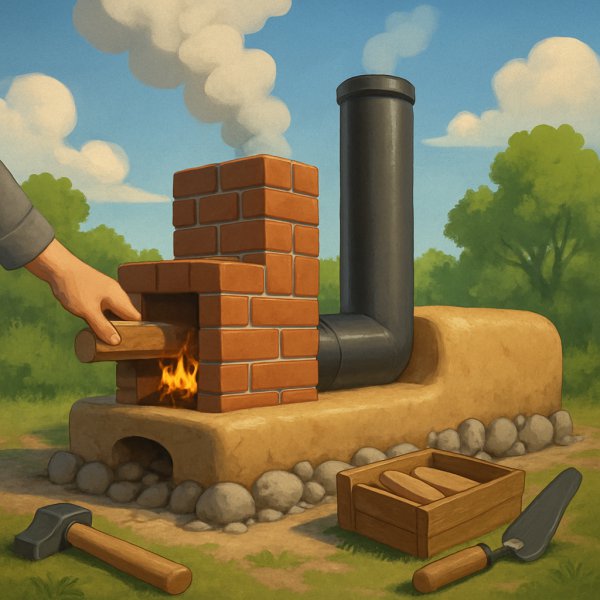
Why a simple hot bench could change how you heat your life
Imagine a woodstove that uses a single armload of sticks to keep you warm for a whole day, while releasing almost no smoke and storing heat like a slow cooker for your house. That is the promise of a rocket mass heater, a deceptively simple system that blends ancient thermal wisdom with modern combustion science. If you care about cutting your heating bills, reducing smoke, or simply learning an elegant way to work with fire, this is a device worth knowing about.
Beyond dollar savings, the charm of a rocket mass heater is experiential. It turns fire into a visible, trustworthy tool that behaves predictably. Instead of a roaring, attention-demanding stove, you get a quiet, efficient system that bakes heat into a bench or floor so you can lean back and feel the warmth hours later. It matters because it is an accessible sustainable tech: you can build one with reclaimed materials, learn by doing, and reduce your carbon footprint while gaining a cozy focal point for your home.
This guide will take you from curious to confident. We will explore what a rocket mass heater is, how it works at both the practical and scientific level, how to choose or build one, and how to use it safely and effectively. Along the way you will get vivid analogies, real-world tips, and short reflection tasks that help you apply the ideas to your own space.
Prepare to meet one of the most satisfying heating systems you might ever try - part fireplace, part laboratory, and part furniture. It both obeys and rewards curiosity.
What a rocket mass heater really is, in plain English
A rocket mass heater is a type of wood-burning heating system designed to burn fuel very efficiently and capture the heat in a large thermal mass - typically a bench, bed, or block of masonry. The core idea is to produce very hot, clean combustion in a small, insulated chamber and then route the hot exhaust through a long path embedded in a mass that stores and slowly releases the heat.
Think of it as a turbocharged woodstove combined with a thermal battery. You feed small-diameter, dry wood into a feed tube. The gases released by the wood are forced into an insulated burn chamber where they combust cleanly at very high temperatures. The resulting hot gases travel through channels in a heavy concrete or cob bench, giving up heat slowly, and exit through a chimney. The result is more heat per piece of wood, drastically less visible smoke, and a cozy, long-lasting warmth.
Rocket mass heaters are not standardized appliances made in factories; they are mostly community-driven designs with variations. Some are built from metal barrels and cob mass, others from full masonry. Some are small and portable, others are built into a house as permanent furniture.
Meet the parts and the choreography of fire
To understand how the heater works, picture a small assembly line with five main stations. Each station has a job, and the magic is in how they coordinate.
- Fuel feed - where you add wood. In the classic J-tube setup there is a vertical feed tube leading down to a horizontal burn tunnel.
- Burn tunnel - a short horizontal chamber where the wood gas is released and warmed before rushes to the riser.
- Heat riser - an insulated vertical chimney within the burn chamber where gases accelerate and reach very high temperatures, encouraging complete combustion.
- Refractory and thermal mass - after the riser the hot gases move through a path under, around, or through a bench made of masonry or cob, transferring heat to the mass.
- Flue/chimney - the treated gases exit through a chimney that draws fresh air through the feed and sustains combustion.
A useful analogy is a rocket engine in miniature. The feed tube is the fuel valve, the burn tunnel and riser act like a combustion chamber and nozzle, and the thermal mass is the payload fairing that absorbs heat and slows it down for later use. Because the burn happens in a very hot, oxygen-rich environment, the wood gases burn more completely. That yields less smoke, more heat released as sensible heat into the mass, and cleaner emissions.
The science behind the “rocket” name and why it is efficient
There are three scientific principles that make a rocket mass heater special: insulation-induced temperature, complete combustion of gases, and thermal mass storage.
First, insulation. By surrounding the heat riser with insulating materials, the gases cannot lose heat to the surroundings early. The heat stays concentrated, driving the internal temperature up into a range where volatile wood gases ignite spontaneously. Higher temperatures make combustion more complete and fast.
Second, secondary combustion. Wood does not burn all at once. It releases volatile gases that need oxygen and heat to ignite. The rocket mass riser gives those gases both. Once they combust, they generate more heat than if the gases simply escaped as smoke. This reduces visible particulate emissions and increases energy extraction from the wood.
Third, thermal mass. Imagine a kettle versus a cast-iron pot. The kettle heats fast but cools quickly when removed from the flame. The cast-iron pot takes time to heat but holds that heat for hours. A mass bench made of cob or masonry behaves like the cast-iron pot. The exhaust transfers heat into the mass gradually, and later the mass radiates warmth slowly into the room, smoothing out the peaks and valleys of temperature.
The combined effect is fuel efficiency. People commonly report 5 to 10 times longer warmth per equivalent volume of fuel compared to open fires, and large reductions in smoke and soot when the system is properly made and operated. Laboratory and field tests vary, but the practical outcome for many users is impressively lower wood consumption and cleaner indoor air.
Different designs you might encounter - quick comparison
There are a few common design families. Here is a compact table to help you choose based on your goals.
| Design type |
Typical form |
Ease of build |
Efficiency |
Best for |
| J-tube Rocket (classic) |
Metal feed tube, insulated riser, barrel on top, cob bench |
Moderate |
High |
DIYers, workshops, small cabins |
| Batch-box Rocket |
Larger firebox for bigger, longer burns |
Moderate to hard |
Very high |
Homes that want larger heat output, indoor installation |
| Masonry Rocket Mass |
Fully masonry firebox and bench, no metal barrel |
Hard |
High - very durable |
Permanent installations, architectural projects |
| Metal Barrel Rocket |
Simplest to prototype, metal drum used as heat riser housing |
Easy |
Moderate |
Quick tests, workshops, temporary setups |
This table helps you match intent to complexity. A J-tube is a good starting point if you want a straightforward, effective system. A batch-box gives more control and longer burn periods but requires more masonry skill. Full masonry systems are beautiful and permanent, but they need careful design and often professional input.
Step-by-step outline to try a small experiment safely
If you want hands-on experience, build a small outdoor prototype to learn the behavior before committing to a permanent indoor installation. Here is a high-level set of steps that keeps safety front and center.
- Learn and prepare - Read local codes and check for restrictions. Talk to neighbors about smoke and safety. Gather safety gear - gloves, goggles, carbon monoxide detector for indoor builds.
- Gather materials - steel pipe sections for a feed tube and riser mockup, a metal barrel or large can for a heat riser jacket, bricks and cob for a small bench, refractory material for the burn tunnel if available.
- Site selection - choose level, non-combustible ground, clear of overhangs and flammable materials. Outdoors is ideal for a first prototype.
- Build a J-tube prototype - assemble a vertical feed tube connecting to a short horizontal burn tunnel then an insulated riser inside a barrel. Seal joints but allow for wood insertion and ash cleaning.
- Light and observe - use small dry sticks. Keep water and a fire extinguisher nearby. Note draft, flame behavior, smoke output, and how heat moves into any adjacent mass you build.
- Adjust and learn - try different wood sizes, different insulation around the riser, and watch how the fire responds. Take notes on fuel consumption and how long heat is retained.
This small experiment will teach you about draft, loading rhythms, and how a rocket prefers to be fed. It is a low-cost way to learn before building indoors.
Practical operating tips - get the most out of your heater
Running a rocket mass heater well is less about constant babysitting and more about smart fueling and patience. Here are practical tips that come from common experience.
- Use dry, seasoned wood. Moisture steals heat. Aim for wood with less than 20 percent moisture for best results.
- Feed small-to-medium sticks. Rocket mass heaters prefer short, dense pieces that fit well into the feed tube. Long logs can choke the flow.
- Start hot. Light vigorously so the riser gets to high temperature quickly. A hot riser is a clean-burning riser.
- Don’t overload. The system is optimized for short, intense burns. Overloading can lead to creosote and smoky exhaust.
- Let the mass charge. A rocket’s magic is that the bench stores heat. After a short hot burn, let the system settle and radiate.
- Monitor draft. The chimney needs to develop a good draft. Cold chimneys or negative pressure situations in tight homes can reduce performance.
- Clean the channels. Ash buildup in the burn tunnel and short bends can reduce airflow over time. Periodic cleaning keeps it efficient.
If your goal is overnight warmth, consider a larger mass or a batch-box design that produces longer burn periods. If you want cooking, the metal barrel top or a designed cook surface can be incorporated, but make sure the thermal path suits both uses.
Safety, codes, and common legal practicalities
A rocket mass heater is not inherently unsafe, but it is unconventional, and that means you must be diligent about permits, clearances, and indoor air quality. Many regions treat rocket heaters like woodstoves and require permits; others are agnostic. Always check local building codes.
Install smoke and carbon monoxide detectors, and plan for proper clearances to combustibles. The outer surface of a thermal mass bench is usually cool enough to touch, but the immediate firebox and primary metal components can be very hot. Use proper refractory materials in the burn tunnel and heat riser, and use qualified help if you are planning a permanent, permanently connected indoor flue.
If you retrofit an indoor rocket mass heater into an existing house, be mindful of negative pressure created by exhaust fans and other combustion appliances. A professional assessment of ventilation and draft balance is a prudent step.
Myths and misunderstandings - what people get wrong
Myth - rocket mass heaters are smoky, dangerous contraptions that will fill a house with soot. Reality - when built and operated properly they produce very little visible smoke during combustion, because the volatile gases are burned in the hot riser. Most smoke problems arise from poor design, wet fuel, or improper draft.
Myth - they need constant feeding. Reality - they need shorter, more intense burns, not feeding every few minutes. Properly designed systems are charged for an hour or less and then give heat for many hours via the mass.
Myth - they cannot be used in houses or are illegal. Reality - regulations vary. Proper installation with correct clearances and chimney connections can bring a rocket mass heater to code in many areas, but permits and inspections are often required.
Myth - they are only for off-grid living. Reality - many people use rocket mass heaters in grid-connected homes because of fuel savings, aesthetics, and the quality of radiant heat.
Addressing these myths helps you approach the project with realistic expectations and safe practices.
Short assessment - questions to make this personal and practical
Take a few minutes to answer these. They will help you decide if a rocket mass heater fits your needs and what kind to choose.
- How much space do you want to heat regularly - a tiny cabin, one room, or several rooms? Estimate in square feet or meters.
- What is your typical fuel source and availability - split firewood, scrap wood, clean urban wood?
- Do you prefer a permanent, architectural installation or a flexible, experimental setup you can move or change?
- How much hands-on building work are you willing to do? Do you want a community build or hire help?
- Are there local building code constraints that might affect installation?
These quick reflections will narrow the choices and guide whether you start with a small outdoor prototype or move toward a full indoor masonry bench.
Practical materials checklist and a few dimension suggestions
If you are going to experiment, here is a helpful starter list with rough dimensions for a small J-tube prototype.
Materials
- Steel pipe or stove pipe sections for feed tube, burn tunnel, and riser - typical feed tube 3 to 6 inches internal diameter, riser 4 to 6 inches.
- Metal barrel (55 gallon) or large can to wrap the riser for a visible prototype.
- Firebrick or refractory cement for burn tunnel surfaces.
- Insulation around riser - perlite, ceramic fiber, or vermiculite mixed into refractory.
- Bricks and cob (clay, sand, straw) or insulation blocks for a small bench.
- Chimney pipe for exhaust extension - depends on local code.
- Tools: angle grinder, trowels, heat-rated gloves.
Suggested small geometry example (classic J-tube)
- Feed tube internal diameter: 4 inches
- Burn tunnel length: 12 to 18 inches
- Heat riser height: 36 to 48 inches (longer risers increase draft and efficiency)
- Bench mass: any mass that gives at least 100 to 200 pounds of thermal mass to noticeably store heat; larger mass stores more.
These are not universal rules, but they get you in the ballpark to learn core behaviors.
Final nudge - why learning this matters and how to take the next step
Rocket mass heaters are a sweet spot between craft and science. They reward curiosity, offer tangible savings, and provide a delightful living experience that reconnects you with the ancient, practical skill of managing heat. The learning curve is gentle if you start small and stay mindful about safety and local rules.
If this sparked your interest, here are three concrete next steps. First, join a local or online rocket mass heater community to see photos, plans, and cautionary tales. Second, attend or volunteer at a build day where you can get hands-on guidance. Third, experiment outdoors with a small prototype to feel how the system breathes and learns to respect the riser. Each step builds confidence and reduces surprises.
You will finish this project not only with a new heating system, but with new skills and a story to tell about how thoughtful design can change how we live with energy. Imagine the satisfaction of handing someone a cup of tea while they sink into a warm bench you built, knowing the heat took hours to arrive - and will last even longer.