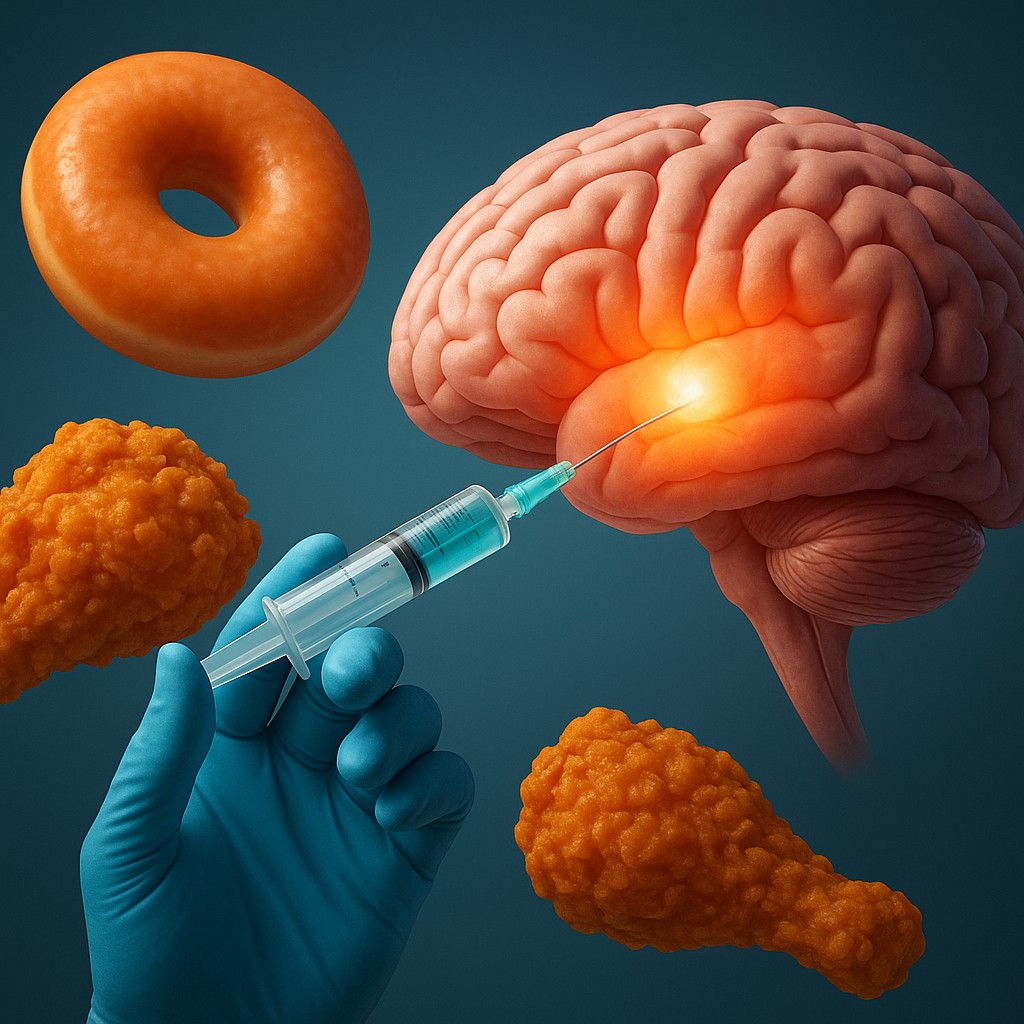
Imagine for a moment that your brain is a high-performance engine. Every time you see a glazed donut or a piece of crispy fried chicken, someone floors the accelerator. This sudden revving isn't actually about the calories you are eating; it is the intense, dopamine-fueled rush of what you are about to eat. For decades, we have treated weight management as a simple tug-of-war between willpower and hunger - a moral test where the person who wants the cookie less "wins." However, a new class of medications known as GLP-1 receptor agonists, including brands like Ozempic, Wegovy, and Mounjaro, is proving that this struggle was never a fair fight. These drugs do more than just make people feel physically full; they are performing a silent surgical strike on the mental roots of craving itself.
The impact of these medications is so deep that it is shaking up the world’s largest food companies. For the first time in the history of industrial food production, the biological "cheat codes" used to make snacks addictive are being bypassed by the consumer's own brain chemistry. Major retailers report that households using these medications are buying significantly fewer high-calorie, ultra-processed items. This shift marks a transition from trying to fix an individual's "willpower" to recalibrating the brain chemicals that scream for sugar long before the first bite is even taken.
The Hungry Ghost in the Reward System
To understand how these medications work, we first have to look at why humans are so sensitive to "food noise" - the constant mental chatter about eating that plagues modern life. Throughout most of human history, calories were scarce. Our ancestors who sought out the most energy-dense foods were the ones who survived. Evolution rewarded this by installing a powerful Pavlovian bell in our brains. When you see a sugary snack, your reward pathway (the mesolimbic dopamine system) lights up. This is the "anticipatory reward," a chemical promise of pleasure that begins before food even touches your tongue. It is the reason you find yourself standing in front of the pantry at 9:00 PM without quite remembering how you got there.
For many, this mental rush is incredibly loud, creating a "craving loop" where the brain treats a fatty snack as a physical necessity rather than a choice. GLP-1 drugs change this by crossing the blood-brain barrier and interacting with the hypothalamus, the brain’s command center for keeping the body in balance. Instead of just telling the stomach to slow down, these molecules tell the brain's nerve cells that the energy tanks are full. The result is a dramatic silencing of those constant thoughts about food. Users often describe it as if a volume knob in their head, which had been turned up to ten their entire lives, was suddenly dialed down to a two.
Breaking the Metabolic Speed Limit
While the brain effects are the headline story, the physical mechanics of GLP-1 (Glucagon-Like Peptide-1) are just as fascinating. Naturally, GLP-1 is a hormone produced in the gut after we eat. It does three main things: it tells the pancreas to release insulin, it signals the liver to stop pumping out extra sugar, and it slows down "gastric emptying." This last part means food literally stays in your stomach longer, making you feel physically full and satisfied for hours. However, natural GLP-1 lasts only minutes in the blood before enzymes break it down. The breakthrough in medications like semaglutide was engineering a version that resists this breakdown, staying active in the body for an entire week.
This extended window of activity creates a fundamental shift in how the body understands the concept of "enough." In a typical body, the hormone ghrelin (the "hunger hormone") rises as the stomach empties, sending urgent signals to the brain to find fuel. By slowing down digestion and mimicking a constant state of being fed, GLP-1 drugs create a physical barrier to overeating. You might want to eat a whole pizza because your brain remembers it tastes good, but after two slices, your body sends a signal so clear and commanding that the "want" simply evaporates. It turns an impulsive, emotional act into a logical, biological one.
The Table of Sensory Reconfiguration
These medications alter our relationship with food in many ways. It is not just about eating less; it is about changing the type of satisfaction we get from what we consume. The following table explores how GLP-1 medications compare to the traditional biological experience of eating.
| Feature |
The Traditional "Craving Loop" |
The GLP-1 "Silent" State |
| Anticipatory Reward |
High dopamine spike before the first bite. |
Muted response; food looks like "just food." |
| Digestion Speed |
Normal; hunger returns in 3-5 hours. |
Slowed; feeling of fullness lasts much longer. |
| Fullness Signal |
Often delayed; easy to eat past the limit. |
Immediate and firm; brain registers "done" early. |
| Food Selection |
Intense drive toward sugar, salt, and fat. |
Increased preference for mild or "clean" foods. |
| Mental Energy |
High "food noise"; constant meal planning. |
Lowered mental load; food is a secondary thought. |
Why the Food Industry is Panicking
For decades, the "Big Food" business model has relied on the science of the "bliss point" - the precise ratio of salt, sugar, and fat that makes a consumer want to keep eating. They have spent billions researching how to bypass our natural fullness signals. But GLP-1 drugs have made the bliss point irrelevant for a growing number of people. If the brain no longer provides a hit of dopamine in response to a caramel drizzle, the product’s carry-on "hook" is gone. This has led to a frantic pivot within the industry as companies realize their core customers are becoming indifferent to their most profitable products.
We are seeing a shift where food companies are now developing "GLP-1 companion" products. These focus on high-protein snacks and nutrient-dense meals that provide the vitamins a person might miss if they are eating 40 percent less food. There is also a move toward smaller portion sizes marketed not as "diet food," but as a new standard for a calibrated appetite. It is a rare moment where the biological evolution of the consumer is moving faster than the product development of corporations. The industry is being forced to treat food as fuel again, rather than as a drug-like delivery system.
The Myth of the Willpower Vacuum
One of the most persistent myths about these medications is that they are a "shortcut" or a "failure of willpower." This view ignores the reality that for many, "hunger" is a legitimate physical signaling error in the brain. It is much like how someone with blurry vision cannot simply "will" themselves to see clearly. GLP-1 drugs do not remove the body’s need for nutrients, nor do they automate health. A person on these medications still has to choose to eat protein, fiber, and healthy fats. What the drugs do is clear the "neurological brush," removing the constant, distracting hunger that makes healthy choices feel like an exhausting uphill battle.
Furthermore, it is important to distinguish between "wanting" and "needing." These drugs target the hedonic system (the part of us that wants food for pleasure) more than the homeostatic system (which manages the food we need to survive). Because they dial back the pleasure-seeking drive, many patients report a strange, new sensation: the ability to leave food on a plate. This might seem trivial, but for someone whose brain has spent a lifetime screaming that every scrap of energy must be consumed, it is a revolutionary shift. It transforms the dinner table from a zone of conflict into a quiet part of the day.
Navigating the Nutrient Gap
While the silencing of food noise is a breakthrough, it introduces a new challenge: the need for nutrient density. When you eat half as much as you used to, every bite matters twice as much. This is where biology meets practical nutrition. Because the medication reduces the mental drive to eat, some users find themselves forgetting to eat altogether, which can lead to muscle loss or fatigue. The goal of using these tools is not to stop eating, but to change the dialogue with food. It requires a conscious effort to prioritize proteins and vegetables, as the body’s old signals for "I need energy" (which usually meant "give me sugar") are no longer in charge.
Education is shifting away from traditional dieting and toward "optimized consumption." Instead of teaching people how to resist a craving, we are now teaching them how to ensure they get enough zinc, iron, and protein within a smaller daily window. This is a much healthier conversation, as it focuses on what the body needs to thrive rather than what the mind is "forbidden" from having. It moves the focus from the negative (taking things away) to the positive (quality and foundation).
The Future of the Human Appetite
We are witnessing a profound recalibration of the human experience. As weight-loss drugs become more accessible, they are showing us how much of our "personality" and "choices" were actually just the result of background biological signals. This doesn't mean we are losing our humanity; it means we are gaining a tool to level the playing field against an environment engineered to make us overeat. By quieting the mental reward for sugar, we are not just losing weight - we are reclaiming the mental space previously occupied by an endless loop of cravings.
The ultimate lesson of the GLP-1 revolution is that our biology is not destiny. We are learning that the brain can change, the gut acts as a second brain, and the path to health is often paved with molecular understanding rather than just grit. In the future, the focus will likely expand beyond weight loss to how these medications might help with other impulse-driven behaviors, from smoking to alcohol use. We are entering an era of "neurological precision," where we can finally treat the root cause of our impulses and find a quieter, more balanced way to live in a world of infinite temptation.