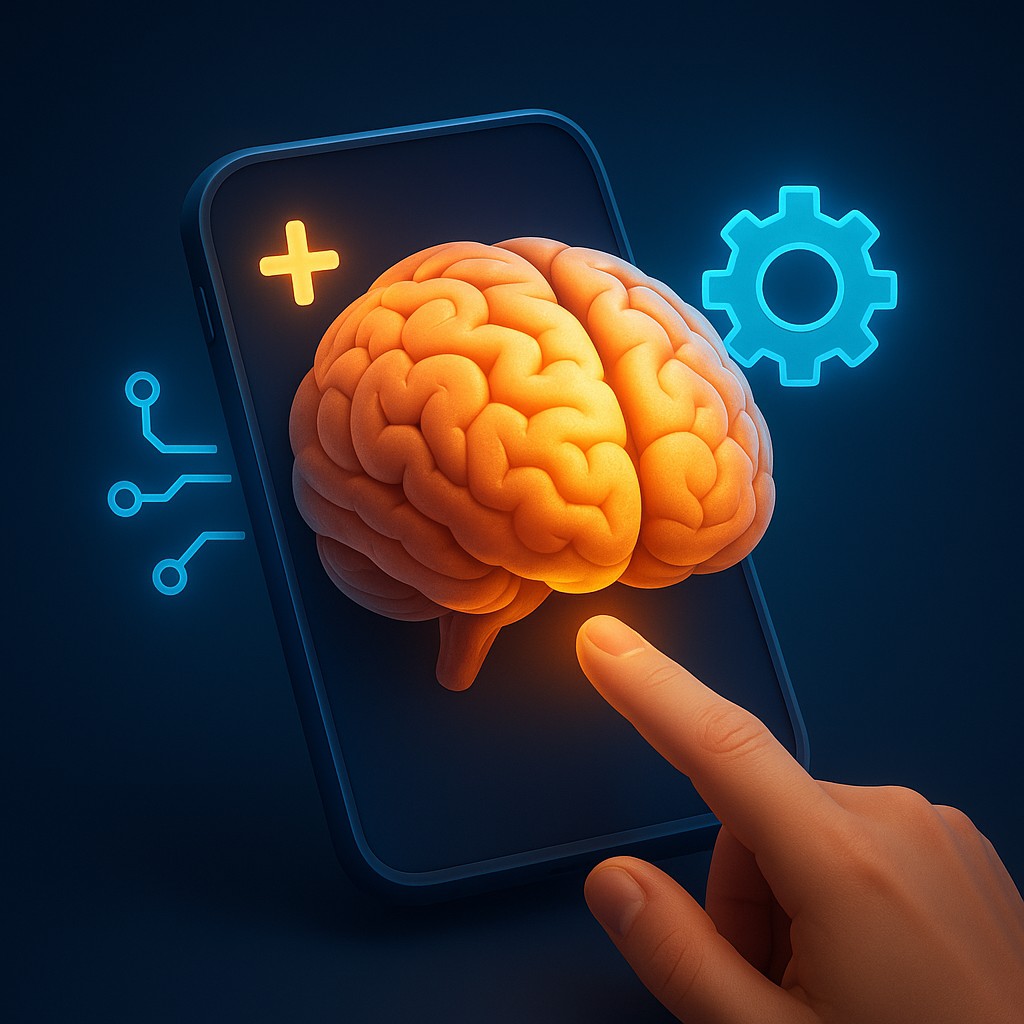
Imagine for a moment that your brain is a high-end smartphone. It has incredible hardware, a stunning camera, and enough processing power to launch a rocket. However, if the operating system is riddled with glitches and pessimistic code, even the simplest app will crash. Most people spend their lives trying to upgrade their external circumstances, like getting a better job or a bigger house, while running an outdated, gloomy software package in their heads. A positive mindset isn't about ignoring the fact that life can be a mess sometimes; it is about upgrading that internal operating system so you can navigate the mess without your system freezing up.
When we talk about a positive mindset, we aren't talking about "toxic positivity," which is that exhausting habit of pretending everything is fine while your kitchen is literally on fire. Instead, we are looking at a psychological framework that changes how you interpret events. It is the difference between seeing a rainy day as a ruined afternoon or as a perfect excuse to read a book and let the garden grow. This shift in perspective actually reconfigures your brain's physical structure through neuroplasticity - the brain's ability to form new connections - making you more resilient, more creative, and surprisingly, more likely to succeed in the very goals you once thought were impossible.
The Biological Architecture of a Better Mood
To understand why a positive outlook changes your life, we first have to look at the gray matter sitting between your ears. Your brain is not a static marble statue; it is more like a dense forest where the paths you walk most often become the widest and easiest to navigate. Every time you have a thought, a small electrical impulse zips across a synapse, the tiny gap between nerve cells. If you constantly think "I’m going to fail," your brain builds a literal highway for that thought. Conversely, when you consciously pivot toward a constructive outlook, you begin to pave a new road. Over time, the "pessimism highway" falls into disrepair, and the "optimism avenue" becomes your default route.
This process is heavily influenced by the amygdala and the prefrontal cortex. The amygdala is your brain’s ancient alarm system, constantly scanning for lions, tigers, and embarrassing social blunders. When you operate from a negative mindset, your amygdala is on high alert, pumping cortisol and adrenaline through your veins. This puts you in "survival mode," where your peripheral vision narrows and your ability to think creatively vanishes. By cultivating a positive mindset, you soothe the amygdala and hand the reins over to the prefrontal cortex. This is the executive part of your brain responsible for logic, problem solving, and seeing the big picture. Essentially, positivity makes you significantly smarter because it unlocks the parts of your brain that stress keeps under lock and key.
Deconstructing the Myths of the Grumpy Realist
There is a common misconception that being a pessimist makes you a "realist," while being an optimist makes you a naive dreamer. In reality, the "realistic" pessimist is often just as biased as they claim the optimist to be; they simply choose to focus on the data points that confirm their gloom. Research has shown that optimists are actually better at processing negative information than pessimists. Because an optimist doesn't view a setback as a permanent character flaw or a sign of the end of the world, they can look at a mistake, analyze it objectively, and learn from it. The pessimist, overwhelmed by the emotional weight of the "disaster," often ignores the facts just to stop the pain.
Another myth is that happiness or positivity is a fixed trait, like having blue eyes or being exceptionally tall. While it is true that we all have a "genetic set point" for happiness, psychologists have found that about 40 percent of our mood is determined by intentional activity. This means a huge chunk of your outlook is a skill you can practice, much like learning to play the ukulele or baking a decent loaf of sourdough. You aren't stuck with a grumpy personality; you are simply out of practice at looking for the silver linings. When you realize that mindset is a muscle, the pressure to "just feel better" disappears and is replaced by a manageable training routine.
| Mindset Element |
The Pessimistic Approach |
The Positive Growth Approach |
| View of Failure |
A permanent reflection of a lack of talent. |
A temporary setback and a source of information. |
| Reaction to Stress |
Tunnel vision and focused on the problem. |
Broad perspective and focused on solutions. |
| Social Interaction |
Guarded, skeptical, and energy draining. |
Open, collaborative, and energy giving. |
| Health Impact |
Higher cortisol and weakened immunity. |
Lower heart rate and improved longevity. |
| Internal Dialogue |
Constant "Why is this happening to me?" |
Consistent "How can I make the most of this?" |
The Art of Reframing Your Daily Narrative
If you want to install this new "positivity software," the most effective tool in your kit is reframing. This is not about lying to yourself; it is about choosing a more helpful interpretation of the facts. Imagine you are stuck in a massive traffic jam. The fact is that cars are not moving. The pessimistic frame is: "This is a waste of my life, I’m going to be late, and everyone else on the road is an idiot." This frame leads to high blood pressure and a ruined morning. The positive frame is: "I’m stuck here regardless, so this is a great time to listen to that podcast I’ve been ignoring." The facts haven't changed, but your internal experience has shifted from misery to productivity.
To master reframing, you have to become an observer of your own internal monologue. Most of us speak to ourselves in a way we would never dream of speaking to a friend. We use absolute terms like "always" or "never," as in "I always mess up presentations" or "I’ll never get promoted." A positive mindset involves catching these "cognitive distortions," or patterns of biased thinking, and challenging them with evidence. When you hear that voice say "I always fail," you stop and think, "Actually, I succeeded at X last week and Y the month before." By injecting a bit of courtroom-style evidence into your self-talk, you strip the power away from the negative emotions and return to a place of control.
Gratitude as a High-Performance Fuel
It sounds like a cliché from a motivational poster, but gratitude is perhaps the fastest way to physically change your brain's chemistry. When you focus on what is going right, your brain releases dopamine and serotonin, the "feel good" chemicals. The catch is that our brains have a "negativity bias" left over from our ancestors. If a caveman saw a beautiful flower and a hungry bear, the guy who focused on the flower didn't live long enough to pass on his genes. We are the descendants of the people who focused on the bear. Today, we don't have many bears, but we treat a snarky email or a broken dishwasher like a predator.
To counteract this ancient bias, you have to actively hunt for the good stuff. This is why gratitude journaling is so effective; it forces the brain to scan the environment for positive moments during the day so it has something to write down later. Over time, this scanning becomes automatic. You start noticing the way the light hits the trees or the fact that your coffee tastes particularly good. This isn't just fluffy stuff; it is a tactical advantage. A brain that is primed to see opportunities will find them in places where a discouraged brain only sees obstacles.
Building Resilience Through the Power of Yet
One of the most transformative shifts you can make is moving from a "fixed mindset" to a "growth mindset," a concept popularized by psychologist Carol Dweck. A fixed mindset believes our abilities are carved in stone. If you aren't good at math, you'll never be good at math. A positive, growth-oriented mindset, however, relies on the most powerful word in the English language: Yet. Saying "I don’t know how to lead a team" is a dead end. Saying "I don't know how to lead a team yet" creates a bridge to the future. It acknowledges the current reality while leaving the door wide open for improvement and mastery.
This shift in language changes how you handle the "middle part" of any journey. Most people quit things when they get hard because they interpret the difficulty as a lack of natural talent. The positive thinker interprets the difficulty as the feeling of their brain expanding. They lean into the friction because they know that friction is where the growth happens. By viewing challenges as "brain gym" sessions rather than personal insults from the universe, you become nearly unstoppable. You stop fearing the struggle and start seeing it as the necessary cost of becoming the person you want to be.
The Social Echo of an Optimized Outlook
We like to think we are independent islands, but human beings are actually highly social creatures with "mirror neurons" that pick up on the emotional states of those around us. If you walk into a meeting feeling cynical and defeated, you will likely trigger a similar response in your colleagues. On the flip side, a genuine positive mindset is infectious. It doesn't mean you have to be a cheerleader; it means you bring a sense of "can-do" energy that lowers the collective stress of the room. When you focus on solutions and give people the benefit of the doubt, they are more likely to do the same for you.
This creates a "virtuous cycle." Because you are more pleasant to be around and more focused on possibilities, people want to work with you, help you, and share opportunities with you. This isn't magic or some mystical "law of attraction"; it is just basic social mechanics. People are drawn to those who make them feel capable and optimistic. By changing your mindset, you change the way the world reacts to you, which in turn reinforces your positive outlook. It is like compounding interest for your social and professional life, where a small daily investment in your attitude pays out massive dividends over the years.
Practical Strategies for Daily Mindset Maintenance
Having a positive mindset is a bit like staying hydrated; you can’t just drink a gallon of water once and expect to be fine for the rest of the year. It requires small, consistent sips throughout the day. To keep your mental software running smoothly, it helps to have a set of "go-to" habits that anchor you when things get chaotic. These aren't just chores; they are defensive measures to protect your most valuable asset: your perspective.
- Morning Input Control: Most people start their day by scrolling through news or social media, which is essentially inviting a crowd of angry strangers into your bedroom. Instead, spend the first ten minutes reading something educational or meditating. This sets the tone for your internal radio station before the world starts screaming.
- The Three-to-One Ratio: For every negative thought you identify, try to consciously find three small things that are going well. This isn't meant to cancel out the bad, but to provide enough of a buffer so that the bad thought doesn't dominate your entire mental landscape.
- Physical State Shifting: Mind and body are a feedback loop. If you find yourself in a negative spiral, change your physical state. Go for a five-minute walk, stretch, or even just stand up. It is remarkably difficult to maintain a deep sense of gloom while you are moving your body briskly in the fresh air.
- The Evening Audit: Before bed, ask yourself, "What was the most interesting thing that happened today?" This directs your subconscious to search for meaning and novelty rather than chewing on stress, leading to better sleep and a more refreshed morning.
Stepping Into a More Vibrant Reality
The journey toward a positive mindset is not about achieving a state of permanent perfection or never feeling sad again. It is about building a mental home that is sturdy enough to withstand the storms of life while being bright enough to enjoy the sunny days. When you choose to look for the growth in every challenge and the beauty in every mundane moment, you aren't just changing your perspective; you are literally changing the trajectory of your existence. You become the architect of your own experience, capable of finding joy and purpose regardless of what the world throws your way. So, take a deep breath, acknowledge the incredible potential of the brain you were born with, and start installing that new, optimistic code today. The world hasn't changed, but you have, and that makes all the difference.