<h2>Why the idea of "lost" civilizations feels eerie - and what we really mean by "lost"</h2>
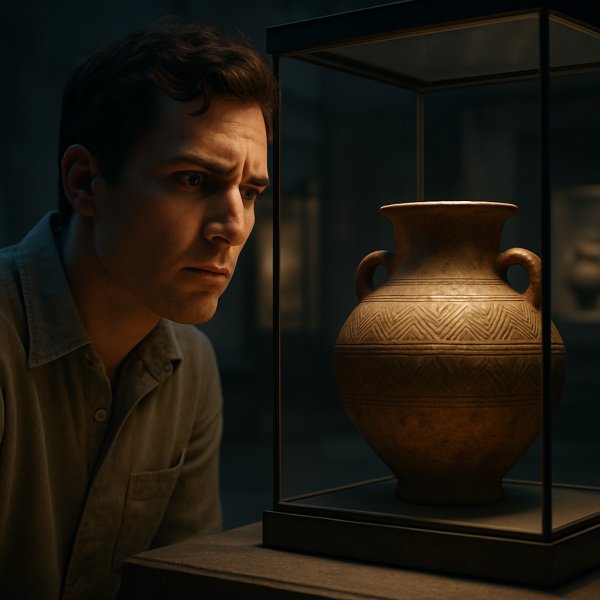
Imagine standing in a museum under a glass case, staring at a pot that someone made 1,200 years ago. It looks both foreign and familiar, like a message in a bottle from a stranger who lived down the same street centuries before you were born. That tug of mystery is why the phrase "lost civilization" is so captivating: it promises secrets, sudden endings, and the thrill of discovery. But most often what actually happened is less Hollywood and more human - change, adaptation, migration, conquest, and sometimes disappearance in the record rather than vanishing in reality.
"Lost" usually does not mean everyone vanished in a puff of smoke. It can mean cultures changed names, languages shifted, political systems collapsed, populations moved, material traces were buried or repurposed, or written records were destroyed. In other words, a civilization might be lost in the sense of no longer being dominant or visible in the archaeological record, but elements of it often survive in people, practices, and genes. Understanding that nuance is the first step to seeing the past as a set of processes, not a set of cliff-edge endings.
<h3>A short map of the reasons civilizations decline or transform</h3>
When scholars try to explain why some polities diminish or disappear from the historical record, they do not look for a single smoking gun. Instead they assemble a set of interacting factors, like a mechanics report for a complex machine. Environmental stress - such as prolonged drought, soil exhaustion, or sea-level change - can be an important stressor. So can human-made pressures, including deforestation, overuse of water, or depletion of local resources that societies depended on. Social and political choices matter too: inequality, elite competition, breakdown of governance, or warfare can fracture resilience.
Disease and pandemics have repeatedly reshaped human populations and institutions, and changing trade networks or technologies can leave once-prosperous centers isolated. Finally, migration and cultural assimilation are often overlooked - people frequently leave, settle elsewhere, mix with other groups, and create something new. The key idea is that causes are usually multiple, interacting, and historically conditioned. Think of collapse less like a single domino falling and more like a storm where rain, wind, and poor building materials together bring a roof down.
<h3>Case studies that teach big lessons, not just dramatic endings</h3>
<h4>Easter Island - statues, scarcity, and global connections</h4>
Easter Island, or Rapa Nui, is famous for its massive stone statues. Early 20th century stories cast the islanders as victims of ecological suicide, chopping down trees to move statues and causing famine. Modern research complicates that neat moral tale. While deforestation and resource stress did occur, the islanders were also affected by introduced rats, which disrupted tree regeneration, and later European contact brought disease and slave raids that dramatically reduced the population. In short, local environmental changes combined with external shocks to produce a tragic outcome.
The Rapa Nui story is a good microcosm for larger themes: small, isolated societies are particularly vulnerable to sudden external impacts; local choices matter; and external forces - even distant ones - can trigger collapse when resilience is low.
<h4>Classic Maya - drought, politics, and regional variation</h4>
Between roughly 750 and 900 CE many major Maya cities in the southern lowlands were abandoned or declined. For decades the narrative involved social collapse triggered by environmental degradation. Recent multidisciplinary work - including paleoclimate records like lake sediments and stalagmites - points to repeated, severe droughts during that period. But drought alone did not break the Maya. Political fragmentation, competition among elites, disruption of trade routes, and social unrest amplified the environmental stress. Some northern cities, like those on the Yucatan peninsula, continued to flourish, showing that outcomes varied across space and political context.
This case highlights the lesson that climate stress can be a catalyst rather than a sole cause, and that social structures determine how societies respond - whether they adapt, migrate, or fragment.
<h4>Indus Valley civilization - transformation without a dramatic exit</h4>
The Indus Valley civilization, flourishing in what is now Pakistan and northwest India around 2600 to 1900 BCE, is often described as "declining" or "mysterious" because its urban centers were eventually abandoned and its script remains undeciphered. Current evidence suggests a mix of processes: shifts in river courses, changing rainfall patterns, and economic reorientation toward smaller, rural communities. There is no strong evidence for a violent, total collapse. Instead, urban forms faded and were replaced by new social arrangements that ultimately fed into later South Asian cultures.
The Indus story teaches that urban decline can be a slow process of de-urbanization and transformation, and that lack of deciphered writing does not equal absence of complexity.
<h4>Norse Greenland - fragile frontiers and climate cooling</h4>
Norse settlers arrived in Greenland around 980 CE and managed to survive for centuries in marginal conditions, but by the 15th century their settlements were abandoned. Factors include the Little Ice Age making livestock farming harder, limited trade links with Europe, and perhaps social inflexibility in adapting diets and practices used in Iceland. New research also emphasizes the role of social networks - when trade and support dried up, the colony's resilience declined.
Norse Greenland shows how peripheral colonies can persist for a time, buoyed by trade and social ties, but may be vulnerable when climatic and economic connections erode.
<h4>Ancestral Puebloans (Anasazi) - water, agriculture, and mobility</h4>
In the American Southwest, the building boom of cliff dwellings and pueblos peaks in the 11th to 13th centuries, followed by depopulation of some areas. Tree-ring data reveals episodes of prolonged drought during key periods. Yet the people did not vanish; they migrated, reorganized socially, and contributed to the cultures of modern Pueblo peoples. Archaeologists emphasize mobility and flexible social responses - when some areas became untenable, people moved to others rather than universally collapsing.
This case underlines the idea that people often respond to stress by moving and reorganizing. Material ruins tell only part of the story; living traditions can carry forward cultural memory.
<h3>A small comparative table - at a glance</h3>
<table>
<tr>
<th>Civilization</th>
<th>Key period</th>
<th>What happened</th>
<th>Primary contributing factors</th>
<th>Evidence types</th>
</tr>
<tr>
<td>Easter Island (Rapa Nui)</td>
<td>~1200 - 19th c.</td>
<td>Population decline, ecological stress, cultural persistence</td>
<td>Deforestation, introduced species, European contact</td>
<td>Archaeology, paleoecology, oral traditions</td>
</tr>
<tr>
<td>Classic Maya</td>
<td>250 - 900 CE peak</td>
<td>Regional abandonment of southern cities, continuity elsewhere</td>
<td>Severe droughts, political fragmentation, warfare</td>
<td>Paleoclimate proxies, epigraphy, settlement surveys</td>
</tr>
<tr>
<td>Indus Valley</td>
<td>2600 - 1900 BCE peak</td>
<td>Urban decline, rural continuity</td>
<td>River shifts, climate change, economic reorganization</td>
<td>Archaeology, geomorphology, archaeobotany</td>
</tr>
<tr>
<td>Norse Greenland</td>
<td>980 - 1450s CE</td>
<td>Abandonment of farms, migration</td>
<td>Climate cooling, trade reduction, social factors</td>
<td>Historical records, zooarchaeology, isotopes</td>
</tr>
<tr>
<td>Ancestral Puebloans</td>
<td>900 - 1300s CE</td>
<td>Regional depopulation, migration, cultural continuity</td>
<td>Drought, agricultural stress, social adaptation</td>
<td>Tree rings, settlement archaeology, oral histories</td>
</tr>
</table>
<h3>How modern researchers piece together these mysteries - tools of the trade</h3>
Archaeologists and historians use a toolbox that mixes excavation with lab science. Radiocarbon dating gives timelines, while pollen and sediment cores reconstruct past environments. Tree rings provide year-by-year climate resolution in some places. Stable isotopes in bones and teeth reveal diets and movement, and ancient DNA traces ancestry and migration patterns. Inscriptions and pottery styles help track interaction and cultural exchange. Importantly, interdisciplinary research - combining climate science, archaeology, history, and ethnography - produces the strongest explanations, because it connects environmental signals with social behavior.
At the same time, every method has limits. Preservation biases mean that organic materials often disappear, favoring stone and ceramics in the record. Written records, when present, are filtered by literacy and politics. That is why scholars are cautious about assigning single causes - the evidence often points to chains of events and complex feedbacks rather than simple stories.
<h3>Common myths, and the clearer picture behind them</h3>
One persistent myth is that "collapse" equals total failure or moral deficiency. Another is the romantic notion that a vanished civilization left no descendants and no cultural legacy. A third is the attraction to monocausal explanations - drought alone, or "bad leaders" alone - which satisfy storytelling instincts but rarely match the messy reality. Finally, sensational theories that invoke supernatural causes or extraterrestrial help gain headlines but lack evidence, and they distract from human agency and ingenuity.
Correcting these myths matters because it changes how we learn from the past. Seeing collapse as a process rather than a morality play helps policymakers, planners, and communities recognize warning signs and design better responses.
<h3>Practical lessons you can apply - resilience, humility, and planning</h3>
How can knowledge of past transformations help us today? First, invest in diversity - ecological diversity, economic diversity, and social safety nets all buffer shocks. Second, monitor early-warning signals and value long-term records like tree rings or sediments that reveal slow trends. Third, reduce inequality; historical cases show that societies with extreme inequality often struggle to coordinate effective responses. Fourth, maintain flexible institutions and knowledge repositories - written, material, and oral - so communities can adapt practices when circumstances change.
A short checklist for resilience inspired by the past:
- Diversify supply lines and energy sources.
- Monitor environmental and social indicators consistently.
- Invest in local knowledge and community networks.
- Plan for mobility and migration as an adaptive strategy.
- Preserve and disseminate technical and cultural knowledge.
These steps are concrete, actionable, and rooted in the patterns archaeologists observe across millennia.
<h3>Try this at home - three thought experiments and mini-challenges</h3>
Challenge 1 - Map your city's vulnerabilities. Make a two-column list: natural stressors (flooding, heat, drought) and social stressors (unemployment, inequality, governance). Which two stressors could interact to cause major disruption? Sketch a response plan.
Challenge 2 - Pick a "lost" civilization and write a two-paragraph explanation of what combination of factors explains its change. Make sure to include at least two interacting causes rather than a single culprit. Compare your explanation to a peer-reviewed source or a museum label and note differences.
Challenge 3 - Design a resilient neighborhood for the future using lessons from the past. Prioritize food diversity, water storage, community governance, and shared knowledge. What trade-offs do you accept?
These small exercises turn passive reading into active learning and help apply historical thinking to modern problems.
<h3>Final thoughts - why these stories make us wiser and more hopeful</h3>
The big lesson is not doom, and not triumphalism. The past shows both fragility and resilience. Societies can fragment or transform under stress, but human communities also migrate, innovate, and preserve key elements of their culture. Understanding the complexity of historical change cultivates humility - we are vulnerable to surprises - and practical wisdom - we can build systems that are more adaptable.
"Lost" civilizations are not time capsules to be ogled at, but living lessons. They remind us that the choices we make about resource use, social equity, and knowledge transmission echo into the future. By studying how others faced droughts, trade shocks, or invasions, we gather a set of strategies for our own uncertain century - and we learn to treat the past as a partner in designing more resilient futures.
<blockquote>
"History does not repeat, but it often rhymes." Think of past societies as a chorus - their melodies differ, but listening closely will teach you the rhythms of resilience.
</blockquote>