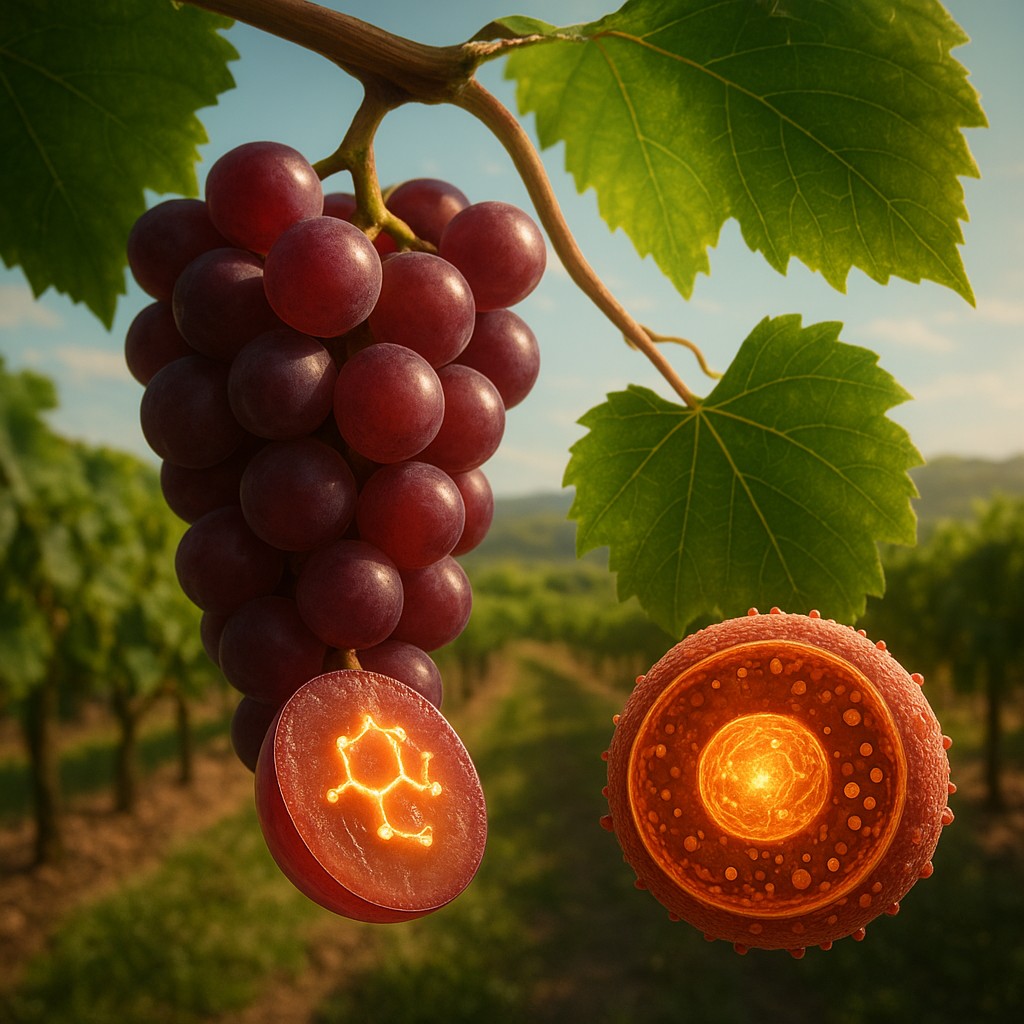
Imagine for a moment that you are walking through the sun-drenched vineyards of Tuscany or the Rhone Valley. As you admire the clusters of red grapes soaking up the light, you likely see nothing more than a delicious fruit destined to become a fine vintage. Yet, hidden inside the skin of those berries is a high-tech chemical armory. Resveratrol, the molecule everyone is talking about in longevity circles, isn't there to please our taste buds; it acts as a bodyguard for the plant. Produced in response to stress, fungal attacks, or harsh UV rays, it serves as a natural shield for the plant world.
What makes this substance fascinating for us humans is how it interacts with our own biology. Ever since the discovery of the "French Paradox" in the 1990s - the strange observation that some Europeans maintained excellent heart health despite a diet high in fat - resveratrol has become a laboratory superstar. Is it truly a fountain of youth in a bottle, or just clever marketing for the wine industry? When we dive into the cellular mechanics, we find a story far more complex and captivating than a simple ad slogan, touching on the very foundations of how our cells age and defend themselves.
The Secret Mechanics of Cellular Defense
To understand why resveratrol excites biologists so much, we have to look at a family of proteins called sirtuins. Think of sirtuins as the maintenance crew and security directors of your cells. When resveratrol enters your system, it appears to "wake up" a specific sirtuin known as SIRT1. Once active, this protein gets to work repairing damaged DNA, lowering inflammation, and optimizing how mitochondria (the cell's power plants) produce energy. It is as if you are clicking on a "smart survival mode" that helps the cell stand firm against the wear and tear of time rather than letting it waste away.
One of the most brilliant things about this molecule is its role as a two-stage antioxidant. Unlike vitamin C, which neutralizes free radicals directly, resveratrol also seems to jumpstart our body's own antioxidant production. It acts like a coach, teaching your cells to build their own defenses and making them more resilient over the long term. This process is called "hormesis," where a mild chemical stress triggers a powerful protective response. This concept is at the heart of human longevity research. Essentially, resveratrol tricks your body into thinking it is going through a period of scarcity, which flips on protective genes that would otherwise stay dormant.
Beyond its effect on genes, resveratrol plays a vital role in blood sugar metabolism. It helps improve insulin sensitivity, meaning your cells become more efficient at pulling sugar from the blood to use as fuel. This is fantastic news for preventing metabolic issues, as stable blood sugar is a key factor in avoiding premature wear on arteries and organs. By helping the cell manage energy better, resveratrol reduces the buildup of toxic metabolic waste that can clog our systems over the decades.
Protecting the Engine and the Circuits of Life
The heart is undoubtedly the first historical beneficiary of resveratrol's fame. Research suggests this molecule helps relax blood vessels by boosting the production of nitric oxide, a natural substance that allows arteries to widen. When your vessels are flexible and relaxed, blood pressure drops, significantly reducing the hard labor your heart must perform every minute. This fluidity helps prevent "vascular traffic jams" and maintains optimal circulation all the way to the tiny capillaries in your hands and feet.
But resveratrol doesn't stop there; it also tackles the "rust" that can build up in the brain. As we age, small protein plaques can clump together and disrupt communication between neurons. Some studies indicate that resveratrol might help clear away this protein debris, protecting our cognitive abilities. Imagine a nightly cleaning service moving through your brain's circuits to ensure connections stay clear and fast. While we are still in the large-scale validation stages, the prospect of a shield against mental decline is particularly exciting for researchers.
It is also important to note that resveratrol's impact extends to controlling chronic inflammation. This low-grade, "silent" inflammation is the breeding ground for many modern ailments, from joint pain to digestive issues. By blocking certain inflammatory signals at the cellular level, resveratrol acts as a soothing balm for the entire system. This holistic view of health, where one molecule can influence several systems at once, defines the modern approach to preventive nutrition and "bio-optimization."
From Theory to the Dinner Plate
It is tempting to think that a quick trip to the local wine shop is all you need to stock up on this precious molecule. However, the reality is a bit more nuanced. While red wine does contain it, the concentrations needed to get the effects seen in a lab are much higher than what a sensible amount of alcohol can provide. You would have to drink dozens of liters a day to reach certain therapeutic doses, which, to be honest, would cause far more health problems than it would solve. Fortunately, nature has provided other, much wiser sources.
Grapes remain an excellent source, especially if you eat the skin and seeds of deep-colored varieties like Muscat or Pinot Noir. But we shouldn't overlook dark berries like blueberries, cranberries, or blackberries, which offer a cocktail of other polyphenols (plant micronutrients) that work in harmony with resveratrol. Even cocoa and certain nuts, like peanuts, contain small amounts. The key isn't to look for one massive dose, but to regularly include these colorful foods in your diet to maintain steady protection.
For those considering a more concentrated supplement, it is essential to understand that resveratrol is "hydrophobic," meaning it doesn't like water. For your gut to absorb it and get it into your bloodstream, it is best to take it with a little fat, such as an avocado, a handful of nuts, or a drizzle of olive oil. This small biochemical detail makes all the difference: without fat, your expensive supplement might just pass right through your digestive system without ever reaching its cellular targets.
Common Food Sources and Concentrations
| Food Source |
Approximate Concentration |
Added Benefits |
| Red Grapes (skin) |
50 - 100 µg per gram |
High in fiber and Vitamin C |
| Red Wine (Pinot Noir) |
1.5 - 12 mg per liter |
Contains bioflavonoids |
| Cranberry Juice |
1 - 2 mg per liter |
Supports urinary health |
| Blueberries |
2 - 3 µg per gram |
Great for memory |
| Cocoa / Dark Chocolate |
0.4 - 0.7 µg per gram |
Magnesium and antioxidants |
| Peanuts (boiled) |
5 µg per gram |
Healthy fats and protein |
Clearing Up Myths and Misunderstandings
Like any nutritional superstar, resveratrol carries its share of myths. The first is the belief that it is a magic pill that cancels out an unhealthy lifestyle. If you eat ultra-processed food and only sleep four hours a night, resveratrol cannot perform miracles. It should be seen as a "health multiplier": it makes good choices even more effective, but it doesn't replace the basic foundations of sleep, exercise, and a balanced diet. It is an ally, not a lone savior.
Another point of debate involves "bioavailability." You often hear people say resveratrol is "useless" because the liver breaks it down very quickly. While it is true that the original molecule disappears from circulation fast, its metabolites - the forms the body converts it into - remain active and circulate for a long time. Science suggests our tissues might even be able to convert these metabolites back into active resveratrol as needed. Therefore, we shouldn't worry too much about how fast it is cleared out, as the body is much cleverer than we think at storing and recycling its defense tools.
Finally, we must address the issue of dosage. More is not necessarily better. In biology, there is a "bell curve" for every substance. In small doses, resveratrol stimulates and protects; in massive doses, it could potentially interfere with natural recovery processes after exercise, such as the inflammation needed to rebuild muscle. Balance is the keyword. Seeking out natural amounts or moderate supplements is often a much better strategy than trying to force results with excessive quantities.
Bringing Longevity Science into Daily Life
Adopting resveratrol as part of your lifestyle is a bit like investing in cellular life insurance where you start seeing dividends day after day. Will it give you superpowers? Probably not. But it might just be the spark that keeps your metabolism running with the precision of a well-oiled clock. By understanding that health is not a static state but a dynamic balance we maintain, we begin to see every colorful food as vital information sent to our genes.
Resveratrol teaches us a fundamental lesson: nature has already provided the repair mechanisms we need. Our role is simply to provide the right signals to turn those internal programs on. Whether by biting into a plump grape or choosing a square of high-quality dark chocolate, you are taking part in the great biochemical conversation that defines your vitality. It is a joyful, proactive path that turns nutrition into an exploration of our own biological potential.
As we finish this journey into the heart of the "red molecule," keep in mind that science is always moving forward and revealing new secrets. Resveratrol is just one piece of a giant puzzle, but it is a centerpiece that reminds us of the immense power we have over our own biology. So, draw inspiration from the resilience of the grapevine, which creates treasures to protect its own life against the wind and rain. By doing the same for your body, you aren't just surviving the passage of time; you are learning to age with scientific grace, renewed energy, and an endless curiosity for everything life still has to offer.