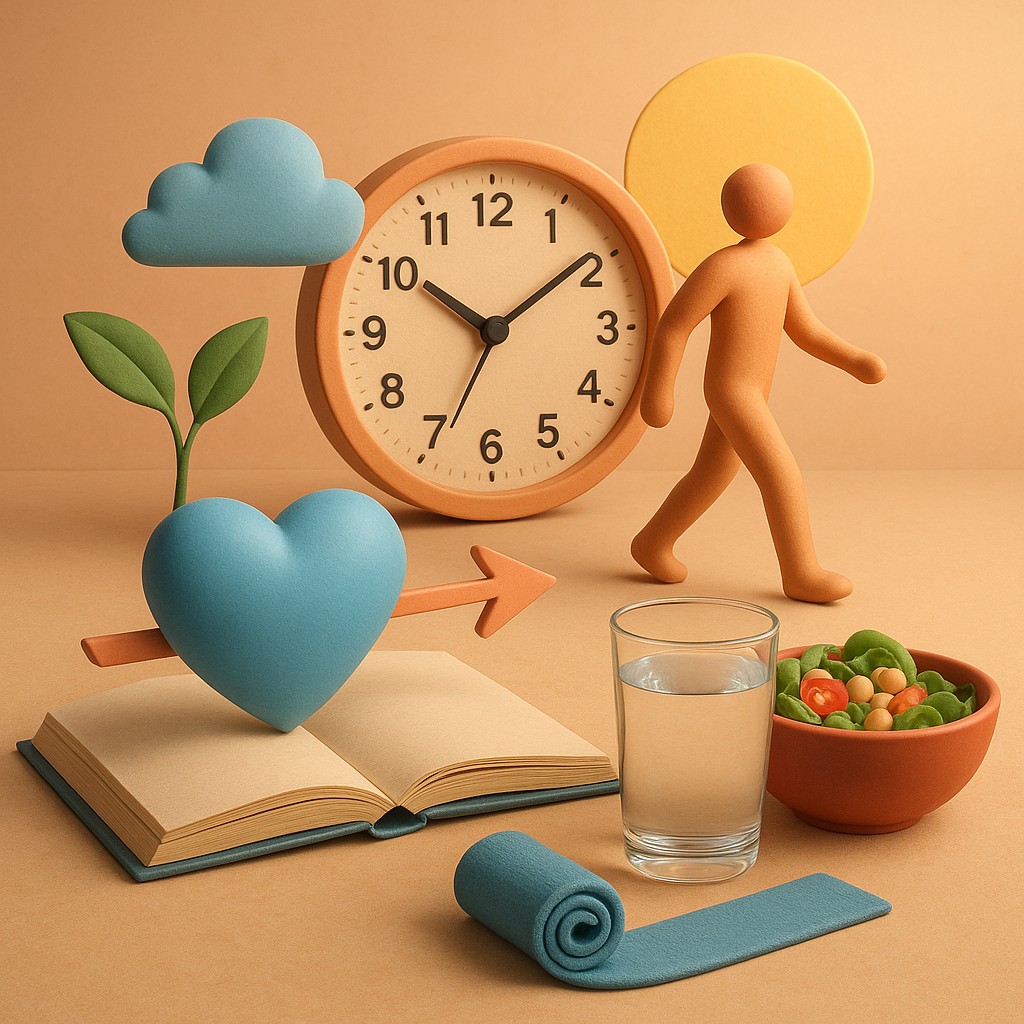
Most people think "perfect health" is a finish line: you cross it, take a victorious selfie, and never get sick again. Real bodies are messier and, honestly, more interesting. Health is a daily relationship between your habits and your biology. It shifts with your age, stress, sleep, environment, and genes. The good news is the biggest levers are ordinary. They live in your morning, your lunch break, your commute, and that quiet moment at night when your phone whispers, "One more scroll."
If you want the habits with the most impact, pick the ones that steer several systems at once: hormones, immunity, metabolism, mood, and even how well you recover from mistakes. These are the keystone habits of health. Nail a few, and many other things get easier without heroic willpower or a suitcase full of supplements.
This guide is not about becoming a monk, a biohacker, or the person who brings a food scale to weddings. It’s about doing simple things that reliably move the needle, understanding why they work, and avoiding common "healthy" traps that backfire.
The big idea: daily “inputs” shape your body more than occasional “fixes”
Your body is a living accounting system. Every day you deposit sleep, movement, food, light, stress management, and social contact. You also withdraw energy, attention, and recovery capacity. Resilient health shows up when your deposits are steady enough that withdrawals don’t bankrupt you.
A useful rule is: consistency beats intensity. A perfect week of green juice and bootcamp workouts cannot erase months of poor sleep, constant ultra-processed snacks, and sitting with your spine only curved toward a laptop. Likewise, a few imperfect meals won’t ruin you if your foundation is strong.
So we’ll focus on daily habits that affect many systems at once: sleep, movement, food quality and timing, stress regulation, and social and environmental factors. Then we’ll get practical about what to do and what to avoid.
Sleep: the habit that multiplies (or destroys) all the others
Sleep is not just rest. It is active maintenance. Your brain clears metabolic waste, your immune system recalibrates, your muscles repair, and your appetite hormones reset. When sleep is short or chaotic, hunger signals rise, impulse control drops, and sugary, high-fat foods start to look irresistible.
Most adults do best with 7-9 hours, but the real target is regularity. A consistent sleep and wake time anchors your circadian rhythm, which shapes metabolism, mood, inflammation, and how your body handles glucose. If you want one habit that makes almost everything else easier, it’s a stable sleep schedule.
What to do (the high-impact basics)
- Keep a consistent wake time within about 30-60 minutes, even on weekends. This is your body clock’s timekeeper.
- Get morning light for 5-20 minutes soon after waking, ideally outside. Light helps your brain set the day’s rhythm and signals melatonin to come at night.
- Protect the last hour before bed with a low-stimulation routine: dim lights, calm music, light reading, stretching, or a shower.
- Keep caffeine on a leash. Many people sleep better if they stop caffeine 8-10 hours before bedtime, yes, including "just one coffee at 3 pm."
What not to do (common sabotages)
Late-night screens aren’t evil, but bright light and exciting content delay sleep for many people. Another classic mistake is trying to "make up" for poor sleep with a punishing workout and extra caffeine. That usually creates a stress-sleep spiral: you feel wired at night, sleep worse, and repeat.
Myth to drop: "I can train myself to need less sleep." You can train yourself to function while tired, but that is not the same as being healthy. Your body still pays, quietly, through higher stress hormones, cravings, and worse recovery.
Movement: your body’s daily maintenance plan (not just exercise)
Exercise is great. The bigger secret is your body hates being parked for too long, even if you work out. Think of movement as lubrication for your joints, a pump for your lymph system, and a signal to your cells to use fuel well. Regular movement improves insulin sensitivity, eases back and neck pain, supports mood, and helps sleep. It is basically a Swiss Army knife with legs.
The highest-impact movement habit is not a fancy program. It’s daily walking and frequent movement breaks. Muscles are a metabolic organ, and they respond best to regular use, not occasional punishment.
The three layers of movement (in order of importance)
- Daily low-intensity activity: walking, stairs, chores, cycling to run errands. This is the foundation.
- Strength training: 2-4 times per week, full-body focus. This protects muscle mass, bone health, and long-term independence.
- Cardio that challenges you: 1-3 sessions per week depending on your level. This trains your heart, lungs, and stamina.
You do not need to "earn your food" with exercise. Movement is maintenance, like brushing your teeth, except your teeth do not help you carry groceries.
What to do (simple, powerful actions)
Aim for:
- 7,000-10,000 steps most days, or at least a brisk 20-40 minute walk daily.
- Movement snacks: 2-5 minutes every hour or two. Stand, do a few squats, walk, stretch your hips, or rotate your spine.
- Strength work using basic patterns: squat, hinge (like a deadlift), push, pull, and carry. Start light and progress slowly.
What not to do
Don’t go from zero to heroic. The fastest way to hate exercise is to begin with injury, extreme soreness, and shame. Also, don’t treat sitting all day as "fine" because you hit the gym once. Many downsides of prolonged sitting do not disappear with a single workout.
Myth to drop: "No pain, no gain." Effort can be uncomfortable, but pain is a message, not a motivational quote.
Food habits that actually matter: quality, protein, fiber, and timing
Nutrition gets noisy because it’s personal, cultural, and full of marketing. The calm truth is most healthy diets share the same backbone: minimally processed foods, enough protein, enough fiber, and reasonable portions. Your body runs on patterns more than perfection.
Instead of obsessing over single "superfoods," focus on daily defaults. If your defaults are good, an occasional pizza won’t undo you.
The "big four" daily food habits
- Protein at each meal: supports muscle, satiety, and recovery. It also tames the snack monster later.
- Fiber most days: supports gut health, lowers cholesterol, stabilizes blood sugar, and keeps you regular, your future self will thank you.
- Plants in variety: different colors and types give different vitamins and beneficial compounds.
- Mostly whole foods: fewer ultra-processed foods mean fewer engineered cravings and easier appetite control.
A realistic rule: build meals around protein and plants, then add carbs and fats in amounts that match your activity and goals.
One table to make it practical: daily habits that pay the biggest health “dividends”
| Habit |
Why it matters (plain English) |
Do this most days |
Avoid this pattern |
| Consistent sleep schedule |
Repairs the body, stabilizes mood and appetite |
7-9 hours, same wake time, morning light |
"Catch-up sleep" roulette and late caffeine |
| Daily walking + breaks |
Helps metabolism, joints, and mood |
Walk 20-40 min, move every 60-90 min |
Sitting for hours and trying to fix it with one workout |
| Strength training |
Builds muscle and bone, protects you as you age |
2-4 sessions/week, full-body basics |
All cardio, no strength, then wondering why you feel weaker |
| Protein + fiber |
Controls hunger, supports gut and muscle |
Protein each meal, 25-40 g fiber/day |
Sugary breakfasts, constant snacking, low-protein dieting |
| Hydration + electrolytes when needed |
Supports energy, digestion, and performance |
Drink water regularly, add salt if sweating a lot |
Mistaking thirst for hunger, overdoing alcohol |
| Stress downshifts |
Lowers chronic cortisol, improves sleep and cravings |
Breathing, walks, short mindfulness, set boundaries |
Living in "always on" mode and calling it productivity |
| Social connection |
Boosts mental and physical resilience |
Regular, meaningful contact |
Isolation with "I'm fine" as a lifestyle |
What to do (easy upgrades that work)
- Eat protein at breakfast: eggs, yogurt, tofu scramble, protein oats, leftover chicken, or beans. This alone helps many people cut evening cravings.
- Aim for half your plate as plants at lunch and dinner. Frozen vegetables count, as do salads you actually enjoy.
- Choose fiber on purpose: beans, lentils, oats, berries, apples, chia, vegetables, and whole grains.
- Plan one "default" meal you can make on busy days. Health often depends on what you do when you are tired, not when you’re inspired.
What not to do (nutrition traps)
- Don’t chase perfection with extreme restriction. That often leads to rebound eating and a tense relationship with food.
- Don’t assume "low-fat" or "gluten-free" means healthy. Ultra-processed gluten-free cookies are still cookies.
- Don’t drink your calories all day. Smoothies and fancy coffees can be fine, but liquid calories often bypass fullness signals.
Myth to drop: "Carbs are bad." Your brain and muscles use carbs well, especially if you are active and choose fiber-rich sources. The real issue is refined carbs plus low protein and constant snacking, not rice itself.
Hydration, alcohol, and the sneaky power of liquids
Hydration is not glamorous, but it affects energy, headaches, digestion, and exercise. Many people run mildly dehydrated and mislabel it as hunger or fatigue. Water needs vary by size, climate, and activity, so a good signal is urine color: pale yellow is a reasonable target, and thirst works too.
Alcohol deserves a special mention because it can look small in daily life while quietly disrupting many systems. It lowers sleep quality (even if it helps you fall asleep), increases appetite, impairs recovery, and can worsen next-day anxiety. It also adds calories without much fullness, a classic setup for slow weight gain.
What to do
Drink water regularly, and add electrolytes or salt when you sweat heavily or exercise for long periods. If you drink alcohol, keep it occasional, eat before drinking, and set a limit you can stick to. The healthiest pattern is sustainable, not "never again."
What not to do
Don’t rely on energy drinks or constant coffee for hydration. Also, don’t let "social drinking" quietly become daily drinking. If sleep is poor or anxiety is high, alcohol is often the first thing to cut back.
Stress and recovery: you can’t out-healthy a constantly activated nervous system
Your body is built to handle stress in bursts, then return to baseline. Modern life loves the first part and forgets the second. Chronic stress raises cortisol and adrenaline, which can increase blood pressure, worsen sleep, drive cravings, and make workouts feel harder. It also shrinks your margin, the space where you handle surprises without falling apart.
Stress management is not about becoming unbothered by everything. It’s about fitting daily downshifts into your life that tell your nervous system it’s safe.
What to do (small practices, big payoff)
- Two minutes of slow breathing, with a longer exhale than inhale, once or twice a day. It is the cheapest nervous system upgrade.
- A daily walk outside, especially in daylight. It combines movement, light, and a mental reset.
- Tiny boundaries: stop checking email after a set time, turn off nonessential notifications, schedule real breaks.
- Write down tomorrow’s first step before bed. That reduces rumination and late-night planning marathons.
What not to do
Don’t treat stress as a personal failure or something you’ll "fix" once life calms down. Life rarely calms on its own. Also, avoid turning wellness into another stressful job with 19 daily rules and a punishment mindset.
Myth to drop: "If I’m stressed, I should push harder." Sometimes you need effort. Often you need recovery. High performers usually do both, on purpose.
Relationships, purpose, and environment: the underrated health multipliers
If you only focus on food and workouts, you miss some of the strongest predictors of long-term health: connection and environment. Social isolation links to worse health outcomes, while meaningful relationships buffer stress and encourage healthier choices. You do not need a huge friend group; you need a few people you can be real with.
Your environment shapes your habits more than motivation does. If the easiest snack in your home is chips, you will eat chips. If your shoes are by the door, you will walk more. If your bedroom is bright and hot, sleep will be harder. Designing your space is like parenting your future self.
What to do
Make health the default: keep fruit visible, prep a couple of protein options, put a water bottle where you will see it, and make your bedroom cool and dark. Schedule connection like a meeting: recurring walk with a friend, family dinner, or hobby group. Purpose matters too, not as a grand mission statement, but as a sense that your days include something that feels meaningful.
What not to do
Don’t wait for motivation. Motivation is notoriously late and unreliable. Build environments and routines that work even when you are tired, busy, or mildly grumpy.
A realistic “perfect health” plan: simple, repeatable, forgiving
Here’s the secret that makes healthy people seem disciplined: many are not fighting themselves every day. They set routines that cut decision fatigue. If you want a practical checklist that does not require becoming a different person, try this:
- Sleep: consistent wake time, reduce screen light at night.
- Move: walk daily, lift a few times a week, break up long sitting.
- Eat: default to protein and plants, aim for fiber most days, treat ultra-processed foods as occasional.
- Recover: brief breathing or quiet time daily, some light time outdoors, and regular connection.
- Limit: alcohol and late caffeine, all-or-nothing thinking, and punishing plans.
When you miss a day, treat it like brushing your teeth. You do not declare yourself doomed. You just brush next time.
Closing: health is built in ordinary moments (and you get to start today)
Perfect health is not a flawless streak. It is resilience: feeling good often, recovering quickly, and trusting your body to handle life’s bumps. The most powerful habits aren’t exotic. They are daily choices that keep your sleep steady, your body moving, your meals grounded, and your nervous system out of constant emergency.
Start small and make it repeatable. Pick one habit that would make tomorrow easier, do it for a week, then add another. In a few months you will not just "be healthier," you will know your body better and feel more in charge of it. That is the kind of health that actually feels perfect: not because nothing ever goes wrong, but because you know how to steer.