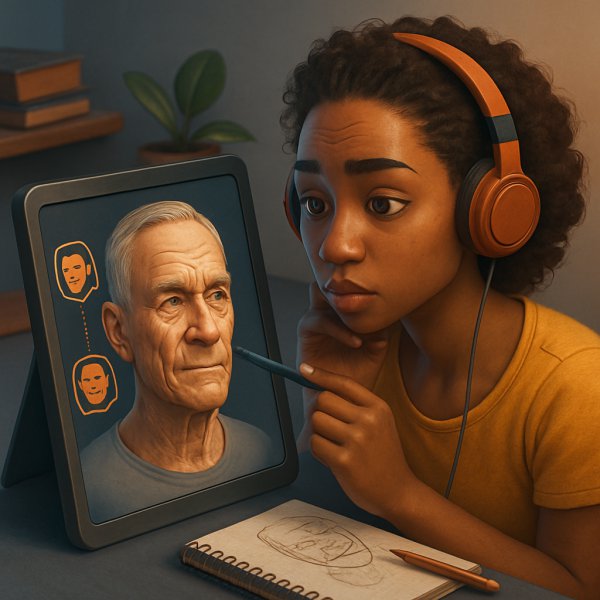
What your face lines whisper before you say a word
Have you ever looked at someone and felt you knew a little about them before they spoke - that their face had already told a story? Faces are tiny theaters of habit, emotion, and life history, and the lines on them are like set pieces left behind by the daily acts we perform. Some lines form from sunlight and genetics, others from laughter and worry, and many from the repeated expressions we wear like costumes. When you learn to read those lines with curiosity and care, you gain a skill that is part anthropology, part psychology, and part respectful intuition.
This article will take you on a careful, evidence-aware tour. You will learn what different facial lines most likely mean, why people intuitively make personality judgments from faces, how to avoid common errors and biases, and how to use what you learn in practical and ethical ways. Along the way you will find clear examples, a table that summarizes common lines and their likely causes, exercises to build your observational skill, and short real-life stories to make the ideas stick. Think of this as a friendly guide to what your face and other people’s faces might be telling you, not a fortune cookie for personality.
How lines appear: muscles, skin, and daily life collaborate
Lines are a physical record of muscle action, skin biology, and environmental exposure. Every time you laugh, squint, frown, or raise your eyebrows, tiny facial muscles contract and fold the skin. Over years, repeated folding can cause collagen and elastin fibers to realign, producing grooves that stay visible even when the face is at rest. Sun exposure, smoking, sleep posture, hydration, and genetics all change how quickly and distinctly these grooves form, so two people who laugh the same amount may end up with different lines.
Scientists have also shown that facial expressions shape social perception. Classic research in psychology demonstrates that observers make rapid personality guesses from faces in a few hundred milliseconds, and in some cases those "thin-slice" impressions have predictive power for traits like extraversion and emotional expressiveness. That is not the same as saying lines directly encode personality like a barcode. Rather, lines often reflect habitual expressions - the behaviors that give observers clues - and those behaviors are sometimes linked to personality traits.
Why habitual expressions make lines meaningful - but not decisive
There is a psychological mechanism that helps explain why lines can signal personality tendencies. If someone habitually smiles, crow's feet and laugh lines are likely to deepen. Habitual smiling usually reflects a pattern of social engagement, warmth, or at least a tendency toward positive displays. Conversely, chronic furrowing of the brow from worry or concentration can deepen forehead creases and glabellar lines, giving an impression of seriousness or anxiety. The facial feedback hypothesis even suggests that the act of making an expression can influence internal emotion, so the relationship between expression and personality can be bidirectional - behavior shapes feeling and feeling shapes behavior.
At the same time, important caveats apply. Lines are only one piece of evidence among many, and their meaning is probabilistic rather than deterministic. Cultural display rules, occupational demands, physical conditions, and cosmetic interventions can all alter how lines form or appear. For example, a professional line of work that requires stern expressions will create different facial patterns than a job that encourages smiling, regardless of inner personality. The wise observer uses facial lines as clues, not verdicts.
A practical chart: common facial lines, what creates them, and what people commonly infer
| Line name |
What mainly causes it |
Personality impression people often assign |
Evidence strength and caution |
| Crow's feet (outer eye wrinkles) |
Repeated smiling, squinting, sun exposure |
Friendly, approachable, warm |
Moderate - often reflect smiling history, but sun and genetics matter |
| Forehead horizontal lines |
Raising eyebrows, surprise, sun, aging |
Expressive, curious, possibly anxious |
Low-moderate - context needed, not a pure personality marker |
| Glabellar lines (between brows, "11s") |
Frowning, concentration, genetics |
Serious, intense, prone to worry |
Moderate - can relate to habitual negative affect, but not always |
| Nasolabial folds (smile lines) |
Repeated lip and cheek movement, weight changes |
Open, sociable, experienced |
Low - common with age and facial structure, not specific to sociability |
| Marionette lines (corner of mouth downwards) |
Gravity, loss of midface volume, habitual downturned mouth |
Stern, pessimistic, reserved |
Low - influenced by anatomy and aging more than personality |
| Perioral vertical lines (lip lines) |
Smoking, pursing lips, sun exposure |
Habitual thinker, smoker, possibly secretive |
Low - lifestyle signs often overlay any personality inference |
| Neck bands |
Aging, muscle use (platysma), genetics |
Mature, maybe stressed or outdoorsy |
Very low - mostly biological and lifestyle driven |
Use this table as a guide for likely meanings and as a reminder to weigh non-personality causes first. When you see crow's feet, think "likely history of smiling or squinting" rather than "definite extrovert." When you see glabellar lines, consider stress and concentration patterns rather than an innate dour temperament.
Case studies: three short stories that teach better judgment
Maria, age 48, is a pediatric nurse whose face carries deep crow's feet and soft smile lines. Patients and families often describe her as warm and comforting, and her team notes she makes frequent small smiles and reassuring expressions while working long shifts. Her lines are a reliable sign of habitual nurturing displays shaped by daily work demands and natural cheer. If you met Maria quickly and labeled her "friendly," you would likely be correct, but if you assumed she never gets frustrated or tired you would be missing half the story. Her lines tell about repeated expression and lifestyle, not a full personality report.
James, age 35, is an actor whose resting face includes a sharp glabellar crease and a slightly downturned mouth. His face can look intense or sad in still photos, and many online comments once assumed he was stern. In reality, James is gregarious and playful; the "serious" expression comes from his face anatomy and the trained ability to hold certain poses for roles. His example shows how occupational demands and facial musculature can mislead quick judgments. A thoughtful observer asks a question, watches dynamic expressions, and remembers that static lines sometimes overemphasize a single emotional posture.
Li, age 62, is an outdoor guide who has deep forehead lines and a leathery complexion from decades in sun. Visitors often call him rugged and trustworthy; colleagues note he is patient, deliberate, and practical. Here the lines reflect a life spent outdoors and a personality shaped partially by that lifestyle. The takeaway is that environment, behavior, and social role often co-create both lines and personality, so lines can be informative when placed in context.
These stories show that lines frequently reflect behavior patterns and life history, but they also demonstrate how easily you can be misled when you neglect context, occupation, and biology.
How to observe lines ethically and accurately - a step-by-step toolkit
First, contextualize every observation. Ask yourself who the person is, what their job or cultural background might be, and what recently happened to them that day. A tired commuter will have temporary lines that mean something very different from a person whose lines are long-established. Second, look for dynamic cues. Watch how the face moves in conversation - do they smile often, furrow their brow when thinking, or squint in bright light? Movement patterns carry more reliable information than static close-ups. Third, combine facial clues with other behavior. Posture, tone of voice, and interaction style are essential cross-checks that either support or contradict a facial-line hypothesis.
Finally, keep ethics front and center. Using facial lines to stereotype, marginalize, or make high-stakes decisions about hiring, policing, or relationship trust is risky and often unjustified. Treat lines as prompts for curiosity and conversation, not as a certificate of character. If you want to act on an inference - for example, approaching someone for comfort because they seem approachable - do so gently and be ready to revise your judgment when given new information.
"Lines are invitations to ask a better question, not keys to a locked personality."
Exercises to sharpen your observational skill and self-knowledge
Practice 1 - The 60-second portrait: Over a week, watch people in public places for 60 seconds each and write a short note about the dynamic expressions you observe. Focus on movements and what behaviors likely produced any visible lines. After each observation, note what other signals confirmed or contradicted your initial impression. This trains you to prefer motion and corroboration over static snap judgments.
Practice 2 - Self-photography review: Take neutral, smiling, and expressive selfies once a month under consistent lighting. Compare how different repeated expressions affect your lines over time. Record a one-sentence note about what mood or habit most often preceded the expression. This exercise builds self-awareness and helps you understand how your habitual face contributes to your social presence.
Practice 3 - Conversational calibration: When you notice a line that suggests a trait, try a low-risk conversational opener related to that inference. For example, if someone has crow's feet you might say, "You seem like someone who enjoys a good laugh, what makes you laugh these days?" Observe the response and update your mental model. The goal is to test assumptions, not confirm biases.
These exercises are designed to build observational humility and accuracy. They invite you to treat lines as hypotheses to be tested rather than facts to be enforced.
How changing expressions and habits can change both lines and social impressions
If you care about altering what your face communicates, there are several realistic levers. Behavioral change is the least invasive and often the most meaningful: practicing more frequent smiles, softening habitual frowns, or working on relaxation can gradually alter dynamic expression patterns and, over years, may change how lines develop. There is also research suggesting that intentionally altering expressions can influence how you feel, so small practiced changes can have internal benefits as well as social ones.
Lifestyle and skin care matter too. Sun protection, not smoking, good sleep, hydration, and skincare that supports collagen can reduce the pace at which lines deepen. For people seeking faster cosmetic changes there are medical options such as neuromodulators and fillers, but those are personal choices with trade-offs. Whatever path you take, remember that changing lines will not transform core personality overnight, but it can change first impressions and sometimes your habitual emotional life.
Myths people tell about face lines, and why they are misleading
Myth - "Lines determine personality permanently." Not true. Lines reflect patterns and influences, not an immutable blueprint. Behavior change, lifestyle, and environment can alter both expression and lines, and personality itself is partly shaped by life context.
Myth - "Bald or exaggerated physiognomy studies prove face reading is scientific." There is a long history of physiognomy that tried to map fixed traits to facial features without solid evidence. Modern psychology finds some small, reliable signals in faces for certain traits, but these are probabilistic and often driven by expression, age, and social signals rather than mystical mappings. Use updated psychology, not outdated pseudoscience, to guide your thinking.
Myth - "Lines are only about emotion." While many lines come from expression, they also reflect sun damage, health behaviors, and genetics. A comprehensive reading accounts for both psychological and biological factors.
Bust these myths out of habit and replace them with cautious curiosity. That leads to better social decisions and fairer interpersonal behavior.
Final big-picture takeaways to remember and apply
- Lines are clues, not verdicts: they often reflect habitual expressions and life history, but they are one data point among many. Use them as starting hypotheses to test with listening, context, and dynamic observation.
- Watch motion, not just stillness: how a face moves in conversation gives better information than a single frozen snapshot. Look for patterns of smiling, furrowing, and squinting to see what likely produced the lines.
- Consider biology and lifestyle first: sun, smoking, sleep, and genetics strongly shape lines and can mimic or mask emotional histories. Always rule out non-personality causes before making social judgments.
- Be ethical and curious: do not use facial lines to stereotype or decide matters that affect someone’s life. Use them to open gentle, respectful conversations that let people speak for themselves.
- Try small experiments: observational exercises, self-photography, and conversational calibrations are practical ways to improve accuracy and empathy. They make you smarter about faces and kinder in your interpretations.
If you leave this article with one practical habit change, let it be this: before you assign a trait to a face, ask one short question, notice how the face moves, and look for other signals that either confirm or revise your first impression. That small pause turns a snap judgment into informed curiosity, and curiosity is the best tool for reading faces honestly and kindly.