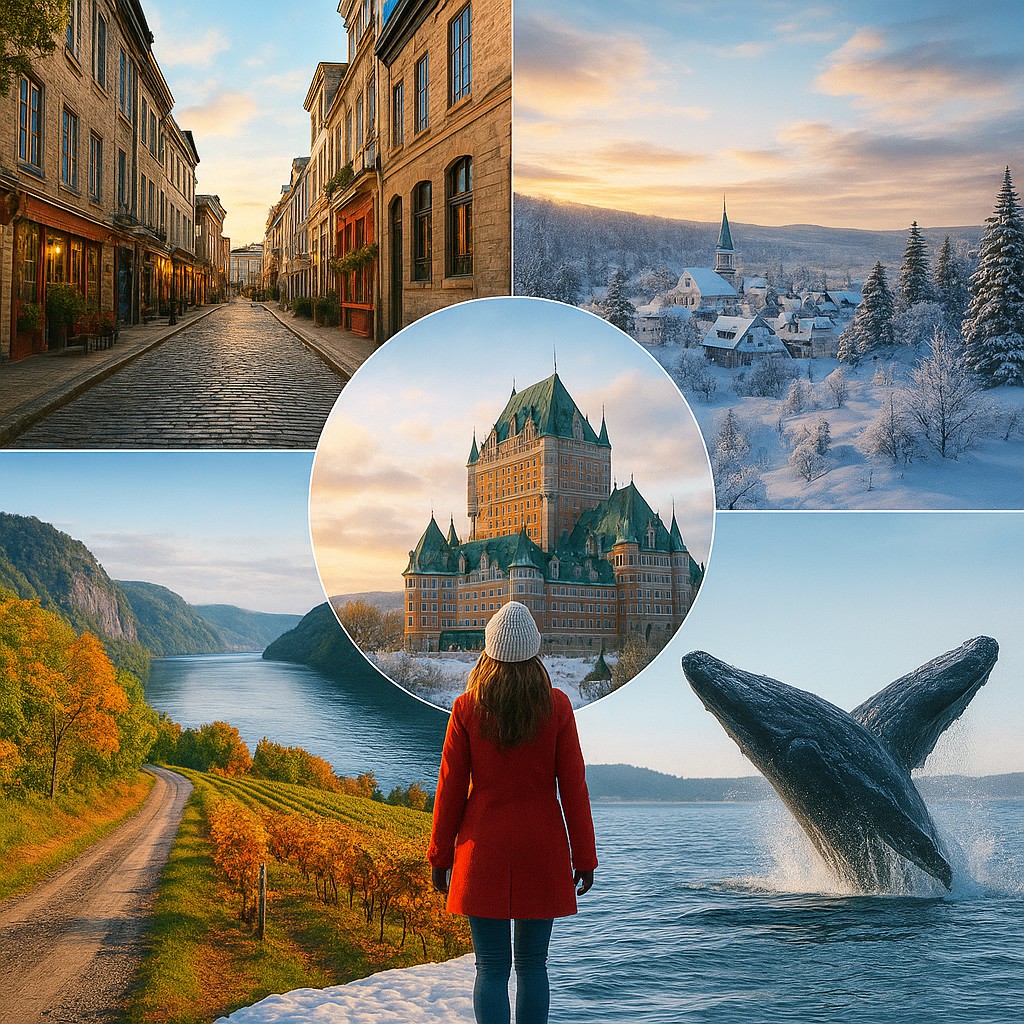
Quebec refuses to fit into one travel category. It is French-speaking North America with a maple-syrup heart, a winter that goes all in, and cities where 400-year-old stone walls sit alongside cutting-edge food scenes. Come for the views, stay for the cozy café life, and leave wondering how a place can feel both European and unmistakably Canadian.
If you are trying to pick the “best places” in Quebec, stop looking for a single perfect list and start thinking in flavors. Do you want storybook streets you can walk through, mountains and fjords that look like a Nordic postcard, or a road trip of villages, cheese, and cider? Quebec has all of that, often within a few hours of each other — convenient and a little unfair to other destinations.
This guide gives you a clear way to choose where to go, with the classics that deserve their fame and a few less-obvious picks that make a trip feel personal. You will also get practical tips, common misconceptions cleared up, and a simple plan for matching places to your travel style.
Two anchor cities that make everything else easier
If Quebec were a novel, Montréal and Québec City would be the main characters. They are not rivals so much as complementary personalities. Visiting both is the quickest way to get the province’s vibe. Montréal is the lively, creative friend who knows every good restaurant and has strong opinions about bagels. Québec City is the charming historian who lives inside a UNESCO World Heritage site and somehow makes cobblestones a way of life.
Montréal: culture, neighborhoods, and food that deserves its own itinerary
Calling Montréal “European” can be misleading. It is not trying to be Paris — it is being Montréal, where French, English, and many other languages share the same sidewalk. The city is best explored by neighborhood; you will enjoy wandering more than you will racing through a list of landmarks. Plan for a mix of museums, street life, parks, and long meals that somehow stretch on.
Start in Old Montréal (Vieux-Montréal) for historic architecture, the Old Port, and that cinematic feeling of another century. Then go to Plateau-Mont-Royal for murals, small shops, and the classic Montréal staircases that curl up building fronts like ribbons. For wide views, climb Mount Royal, which is more a very successful hill than a mountain. If you like markets, Jean-Talon Market is a delicious introduction to Quebec produce, cheeses, and local specialties.
Food is essential here. Montréal is famous for smoked meat, poutine, and bagels, but the real treat is variety: tasting menus, Lebanese bakeries, Haitian griot, and Vietnamese pho that locals will fiercely defend. One small tip: if a place looks tiny and busy, and people are standing to eat with a smile, you are probably in the right spot.
Québec City: living history, winter magic, and a castle that is not pretending
Québec City offers one of North America’s most distinctive urban experiences. The Old City (Vieux-Québec) is the star: fortified walls, narrow streets, and viewpoints over the St. Lawrence River that seem made for dramatic entrances. The Château Frontenac towers over it all and is more than a photogenic hotel — it explains why people still send postcards.
Spend time in Upper Town for major sights like Terrasse Dufferin and the Citadel, then drift down to Lower Town (Petit-Champlain) for boutiques, bistros, and streets that look like winter was invented here. If you come in the colder months, embrace the cold. Québec City is one of the best places on the continent to learn how to stay warm and have fun, especially during Carnaval, when the city turns cold into celebration.
A common myth is that Québec City is “just for a day.” You can see the highlights quickly, yes, but the real pleasure comes from slowing down. Have a long breakfast, wander side streets, take in river views, and let the city’s relaxed confidence do its work.
Nature that goes big: fjords, whales, and mountains you can actually reach
Quebec’s wilderness can feel epic, and you do not need to be a backcountry expert to enjoy it. Many of the most impressive natural spots are reachable by car, bus, or a short tour, offering everything from easy boardwalks to serious hikes. The trick is choosing the landscape that excites you: whales and sea air, dramatic cliffs and fjords, or mountains that change with the seasons.
Charlevoix: scenic roads, art, and the kind of views that make you pull over
Charlevoix, northeast of Québec City, mixes rolling hills, river panoramas, and small towns with creative energy. The drive itself is part of the joy, with viewpoints that make you say, “One more photo.” Towns like Baie-Saint-Paul are known for galleries, local food, and that relaxed holiday feeling where time politely slows.
If you like hiking and big vistas, Parc national des Grands-Jardins and Parc national des Hautes-Gorges-de-la-Rivière-Malbaie offer trails from easy walks to tougher climbs. These parks give classic Quebec scenery: forests, steep valleys, and lookouts that reward the effort without asking you to summit Everest. In autumn, Charlevoix is a fall-color show — a fancy way of saying the trees put on a spectacular display.
Saguenay-Lac-Saint-Jean: fjord drama and a distinct regional personality
Saguenay-Lac-Saint-Jean has a strong identity, and locals will happily tell you so. The region is known for warm hospitality, hearty food, and landscapes that move from wide lake shores to the steep, moody walls of the Saguenay Fjord. Yes, Quebec has a fjord, and it is as dramatic as it sounds.
Parc national du Fjord-du-Saguenay is a highlight, with hiking trails and viewpoints that look like they belong in a Norway photo album. You can kayak in calmer sections and feel adventurous without needing a survival plan. If you prefer a quieter, lake-centered experience, Lac Saint-Jean offers beaches in summer and a lovely road-trip loop with small communities and local treats.
Tadoussac and the Côte-Nord: whales, sea cliffs, and salt air
If whale watching is on your list, head to Tadoussac, one of Quebec’s best whale-watching spots. Where the Saguenay River meets the St. Lawrence, nutrient-rich waters attract marine life, and boat tours often spot belugas, minke whales, and sometimes larger species that leave everyone on deck speechless. Even without a boat, the coastline is beautiful and you can sometimes glimpse whales from shore.
The Côte-Nord is a gateway to big, rugged nature. It is less crowded than the cities and feels wilder the farther east you go. If you want “Quebec, but rougher,” this is your chapter.
Small towns and easy escapes that quietly steal the show
Not every “best place” needs a skyline or a national park sign. Some of Quebec’s most memorable moments come from small towns where you can slow down, eat well, and feel the local rhythm. These spots are great for families, romantic getaways, or anyone needing a break from city energy.
Eastern Townships (Cantons-de-l’Est): villages, vineyards, and cozy road-trip energy
The Eastern Townships, southeast of Montréal, are a local favorite, which is a strong recommendation. Think lakes, rolling farmland, charming towns, and a food scene that punches above its weight. Towns like Magog (near Lake Memphremagog) and Sutton are popular bases, especially in summer and fall.
The region is known for local products such as cheeses, cider, and wine. Quebec is not trying to outdo Bordeaux, but it makes delightful cool-climate wines, and tasting them in a relaxed countryside setting is half the fun. In winter, ski areas like Mont Sutton offer a friendly, less-hyped alternative to bigger resorts.
Mont-Tremblant and the Laurentians: four-season fun without a complicated plan
If you want mountains with an easy learning curve, the Laurentians are a reliable pick. Mont-Tremblant is famous for skiing, but it shines in warmer months too, with hiking, cycling, and lake activities. The pedestrian village is undeniably touristy, but that can be handy — restaurants and rentals are within a short walk.
The broader Laurentians offer quieter options as well. You can find smaller parks, lakeside cabins, and scenic drives that feel far away even when you are only a couple of hours from Montréal. It is a reminder that “best place” often means “best match for your energy level.”
Île d’Orléans: pastoral charm five minutes from history
Île d’Orléans sits in the St. Lawrence River near Québec City and feels like a countryside time capsule. It is known for farms, strawberry stands, wineries, and scenic roads with river views. The island is small enough for an easy day trip but charming enough to stretch into a slow afternoon of tastings and short stops.
This is a great place to see Quebec’s agricultural side without a long drive. It also shows a truth about travel here: the province loves seasonal food and will happily build an itinerary around it.
A simple way to choose: match destinations to your travel style
When people ask for the “best places,” they usually mean “the best places for me.” Here is a practical comparison to help you build a trip that fits your interests, time, and willingness to drive.
| Destination |
Best for |
Ideal time of year |
How long to stay |
What you will remember most |
| Montréal |
Food, festivals, neighborhoods, museums |
Late spring to fall, also winter for cozy city vibes |
3-5 days |
The way every block feels like a new scene |
| Québec City |
History, architecture, winter atmosphere |
Year-round, especially winter and early fall |
2-4 days |
Old-world streets and river viewpoints |
| Charlevoix |
Scenic drives, hikes, art towns |
Summer and fall |
2-4 days |
Lookouts that make you stop mid-sentence |
| Tadoussac and Côte-Nord |
Whale watching, coastline |
Summer to early fall |
2-3 days |
Seeing wildlife in a grand seascape |
| Saguenay Fjord region |
Fjord hikes, regional culture |
Summer and fall, some winter activities |
3-5 days |
The fjord’s scale and quiet drama |
| Eastern Townships |
Slow travel, food, lakes, cycling |
Summer and fall |
2-4 days |
Village charm and local flavors |
| Mont-Tremblant and Laurentians |
Skiing, hiking, easy outdoors |
All seasons |
2-4 days |
Four-season playtime with low friction |
| Île d’Orléans |
Day trip, farms, tastings |
Late spring to early fall |
Half day to 1 day |
Pastoral scenery close to Québec City |
Common misconceptions that make people plan poorly (and how to fix them)
One myth is that Quebec is only worth visiting in summer. Summer is lovely, yes, but fall is spectacular, winter is iconic if you dress properly, and spring has its own charm, especially in cities when terraces reopen and everyone emerges like bears with better fashion. The “best” season is usually the one that matches what you want to do, not just the warmest one.
Another misconception is that you must choose between city and nature. In Quebec, you can do both easily. Visit Montréal and escape to the Laurentians, or base yourself in Québec City and explore Charlevoix or Île d’Orléans. Think of cities as comfortable launch points, not your whole trip.
People often underestimate driving times by looking at a map and forgetting that scenic regions invite stops. Charlevoix and the Côte-Nord are not “rush-through” places, so don’t treat them like errands. Build in slack time for viewpoints, small cafés, and inevitable, “Wait, what is that bakery?” moments.
Finally, some travelers worry about language and assume they need fluent French. Knowing a few phrases helps and is appreciated, but in most tourist areas you will be fine, especially if you are polite and patient. Quebec’s identity is proudly French, but its hospitality is open to everyone.
Practical planning moves that make a Quebec trip noticeably better
A few small choices can make your trip smoother and more enjoyable, especially on a first visit. The goal is not to over-plan, but to remove predictable friction so you can focus on enjoying yourself.
Here are high-impact tips:
- Build your trip around two bases. For a first visit, pick Montréal and Québec City, then add one nature region (Charlevoix or the Laurentians are easy wins).
- Reserve early in peak seasons. Summer, fall weekends, and winter holidays fill up fast in places like Tremblant and Old Québec.
- Dress for the actual weather, not your hope. Layers matter in every season, and winter needs real boots and a real coat, not optimism.
- Leave room for food. Local specialties are part of the culture, and you will enjoy Quebec more if meals are experiences, not refueling stops.
If you like festivals, check what is happening on your dates. Montréal runs on a calendar of events, and stumbling into a big outdoor concert or street festival is one of the province’s best surprises.
Leaving with a map in your head, not just photos on your phone
The best places in Quebec are not only the famous ones. They match your curiosity, whether that means chasing whales on the St. Lawrence, eating your way across Montréal one neighborhood at a time, hiking a fjord trail that makes you whisper “wow,” or sipping cider in a village where the loudest sound is a bicycle bell.
Quebec rewards travelers who mix structure with wandering. Pick your anchors, add one or two side adventures, and let the province fill in the gaps with good food, big landscapes, and a confident culture that makes everything feel sharper. Plan well, show up curious, and you will leave not just having visited Quebec, but having met it.