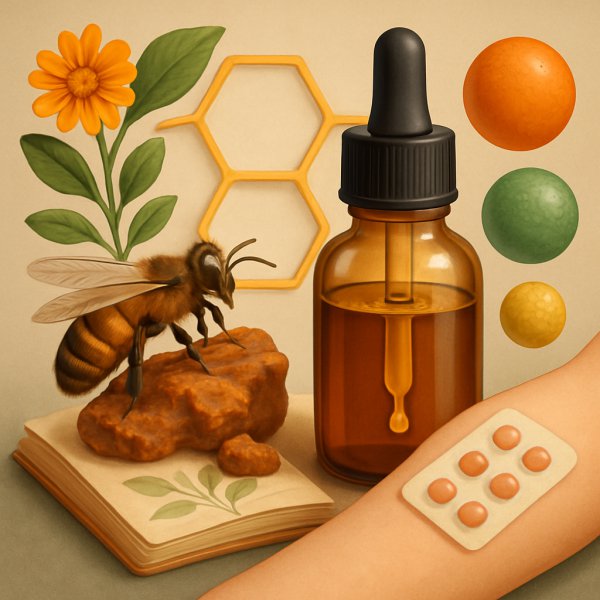
How a sticky, golden secret became nature’s mini-pharmacy
Imagine walking into a museum where the walls are coated with a fragrant varnish that keeps everything squeaky clean, sealed, and smelling faintly of pine and citrus. That varnish exists in bee society, and it is called propolis. For millennia humans have stumbled on propolis in hives and learned to use it as medicine, glue, and balm. Today, with modern science and a renewed interest in natural remedies, propolis is getting a second look, both as a folk remedy and as a subject of clinical research.
Why should you care about a substance made by bees? First, because propolis is one of the most chemically diverse natural products on Earth, and that chemical diversity is linked to real biological activity. Second, because the way bees use propolis to protect their hive reads like a masterclass in hygiene - useful lessons for human health too. Finally, whether you keep bees, want a gentle topical antiseptic, or are curious about immune-support supplements, understanding propolis helps you separate hype from helpful practice.
This Learning Nib will take you from the buzzing backyard basics through chemistry and clinical evidence, to practical, safe ways you can try propolis if you want to. Expect vivid bee metaphors, a useful comparison table, two real-world stories, an actionable plan to test and use propolis safely, and reflection prompts that nudge you to apply the ideas to your life.
What propolis really is, and how bees make their miracle glue
Propolis is a resinous, sticky material bees gather from tree buds, sap flows, and plant exudates, then mix with beeswax and enzymes. Think of forager bees as tiny herbologists and pharmacists, collecting plant resins that are rich in terpenes, flavonoids, and phenolic compounds. Back in the hive, worker bees knead these resins with wax and saliva to create a versatile substance that hardens into a durable sealant.
Bees use propolis at the entrance and inside the hive, where it acts as physical caulking, an antimicrobial coating, and a thermal-and-moisture regulator. Even more dramatic, honeybees will “mummify” or entomb invaders too large to remove, covering them in propolis to stop decay and disease spread. This combination of structural and hygienic roles helps explain why propolis is so complex: it needs to be sticky, flexible, and biocidal enough to keep microbes at bay.
Because propolis is made from local plants, its chemical profile varies widely by geography and season. That variability is a key reason why not all propolis products are equal, and why research results can be mixed from one study to another.
The hive’s toolkit: structural, hygienic, and social uses of propolis
Propolis functions like the hive’s multi-tool. Structurally, bees use it to seal gaps that are too small for bees to pass through but large enough for drafts or pests. Propolis smooths and stabilizes the internal architecture, making comb attachment neat and robust. Hygienically, propolis’s antimicrobial properties reduce pathogen loads on surfaces where brood and food are stored, lowering disease transmission risk.
There are also behavioral uses. For example, the presence of propolis coating the inside of a hive correlates with lower stress markers in bees and improved colony health metrics in some studies. As an emergency response, a swarm may coat a new cavity heavily in propolis during relocation to create a sterile environment, illustrating how essential the material is to colony resilience.
Chemistry by neighborhood: types of propolis and what’s in them
Propolis is a chemical mosaic, shaped by the plants available to bees. The following table summarizes common regional types, their typical botanical sources, signature compounds, and common human uses. This helps explain why a Brazilian tincture may act differently from a European balm.
| Propolis Type |
Typical Region |
Botanical sources |
Characteristic compounds |
Common human uses |
| Poplar-type |
Europe, North America |
Poplar buds, aspens |
Flavonoids like pinocembrin, galangin |
Throat sprays, oral care, general immune support |
| Brazilian green |
Brazil |
Baccharis dracunculifolia |
Artepillin C, prenylated phenolics |
Wound care, anti-inflammatory research |
| Mediterranean |
Southern Europe |
Cypress, pine |
Terpenoids, phenolics |
Topical antiseptics, anti-fungal uses |
| Red propolis |
Brazil, Cuba |
Dalbergia, Clusia species |
Isoflavonoids, unique phenolics |
Antimicrobial research, experimental supplements |
Chemistry matters because bioactivity, taste, smell, and allergy risk all change with composition. When choosing a propolis product, regional labeling and standardized extracts can be helpful clues for what you are getting.
What the science actually says about health benefits
Laboratory studies consistently show propolis is antimicrobial, antiviral, antifungal, anti-inflammatory, and antioxidant. In vitro experiments often reveal potent activity against bacteria like Streptococcus mutans, fungi like Candida, and viruses in cell cultures. Animal studies support wound healing and anti-inflammatory effects. However, the jump from petri dish to reliable human therapy is not automatic.
Clinical trials have found promising results in a few areas. Propolis mouthwashes and toothpastes can reduce dental plaque and improve periodontal health in some studies. Topical propolis formulations may speed healing of minor wounds, burns, and skin infections. There is evidence that propolis extracts can reduce severity or duration of upper respiratory complaints, though results vary by formulation and dose. For conditions like chronic diseases, cancer, or severe infections, evidence remains preliminary and insufficient to recommend propolis as a standalone therapy.
The bottom line is cautious optimism. Propolis is a multifunctional natural product with measurable bioactivity, but its clinical effects depend heavily on dose, preparation, and individual response.
Forms, preparations, and sensible dosing recommendations
Propolis is sold as raw chunks, tinctures (alcohol extracts), glycerites (alcohol-free extracts), capsules, creams, throat sprays, and lozenges. Each form suits different uses: tinctures and sprays for oral/throat use, creams for skin, and capsules for systemic supplementation.
There is no universal dosing standard. Typical ranges used in human studies and traditional practice include:
- Tincture: 10-30 drops, two to three times daily
- Capsules: 300-500 mg, once or twice daily
- Topical creams/gels: 3-10 percent propolis concentrations applied one to three times daily
Always follow product labels and start with the lowest reasonable dose. If you are sensitive to alcohol, choose glycerite or topical products. Keep in mind that commercial products vary in potency, so standardized extracts with stated active markers are preferable if you seek consistent effects.
Safety, allergies, and when to avoid propolis
Propolis is not benign for everyone. Contact allergy and allergic contact dermatitis are common adverse effects, especially in people allergic to bees, bee products, or certain plant resins and balsams. Symptoms range from skin redness and itching to more severe dermatitis. Oral allergic reactions are rarer but possible.
Pregnant and breastfeeding people should avoid propolis unless a healthcare provider advises otherwise, because safety during pregnancy is not well studied. People on anticoagulant therapy or taking immunosuppressants should seek medical advice before using propolis, since it may affect platelet function and interact with medications in unpredictable ways. As with any supplement, discuss propolis with your clinician if you have chronic medical conditions or are on prescription drugs.
Harvesting, quality control, and sustainability considerations
Commercial propolis is harvested from hive traps and scraped from frames. Ethical harvest balances beekeeper need with colony health; over-harvesting can stress colonies. Contamination can be an issue: propolis can contain pesticide residues, heavy metals, or environmental pollutants, depending on where bees forage. Look for suppliers who test for contaminants and who provide information on regional sourcing.
Quality cues include standardized extracts listing active compounds, lab testing for purity, and transparent sourcing. Organic labeling helps, though it is not a perfect guarantee against contamination. For hobbyists, use small amounts harvested for your own bee colony, and avoid taking large volumes that could compromise hive defenses.
Two short stories: propolis in practice
Story 1 - A beekeeper’s quiet discovery: Maya ran a modest apiary in Oregon and noticed a new hive plagued by repeated small-pest invasions and brood disease. After consulting a local extension agent, she installed a propolis trap and collected a few grams over several weeks. Coating the hive interiors lightly with a homemade 5 percent propolis tincture reduced visible mold and coincided with stronger brood rearing. Maya credits propolis with tipping the balance back, and she now emphasizes gentle, sustainable harvesting to maintain colony health.
Story 2 - A throat spray that actually helped: Tomas works in a school and used to get multiple sore throat episodes per winter. He started using a propolis throat spray daily as a preventative, choosing a five percent poplar-type spray. Over a season, he noticed fewer sore throat days and milder symptoms when he did get ill. While not a cure, the spray seemed to reduce his symptom duration, and his doctor agreed it was reasonable as a supportive measure given his otherwise good health.
Practical how-tos, without the fluff: using propolis safely at home
If you want to try propolis, follow these practical tips. First, do a patch test for topical products: apply a small amount to the inside of your forearm and wait 24 to 48 hours to check for redness or itching. For oral tinctures or sprays, start with a low dose for a few days to gauge tolerance. Use standardized products when possible, and store propolis in a cool, dark place to preserve active compounds.
If you decide to experiment with a simple tincture at home, here are safe steps:
- Use food-grade ethanol 40-60 percent as solvent, or vegetable glycerin for alcohol-free extracts.
- Grind or chop raw propolis, soak it in solvent in a sealed jar for 1-2 weeks with occasional shaking.
- Strain through fine mesh, then filter with cheesecloth or coffee filter.
- Label with date and store in amber glass.
Always keep records of batch, source, and any reactions.
An action plan to explore propolis responsibly
If you are intrigued and want to incorporate propolis into your routine, here is a practical five-step plan that mixes curiosity with caution.
- Learn your goals. Decide if you want propolis for topical wound care, oral/throat support, dental health, or general supplementation. Clear goals guide product choice and dosing.
- Choose the right form. For skin, pick a cream or gel; for throat or oral use, pick a spray or tincture; for systemic supplementation, choose standardized capsules.
- Check quality. Select products with transparent sourcing, lab testing, and standardized markers when possible.
- Test for allergies. Do a 24 to 48 hour patch test for topical products, and start oral products at low dose for several days.
- Monitor and record outcomes. Keep a simple log of symptoms, doses, and any side effects for 2 to 4 weeks.
Helpful quick checklist:
- Patch test completed
- Product source verified
- Start with lowest dose
- Record effects and side effects
- Consult clinician if on medications or pregnancy
Common myths, and the plain truth
Myth - Propolis cures everything. Truth: Propolis shows broad bioactivity, but it is not a miracle cure for serious infections or chronic disease. Use it as an adjunct, not a replacement for medical care.
Myth - Natural equals safe. Truth: Natural substances can cause allergies and interactions. Be cautious, especially if you have sensitivities.
Myth - All propolis is the same. Truth: Composition varies dramatically by region and plant source, so effects and allergy risks vary too.
Reflection prompts to make this stick
- If you had to choose one practical use for propolis in your household, what would it be and why?
- How might local plant diversity around you affect the propolis sourced from nearby hives, and what does that mean for product selection?
- In what ways could relying on bee-derived products encourage you to think differently about ecosystem health and sustainable sourcing?
Quick takeaways to remember
- Propolis is a plant-resin based substance bees mix with wax and enzymes, used for hive sealing and hygiene.
- Chemical composition varies by region, and this diversity affects bioactivity and allergy risk.
- Evidence supports some uses, including oral care and topical wound support, but clinical results vary.
- Allergies and drug interactions are real risks, so patch tests and medical consultation are important.
- Choose quality, standardized products and harvest propolis sustainably to protect bee colonies.
A little nudge to keep exploring
Propolis is one of those small natural wonders that connects plant chemistry, bee behavior, and human health in an elegant loop. Learning about it invites you to think like a beekeeper, a chemist, and a cautious consumer all at once. If you choose to try propolis, do so thoughtfully, track your experience, and celebrate the tiny pharmacists who make it possible. The next time you peek into a hive or step into an apiary, you will see more than bees at work; you will see a living laboratory that has, for millions of years, combined chemistry and craft to keep a community healthy. Go explore, with curiosity and care.