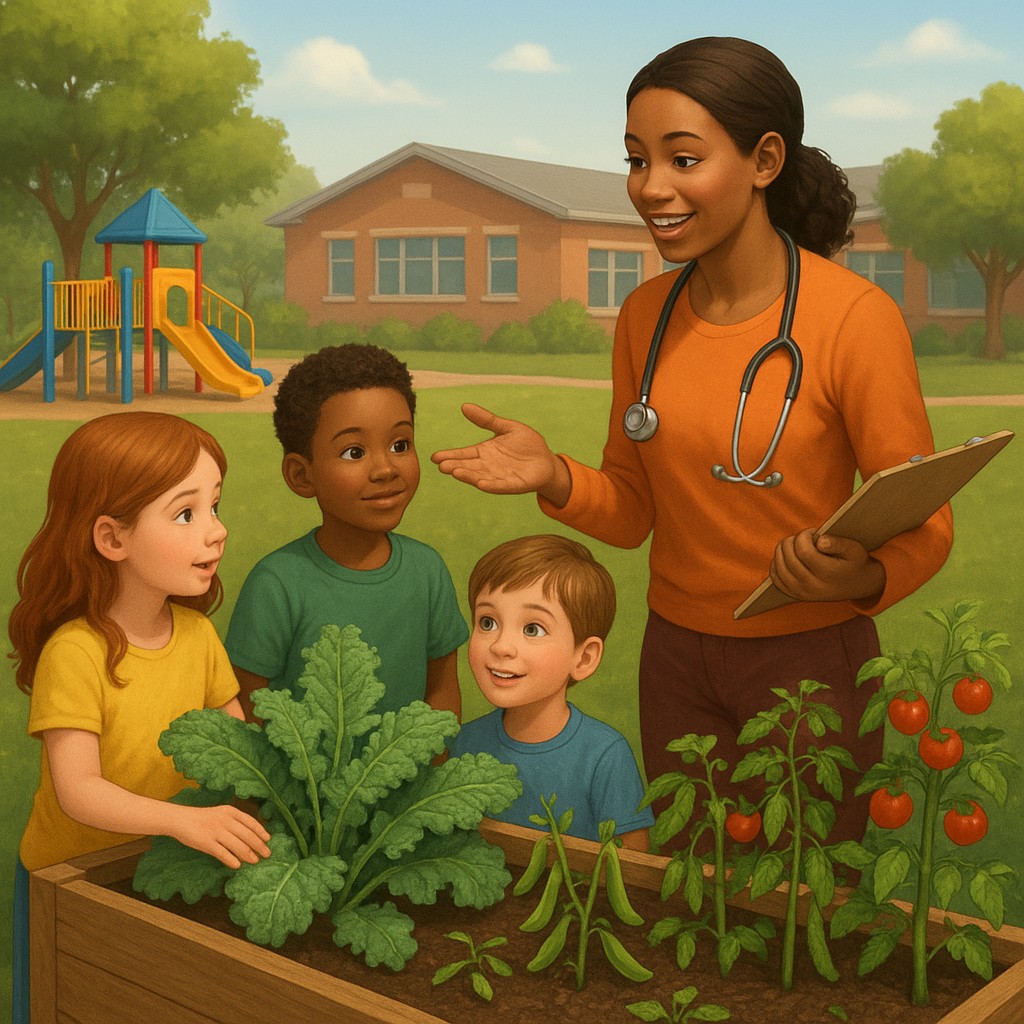
Imagine a school playground where the most popular spot isn't the slide or the swing set, but a sturdy raised bed bursting with kale, snap peas, and cherry tomatoes. For decades, school gardens were seen as charming but non-essential-the first things to be cut when budgets got tight or testing pressure increased. They were labeled as "enrichment," a hobby for a teacher with a green thumb or a weekend project for a few dedicated parents. However, a quiet revolution in how we define medicine is turning these garden beds into something much more powerful than a hobby. These small plots of soil are being redefined as clinical assets, as vital to a child's health as a stethoscope or a course of antibiotics.
This shift comes from a growing realization in the medical community that our health is shaped far more by our zip codes than by what happens in a doctor's office. In low-income school districts, where fresh produce is hard to find because of "food deserts" (areas without grocery stores) or "food swamps" (areas overwhelmed by fast food), a child's health future is often decided before they even reach adulthood. But new healthcare billing codes are changing the game. By allowing providers to treat social factors like food insecurity as billable medical priorities, we are seeing a massive structural change. Schools are no longer just for learning; they are becoming hubs for preventative medicine, funded by the same insurance systems that used to only pay for treatment after a person got sick.
The Infrastructure of Prevention
To understand how a garden becomes a medical tool, we have to look at how lifestyle medicine works. For years, doctors have known that diet-related illnesses, such as type 2 diabetes and high blood pressure, are the primary drivers of healthcare costs and early death. Yet, the traditional medical model is mostly reactive: you get sick, you get a prescription, and you try to manage the damage. Lifestyle medicine flips this script by focusing on the pillars of health: nutrition, physical activity, and stress management. In a school setting, a community garden hits all three at once. It provides the ingredients for a healthy diet, the physical work of planting and harvesting, and the mental health benefits of being outdoors and working with one's hands.
The beauty of this new funding model is that it treats "environmental exposure" as a clinical factor. In medical terms, if a child lives in a place where the easiest food to find is highly processed and full of sugar, their metabolic health is at risk. By using insurance money to build agricultural infrastructure, schools are literally changing the chemistry of the neighborhood. This isn't just about handing a child a carrot; it is about building a sustainable system where that child learns to grow, cook, and value that carrot. This creates a feedback loop where the school garden acts as a primary care intervention, reducing chronic illness by tackling the root cause rather than just the symptoms.
Breaking the Code of Social Determinants
The technical engine behind this change is the introduction of specific health-related social needs (HRSN) codes. In the past, if a doctor saw a patient who was malnourished because they couldn't afford fresh food, there was no way to "bill" for a solution. They could offer a list of local food banks, but that was usually where their medical responsibility ended. Today, new codes like G0136 allow for the assessment of social needs, and community health integration codes like G0019 allow providers to bill for time spent connecting patients to community resources. This means a doctor or nurse practitioner can effectively "prescribe" a school gardening program and the healthy food it grows as a form of clinical treatment.
This change in the financial plumbing of healthcare allows money to flow from massive insurance pools into local school districts. When a school can justify the cost of an irrigation system or a greenhouse as a medical expense, the "return on investment" changes completely. It is no longer an expense that the school board has to weigh against textbooks or teacher salaries. Instead, it is a preventative health measure paid for by companies that want to keep that child out of the emergency room twenty years from now. This builds a bridge between the education and healthcare systems that has never existed at this scale before.
Comparing Traditional and Integrated Health Models
It helps to visualize how this shifts the experience for a student in a low-income district. When we compare the old way of doing things with this new, integrated approach, the difference in the "patient" experience and long-term success becomes clear.
| Feature |
Traditional Social Service Model |
Integrated Lifestyle Medicine Model |
| Funding Source |
Grants, donations, school budget |
Clinical billing, insurance, healthcare funds |
| Primary Goal |
Short-term hunger relief |
Long-term health and disease prevention |
| Role of Garden |
Extra activity or science lab |
Clinical treatment and farm infrastructure |
| Sustainability |
High risk (depends on volunteers) |
High stability (part of medical billing) |
| Health Metric |
Calories provided |
Blood sugar levels, BMI, and food knowledge |
| Engagement |
Passive (receiving a food box) |
Active (planting, weeding, and harvesting) |
The Biological Literacy of a Harvest
One of the deepest effects of turning school gardens into medical assets is the increase in "biological literacy" among students. We usually think of literacy as the ability to read and write, but biological literacy is the ability to understand how your body reacts to the world around it. When a child spends time in a garden, they aren't just learning about how plants grow; they are learning about the link between the soil, the plant, and their own energy levels. This hands-on education is a form of behavioral therapy. It replaces the "black box" of pre-packaged food with a clear process that empowers students to make healthy choices.
From a clinical perspective, this is called "patient activation." An activated patient is someone who understands their health and takes an active role in managing it. By starting this process in elementary school, we are training a generation of "activated" citizens. They understand that food is medicine because they have seen the life cycle of that medicine from seed to table. This exposure lowers the mental barriers to eating well. It is much easier to convince a teenager to eat a salad if they were the one who built the irrigation system that watered the lettuce.
Moving Beyond the "Band-Aid" Approach
A common mistake is thinking that lifestyle medicine and school gardens are meant to replace traditional doctors. If a child has a bacterial infection, they still need an antibiotic. If they have a broken arm, they still need a cast. The garden isn't a replacement for the hospital, but it is a replacement for the "Band-Aid" approach to chronic, diet-related illness. For too long, we have tried to treat poverty and food insecurity with temporary fixes, like one-time food drives or yearly health fairs. These are like putting a small bandage on a deep, structural wound.
Using clinical billing for gardens represents a shift toward "structural competency" in medicine. This is the idea that doctors should understand and fix the structures that make people sick in the first place. By funding farm infrastructure in schools, the healthcare system is acknowledging that the physical environment is just as important as biology. We are finally moving away from the idea that health is solely the responsibility of the individual and toward the idea that health is a product of the systems we build. This layer of prevention acts as a buffer, protecting children from the unhealthy food environments that lead to lifelong illness.
The Future of the Green Classroom
Imagine a future where every school in a high-poverty district is anchored by a thriving, productive farm that doubles as a local health clinic. In this future, the school nurse and the garden coordinator work side by side. The data collected from the garden-how many pounds of produce were grown, how many students participated, and the resulting changes in the community’s health markers-is sent to insurance companies as proof that it works. This creates a self-sustaining system where health and education are linked. It turns the school from an isolated building into a vibrant center for community strength and metabolic health.
This isn't just a dream; it is a logistical possibility that is already being written into policy. As more districts realize they can use healthcare funding to support their farming goals, we will see a literal greening of the educational landscape. We are starting to see that at the intersection of a billing code and a seed packet lies a radical new way to care for our children. It turns out that the best way to fix a broken healthcare system might just be to give a child a trowel and a reason to get their hands dirty.
The next time you see a group of kids huddled over a patch of dirt, debating the best way to stake a tomato plant, remember that you aren't just looking at a science lesson. You are looking at a frontline medical intervention. You are seeing the construction of a future where chronic disease is caught in the soil before it ever has a chance to take root in a human body. This is the new frontier of medicine: one built on the simple, profound truth that a healthy life begins in the earth, nurtured by a community that values its children's health enough to fund it properly. There is a quiet, rhythmic power in the act of growing food, and as we embrace this new model, we are realizing that the most advanced medical technology we have might just be the ability to cultivate a garden.