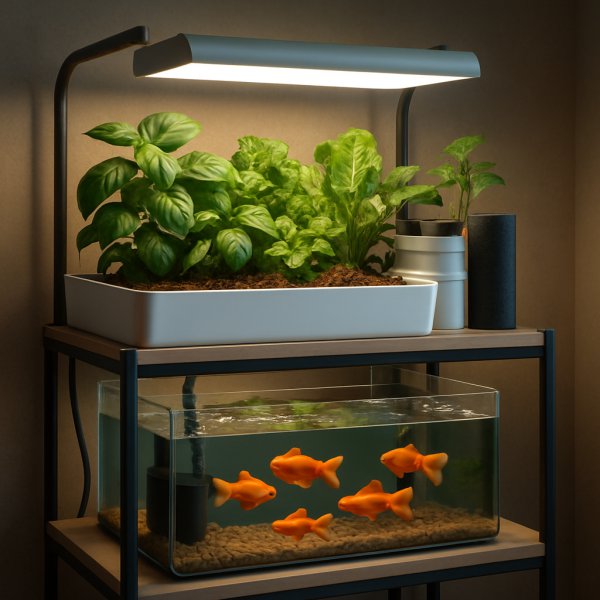
Why aquaponics is a tiny revolution you can grow on a porch
Imagine a garden that feeds itself while recycling water, a micro-ecosystem where fish and plants literally take care of each other. Aquaponics combines aquaculture - raising fish - with hydroponics - growing plants in water - to create a closed-loop food production system. It sounds like futuristic green technology, but in practice it is both ancient logic and modern engineering: feed the fish, the fish feed the plants, the plants clean the water for the fish, and the loop keeps humming.
This matters for several reasons. Aquaponics uses far less water than conventional soil gardening, it eliminates the need for chemical fertilizers, and it can produce both protein and vegetables in small spaces - rooftops, garages, balconies, and community centers. For people in cities or places with poor soil, it can mean reliable, pesticide-free produce year round. For hobbyists, it is endlessly satisfying to watch a balanced system evolve from clear water and fish flakes into a salad on your plate.
Beyond the practical, there is a delightful mental payoff. Aquaponics invites you to think like a systems designer - to balance inputs and outputs, to monitor subtle signs, and to work with living partners rather than imposing rigid control. If you have ever wanted to feel smarter than a smartphone about where your food comes from, this is a hands-on way to build that confidence. Read on and you will learn the biology, the hardware, the common pitfalls, and a simple plan to get your first system running.
As you learn, keep in mind that aquaponics is part gardening, part aquarium care, and part environmental engineering. The learning curve is forgiving if you adopt a patient mindset. Expect some mistakes, enjoy the experiments, and prepare to be surprised by how much nature can teach you when you create the right conditions.
The living partnership - how fish and plants cooperate
At the heart of aquaponics is a biochemical partnership. Fish produce waste that contains ammonia, which is toxic to them in high concentrations. Beneficial bacteria colonize surfaces in the system and convert ammonia first into nitrite, then into nitrate. Nitrate is a form of nitrogen that plants love and can absorb through their roots. When plants consume nitrate, they remove the toxic build-up and return cleaner water to the fish. The bacteria are the invisible workers that keep the cycle going.
Think of the system like a tiny town: the fish are the producers of raw waste, the bacteria are the sanitation and treatment plant, and the plants are the city gardeners who use the treated water to grow food. If any one of those groups fails to do its job, the town runs into trouble. Too many fish, too few bacteria, or weak plant uptake will unbalance the system and harm the fish.
This partnership is dynamic. Temperature, feed rates, light, and water chemistry all change how quickly bacteria process ammonia and how much nutrients plants can uptake. A successful system is not static technology - it is an ongoing conversation between you, the fish, the bacteria, and the plants. Learning to read the signs - plant leaf color, fish behavior, water tests - is the skill of aquaponic gardening.
A practical bonus is that, unlike soil gardening, many common pests and soil-borne diseases are less problematic in aquaponic setups. You can grow tender leafy greens, herbs, vine crops, and even fruiting plants with reduced pesticide use. That makes the method appealing for people who value clean produce and enjoy blending aquarium care with kitchen gardening.
Core hardware explained in friendly terms
Every aquaponic system has a few core parts that work together. Understanding these pieces helps you design and troubleshoot your setup without needing to memorize arcane rules.
Fish tank - This is the home for your fish. Tank size determines how many fish you can keep and how stable your water chemistry will be. Bigger tanks are more forgiving because they dilute changes in water quality. Choose something sturdy, food-safe if possible, and consider access for feeding, cleaning, and harvesting.
Grow bed or raft - This is where your plants live. Media-based grow beds use gravel, clay pebbles, or similar media to support roots and provide surface area for bacteria. Raft systems float plant trays over nutrient-rich water. Each approach changes maintenance style and plant choice, but both connect to the tank via water flow.
Filtration - Mechanical and biological filtration are essential. Mechanical filters catch solids like fish feces and uneaten feed, preventing clogs and oxygen-sapping decomposition. Biological filters provide surface area for nitrifying bacteria to convert ammonia into nitrate. In media beds, the media itself often serves both functions. In raft and nutrient film technique systems, separate filters are typically used.
Pumps and plumbing - A water pump moves water from the fish tank to the grow beds or rafts, while return plumbing brings the cleaned water back. Air pumps and diffusers keep dissolved oxygen at healthy levels for both fish and plant roots. Choose reliable pumps and design simple plumbing to reduce the chance of failure.
Lighting and climate control - If you grow indoors or during short winter days, supplemental light is necessary. LEDs with broad-spectrum output are efficient and effective. Temperature control matters for both fish and plants; choose species whose temperature preferences overlap to simplify management.
The nitrogen cycle, step by step, without the textbook dryness
If you remember only one process, learn the nitrogen cycle - the chain from fish feed to plant fertilizer. It goes like this: feed fish - fish produce ammonia - bacteria convert ammonia to nitrite then nitrate - plants absorb nitrate - water cleansed returns to fish. That sequence is the durable backbone of every aquaponic setup.
When you start a new system you need to establish the bacterial colonies. Beginners sometimes panic when ammonia spikes early on, but this is normal during "cycling." Cycling takes a few weeks to a month depending on temperature and how much surface area you provide for bacteria. You can speed the process by adding media from an established aquarium or by using commercial bacterial starters, but patience pays off.
Monitoring is straightforward: test strips or liquid kits measure ammonia, nitrite, nitrate, and pH. In a healthy, cycled system, ammonia and nitrite should be at trace levels, while nitrate should be present in low to moderate amounts that plants can use. Regular observation of fish and plants, along with simple water tests, keeps you in tune with the cycle and allows you to act before small issues become big problems.
Remember that feed equals nutrient. Overfeeding spikes ammonia and can overwhelm bacteria and plants. Underfeeding produces slow growth for fish and fewer nutrients for plants. Balancing feed rate against plant demand is an art and a science - many successful aquaponic growers log feed, plant growth, and water tests to refine their system over weeks.
Picking a system type - which one fits you and why
There are several common system designs, each with strengths and trade-offs. The right choice depends on space, budget, what you want to grow, and how much maintenance you enjoy. The table below compares the three most common small-scale systems in practical terms to help you choose.
| System type |
Best for |
Advantages |
Challenges |
| Media-based grow bed |
Backyard hobbyists, mixed crops, beginners |
Simple, low-tech, good for seedlings and fruiting plants, media provides filtration |
Heavy when filled, periodic cleaning, can trap solids if not designed well |
| Raft (deep water culture) |
Leafy greens, commercial lettuce production |
Excellent for high-density leafy greens, easy to harvest, stable water volume |
Needs solid filtration to remove solids, not ideal for large fruiting plants without modifications |
| Nutrient Film Technique (NFT) |
Herbs, greens in compact setups |
Water-efficient, efficient root zone oxygenation, sleek for indoor setups |
Roots can clog channels, less buffering capacity, tricky for larger root systems |
Choosing a system is a balance between your goals and practical constraints. If you want to experiment quickly, a media-based mini-system in a tote is forgiving. If you crave a commercial-style lettuce raft, a deep water culture raft yields fast growth and is efficient in space.
What fish and plants pair best - practical pairings and stocking rules
Your choices for fish and plants should overlap in preferred temperature and water conditions. Tilapia is a popular beginner fish because it is hardy and tolerant of varied conditions, but it has legal and ethical considerations in some regions. Trout love cold water but require high oxygen and very stable temperatures. Goldfish and koi can be good for ornament and system stability, while edible species like barramundi or catfish can produce food but need more care.
Plants that like lots of steady water - lettuce, kale, basil, chard, and other greens - are the easiest and fastest. Fruit crops like tomatoes, cucumbers, and peppers can do well, but they need more attention to nutrient levels and support structures. Start with greens and herbs, learn the rhythm of your system, then add more demanding plants.
A basic stocking guideline is to start conservatively: about 20 to 40 grams of fish per liter of tank water as a maximum for small hobby systems, with lower densities being easier to manage. This is a rule of thumb and varies with species, filtration capacity, and your willingness to monitor and adjust. For example, in a 200 liter tank, stocking 4 to 8 kg of tilapia may be possible for experienced growers, but starting at 1 to 2 kg will reduce stress and accelerate system stability.
Feeding strategy is pivotal - feed the fish according to their size and water temperature, and never overfeed. Uneaten food decomposes, raises ammonia, and invites algae. Regularly remove solids caught by mechanical filters to keep bacteria healthy and oxygen levels high.
Keeping the water chemistry simple and manageable
Water chemistry sounds intimidating, but it becomes intuitive with a few simple tests and targets. pH should typically be between 6.8 and 7.2 for most mixed systems - this is a compromise range that suits nitrifying bacteria, most vegetables, and many warm-water fish. Ammonia and nitrite should be near zero in a healthy system, while nitrate will be present and consumed by plants. Dissolved oxygen should be above 5 mg/L for most warm-water fish, and higher is better for fish under stress.
Temperature matters because bacteria and fish metabolism speed up in warmer water. Many common aquaponic pairings do well between 20 and 28 degrees Celsius, but select your fish and plants to match your climate or be prepared to provide heating or cooling. If you live in a hot or cold climate, insulating tanks and providing shade or heat will make a large difference.
Adjustment is typically gradual. To raise pH use potassium bicarbonate or add buffering capacity via crushed oyster shell in the filter media. To lower pH use food-grade acids or add carbon dioxide via controlled aeration changes. Rapid swings in pH are a common cause of stress for fish and bacteria, so aim for slow corrections and monitor daily during any adjustment period.
A practical 90-day startup and maintenance plan
Starting slowly gives your system the best chance. The early weeks focus on establishing bacteria and stabilizing the cycle. Here is a practical timeline you can follow.
Days 0-14 - Assemble the system and begin filling it with dechlorinated water. Turn on pumps and aeration, add media or biofilter, and introduce bacterial starters if desired. Begin a low feed rate for fish, or introduce a small number of hardy fish or "cycling fish" if you prefer live cycling.
Days 15-30 - Monitor ammonia and nitrite closely. Expect ammonia to rise then drop as bacteria establish, with nitrite peaking in between. Add plants only when ammonia and nitrite levels drop near zero or when you have confidence the biofilter is established. Check pumps and clean pre-filters as solids collect.
Days 31-90 - Add more plants and gradually increase fish numbers or feeding rates as the system demonstrates capacity. Keep a log of feed amounts, water tests, plant growth, and any interventions. Perform weekly partial water tests and monthly broader checks like phosphate, calcium, and magnesium if you want to optimize for fruiting crops.
Ongoing maintenance tasks are straightforward and low time-cost: daily visual checks of fish health and pump operation, weekly removal of solids and pruning of plants, monthly testing of pH and other parameters, and seasonal adjustments for temperature and light.
Troubleshooting common problems without panic
A few recognizable problems show up most often, and each has a practical fix. Algae growth is usually a sign of excess light or nutrients and can be controlled by reducing light on the water surface, increasing plant uptake, or cleaning surfaces. Brown or stringy biofilm is generally harmless and a sign of bacterial activity, but if it becomes dense, improve water flow and mechanical filtration.
Fish gasping at the surface often indicates low oxygen or very high temperature. Increase aeration immediately, check pump operation, and if needed, do a partial water change with properly conditioned, oxygenated water. Yellow or pale plant leaves can indicate a nutrient imbalance, commonly iron deficiency; foliar feedings of chelated iron can be a quick remedy while you address root uptake.
Pump failure is the system emergency that requires preparation. Have redundancy when possible - dual pumps or a backup battery-powered aerator - and plan for power outages by moving fish temporarily to a safe holding tank if needed. Regularly inspect impellers, clean intakes, and keep spares of common parts for quick swaps.
Common myths and the truth behind them
Myth - Aquaponics is zero-work and self-sustaining from day one. Truth - It reduces some types of labor, like weeding, but requires regular monitoring, maintenance, and systemic adjustments. Think of it as low-drudgery, high-attention gardening.
Myth - You need exotic equipment and huge investment to start. Truth - You can start with recycled containers, a simple pump, and inexpensive media. Systems scale up, but beginners can build effective small setups on modest budgets.
Myth - Fish eat all the nutrients so plants starve. Truth - Fish waste provides nitrogen and other nutrients but rarely supplies everything for heavy-feeding fruiting crops, which may need additional supplementation. Leafy greens often grow fine without extra inputs.
Myth - Clear water is healthy water. Truth - Crystal clear water can indicate a lack of dissolved organic matter and bacteria, while slightly yellow or green water can be normal in mature, productive systems. Test results and organism behavior matter more than aesthetics.
Designing your first small system - a simple 4-step project
If you want to try aquaponics this weekend, here is a compact, reliable project plan that fits a porch or balcony.
Step 1, gather materials - A 100 to 200 liter plastic tank or food-grade tote, a shallow grow bed or another tote for media, expanded clay pebbles or gravel, a submersible pump rated for your head height, airline tubing and an air pump, simple water test kits for pH and ammonia, and a handful of hardy fish like goldfish or tilapia if legal in your area. Budget for a few spare parts.
Step 2, assemble and fill - Place the fish tank at the lowest point, the grow bed above it so gravity can return water, connect the pump to feed the grow bed, and set up an overflow so water returns gently. Fill with dechlorinated water and place media in the grow bed.
Step 3, cycle and seed - Start the pumps, add bacterial starter or media from an existing aquarium if possible, and begin feeding fish very lightly. Monitor ammonia and nitrite daily. Add a few fast-growing plants once nitrite and ammonia settle near zero.
Step 4, grow and iterate - Add more plants and increase feeding gradually as the system demonstrates stability. Take notes. Expect tweaks - adjusting feed, trimming plants, and cleaning filters. Enjoy the learning curve and the harvests.
Questions to make this thinking personal
- How much space and light do I actually have, and which system type will fit that space best?
- What are my goals - food production, learning a hobby, or starting a small business - and how much time can I commit weekly?
- Which fish species are legal and practical in my location, and do their temperature needs match the plants I want to grow?
- How will I handle power outages or pump failures - can I add redundancy or a backup plan?
- What small experiment can I run this month to test a hypothesis about feed rate, plant density, or media choice?
Pause and answer these honestly - your choices shape practical success more than any theoretical model.
Why this matters beyond your backyard
Aquaponics scales from hobbyist tubs to commercial greenhouses. On a small scale, it fosters food literacy, resilience, and community. On a larger scale, aquaponics offers reduced water use, less fertilizer runoff, and localized food production that can shorten supply chains. It is not a silver-bullet solution to global food challenges, but it is an important tool in a diversified approach to sustainable agriculture.
The real power of aquaponics lies in its combination of curiosity and utility. It is a project that rewards observation, patience, and incremental improvement. Whether your goal is to save a little grocery money, teach kids about ecosystems, or prototype a food business, aquaponics gives you a practical laboratory to practice smart stewardship of resources.
Final encouragement - start small, think big, enjoy the science
You do not need to be an engineer to succeed in aquaponics - you need curiosity, careful observation, and a willingness to learn from living systems. Build a small system, log your results, and treat mistakes as data. In a few months you will be harvesting your first salads and discovering how satisfying it is to feed yourself with a system you helped balance.
Aquaponics invites you to participate in a quiet revolution - producing food that is efficient, local, and engagingly alive. Take one small step this week: sketch a layout, pick a fish and a plant, or buy a simple pump and a tote. The rest will follow as you watch water, bacteria, fish, and roots find their rhythm together. Welcome to a way of growing that is practical, poetic, and profoundly doable.