A surprising opener: why a simple board can teach you cunning, patience, and math
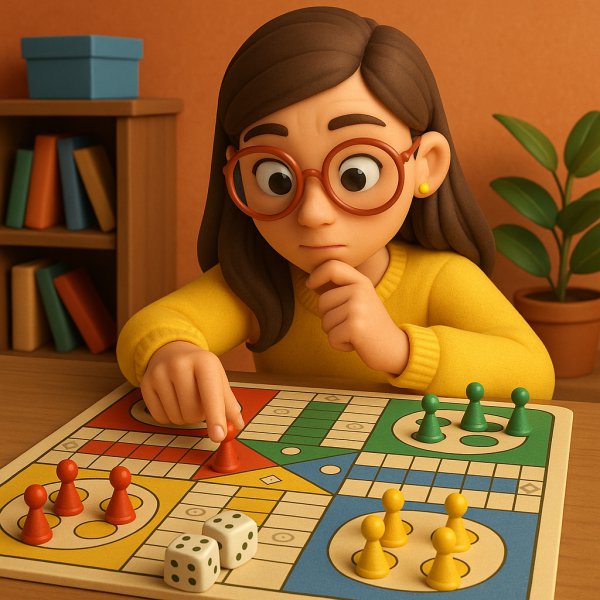
Imagine sitting at a kitchen table, coffee steaming, while laughter and mild outrage bounce around the room as a single pawn is knocked back to start. That moment - the sweet victory of a capture, the slow horror of a blocked path - is why Parchís has endured for centuries. Parchís is not just a children’s race game, it is a miniature arena where probability, timing, negotiation, and risk-reward decisions come alive. Learn it well, and you will find yourself making smarter choices in games, and practicing quick mental math and strategic thinking that matter off the board too.
Where Parchís came from, and why it feels familiar immediately
Parchís is the Spanish family of the ancient Indian game Pachisi, and it belongs to the same family as Ludo, Parcheesi, and Mensch ärgere dich nicht. All of these games share a simple premise - move your tokens from home to center along a track, using dice to determine movement, while trying to beat and sometimes knock back your opponents. Over the last few centuries, regional variants have introduced different rules for getting out of home, using dice, creating blockades, and rewarding captures. The result is a lively, social game that blends luck with strategy.
The board and pieces explained, so you can visualize every decision
A typical Parchís set has a square board divided into four colored quadrants, one for each player, with a winding path from the player’s starting area to a central home. Each player has four pawns, usually plastic or wooden tokens in the player’s color. The path contains colored starting squares - those are usually safe zones - and a final stretch of squares leading to the center.
Important common features are: safe squares (where pieces cannot be captured), blockades (two of the same-color pawns on one square that block passage), captures (landing exactly on an opponent’s pawn sends it home), and a pair of dice used to generate movement. Note that exact board layouts and the number and location of safe squares vary by edition and house rules, so always confirm the version you are playing before deep strategy sessions.
Core rules that most players will recognize, with common variations flagged
A single paragraph to lay the foundation helps. Most Parchís variants play with two six-sided dice, and each player has four pawns starting in a home corner. On your turn you roll the dice and use the values to move your pawns. You may move a single pawn using the sum of the dice, or you may move two separate pawns, one according to each die. Landing exactly on an opponent’s pawn sends that pawn back to its home area. Two pawns of the same color on one square form a blockade, which normally cannot be passed by any pawn, including your own, until the blockade is broken. Some squares are flagged as safe - pieces on them cannot be captured. The goal is to bring all four pawns into the center home.
Common house-rule variations to watch for include: the number required to leave home (in many Spanish rules you need a roll of 5 to come out, while Ludo commonly requires a 6), whether capturing gives an extra turn, whether double rolls give extra play or penalties, and special bonus squares that grant leaps. Because rules differ, agree them before play.
Quote for flavor:
"Games are the training grounds of life; Parchís simply makes the lessons more dramatic."
How the dice work, in plain probability language
Understanding the dice mechanics is half the battle. With two dice you have 36 equally likely outcomes. Doubles occur on 6 of those 36 outcomes, so the probability of a double is 6/36, or 1/6. If your version requires a 5 to leave home, the probability of rolling a 5 on at least one die is 11/36, about 30.6 percent. If you require a 6 instead, the same calculation applies for the 6.
Quick table - helpful cheat sheet for two dice:
| Event |
Favorable outcomes |
Probability |
| Double (both dice same) |
6 |
6/36 = 1/6 ≈ 16.7% |
| At least one 5 |
11 |
11/36 ≈ 30.6% |
| Exact sum 7 |
6 |
6/36 = 1/6 ≈ 16.7% |
| Exact sum 2 or 12 |
1 each |
1/36 ≈ 2.8% |
Knowing these probabilities will help you judge how risky it is to wait for a particular number, or how likely you are to break a blockade with a split move.
Opening moves and early-game strategies that set the stage
Your opening choices shape the rest of the game. If your rules require a 5 to leave home, then the first goal is to get at least one pawn out as soon as a 5 appears. When you have a pawn out, you face a recurring decision each roll - spread your risk by advancing multiple pawns, or concentrate power in one pawn to create blockades and capture opportunities?
A useful general rule is to get two pawns into play early, because two pawns increase your flexibility. With two pawns you can threaten captures, form a potential blockade, and use each die to respond to immediate threats. However, if the track is crowded and opponents are in a capturing mood, a conservative approach - keeping pawns behind safe squares and whittling forward - can be better.
Practical tip: keep one pawn near a safe square and another that is aggressive. This gives you both insurance and threats.
Midgame tactics - capture timing, blockades, and forcing decisions
The middle of the game is tactical chess with dice. Capture decisions are rarely automatic; you must think one or two moves ahead. Capturing an opponent sends them home and sets them back, but it may expose your pawn to immediate recapture, especially if the return square lies in the path of an opponent about to move. Ask yourself: do I gain a net time advantage by capturing? Will capturing create a blockade for me, or for my opponent?
Blockades are powerful. Two of your pawns on a square create a wall that nobody can pass, effectively controlling a segment of the board. Use blockades to cortile opponents, corral them into traps, or protect your lead. Remember that blockades can backfire: they immobilize the pawn on top of them and can make it hard to finish if you need to carry both into home.
Small scenario to think about: you have two pawns adjacent to an opponent’s pawn, and your roll lets you either capture their pawn or form a blockade with your two. Which do you choose? Capture if capturing sets them back several moves and leaves you safe; form a blockade if you can lock them behind it and prevent their escape for multiple turns. Evaluate risk, dice probability, and your relative lead.
Late game - racing to the finish and safe passage strategies
When pawns approach the final stretch, the game becomes a race. The main priorities change to avoiding sending your own pawns home, advancing efficiently, and preventing opponents from forming last-minute blockades. In many variants the final stretch is narrow and vulnerable, so plan your entries carefully. Using dice splits to advance multiple pawns just enough to enter sequencing positions can avert being stalled by an opponent’s blockade.
If you are ahead, play conservatively and avoid unnecessary captures that could expose your lead. If you are behind, opt for riskier plays - go for captures or attempts to form blocking walls that will slow the leader.
Counting and mental math - the small skills that matter
Good Parchís players count squares aloud to avoid mistakes, calculate odds of rolling needed numbers, and track opponents’ pawn distances and likely moves. Practicing quick addition and subtraction of dice combos gives you an advantage in tight situations. Try this quick exercise: suppose you need exactly 3 to enter the final home. Which die combinations allow you to do this if you can split or sum? Can you reorganize your pawns so that a likely roll helps you rather than hurts you? Mental arithmetic and planning two moves ahead make you a more consistent player.
Challenge question for the reader: You are on a square 4 steps away from home. Your opponent is 8 steps behind you and has a pawn close to a safe square. You roll 4 and 3. Describe two ways to use your dice, and briefly evaluate the risk of each. (Answer: move one pawn 7 to hit home if allowed by rules to use the sum, or move one pawn 4 into home and move another pawn 3 forward to build safety; the first is faster but leaves less board control, the second splits risk and builds flexibility.)
Common misconceptions and errors to avoid
Many beginners fall into traps. One misconception is that forming blockades is always good. In fact, blockades can stall you when you need to move those pawns home, and if your opponent lures you out they can force you into bad rolls. Another frequent error is ignoring the opening safe squares; they are designed to be staging posts that protect you from early captures, and using them smartly buys time. Finally, players often fail to calculate the opponent’s likely responses when capturing; a capture that seems brilliant can simply hand the initiative back in the next move.
Psychology, negotiation, and multiplayer dynamics - the human side of Parchís
Parchís is social. Alliances form naturally - two players may temporarily gang up to stop a runaway leader - and social bargaining matters. Be alert to table dynamics: if everyone is behind a player, other players are incentivized to capture that leader. Use psychology to your advantage: delay finishing to draw others into fights, or be the player who quietly secures safe squares and capitalizes on others’ slugfests.
Tip: keep your tone friendly and avoid gloating. Parchís is about social pleasure as much as winning.
Case study - a memorable comeback explained
In a neighborhood tournament, a player lagging with two pawns at start and two pawns near home rolled a 5, got one pawn out, and then used conservative play to avoid capture while the leaders fought. By splitting moves to keep pressure, forming a blockade at a critical choke point, and timing a capture that sent a leading pawn back three squares, the lagging player turned a 2-turn deficit into a win. The lesson is that patient opportunism - waiting for the board to create a chance - often outperforms blind aggression.
Practical toolbox - a quick checklist of tactics to use next time you play
- Get at least one pawn out early, aim for two as soon as safe opportunities arise.
- Use dice splitting to keep flexibility - move two pawns rather than pushing one hard, unless push yields a secure capture or blockade.
- Create blockades selectively, where they produce maximum delay for opponents and minimal self-constraint.
- Prioritize safety near the final stretch, avoid risks that could reset progress near the end.
- Count the board before capturing - will you be recaptured? Is the capture worth the tempo?
- Watch player psychology - coalitions form, and silence on the table is often the most dangerous sign.
A few variants and house rules to spice things up
Parchís has many playful variants: some grant an extra turn for captures, some award bonus movement points, some forbid forming more than one blockade, and some introduce special squares that leap you forward - often called star squares or shortcuts. If you want a more tactical game, prohibit too many blockades. If you want more chaos and comebacks, add capture bonuses. Always agree on the variant before the first roll.
Where to go next - practice, resources, and experiments
The best way to learn Parchís is to play and reflect. Try experimenting with one new strategy per evening - focus on blockade usage one game, risk-taking another. Read about Pachisi and Ludo to see how rules shape play, and if you want math deeper, explore probability texts that analyze random walks and race probabilities, which mirror late-game finish probabilities. Practice quick calculation drills for two-dice outcomes to make split-move decisions automatic.
Final encouragement: Parchís rewards both cool, long-term thinking and audacious, opportunistic moments. Whether you play for family fun or intense local bragging rights, mastering its tradeoffs will sharpen both your strategic mind and your joy in shared play. Pull up a chair, roll the dice, and enjoy the delightful mixture of chance and choice.