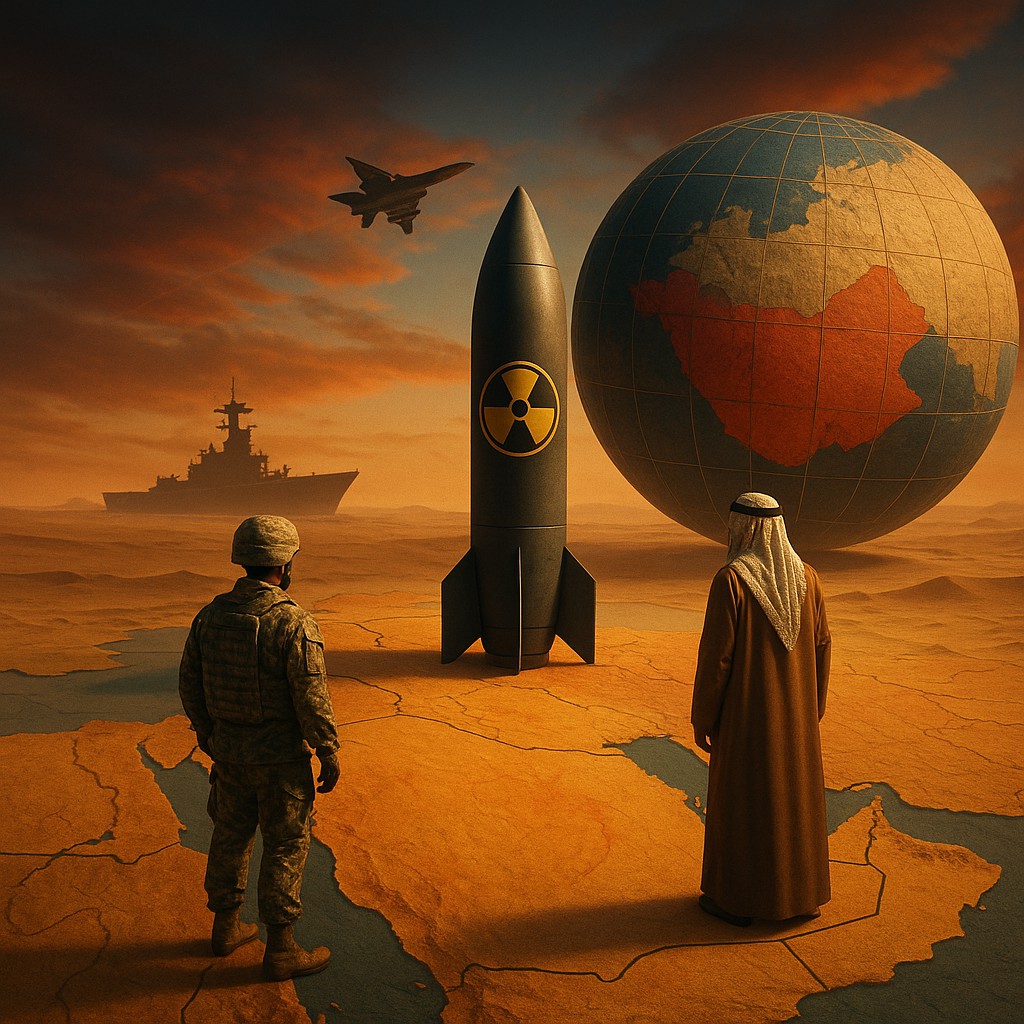
The geopolitical landcape of the Middle East is currently vibrating at a frequency that suggests a massive tectonic shift is coming. For many Americans, news of tension in this region feels like background noise - a constant hum that has persisted for decades without ever reaching a breaking point. However, the current administration is navigating a narrow corridor where several dangerous paths meet, and the window for a peaceful exit is shrinking. We are seeing a rare alignment of military buildup, nuclear deadlines, and a reshuffling of regional powers that places the United States closer to a major regional conflict than at any time in recent memory.
Understanding this situation requires looking past the headlines to see how international brinkmanship actually works. The administration is trying to balance a "maximum pressure" campaign with a promised desire to avoid "forever wars." This creates a contradiction that enemies are eager to exploit. While the public often focuses on individual events like protests or isolated strikes, the true danger lies in the friction between a renewed U.S. presence and a regional power structure that is becoming increasingly desperate. To understand why the next few weeks or months are so critical, we have to look at the invisible tripwires laid across the desert sands.
The Nuclear Countdown and the Two-Week Window
At the heart of the current tension is the rapidly accelerating timeline of Iran’s nuclear program. For years, the international community assumed that diplomacy or sabotage could indefinitely "kick the can down the road." That road has now reached a dead end. Recent intelligence suggests that the technical barriers between "peaceful energy" and the ability to build a weapon have become razor-thin. This shift has forced the Trump administration into a corner where doing nothing is increasingly viewed by military planners as a de facto choice for a nuclear-armed Iran.
The White House has recently signaled a major shift, indicating that a decision on direct action against these nuclear facilities could be made within a remarkably short time - often cited as a two-week window. This isn't just a random deadline; it matches technical milestones and the readiness of allied forces in the region. When the United States says "all options are on the table," it is usually just a figure of speech. However, the current movement of aircraft carrier groups and heavy bombers suggests the table has been cleared for action. The reality is that if a decision to strike is made, it will not be an isolated event, but the first shot of a much larger regional war.
Navigating the Gaza Peace Paradox
While the threat of a major war loomed on the horizon, there is a parallel track of intense, high-stakes diplomacy that seems almost contradictory. Reports from Cairo and Washington suggest that a breakthrough in Gaza may be closer than ever before. This "peace deal" is about more than just a ceasefire; it represents a fundamental change in how the Palestinian territories are managed and who is responsible for their security. The administration has hinted at a plan that could involve moving populations and completely redrawing the regional map - a move that is as ambitious as it is controversial.
The paradox here is that a peace deal in Gaza might actually trigger a larger conflict elsewhere. By stabilizing the southern front for Israel, the U.S. and its allies gain "freedom of movement" to focus entirely on threats from the north and the Iranian heartland. This explains why the administration is projecting both extreme optimism about a deal and dire warnings about a potential World War III. They are using the prospect of peace as a "carrot" for regional partners and a shield against the backlash of more aggressive actions elsewhere. It is a high-stakes shell game where the prize is control over the region.
Comparing the Pillars of Current Strategy
To understand how the administration is juggling these explosive variables, it helps to look at the different theaters of operations and how they interact. Each area serves a specific purpose in the broader strategy of containing and transforming the region.
| Strategy Pillar |
Key Objective |
Primary Risk |
Current Status |
| Gaza Ceasefire |
Hostage release and border stability |
Backlash from Arab nations over population transfers |
High optimism; deals being finalized in Sharm el-Sheikh |
| Iran Containment |
Preventing a nuclear weapon |
All-out regional war involving proxy groups like Hezbollah |
Critical; two-week decision window approaching |
| Abraham Accords 2.0 |
Normalizing ties between Israel and Arab states |
Political instability within partner nations |
Ongoing; depends heavily on the outcome in Gaza |
| Military Deterrence |
Discouraging Russia and China from stepping in |
Accidental escalation or mistakes by local commanders |
Elevated; massive U.S. naval and air presence in the region |
The Mechanics of a Looming Escalation
War rarely starts because everyone wants it; it starts because the cost of peace becomes higher than the cost of fighting in the eyes of leaders. In this case, the administration views the status quo as a failing structure that will eventually collapse on its own. Their strategy is to force a resolution now, while they believe they still have the military and economic upper hand. This "proactive escalation" is a risky doctrine. It assumes the enemy will back down when faced with overwhelming force, but it ignores the possibility that an opponent might feel they have nothing left to lose.
If a conflict begins, it likely won't look like the ground invasions of the early 2000s. Instead, we would see a high-tech "integrated" war. This would involve massive cyberattacks to blind early-warning systems, followed by precision strikes on command centers. The real danger, however, is the "grey zone" response. Iran and its allies have spent decades perfecting unconventional warfare, which means the conflict wouldn't stay in the desert. It could show up as disruptions to global shipping in the Strait of Hormuz, worldwide cyberattacks on infrastructure, or a surge in violence across three continents. This is the "major war" most people aren't prepared for, as they are still thinking of traditional troop movements.
Correcting the Myth of the Isolated Conflict
One of the most dangerous misconceptions is that a war in the Middle East would stay there. We live in a world where energy markets, digital supply chains, and political alliances are so tightly connected that a "local" war is a myth. For instance, if the administration moves against Iranian nuclear sites, the ripple effect would hit gas prices at American pumps within hours. This isn't just about the price of oil; it's about global market confidence. A major conflict would likely draw in secondary players like Russia, which has deepened its ties with regional actors, turning a local dispute into a global proxy battle.
Furthermore, many people believe that "diplomacy" and "war" are opposite ends of a spectrum. In reality, the administration is using them as two sides of the same coin. The threat of a major war is being used as a diplomatic tool to force concessions that were previously unthinkable. This is called "coercive diplomacy." It works until it doesn't. If the other side calls the bluff, or if the administration feels its credibility is at stake, the transition from "threatening war" to "launching war" can happen in a heartbeat. The thin line between a brilliant diplomatic move and a catastrophic military blunder is often only visible in hindsight.
The Psychological Readiness of a Nation
Perhaps the most overlooked element is the lack of psychological preparation among the American public. During the Cold War, citizens were acutely aware of the "Doomsday Clock" and how close they were to conflict. Today, our distractions are more sophisticated, and our news cycles move so fast that we suffer from "crisis fatigue." When the President warns of "World War III" or a "major war very soon," it is often dismissed as exaggeration for the sake of an election or a negotiation. However, military movements do not lie. The logistical buildup currently happening in the Eastern Mediterranean and the Persian Gulf is not the behavior of a country that expects a quiet year.
This lack of awareness creates a dangerous vacuum. If a conflict breaks out, the sudden shift from a "peaceful" mindset to a "war" footing can cause panic and political instability at home. The administration is essentially driving a high-speed vehicle while the passengers are mostly asleep. To be "smarter" about this situation means recognizing the signs of escalation for what they are: preparations for a definitive, potentially violent, reordering of the world’s most volatile region. Whether this ends in a historic peace deal or a historic war, the silence of the current moment is the hush that always precedes the storm.
As we stand on this precipice, it is vital to remember that history is not just a series of accidents, but a collection of choices made by people under pressure. You now have the framework to see past the surface noise and understand the gears turning behind the scenes. Stay curious, stay informed, and remember that being aware of the risks is the first step in navigating them. The world is changing quickly, but by understanding these global tensions, you are no longer just a spectator - you are an informed citizen of a complex, interconnected world.