When the lights go weird but you come back: why near-death experiences matter
Something strange happens at the edge of death: people report tunnels, brilliant lights, conversations with beings, life reviews and an uncanny sense that they were out of their bodies watching doctors work. These accounts have fascinated philosophers, scientists and the merely curious for decades because they touch our deepest questions - what is consciousness, what happens when the brain fails, and what it feels like to die. Near-death experiences, or NDEs, sit exactly where hard biology and human meaning bump into each other, and that friction lights up big conversations about science, spirituality and healthcare.
You might know a few famous NDE stories - from people who came back from cardiac arrest to tell of peaceful havens, to those who saw deceased relatives and returned changed. But beyond the compelling anecdotes is a growing body of research trying to map the phenomenon, sort hypotheses into plausible and fanciful, and understand how such experiences alter lives. This Learning Nib will take you from what people typically report, through the main scientific explanations, into cultural shapes and emotional fallout, and finally to practical ways to think about, process, or integrate an NDE either for yourself or someone you love.
Read this as an invitation to both wonder and scrutiny. I will give you vivid scenarios, useful analogies and a practical action plan, while also pointing out methodological traps and common myths. You will finish knowing more about the phenomenon, how scientists study it, and what to do if you or someone you care about has had an NDE.
What people commonly report when death feels like a story
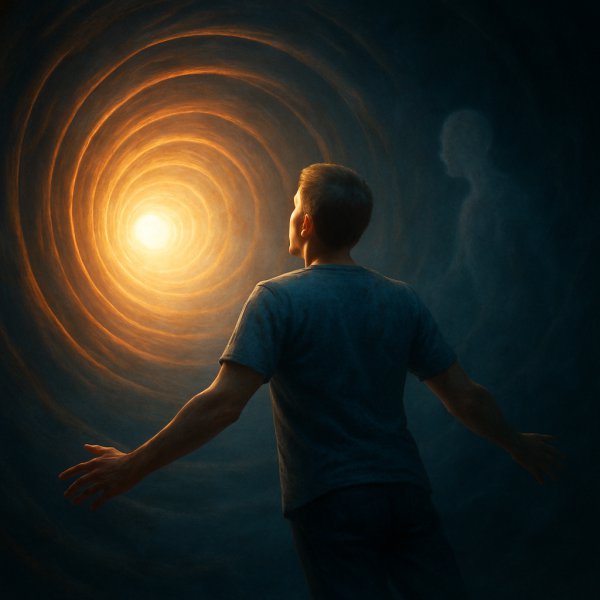
Reports of NDEs show recurring elements across decades and cultures. Many survivors describe an out-of-body sensation, as if consciousness rose above the scene and observed their body and medical efforts. Vivid perceptions follow - moving through a tunnel toward an intense, loving light, a life review in which moments are relived with emotional clarity, encounters with beings or deceased relatives, and a final choice or boundary where the person returns. Most accounts emphasize an overwhelming sense of peace and reduced fear of death.
These elements are not universal, and content often reflects a person’s cultural background and expectations. For example, a person raised in a Christian culture may describe meeting Jesus, while someone from another culture may report ancestral figures or ethereal guides. Cognitive psychologists note both the shared structural themes and the culturally specific imagery, which suggests a mixture of common neural processes and interpretive overlays.
Researchers quantify NDEs using instruments such as the Greyson NDE Scale, which scores typical features to differentiate full NDEs from partial or related experiences. Scaling helps move beyond anecdotes to measurable phenomena, but it cannot capture the subjective meaning each person attaches to their experience. That personal meaning is where NDEs exert most of their long-term influence on identity and behavior.
How common are near-death experiences and who reports them
Estimating prevalence is trickier than it sounds because of survivorship bias and different definitions. Surveys suggest that roughly 4 to 18 percent of people who survive a life-threatening event report an NDE, depending on how generous the definition is and the sampled population. Among cardiac arrest survivors the proportion varies widely across studies, from rare to fairly common, depending on factors like how soon researchers interview patients and the clinical context.
NDEs are reported by people of all ages and backgrounds, though certain medical situations - cardiac arrest, severe trauma, obstetric emergencies, and deep sedation - are common contexts. A notable point is that not everyone with a period of unconsciousness or brain dysfunction has an NDE, which hints that a mix of biological, psychological and situational variables determines who will have one.
Prospective studies, those that follow patients at the time of emergency care rather than asking about past experiences, are considered stronger because they reduce recall bias. Landmark prospective work, such as Pim van Lommel’s cardiac arrest study and the AWARE study led by Sam Parnia, have both advanced the field and exposed how rare and elusive verifiable perceptions are under rigorous conditions.
Scientific explanations: brain chemistry, brain circuitry, and the storytelling brain
Science offers several plausible mechanisms for NDEs, not mutually exclusive and often overlapping. One set of explanations points to acute physiological stressors. Severe hypoxia, when the brain is starved of oxygen, can produce tunnel-like visual phenomena and hallucinations. Elevated carbon dioxide levels, a surge of stress hormones, and large swings in blood pressure all change brain function in ways that could create the common NDE features.
A second set of theories focuses on neurochemistry. Release of endogenous opioids may produce analgesia and euphoria, while heightened serotonin activity and other neurotransmitter changes might drive vivid imagery. Some researchers have speculated about endogenous DMT as a trigger for intense visionary states, but evidence remains circumstantial and contested. Clinically, drugs like ketamine, which affect NMDA receptors, can produce experiences that overlap with NDE reports, providing a pharmacological model for certain elements.
Third, specific neural circuits are implicated. Disruption of the temporoparietal junction can produce out-of-body sensations by distorting the brain’s integration of visual and bodily signals. Widespread cortical disinhibition during extreme stress or reduced brain perfusion may release internally generated imagery. Psychological factors - prior beliefs, expectations, and the brain’s drive to make meaning under threat - shape both the content and emotional tone.
Taken together, these mechanisms suggest that NDEs are emergent phenomena produced when ordinary brain systems are pushed to extreme states. They do not answer the metaphysical question about continuity of consciousness beyond brain activity, but they do provide plausible physical pathways from cause to experience.
How researchers investigate an intensely subjective event
Studying NDEs is a methodological tightrope. The gold standard would be prospective, blinded, verifiable assessments during emergencies, but this is difficult to implement ethically and logistically. Prospective studies recruit patients at high risk of cardiac arrest or severe trauma, place visual targets in resuscitation rooms that could hypothetically be viewed if someone had a genuine out-of-body perception, and follow survivors with structured interviews. The AWARE study used such protocols and reported very few verifiable perceptions, suggesting that most NDE reports are not accompanied by objectively corroborated observations.
Retrospective interviews and survey studies are more common but suffer recall bias, memory reconstruction and cultural shaping. Memory is reconstructive, especially for emotionally charged events, so details can be added later. Despite these limits, converging evidence from different methodologies - phenomenological patterns, pharmacological analogues, neuroimaging of related states, and prospective cardiac arrest cohorts - builds a credible picture without a neat single answer.
The biggest research challenges are small sample sizes for verifiable results, the rarity of certain types of exposures, and the ethical constraints around experimenting with human risk. Still, incremental improvements in study design, and greater collaboration between clinicians, neuroscientists and qualitative researchers, keep progress steady.
Cultural frames, spiritual interpretations, and why they coexist with science
NDEs live in the liminal space where science and spirituality both make meaningful claims. For many people, the overwhelming peace, perceived verification of deceased relatives, or life-changing moral clarity is compelling spiritual evidence. Scientists, meanwhile, point to neurobiological models that reproduce many features of NDEs without invoking the supernatural. Both perspectives can coexist because they answer different questions: science asks how such experiences arise and what brain states correlate with them, while spiritual accounts emphasize transformation, meaning and value.
Culturally shaped expectations alter content but not necessarily the structure of the experience. Comparative studies show remarkable cross-cultural similarities in the core elements, even while the figures or symbols vary. This suggests a universal foundation in brain function, interpreted through culture-specific lenses. Respectful dialogue between clinicians and spiritual caregivers is essential when supporting survivors, because the experience matters a great deal to a person’s identity and worldview, beyond what the lab can measure.
Long-term psychological and social effects of having an NDE
Survivors frequently report profound aftereffects. Many experience reduced fear of death, altered priorities, increased spiritual interest, and a sense of mission or purpose. Relationships may deepen, while some people struggle with reintegration into daily life, encountering disbelief or social isolation when trying to share their experience. A minority develop distress, confusion, or symptoms resembling post-traumatic stress, particularly if the return to life was abrupt or the social response was invalidating.
Clinicians who work with survivors should be aware of both the opportunities and pitfalls. Integrative approaches that combine psychological support, validation of subjective meaning, and careful attention to any co-occurring mental health issues tend to be most helpful. Some specialized therapies and peer support groups specifically address NDE integration, showing the practical value of acknowledging both science and lived meaning.
Two brief, real-world stories that illuminate the debate
Pam Reynolds underwent a risky brain surgery in 1991 and later recounted vivid memories of the surgical procedure, statements made by surgeons and visual scenes despite being clinically in cardiac arrest with minimal brain blood flow. Her account became a central case for those advocating for non-local consciousness. Skeptics point to possible bone-conducted hearing, residual brain activity, and the imperfect monitoring of awareness during surgery as alternative explanations. The case highlights the interpretive gap between compelling anecdote and verifiable proof.
A prospective study known as AWARE, led by Sam Parnia and colleagues, prospectively enrolled cardiac arrest patients and placed visual targets on high shelves to test claims of out-of-body awareness. Out of hundreds of patients only a handful reported experiences, and one case included a patient who reported verifiable perceptions. The rarity of verifiable reports illustrates how difficult it is to obtain objective confirmation, even when extraordinary hallucinations are claimed. Together, these stories show both the power of personal testimony and the need for careful, controlled study.
Quick comparison table: main explanations at a glance
| Explanation type |
What it predicts |
Key supporting evidence |
Main limitation |
| Physiological (hypoxia, hypercapnia) |
Visual tunnel, altered consciousness, confusion |
Animal and human studies linking low oxygen to visual phenomena |
Not all NDEs occur with clear hypoxia; content includes complex narrative |
| Neurochemical (serotonin, endorphins, DMT) |
Euphoria, vivid imagery, reduced pain |
Overlap with drug-induced states (ketamine) and stress hormone release |
Direct evidence for endogenous DMT is weak; timing issues |
| Neural circuit disruption (temporo-parietal, cortical disinhibition) |
Out-of-body sensations, altered body image |
Lesion and stimulation studies produce OBEs and body distortions |
Does not fully explain life reviews or meetings with beings |
| Psychological/spiritual (expectation, memory, cultural shaping) |
Content shaped by beliefs; strong personal meaning |
Cross-cultural variation in imagery; role of expectations |
Does not explain universal structural motifs across cultures |
Action plan: what to do if you or someone you love has an NDE
If an NDE touches your life, you can take concrete steps to process it with curiosity and care. Imagine you are guiding a friend back from a strange journey. Begin with listening, then gather context, and finally take practical steps to integrate the experience.
- Start by listening and validating. Give the person space to tell their story without immediate judgment or reinterpretation.
- Encourage journaling and detailed timelines. Ask them to write down what they remember as soon as possible, because memory reconstructs quickly.
- Seek balanced medical and psychological assessment. A clinician can evaluate for brain injury, PTSD, depression or medication effects while respecting the subjective meaning.
- Explore supportive communities. Peer groups, conscious inquiry circles, and therapists familiar with NDE integration can normalize the experience.
- Educate with curiosity, not certainty. Read both scientific literature and first-person accounts to form a nuanced view.
- If spiritual meaning is central, connect to trusted spiritual counselors who respect psychological health and evidence-based care.
- Monitor long-term changes. Notice shifts in relationships, values, sleep and mood and address these with appropriate support.
A short checklist to carry in your pocket:
- Listen first, analyze later
- Document the story ASAP
- Get a medical checkup
- Find supportive peers or therapists
- Read widely and stay humble
Reflection prompts to make it personal
- If you imagine yourself at the edge of life, what kind of explanation would satisfy you most, scientific or spiritual, and why?
- How would you respond if a loved one returned from an NDE with beliefs that felt radically different from yours?
- What does your reaction to NDE stories reveal about your own attitudes toward death and meaning?
Compact takeaways you can remember
- Near-death experiences are recurrent, structured phenomena with common features like out-of-body sensations, tunnels and intense peace.
- Multiple plausible mechanisms exist: physiological stress, neurochemistry, circuit disruption and psychological meaning-making.
- Scientific studies have made progress, but objective verification of out-of-body perceptions remains rare.
- Culture shapes the imagery, while core structural themes appear across societies.
- NDEs often produce lasting psychological change, usually positive but sometimes challenging.
- Handle NDE reports with curiosity, validation and a mix of medical and psychological care.
- Your perspective on NDEs will likely reflect both evidence and the meanings you find most valuable.
Final nudge: curiosity over certainty
Near-death experiences invite both awe and skepticism, which is a healthy tension. They press us to ask big questions about consciousness while reminding us how personal and consequential such experiences are. Whether you lean toward a neurobiological account, a spiritual interpretation, or an uneasy blend of both, the best response is compassionate curiosity: honor the lived reality of survivors, support their integration, and keep asking careful questions. If anything, NDEs teach that human lives are stories of meaning under pressure, and learning how to listen might be the most humane skill we can cultivate.