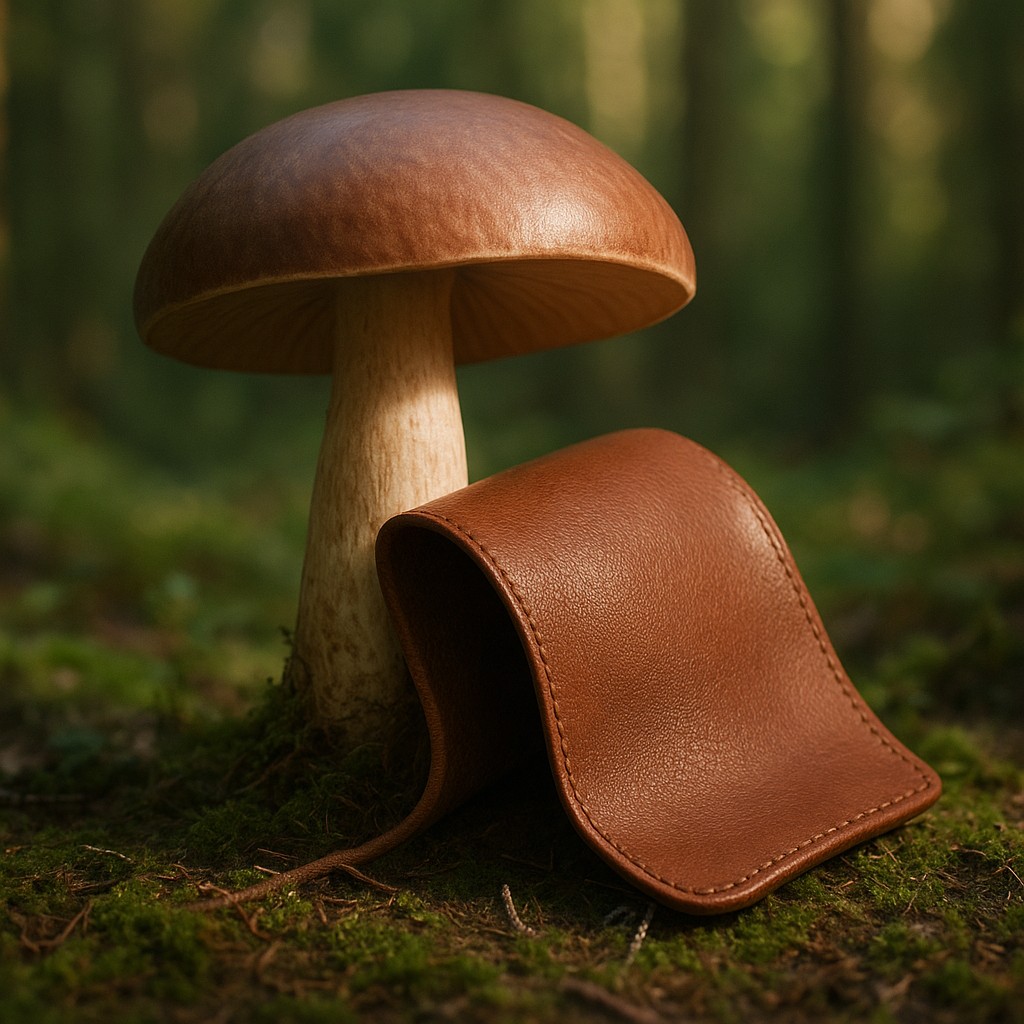
Imagine for a moment that the secret to the future of fashion isn't hidden in a high-tech chemistry lab, but right beneath your feet during a walk in the woods. For decades, we have been stuck between two flawed choices for our bags and shoes: animal leather, which has a massive environmental footprint, and plastic "pleather," which takes centuries to break down while polluting our oceans. However, nature has quietly perfected a third option-an invisible underground network of incredible strength. This network is mycelium, the root-like part of fungi that acts as a complex system capable of weaving structures of surprising density.
Today, engineers and biologists are working together to turn these fungal threads into a high-end material that perfectly mimics the texture, flexibility, and durability of cowhide. By feeding these fungi agricultural waste, we aren't just creating an eco-friendly substitute; we are joining a "circular" industrial revolution, where waste is used to create new products. This process doesn't require thousands of gallons of water to raise livestock or toxic chemicals to tan the hides. It is a fascinating dance between biology and engineering, where we learn to "grow" our belongings rather than extracting them from the earth.
The Secret Architecture Under the Mushroom Cap
To understand how a fungus can become a luxury handbag, you have to forget about the mushroom caps we eat in omelets and focus on the mycelium. This network is made of millions of microscopic threads called hyphae. In the wild, these threads spread out to find food, but in a controlled environment, they form an incredibly dense three-dimensional structure. You can think of them as an army of tiny weavers working round the clock to create a mat of tangled fibers. Unlike plastic, which is just a solid mass, mycelium is an organized structure with its own built-in strength thanks to chitin-the same natural polymer that makes insect shells so tough.
Manufacturers use what they call "mycelium scaffolding." They place spores on a bed of farming leftovers, like sawdust or rice husks, which serve as food. In just a few days, the fibers take over this base, wrapping around each other to form a solid mass. The wonderful thing about this process is that the fungus does all the hard weaving for us. Engineers simply guide the growth. It is a form of biological partnership where humans provide the frame and the food, and nature provides the structural labor.
Fine-Tuning a Living Organism
The real brilliance of producing mycelium leather lies in manipulating the environment to change the material's physical properties. Imagine if you could tell a tree to grow so that its wood was as flexible as rubber or as hard as steel. With fungi, that is almost possible. By fine-tuning the temperature, humidity, and carbon dioxide levels in the growth chambers, technicians can change how dense the fibers become. Higher humidity might encourage a softer, airier growth, while controlled stress can force the fibers to pack tighter, increasing the durability of the final "leather."
This versatility is one of its biggest advantages over animal skins. A cowhide has natural variations, scars, or weak spots that leatherworkers have to cut around. Mycelium leather, however, can be grown in molds to exact sizes with perfectly even thickness from edge to edge. Designers can even adjust the material's softness depending on whether it's meant for a delicate watch strap or a rugged shoe sole. This level of molecular customization is why fashion designers looking to push the boundaries of creativity find this technology so attractive.
Comparing Tradition with Fungal Innovation
It is often hard to see how disruptive this technology is without comparing it to the methods we have used for thousands of years. The table below highlights the fundamental differences between traditional leather, classic synthetic leather (plastic), and this new biological alternative.
| Feature |
Animal Leather |
Synthetic Leather (PVC/PU) |
Mycelium Leather |
| Source |
Raising livestock |
Oil and chemicals |
Fungal biomass |
| Production Time |
Several years (growth) |
A few hours (factory) |
A few weeks (growth) |
| Environmental Impact |
Very high (methane, water, tanning) |
High (microplastics, CO2) |
Very low (circular) |
| Biodegradability |
Partial (depends on tanning) |
No (millennia) |
Excellent (compostable) |
| Uniformity |
Naturally varies |
Perfect and consistent |
Highly controlled |
| Water Usage |
Extremely high |
Moderate |
Minimal |
As this comparison shows, mycelium leather offers an impressive balance. It combines the production speed of the chemical industry with the high quality and biodegradability of natural materials, all while removing the ethical concerns of animal farming. It is a solution that doesn't just "pollute less" but actively fits into a healthy life cycle.
Overcoming Challenges with Heat and Water
Despite all the excitement, there are still hurdles to clear before mushroom leather can fully replace cowhide in extreme conditions. One of the biggest challenges for scientists today is waterproofing. By nature, fungal fibers are porous. They evolved to soak up moisture from their surroundings, which is the exact opposite of what you want in a rain boot. Currently, many mycelium leathers need a surface treatment to become water-resistant. The trick is finding a coating as eco-friendly as the material itself, so its compostable qualities aren't ruined by a layer of plastic.
Another area of research is long-term tear resistance. Animal leather is made of collagen woven in an incredibly complex way that nature took millions of years to perfect for protecting living creatures. While mycelium is already very tough, experts are working on "green tanning" techniques using natural enzymes to further strengthen the bonds between the chitin fibers. The goal is to reach a level of durability where your mushroom jacket can be passed down to the next generation, just like a vintage leather coat.
Debunking Myths About Fungal Fashion
Skeptics often worry about the practical side of wearing a fungus. The first common myth is the smell: many imagine a mycelium bag will smell like a damp forest or mold. In reality, once it is treated and dried, the material has no mushroom scent at all. It can even be scented to mimic the classic smell of tanned leather-which, interestingly, is usually the smell of wood bark or chemicals rather than the skin itself. The final product is neutral and clean, ready to be colored with natural dyes.
Another frequent fear is that the material might "regrow" or fall apart if it gets wet. Rest assured, once the growth process is stopped by heat, the fungal cells are inactive. Your wallet isn't going to suddenly sprout mushrooms after a rainstorm. Mycelium leather is a stable, finished product. It is a biomaterial, yes, but it is no longer "alive" in a biological sense by the time it reaches your wardrobe. Its structure is set and designed to last as long as any other high-quality fabric.
The Future at Our Fingertips
The potential for this technology goes far beyond the world of high fashion. If we can grow leather, why not grow building materials, home insulation, or car interiors? We are entering the era of "bio-fabrication," where the factory of tomorrow might look more like a greenhouse or a giant brewery than a metal assembly line. Mycelium teaches us that true innovation isn't always about inventing something brand new, but sometimes about looking closer at what the Earth has used for eons to recycle life.
By choosing to support these alternatives, we are changing our relationship with the things we own. Instead of using up finite resources, we are learning to grow solutions that respect our planet's limits. The next time you touch a soft, durable object, ask yourself if it came from a petrochemical plant or if it was patiently woven by the forest's invisible network. The future of fashion may be quiet and underground, but it is incredibly promising-and it is rising from the earth right before our eyes.