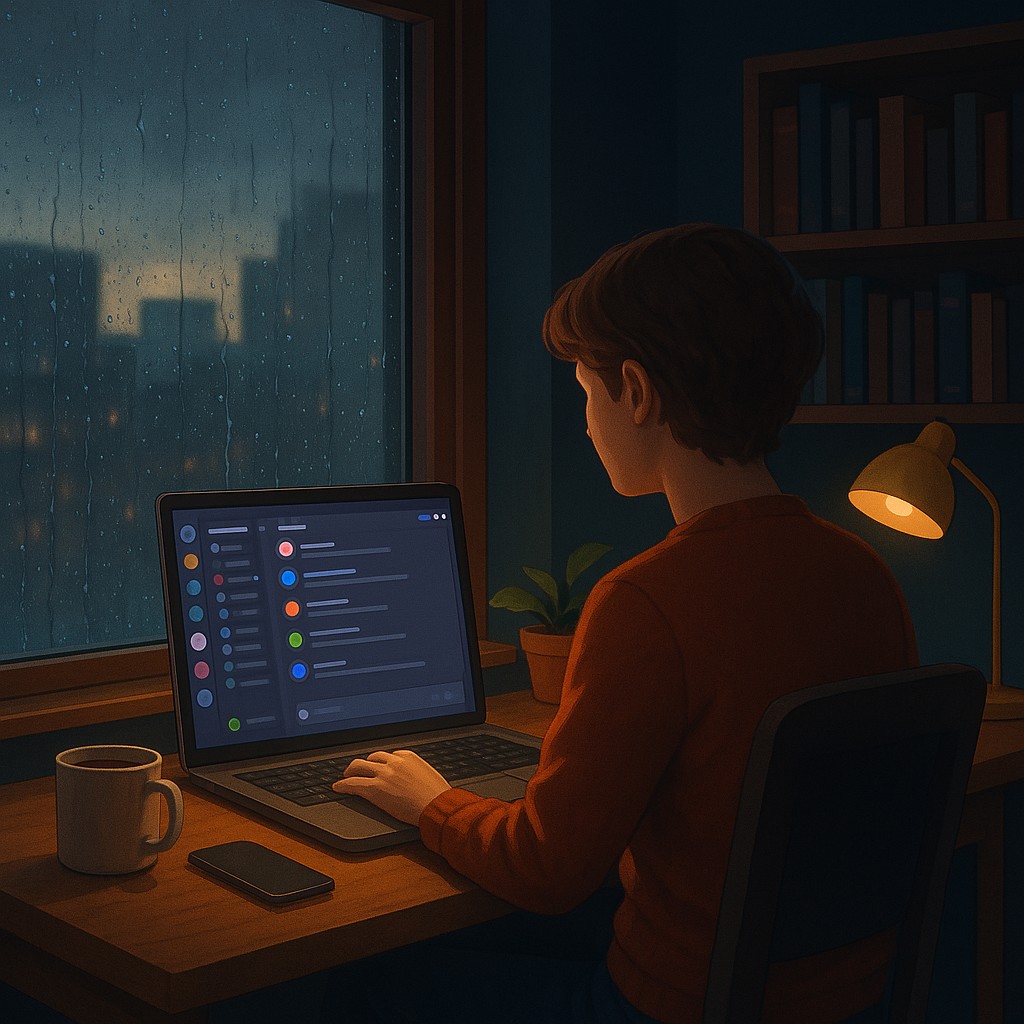
Imagine a rainy afternoon in 1985. If you wanted to escape the repetitive grind of household chores or the high pressure of the office, you likely headed to a neighborhood tavern, a public library, or a local diner. These were the "living rooms" of society - places where you could walk in, pull up a chair, and strike up a conversation with someone you might or might not know. These spaces were vital because they acted as social levelers. It did not matter if you were a CEO or a clerk; when you were at the local pub, you were just another regular enjoying a shared space. Sociologists call these "third places." They are the essential zones that exist outside of your "first place" (home) and your "second place" (work).
In recent decades, however, the landscape of our daily lives has shifted dramatically. Many of those classic physical hubs have vanished or become increasingly expensive. They have been replaced by high-rise developments or sterile shopping centers that prioritize sales over socializing. But humans are persistent social creatures, and we have not simply stopped gathering. Instead, we have migrated. We have moved our gossip, our debates, and our need for belonging into the digital world. Today, a Discord server dedicated to vintage synthesizers or a niche subreddit for backyard gardening serves the same social function as the village square once did. These digital third places are not just distractions; they are the new infrastructure of human connection, and they are changing the way we relate to the world around us.
The Recipe for a Perfect Social Hub
To understand why a subreddit or a gaming lobby can feel like a home away from home, we first have to look at what makes a third place work in the real world. In the late 1980s, sociologist Ray Oldenburg identified several key traits that define these spaces. First, they must be neutral ground, meaning no one is required to be there and no single person acts as the host. Second, they are levelers, where social status is left at the door. Third, the "main activity" is conversation. Whether the backdrop is a game of pool or a cup of coffee, the real point is the talk. Finally, these places provide a "low profile" atmosphere that is cozy, unpretentious, and accessible.
When we apply these rules to the digital world, we start to see why certain platforms succeed while others feel like cold, commercial voids. A bustling Discord server often mirrors a busy tavern. There are "regulars" who are always there, a playful tone of banter, and a low barrier to entry. You can lurk in the corner and listen to the conversation, or you can jump in and share your thoughts. The digital medium actually improves some of these traits. In a physical coffee shop, you are limited by who happens to live in your neighborhood. In a digital third place, you are united by interest rather than geography. This means the "leveling" effect is even stronger because users often interact through avatars and nicknames, stripped of the immediate visual cues of class, age, or wealth that might influence a face-to-face meeting.
From Neighborhood Ties to Interest-Based Bonds
The shift from physical to digital hubs represents a massive change in how we define community. Historically, your community was dictated by the "accident of proximity." You were friends with your neighbors because they were right there, even if you had nothing in common besides a shared fence. This created a broad but sometimes shallow social web. Digital third places flip this dynamic. Now, we cultivate "networked individualism," where we build highly specific communities based on our unique identities and passions. If you are a fan of 14th-century Mongolian poetry living in a small town, you are unlikely to find a local club for your hobby. Online, however, you can find a thriving community filled with people who share your specific obsession.
This transition allows for a level of emotional support that physical neighborhoods often fail to provide. For people in marginalized groups, those with rare health conditions, or individuals struggling with niche professional challenges, the digital third place is a lifeline. It provides a "psychological home" where the stakes are low but the rewards of being understood are high. However, this shift also means we spend less time interacting with people who are different from us. While the old neighborhood park forced you to deal with the person across the street who had different political views, digital spaces allow us to curate our environments. We must weigh the benefit of deep, specialized belonging against the risk of living in a social bubble.
| Feature |
Physical Third Place (e.g., Café) |
Digital Third Place (e.g., Discord) |
| Primary Bond |
Geography and proximity |
Shared interests and values |
| Accessibility |
Limited by commute and hours |
24/7 access from anywhere |
| Social Filtering |
Visual and economic cues |
Use of aliases and merit-based |
| Cost of Entry |
Usually requires a purchase |
Often free, requires internet |
| Interaction Type |
In-person and face-to-face |
Mix of real-time and delayed |
| Community Size |
Small, local, intimate |
Large, global, scalable |
The Architecture of Digital Belonging
If the neighborhood hub is built of bricks and mortar, the digital third place is built of code and community guidelines. This is where things get complicated. In a physical park, the "rules" are often governed by local laws and social norms that have evolved over centuries. In a digital space, the rules are set by software engineers and corporate policies. The way a platform is designed determines the kind of community it fosters. For example, a platform that uses an algorithm to show you the most controversial content is going to feel like a very different place than one designed for slow, respectful discussion.
We are currently seeing a move away from "mass" social media toward "boutique" digital spaces. Large platforms often feel more like a crowded stadium or a noisy protest than a cozy lounge. This is why people are flocking to smaller, private groups where they can control the environment. In these smaller digital rooms, the "regulars" can establish their own culture, slang, and etiquette. This sense of ownership is crucial. When users feel like they have a hand in shaping the space, they become more invested in its health. This is why community moderation is so important; it is the digital equivalent of a bartender knowing when to cut someone off or a librarian asking for quiet.
Navigating the New Social Infrastructure
One of the most common misconceptions is that digital social spaces are inherently "less real" than physical ones. Critics often suggest that talking to someone online is a poor substitute for a handshake, but this ignores the profound impact these digital bonds have on our mental health. For someone who is bedridden, digital third places are their only access to the outside world. For a teenager in a restrictive environment, a gaming community might be the only place they feel safe enough to be themselves. We need to stop viewing apps as mere "time-wasters" and start seeing them as the vital social infrastructure they have become.
However, recognizing their importance also means we must be critical of how they are managed. In the past, if a town square was poorly maintained, the citizens could lobby their local government. When a digital third place is owned by a private corporation, the users often have very little say in how the environment changes. If a company decides to shut down a platform or change its interface, an entire community can be displaced overnight. This creates a new kind of social vulnerability. Our well-being is now tied to the corporate health and design choices of tech giants. Understanding this power dynamic is the first step in becoming a more intentional participant in the digital world.
The Future of the Virtual Porch
As technology continues to evolve, the line between the physical and the digital will likely continue to blur. We are already seeing the emergence of virtual reality spaces that attempt to mimic the feel of physical locations, from cozy jazz clubs to mountain retreats. These "metaverse" concepts aim to bring back the spatial cues of the traditional third place, like body language and directional audio, combining them with the global reach of the internet. Whether or not these specific technologies take off, the underlying human drive remains the same: we want to be where the people are.
Ultimately, the rise of digital third places proves that community is not about where you are, but how you connect. While we should certainly fight to preserve our local parks and libraries, we should also celebrate the fact that we can now find "our people" across oceans and time zones. By treating these online spaces with the same respect and care we give to our physical neighborhoods, we can build a more resilient and inclusive society. The next time you log into your favorite forum or join a group chat, remember that you aren't just looking at a screen; you are stepping into a modern sanctuary of human interaction. Cherish it, contribute to it, and help make it a place where everyone feels welcome to pull up a virtual chair.