For a long time, the story of artificial intelligence followed a simple, heavy-handed logic: bigger is better. We were told that the only way to build a digital mind capable of real reasoning was to pile up more "parameters." These are essentially the internal tuning knobs that dictate how a model processes information. Every time a tech giant unveiled a new model, the number of these parameters jumped from billions to trillions. This required massive warehouses full of servers and enough electricity to power a small city. It felt as though we were building digital cathedrals - awe-inspiring in scale, but far too heavy to move and too expensive for the average person to run.
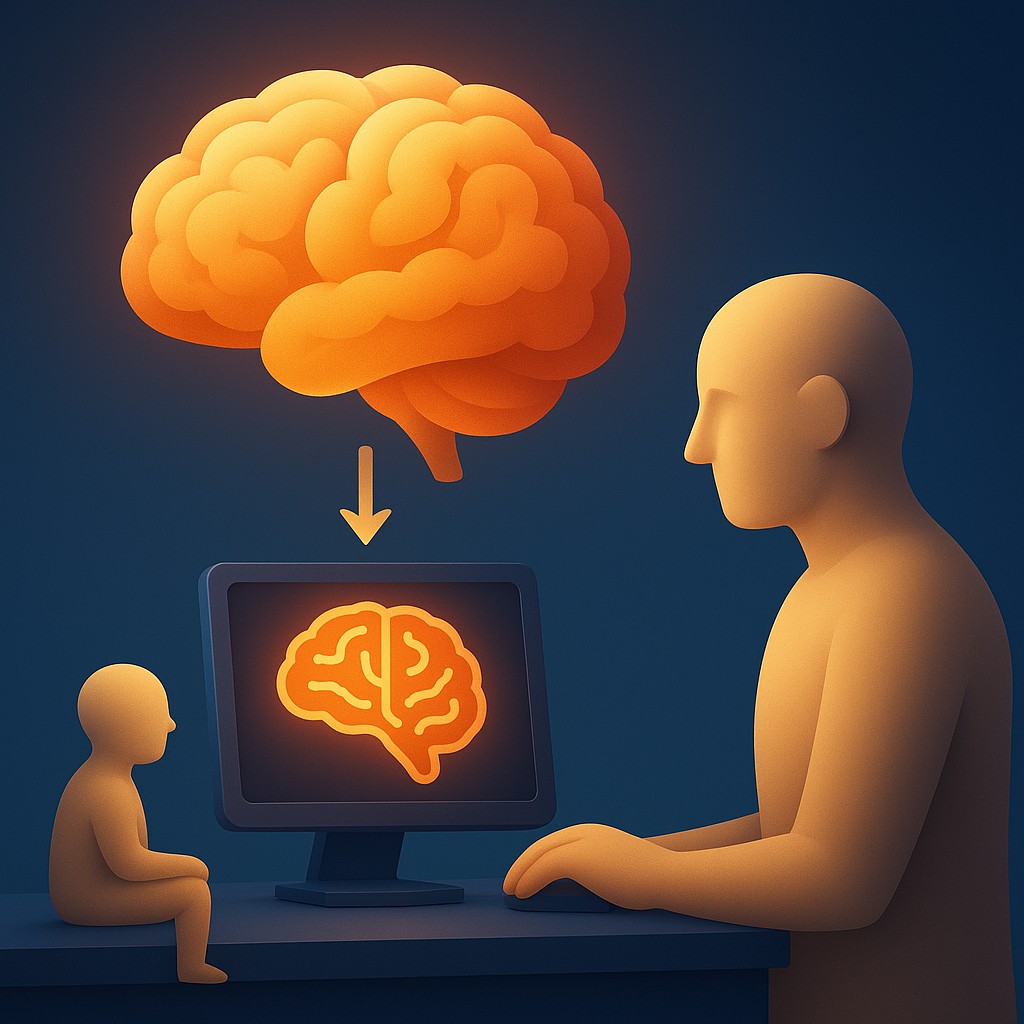
However, a quiet revolution is now taking place in the world of silicon and code. Researchers noticed that while these massive "frontier" models were brilliant, they were also incredibly redundant. Much of that vast digital brain was essentially "dead air," or at least highly inefficient. This realization sparked a shift toward Small Language Models (SLMs). These are compact programs that can fit on a smartphone or a laptop without losing the logical "bite" of their giant cousins. Instead of just feeding these small models more data, engineers now use a technique called "knowledge distillation." This is essentially a process where a wise, massive teacher model mentors a nimble, smaller student.
The Art of the Academic Shortcut
To understand knowledge distillation, it helps to stop thinking of AI training as someone memorizing a dictionary. Instead, think of it as a student learning to solve a complex puzzle. In traditional AI training, a model looks at trillions of words and tries to predict the next word in a sequence. It is a grueling process of trial and error. Knowledge distillation changes the game by bringing a "Teacher" model into the classroom. The Teacher is a massive, established program that has already mastered the nuances of human logic, coding, and creative writing.
The "Student" model does not just look at the raw data; it watches how the Teacher reacts to that data. When the Teacher processes a sentence, it doesn't just give a single "correct" answer. It generates a "probability distribution," which is a fancy way of saying it shows its work. It might calculate an 85 percent chance the next word is "apple," a 10 percent chance it is "orange," and a tiny fraction of a percent that it is "bicycle." By seeing these relative weights, the Student learns how concepts relate to one another. It learns that "apple" and "orange" are close cousins in the world of meaning, while "bicycle" is a distant stranger. This nuanced guidance allows the smaller model to reach a high level of skill in a fraction of the time.
From Brute Force to Elegant Mimicry
The traditional way to make a model smarter was to give it more "synapses" (parameters). If a model with 70 billion parameters was smart, the logic went, then one with a trillion would be a genius. While this is true to a point, it is also incredibly wasteful. A huge model might use millions of its parameters just to remember the birth date of an obscure 14th-century poet - a fact you might never ask for. Knowledge distillation focuses on "reasoning pathways" rather than just storing facts. It prioritizes the logic of how to build a sentence or solve a math problem over the sheer volume of data.
This process is often called "logit matching." Logits are the raw scores a model assigns to different possible outcomes. By forcing the Student model to match the Teacher’s logits, we are essentially teaching the Student the Teacher's "thought process." It is the difference between giving a child the answer key to a math test and sitting down to explain the underlying logic of algebra. The Student model emerges not just as a smaller version of the Teacher, but as a more efficient version that has been "pre-compressed" with the most vital insights of its predecessor.
| Feature |
Large Language Models (Teacher) |
Small Language Models (Distilled Student) |
| Parameter Count |
70B to 1 Trillion+ |
1B to 8B |
| Hardware Needs |
High-end Data Centers |
Phones, Laptops, Local devices |
| Main Strength |
Vast, Niche Knowledge |
Logic, Reasoning, and Speed |
| Training Method |
Mass-scale Self-Learning |
Distilled from Teacher Models |
| Running Cost |
Expensive (Pennies per Query) |
Negligible (Runs on your device) |
The Challenge of the Long Tail
While distillation is a technological marvel, it comes with a catch that reveals the true nature of machine intelligence. Smaller models are exceptional at reasoning, which involves following rules, coding, and structuring arguments. However, they struggle with what researchers call "long-tail facts." Imagine the Teacher model as a massive university library and the Student model as a very smart student with a pocket notebook. The student can learn the beautiful logic of physics from the library, but they cannot fit every obscure fact from every book into their notebook.
If you ask a distilled small model to write a computer script to sort a list of numbers, it will likely perform as well as a model ten times its size. It has "learned the logic" of coding perfectly. However, if you ask for the name of an obscure village in rural France or a niche historical event from 200 years ago, it might make things up (hallucinate) or admit it doesn't know. The capacity for "world knowledge" is still largely tied to the number of parameters. This creates an interesting split in the AI landscape: large models remain our encyclopedias, while distilled small models are becoming our everyday logic engines.
Reasoning Without the Weight
Recent breakthroughs, such as Microsoft’s Phi series or the distilled versions of DeepSeek, have shown that a model with only 3 billion or 7 billion parameters can beat much larger models in specialized tasks like mathematics. This is achieved through "curriculum distillation," where the student is guided through increasingly difficult problems. At first, the student learns simple sentence structures, and eventually, it begins to mimic the "Chain of Thought" (CoT) processing of the larger model.
Chain of Thought is the process where a model explains its reasoning step-by-step before giving a final answer. By training small models on these step-by-step "thought traces" generated by the Teacher, the Student learns how to break down complex problems. It essentially learns the habit of thinking before it speaks. This shortcut in development allows us to use highly capable AI in places where internet access is spotty or where privacy is a major concern, as the model never has to send your data to a central cloud server to "think."
The Democratization of Digital Intelligence
The true magic of knowledge distillation lies in its impact on the real world. For years, the power of high-end AI was locked behind a paywall or required a high-speed internet connection to talk to a distant server. This created a digital divide where only those with the best hardware or connectivity could benefit from AI-assisted reasoning. Distillation shatters this barrier. It allows a developer in a remote area to run a powerful coding assistant on a five-year-old laptop. It allows a doctor in a rural clinic to use a diagnostic tool on a tablet without needing to upload sensitive patient data to the cloud.
We are moving away from an era of "Cloud-First AI" and into an era of "Edge-First AI," where the models run locally on our own devices. In this new world, intelligence is like electricity: it is everywhere, built into the devices we carry in our pockets. By focusing on the quality of the patterns we teach rather than the quantity of the data we hoard, we have discovered that intelligence is more about the elegance of logic than the size of the machine. As we refine these distillation techniques, the gap between the "giants" and the "nimble" will continue to shrink. This makes the dream of a truly personal, private, and powerful AI tutor a reality for everyone.
The journey of AI is no longer just a race for height, but a race for efficiency. We have learned that a model doesn't need to know everything to be incredibly useful; it just needs to know how to think. This shift ensures that the future of technology isn't reserved for the massive server farms of Silicon Valley, but is something that can live, learn, and reason right in the palm of your hand. Through the quiet, diligent work of distillation, we are making the most powerful tool in human history lighter, faster, and more accessible than ever before.