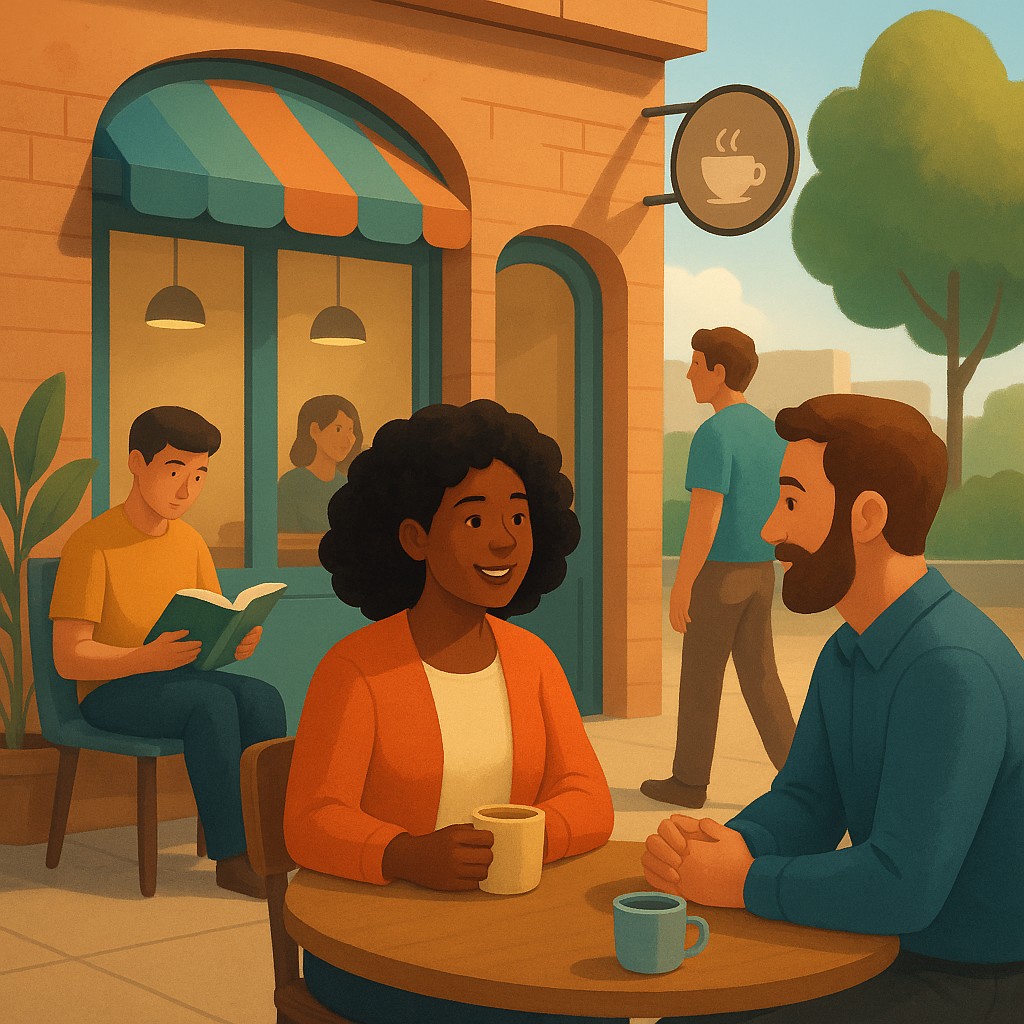
Think about your typical daily routine. For most of us, life is a steady commute between two main anchors. The "first place" is your home, the private world where you sleep, eat, and tackle the never-ending laundry. The "second place" is work or school, the structured setting where you earn a living and meet your obligations under the eye of a boss or a ticking clock. These two pillars are vital for survival, but if life were nothing more than a loop between the sofa and the office, the human spirit would soon start to wilt like a houseplant forgotten in a dark room.
Humans are social creatures. We crave a specific kind of connection that exists outside of our domestic chores and the professional grind. This is where the "Third Place" comes in. A term coined by sociologist Ray Oldenburg in the 1980s, a third place is neutral ground where people can gather, linger, and chat without the pressures of home or the rank and file of work. It is the neighborhood pub, the local coffee shop, the library, or the barbershop where conversation flows as easily as the coffee. In these spaces, we aren't just "parents" or "employees"; we are simply neighbors engaged in the vital, messy, and beautiful art of being social.
The Architecture of Belonging and the Leveling Effect
At the heart of any successful third place is a psychological trick known as "leveling." In our first and second places, status is almost always a factor. At home, there are roles for parents or spouses; at work, there are bosses and staff. However, the ideal third place acts as a great equalizer. When you walk into a true community hub, your job title, bank balance, and social standing matter very little. Instead, people judge you by your wit, your kindness, or perhaps your take on the local sports team and the latest neighborhood news.
This leveling effect is crucial for our mental health because it offers a "role release." We spend so much of our lives performing for others or meeting expectations that being in a space where no one is "the boss" feels incredibly liberating. A well-designed third place encourages this by keeping things informal. There is no fancy dress code or expensive membership. The physical layout often reflects this equality, using communal tables and open seating that break down the silos we usually live in. By removing the usual markers of status, the third place creates a safety net where real connections can grow between people who might otherwise never meet.
Rooting the Soul in a Restless World
Why do we feel so much better after an hour in a busy bookstore or on a sunny park bench? The answer lies in "psychological anchoring." Modern life often feels fragmented; we move through digital spaces and sterile transit zones that rarely offer a sense of home. A third place provides a physical location that feels like an extension of who we are. It becomes a front porch for the community - a place where "everybody knows your name," or at least where the barista remembers your usual order. This recognition makes us feel seen and valued, reducing feelings of isolation and anxiety.
Furthermore, third places serve as the "living room" of society. They help us build what sociologists call "weak ties." While "strong ties" (family and close friends) are vital, these weak ties (acquaintances and regulars) are the secret sauce for a healthy society. These casual interactions expose us to different points of view and keep us grounded in our local area. When we lose our third places, we tend to retreat into bubbles of people who think exactly like we do. A good third place fights this by being a "low-stakes" environment. You don't have to agree with everyone at the community garden, but the shared act of planting tomatoes creates a bond that softens the edges of disagreement.
Designing the Blueprint for Comfort
If we were to sit down with a blank sheet of paper and design the "Perfect Third Place," we would need to balance several mental and physical needs. It isn't enough to just put some chairs in a room. The space must have a specific "vibe" that invites people in and makes them want to stay. The following table summarizes the key traits that turn a simple building into a thriving hub.
| Feature |
Psychological Impact |
Practical Example |
| Neutral Ground |
Removes the pressure to host or act like a guest. |
Public parks or cafes where no one person owns the space. |
| The Leveler |
Dissolves social rank and status anxiety. |
Shared tables where doctors and janitors sit together. |
| Conversation |
Talk is the main event, keeping the mind active. |
Quiet background music that doesn't drown out speech. |
| Accessibility |
Lowers stress by making it easy to visit. |
Within walking distance and open late into the evening. |
| The Regulars |
Creates a sense of familiarity and safety. |
People who visit often and set the tone of the place. |
| Low Profile |
Ensures the space feels cozy and casual. |
Simple decor that doesn't feel "too fancy" or intimidating. |
| Playfulness |
Encourages joy and lightens the mood. |
Board games, trivia nights, or a funny chalkboard sign. |
To make a space truly "ideal," we also have to think about the senses. Humans are wired to respond to light, sound, and texture. A great third place maximizes natural light to boost mood and uses "human-scale" architecture. This means high ceilings that feel airy, but also cozy corners for private chats. The acoustics are especially important; a space that is too quiet feels like a library, while a space that is too loud prevents the very conversation that defines a third place. The goal is a gentle "buzz" of activity that acts as a comforting background hum.
The Mental Danger of the Third Place Void
We are currently living through a "loneliness epidemic," and a major cause is the loss of physical third places. Over the last few decades, we have seen the rise of "non-places" - think of shopping malls where you are only welcome if you are spending money, or gated communities that choose security over social life. When these spaces vanish, people often try to replace them with digital platforms. While social media offers some interaction, it lacks the physical presence and the "spontaneous friction" of a real room.
The problem with digital "third places" is that they are often designed for engagement (keeping you clicking) rather than connection. Algorithms prioritize emotional, often negative, content to keep you scrolling. A physical third place, on the other hand, usually encourages a mellow, steady state of mind. Without a physical space to gather, we lose our "social muscle memory." We forget how to make small talk, how to read body language, and how to live alongside people who aren't hand-picked by an algorithm. The ideal third place acts as a gym for the soul, keeping our social skills sharp. Without it, we become more prone to "social atrophy," which can lead to higher rates of depression and a lack of trust in our neighbors.
Balancing Activity and Stillness
An ideal third place shouldn't just be a place to sit; it should be a place where "doing" and "being" are both welcome. Think of a workshop where people can fix bicycles while chatting, or a community kitchen where chopping vegetables acts as a bridge between strangers. It is often easier for humans to bond when they are focused on a shared task – a concept known as "parallel play." In our ideal blueprint, there would be zones for activity and zones for quiet thought. This allows the space to serve different personality types, from the extrovert who wants to debate the news to the introvert who just wants to read a book near other people.
This blend of activity and stillness is what makes a space feel "alive." It needs to be flexible. In the morning, it might be a quiet spot for retirees to read the paper; in the afternoon, it becomes a hub for students and remote workers; in the evening, it transforms into a venue for local music. This "multimodal" nature ensures the space never feels stale. It becomes a living organism that breathes with the rhythm of the city. The ideal third place is never truly finished; it is a collaborative work of art constantly being reshaped by the people who use it.
The Future of Shared Spaces
As we look ahead, the need for these psychological sanctuaries will only grow. We are moving toward a world of remote work and crowded cities, making this "middle ground" more precious than ever. The ideal third place isn't a luxury; it is a public health necessity. It is the antidote to the cold efficiency of modern life and the isolation of the digital age. By making these spaces a priority in our neighborhoods, we aren't just building "hangouts" - we are building the infrastructure of human happiness.
Go out and find your third place today, or better yet, find a way to help create one. Whether it is a community garden, a tiny neighborhood library, or simply staying a little longer at your favorite cafe to talk to the person next to you, you are part of a vital tradition. When we invest in these shared spaces, we are really investing in each other. In a world that often feels like it's pulling us apart, there is no act more radical or beautiful than finding a place where we can simply be together.