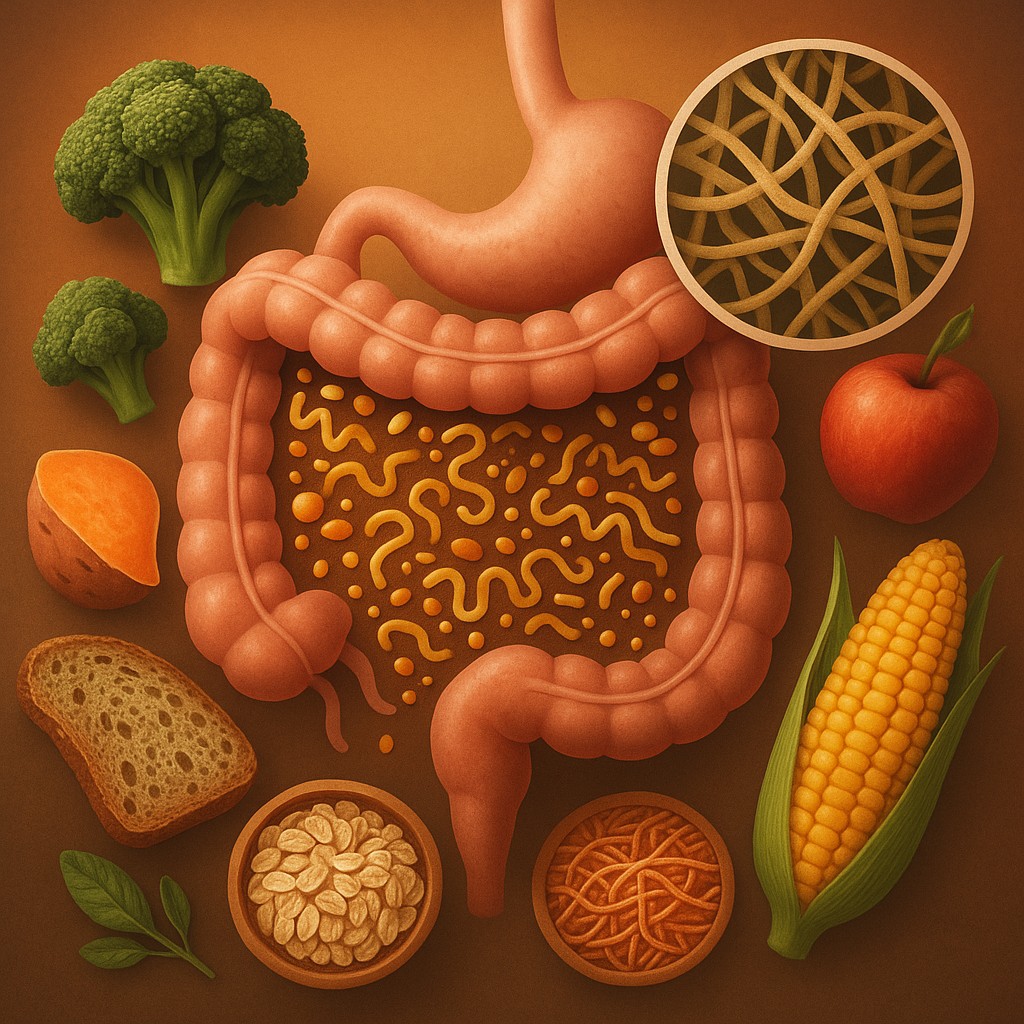
Imagine you are hosting a grand, high-stakes dinner party for the world’s most demanding guests: the trillions of bacteria living inside your gut. You have spent hours choosing the finest proteins and the most flavorful fats, assuming these are the stars of the show. However, as the meal progresses, you realize your guests are actually starving because you forgot the one thing they truly crave. While you are busy absorbing sugars and fats in your upper digestive tract, your microscopic companions in the "basement" are waiting for the rough stuff - the tough plant parts that your own enzymes cannot break down. This is the great irony of fiber: it is the part of our food that we technically cannot digest, yet it is arguably the most vital ingredient for our long-term survival.
Most people view fiber as a boring, practical substance, something associated with dusty cardboard cereals or a supplement your grandparents stir into a glass of water. In reality, fiber is a sophisticated biological tool that coordinates a symphony of health benefits from your brain to your blood vessels. It is the architectural framework of the plant world, providing the crunch in your carrots and the structure in your kale. Once it enters your body, it transforms into a multitasking marvel. By understanding how this "non-nutrient" works, you can unlock a level of vitality that no trendy superfood can match. It is time to stop thinking of fiber as just a bathroom aid and start seeing it as a longevity essential that fuels your internal ecosystem.
The Secret Identity of the Indigestible Carb
To understand fiber, we first have to look at what it actually is: a complex carbohydrate that refuses to be tamed. While simple carbs like white sugar are easily shattered by your digestive enzymes into glucose, fiber is held together by stubborn chemical bonds that your body simply doesn't have the tools to break. Because of this, fiber travels through your stomach and small intestine relatively untouched, making it a unique traveler in your digestive tract. This resilience is exactly why fiber is so valuable; if we could digest it easily, it would just be more calories. Because we cannot, it keeps its physical properties all the way down to where it is needed most.
We generally divide fiber into two main categories: soluble and insoluble. Soluble fiber is the "gel-former" of the group. When it meets water, it dissolves into a thick, sticky substance, much like the inside of an aloe vera leaf or the goo that forms when you soak chia seeds. This gel slows down the speed at which food leaves your stomach, which is why a high-fiber meal keeps you feeling full for hours. On the other hand, insoluble fiber is the "broom." It does not dissolve in water and remains relatively intact, adding bulk to your waste and acting like a gentle scrubbing brush for your intestinal walls. Both are essential, and most whole plants contain a mixture of the two, working together to keep the internal assembly line moving smoothly.
A Microscopic Feast for Your Internal Allies
The true magic of fiber happens when it reaches the large intestine, also known as the colon. This is where your microbiome - a massive colony of bacteria, fungi, and viruses - lives. These microbes are not just hitchhikers; they are active participants in your metabolism, and fiber is their primary fuel source. When you eat fiber, you are effectively "feeding the troops." These bacteria possess the enzymes that you lack, allowing them to ferment the fiber into various beneficial byproducts. The most famous of these are short-chain fatty acids (SCFAs), such as butyrate, propionate, and acetate.
These SCFAs are like a currency that your body uses to buy better health. Butyrate, in particular, is the preferred energy source for the cells lining your colon. By providing these cells with fuel, fiber helps maintain a strong, leak-proof gut barrier, preventing unwanted toxins from escaping into your bloodstream. This fermentation process also creates an acidic environment that keeps harmful, disease-causing bacteria away. When you starve your microbiome of fiber, they get hungry and begin to nibble on the protective mucus layer of your gut, which can lead to inflammation. In a very real sense, eating fiber is an act of self-preservation for your body's internal structure.
Regulating the Steady Flow of Energy
One of the most immediate benefits of consuming fiber is its ability to regulate your blood sugar and insulin levels. Imagine your bloodstream is a highway and glucose is a fleet of cars. If you eat a candy bar with no fiber, all those cars enter the highway at once, causing a massive traffic jam and a spike in insulin. However, when you eat that sugar packaged inside a high-fiber fruit or vegetable, the fiber acts like a series of sophisticated toll booths. The soluble fiber gel creates a physical barrier that slows the absorption of sugar, ensuring that glucose enters your blood in a slow, steady stream rather than a chaotic surge.
This steady energy release is a game-changer for your daily productivity and long-term metabolic health. By avoiding the "sugar crashes" that follow low-fiber meals, you maintain more consistent focus and avoid the irritability that comes with fluctuating blood sugar. Over the decades, this protective effect significantly reduces the risk of developing Type 2 diabetes. By keeping insulin levels low and stable, fiber helps your body remain "insulin sensitive," meaning your cells stay responsive to the hormone’s signals. It is an elegant, mechanical solution to a complex chemical problem, proving that sometimes the best way to manage your biochemistry is through physical structure.
Building a Fortress Against Chronic Disease
The long-term impact of a high-fiber diet on the heart and blood vessels is extraordinary. Soluble fiber has a unique and beneficial relationship with cholesterol. As it forms that thick gel in your gut, it actually traps bile acids, which are made of cholesterol and are used to digest fats. Normally, your body is incredibly efficient at recycling these bile acids, but fiber grabs onto them and drags them out of the body as waste. This forces your liver to pull more cholesterol out of your blood to manufacture new bile acids, effectively lowering your "bad" LDL cholesterol levels without needing a prescription.
Furthermore, the anti-inflammatory effects of fiber reach throughout the entire body. Inflammation is the silent driver behind almost every modern ailment, from heart disease to Alzheimer’s. By keeping the gut lining healthy and feeding the microbes that produce anti-inflammatory compounds, fiber acts as a natural cooling system for the body. Studies have consistently shown that people with the highest fiber intake have the lowest rates of heart disease and stroke. It turns out that the humble bean and the simple apple are some of the most powerful tools we have for keeping our arteries clear and our hearts beating strong well into old age.
| Fiber Source |
Primary Type |
Key Health Benefit |
Fun Fact |
| Oats and Barley |
Soluble (Beta-glucan) |
Lowers LDL cholesterol |
Makes a gel that feels "creamy" in your mouth. |
| Lentils and Beans |
Both |
Lasting energy and fullness |
Known as "nature's small prizes" for the gut. |
| Berries (Raspberries) |
Mainly Insoluble |
Better digestion and antioxidants |
One cup has a surprising 8 grams of fiber. |
| Avocados |
Both |
Heart health and healthy fats |
One of the few fats that comes with built-in fiber. |
| Seeds (Chia/Flax) |
Soluble |
Gut barrier protection |
Can absorb up to 12 times their weight in water. |
| Broccoli and Greens |
Insoluble |
Natural detox and bulk |
Contains sulfur compounds that help the liver. |
Clearing Up Common Fiber Myths
Despite the clear science, several myths persist that keep people from eating enough fiber. The most common misconception is that "fiber is just for constipation." While it certainly helps keep things moving, this is like saying a smartphone is "just for making phone calls." As we’ve explored, fiber’s roles in immune function, cholesterol management, and blood sugar regulation are arguably more important than its role in the bathroom. Another myth is that you can get all the fiber you need from "fortified" processed snacks. While manufacturers may add isolated fibers like inulin to cookies or bars, these added fibers rarely provide the same complex mix of nutrients and textures that whole plant foods offer.
There is also a fear of bloating and gas, which often prevents people from increasing their fiber intake. It is true that if you go from zero to sixty - eating a massive bowl of lentils when your gut isn't used to it - you will likely experience some digestive fireworks. This isn't because fiber is "bad" for you, but because your microbiome is out of shape. You wouldn't try to run a marathon without training, and you shouldn't try to process 50 grams of fiber if you've been living on white bread. The key is to start with small amounts and increase slowly, allowing your bacterial populations to shift and adapt over a few weeks. Drinking plenty of water is also essential, as fiber needs liquid to form gels and add bulk effectively.
The Longevity Connection
If you were to look for a "longevity pill," the closest thing we have is a diet rich in diverse plant skins and seeds. Large-scale, long-term studies have found a direct link between high fiber intake and a reduced risk of "all-cause mortality." This means you don't just avoid one specific disease; you effectively lower your risk of dying from almost everything common in the modern world. This is likely because fiber addresses the root causes of aging, such as oxidative stress, sugar damage (glycation), and chronic inflammation. By protecting the gut, fiber protects the entire body, keeping the immune system sharp and the brain clear.
Moreover, we should not ignore the psychological benefits of fiber. There is a growing field of research called the "gut-brain axis," which explores how our gut health influences our mood and mental clarity. Since fiber is the primary fuel for the bacteria that produce brain chemicals like serotonin and dopamine, eating a high-fiber diet can actually make you feel happier and more resilient to stress. Longevity is not just about adding years to your life, but adding life to your years. Feeling energetic, mentally sharp, and physically light is much easier when your internal ecosystem is thriving on a steady supply of plant-based roughage.
Simple Ways to Live a High-Fiber Life
Transitioning to a high-fiber lifestyle doesn't require a radical change to who you are, but it does require some planning at the grocery store. A great rule of thumb is the "half-plate" rule: fill half of every plate with colorful vegetables or fruits. Another easy win is to swap all "white" grains for their "brown" or "whole" versions. White rice and white flour have had their fibrous outer husks stripped away, leaving you with only the starch. By choosing brown rice, quinoa, or whole-grain bread, you are keeping the fiber that nature intended. It is also remarkably easy to "sneak" health into your meals by adding a tablespoon of chia seeds to yogurt or tossing a handful of spinach into a smoothie.
Snacking is another area where you can make a huge impact. Instead of reaching for processed crackers or chips, which have almost no fiber, try nuts, seeds, or raw vegetables with hummus. Even a simple switch from fruit juice to whole fruit makes a massive difference. When you juice an orange, you keep the sugar and water but throw away the fiber, which is the very thing that prevents the sugar from harming you. By eating the whole orange, you get a much more satisfying snack and a much healthier blood sugar response. Consistency is key; your gut microbes are creatures of habit, and they thrive when they receive a predictable, diverse supply of fiber every single day.
Starting Your Journey to Internal Vitality
As you finish reading and head back into your daily life, remember that every meal is an opportunity to invest in your future. You are not just eating for your own taste buds; you are providing the essential raw materials for a vast, microscopic empire that works tirelessly to keep you healthy. Fiber is the invisible thread that connects your digestive health to your heart, your brain, and your lifespan. It is the ultimate "slow medicine," working quietly in the background to prevent the silent damage that leads to chronic illness.
Embrace the crunch, enjoy the variety of the plant kingdom, and take pride in the fact that such a simple dietary change can have such profound results. Whether it is a handful of raspberries in the morning or a hearty bean soup in the evening, these small choices build into a powerful shield for your health. You now have the knowledge to navigate the myths and the science of the fiber world with confidence. Start today, nourish your inner world, and watch as your body rewards you with a level of energy and resilience you never thought possible. Your journey to longevity begins with the very next bite.